
How a Digital Voting System Can Be Much Better Than What We Have Today
I want to vote on my phone next time!
I am hoping that one day we will all be laughing, incredulous, as we reminisce about 2020 and how we voted by mail using paper, markers, and envelopes. It might be too late for most of us but there is hope that our children and grandchildren build a digital democracy.
“You guys had computers, the internet, and smartphones? Right?”
“We did… but it is complicated.”
We somehow concluded that the only way we could vote was to show up in person or mail it in, jumping a bunch of hoops in the process and a couple 20 feet high metaphorical walls for some.
As I write this, mid-day on November 3rd, 2020, this is the most important election I can think of in my lifetime.
It is expected that not all winners will be announced today and that we will need weeks to count all the votes. It is also assumed that some ballots will be recounted and challenged. There is a risk of unrest and violence.
Both sides are strategizing and funding initiatives to go through the courts, congress, and any other alternatives, if any results are not leaning one way, in the multiple contests taking place at once throughout the country.
Thankfully many voted in advance, where early voting is possible, and/or by mail, which takes a lot of uncertainty out of the whole situation when compared to prior elections.
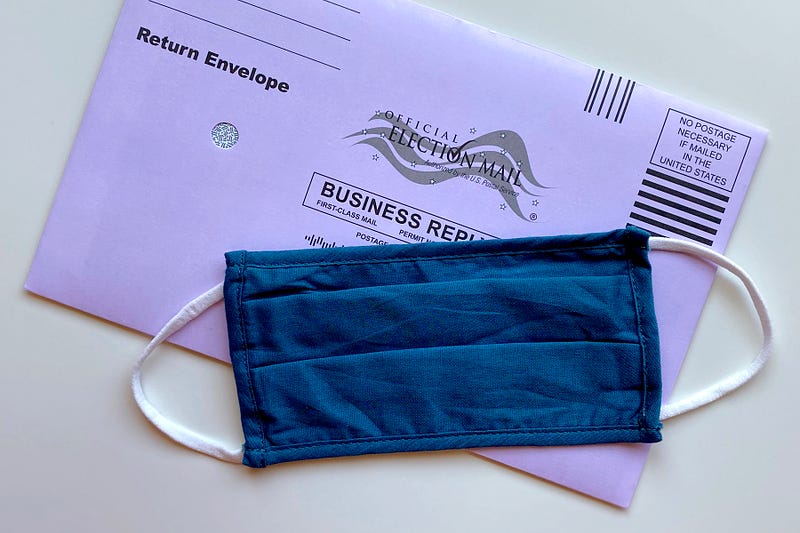
Describing the process of voting by mail can sound unnecessarily complicated: upon proper registration and an approved request, you receive an envelope containing 2 more envelopes, instructions, and a ballot. You need to fill in the ballot, put it in the ballot envelope, and mail it back using the mailing envelope.
Of course, you have to follow all rules and instructions correctly as one trivial mistake can invalidate the ballot. Each state can follow a slightly different process, so you cannot communicate or explain it at the country level. Any public announcements have to break down the messages state by state.
Voting in the middle of a pandemic
This year was obviously very different and, because of the pandemic, a large portion of the population wanted to vote by mail.
Given the convenience and the fact that it was better and safer than voting the day of the election, I decided to vote by mail, which is also called an absentee ballot (same thing).
I received 4 pages of instructions in 4 languages in my voting package. I thought that anybody who does not understand one of these 4 languages is out of luck.
Having instructions in 4 languages is nice but using an app or a website would serve all better, especially any populations which prefer another language, video, or braille.
In my case, the ballot envelope was labeled with my name and my address on a sticker… so I imagine it was not a secret vote anymore but that it was also a solid protection against duplicated submissions, fraud, or mistakes.
I was still required to write my name and my address on the envelope, next to that sticker. That envelope went into a mailing envelope that could be mailed from any mailbox or post office. It could also be dropped off.
Given the USPS delays and the process itself, it sounded wise to give yourself extra time, by mailing it as early as possible or dropping it off in person.
There were some talks about not counting ballots arriving by mail after the 3rd in some states so that encouraged many voters to avoid the post office in the last few weeks.
After a few days, at least in my state, you could check online that your ballot was accepted and counted. You can find more info on that process by state here.
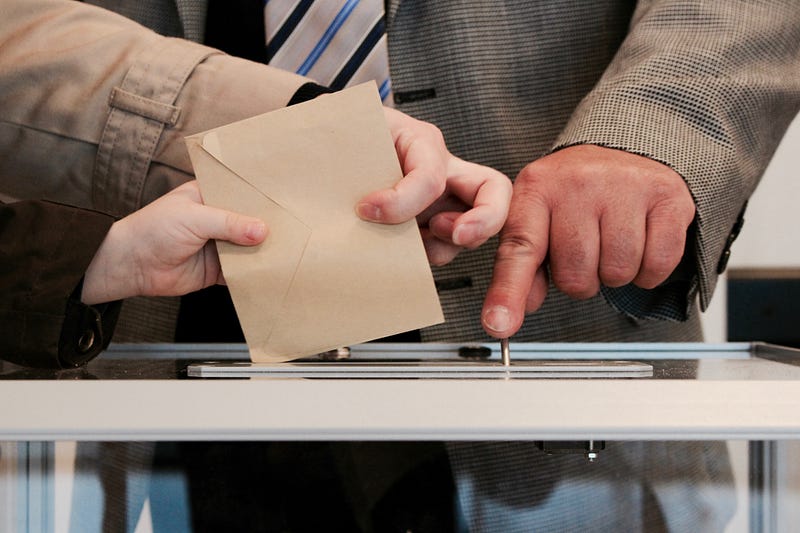
I was going to mail my ballot early on for convenience and safety. I then heard about the mail issues and noticed a drop off box a few blocks from my home.
I went to the drop off box and looked frantically for instructions. Was I supposed to insert the ballot with its mailing envelope or just the ballot envelope since it was not going through the mail?
In the end, I ended up leaving it in its mailing envelope and inserting it in the drop off box. I checked online if it was counted a few days later. I could see how it could have been discarded in a state trying to split hairs on what is a valid ballot.
The voting process was odd at times but worked great overall. At least, being in the Northeast and not in a swing state, I did not have to drive 4 hours or wait in line in front of one voting location for the entire county. I also did not have to fly to cast my vote in the only authorized voting place as some did and did not face any intimidation or tentative to suppress my vote.
I could not help but think that thousands upon thousands of voters missed a step, forgot to sign, or used the wrong envelope. It was not the most intuitive process. The story of the recount in Florida in 2000 is harrowing in terms of the technicalities, steps, and leeway which can be used to discard votes.
I remember the first time I voted. It was an in-person vote for several local officials, including the mayor. I was able to go in the middle of the day to avoid the lines. I thought about all the people who were working, who could not take a break to vote and who would have to wait in line to vote before the polls close. That seemed unfair.
I also remember that the ballots were much more complicated than I expected. A lot of content to process, instructions, and circles to fill in. It is very manageable for most people but I thought of the elderly and of anybody who could unknowingly miss a step, voiding their vote.
By the time you are filling your ballot on-site, you cannot do any more research, and am sure many make decisions on the spot when they wished they would have done more homework. It is especially true if you do not vote along party lines and like to learn about programs and backgrounds. This year I learned about a candidate who was temporarily suspended from the position he was running for and another who switched party 7 times over the years.
Any consulting firm could map out that process and remove most of the steps, redundancies and devise clearer instructions. Of course it is a critical and sacred process. We should still improve it over time, to keep up with times, better manage growing populations and address the issues we keep facing with the process.
It is not a partisan issue or at least it should not be. All sides have invested valuable resources in the process itself, fighting potential recounts, delays, and counts. Trying to protect and discard ballots often comes at huge costs.
At the end of the day, you want all votes to be counted, quickly, accurately and be as close as possible from real-time results to avoid any arguments. If anything, you would want all the arguments to take place before the vote and to focus on the programs, not on the process.
Over the long run, votes sway between parties, regardless of the process, as long as it is fair. As non-ruling political parties reshape their platforms and line up new candidates, they will eventually represent the change, the fresh ideas and get a chance to rule again.
According to NPR even Donald Trump said “I think it’s a terrible thing when people or states are allowed to tabulate ballots for a long period of time after the election is over. I think it’s terrible when we can’t know the results of an election the night of the election in a modern-day age of computers.”
With a pandemic in full swing, many voters and elected officials wanted to ensure that voting by mail would be widely available.
Having large crowds lining up in the streets to vote was a high-risk proposal because 100,000 Americans were testing positive for the virus daily.
Once you switch from in-person to remote voting, making the process 100% virtual seems to be the best evolution.
How about using a mobile app or a website to vote?
Elections have become a very sensitive topic, especially this year, and changing the process will face significant resistance.
Of course, we have recently seen claims of irregularities and too many incidents related to voting to think it is a coincidence. It is worth it for some to disrupt the process and question the results.
There are many concerns about fraud, hacking, and conflicts of interest. There are also many traditions, regulations, and constitutional aspects to voting which could impede change.
Bypassing all of this with proven technology and avoiding all those court hearing, legal challenges, and a massive waste of resources seems the logical next step, especially if it ensure fairer and undisputable elections.
Change is challenging
It is easy to imagine that generational and knowledge roadblocks could get in the way. It could worry the population which is not technology-savvy, regardless of how simple the solution could be and how easier it could be compared to paper voting.
It is always hard to bring up change and alternatives without being vilified, especially when it alters such an established institution.
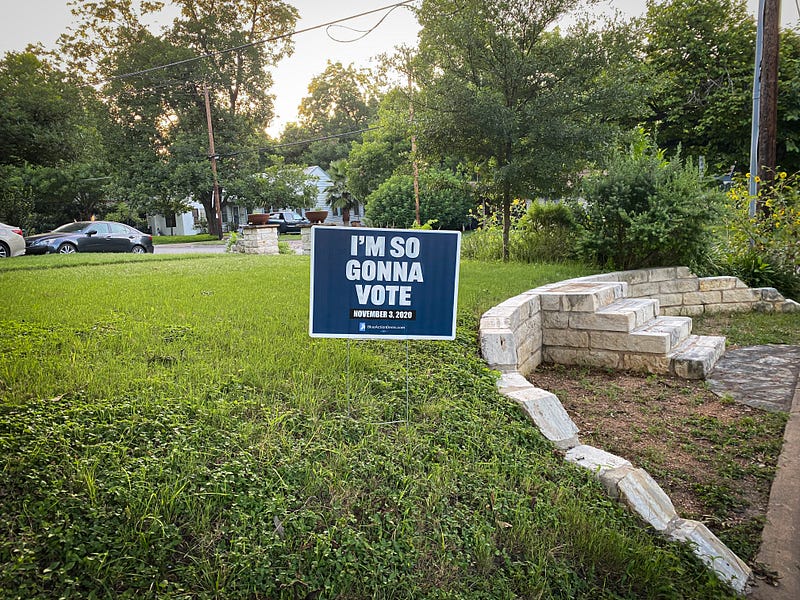
It is amplified by the press and anybody active online as many would most likely entertain circular arguments by pitting supporters and detractors regularly.
Social media unfortunately thrive on negative engagement as it generates more clicks, burns more time, and therefore produces more revenues than positive, consensual, logical, and civil discussions.
It would also be a minefield for any candidates in office or running for one, as it would be invariably perceived that they are trying to get an edge or take a stand based on their demographics.
The most challenging aspect of establishing a digital democracy will be trust and the communications aspect of it. We have in recent years allowed each topic to become a double-sided argument, even when it involves facts and science. That phenomenon is described in detail in The Death of Expertise. It is a major threat to democracy and progress.
Leading change carefully
Of course, at some point, you need to draw the line and lead the way but yet allow time for comments, public discourse, collecting data, and mapping the path. Taking time and keep the process transparent will reduce the angst created by revamping a critical process.
When faced with high-risk change, the best way to get past obstacles is to ease through it, explain thoroughly, focus on the benefits and introduce gradual changes, insisting that nothing is permanent until vetted and that everything is a test or an experiment until the best solution is found.
One way to transition to a digital democracy would be to phase in small changes at first and enable lots of checks and balances to offset any doubts. It might make sense to call it a temporary process at first, not knowing nor promising that it will work and should become the new norm.
It could be tested on small elections, primaries or typically undisputed elections with wide margins, to confirm that results are within the margin of error and that the process works.
It could then be used as an opt-in model at first, allowing all to still vote in person or by mail as an alternative or as the main option. Maybe it would make sense to scan and save all ballots to rely on a digital archive rather than paper in the meantime.
That would be yet another sensitive topic but lining up independent observers and third parties could be helpful as well.
Maybe another option would be for some voters to waive their privacy and publicly disclose their votes to increase confidence in the process. Of course, that would be completely voluntary and elected officials could start that trend. It is usually already clear how they are going to vote but that would support the process. That would provide a way to reconcile votes. It actually already happened, for example in Dixville Notch, New Hampshire. The town in New Hampshire voted first in this election and disclosed its 5 votes.
Creating a better and safer process
With an app, candidates could be allowed to link to their official site and provide some background info. Voting remotely gives also you more time to study the ballots and research the candidates. It would benefit candidates who put more effort into their online presence, their programs, and who do not have felony convictions or scandals showing in searches, for example.
At the end of the day, trust and cybersecurity will be paramount issues to address to get a majority of constituents on board. We managed to do it for banking and paying taxes so we can do it for voting as well, with the right focus and resources. Nobody is arguing that we should delete all the banking applications from our phones or that banking with bills in person is the only way to go. We need to reach that level of comfort with voting.
I am hoping using an app and a website would simplify, secure, and make voting more approachable. Hopefully, many more voters would join the process, participate in civil discussions, and have their voices heard if they could vote online, using an app on their phone or a website.
As demographics change and open-minded new generations become the majority, I am hoping fresh ideas will take over and that we will spend more time discussing the best ideas and not worrying about the process itself.
Max Dufour is a Partner at Harmeda. He leads strategic engagements for Financial Services, Technology, and Strategy Consulting clients. Connect at [email protected], on LinkedIn, or visit Harmeda. Any links to external sites can be affiliate links and therefore generate compensation as part of the Amazon Associates Program and other similar programs.


