
We must change our ways.
We must adapt our thinking to meet climate and social upheaval.
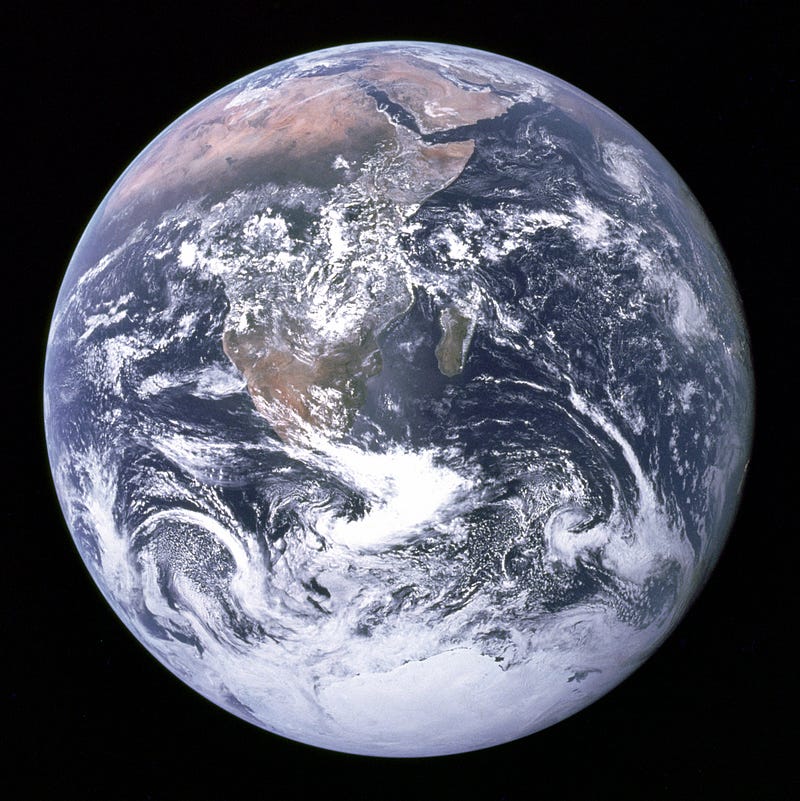
Changing Times.
“May you live in interesting times”, Traditional curse most suitable for our modern connected world.
Our connected world, Population and pollution, Land pressures global warming and environment degradation, High speed communications, Widespread literacy with freely available knowledge and misinformation, Empowering and limiting in equal measure.
Time’s Context.
Times change, Communications bind us as never before, Social networks global spanning lightning fast.
Knowledge transmission accompanied by lies hate and misinformation, Information deluge little time to understand and form sound opinion sort out gold from piles of dross, Political opportunists thrive as their lies and deceit lay undetected and unrebutted.
Climate change is now in our-faces, Fires floods and land inundation, Too many people, Old maxims and accepted definitions now seem largely irrelevant, Institutions don’t want change as it may affect their comfortable parasitic life.
Climate change’s unwelcome friend is social upheaval, Refugees displaced as lands become infertile or made unlivable through weather events rising seas and other calamities, Happening now in Australia due to floods.
Our “Now” problem.
Old ways and attitudes inhibit our ability to adapt and change in order to tackle climate change and social adversities.
Connected.
While individuals families and communities adapt to change, Social norms and concepts seemingly lag behind.
Consider free will, Capacity of individual to choose unimpeded between different possible actions, So many people so many opinions so much advice friendly and antithetical end up making individual’s unimpeded choice problematical.
Times past choices simpler because possible actions fewer and consequences mostly clearly seen, People had time and space in which to think.
Now we have numerous possibilities with many unknown and unknowable consequences made worse by limited time for rational thought, Result being more often than not people decide not to choose because of stress and anxiety.
My thought, Reconsider free will as individual being given unimpeded opportunity to make a choice, deciding not to make a choice is legitimate option, Perhaps this would help relieve stress.
Determinism.
Determinism suggests that only one course of events is possible, Hard determinism claims that determinism is true and thus free will is not possible.
Problem is determinism implies perfect knowledge of system or situation being studied, Such reductionist perfection is unobtainable in today’s social systems.
Indeterminism
Indeterminism, Idea that some events are not caused or don’t cause deterministically, Quantum theory proposes that no event is certain and entire outcome of anything is probabilistic, Heisenberg’s uncertainty principle basis of support for universe’s indeterministic nature, Physicist-chemist Ilya Prigogine argues for indeterminism in complex systems.
Complex Systems.
Complex system means that systems’ behaviors cannot be inferred from its properties.
Emergence occurs when system is observed to have properties its parts do not have on their own.
Complex properties or behaviors are called emergent and only occur when parts interact in wider whole.
In practical terms required by engineer, Complex models like Netlogo demonstrate that emergent behavours cannot be predicted or inferred from interactions between system components, Complex systems are indeterminate, Determinism doesn’t work.
Climate change is complex and so change cannot be predicted from individual ecosystem interactions, Scientists and old engineers rely on comparing many climate models with ranges of inputs, Only through careful comparative analysis can some notion of probability be derived for something like extreme weather events or tomorrow’s rain.
Climate Change, Tipping Points and Feedback Loops.
Human ecosystem dominates Earth.
Climate system is complex adaptive social system, Human actions drive emergence of global warming which through positive feed-back loops changes state of our global system, Exacerbating situation species extinctions weather extremes rapid ice-melting and rising sea-levels.
Climate tipping points are critical points at which small changes cause system to change rapidly drastically and even permanently, Geological records provide evidence of tipping point actions causing permanent environmental change.
Human intelligence allows us to recognise and adapt to change, Concern raised that we may adapt and act in manner that lessens any possibility of returning to previous pleasant climate states.
Reflection
We must focus on avoiding tipping points, We must understand that climate is complex and quickly adapt to apply ourselves and minimise consequences.
We must be free and unrestrained by irrelevant dogma like determinism and its simplistic advice, We make our fate, We have freedom to choose and fight climate change.