
Are You a White Killer? Come, Let Me Get You a Glass of Milk
Isn’t funny (as in sad) how we end up feeling empathy for white killers in movies? Case in point, the series The Sinner
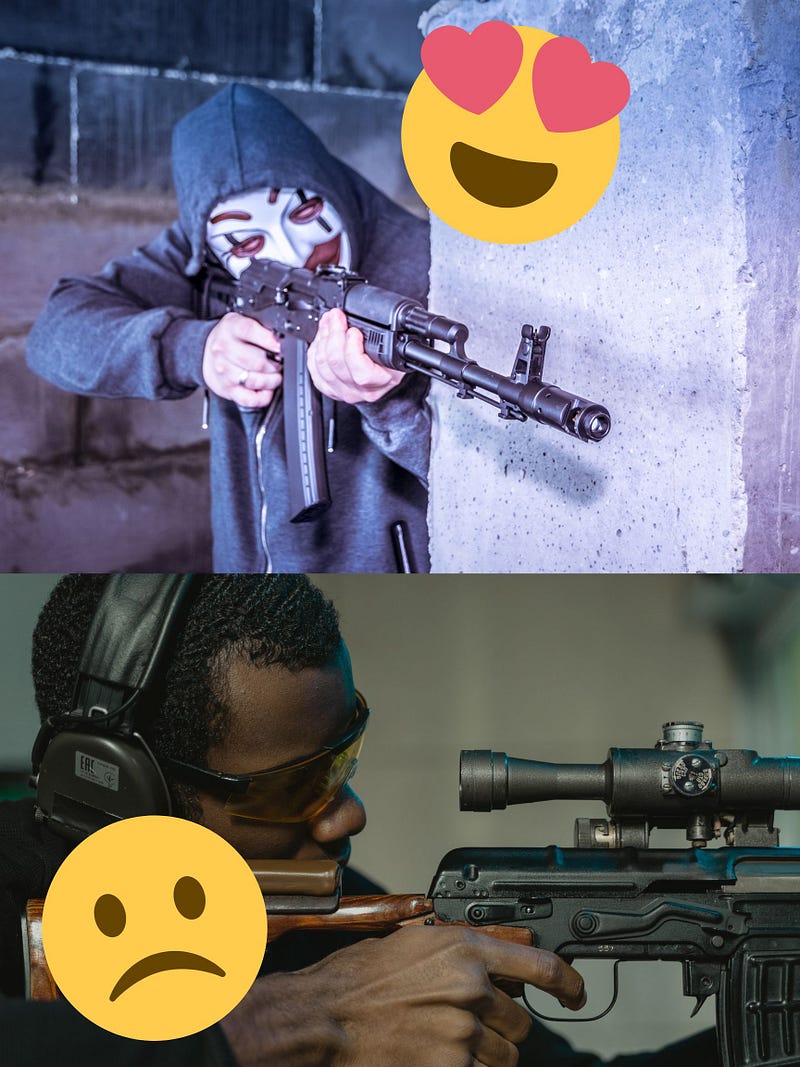
Kid gloves for white killers
If you are a black person, or a person of color, you probably have a track going in your head when you watch movies or series when white criminals get treated like mischievous children trying to steal from Bob’s candy store. This track usually goes something like, ‘Oh, watch, if this white person were black.’ Meaning, treatment of criminal acts by race is the difference between being offered the electric chair and being offered a cup of chamomile tea.
In the third season of the series The Sinner (Biel et al., 2017), Harry Ambrose, a detective, becomes intrigued by a murder suspect Jamie, a handsome but troubled white man, teacher at a prestigious private school, and soon-to-be father. Jamie is suspected of killing his best friend and he quickly racks up other unsavory possible crimes. Spoilers!
Eight sins forgiven, but if he were black, though
Throughout the series, it strikes you that even though people have good cause to believe Jamie commits trespassing, harasses, kills, and strangles people, nearly everyone in his surroundings treats him like a puppy who needs a treat so he can complete obedience training. There were so many “if-this-white man-were-black” moments. Those moments include:
1)Harry finds out that Jamie allowed his friend to bleed to death after a car accident because he wanted to experience a Nietzschean fantasy.
2)One night Jamie trespasses on Harry’s property and harasses Harry’s young grandchild. Ohhh yes — Harry saw all of it.
3)Jamie shoots Harry in the arm. Reminder: Harry is a police detective.
4)Jamie bludgeons a stranger to death at a house party. A HOUSE PARTY!
5)Jamie breaks into the art studio of Harry’s girlfriend Sonya. No, she does not call the cops. She has him pose for an acrylic portrait.
6)Sonya identifies Jamie for digging graves in her property.
7)Jamie breaks into Sonya’s house a second time. She chooses not to call for help because she wants to be the one who can save him (she considers him a good guy who has lost his way.) He then tries to strangle her.
8)Harry agrees to be buried alive by Jamie to prove his trust, (but Jamie doesn’t hold up his end of the bargain and removes the hose he had placed in the coffin for oxygen flow).
Characters give a nod to white privilege
The topic of white privilege makes a surprise entrance and swift exit when Jamie experiences flashbacks of himself attempting to murder people. His wife Leela, a light-skinned black woman, calls out his whiteness for giving him the privilege to worry about his existential crisis while at the same time shirking his responsibilities as a soon-to-be father. Jamie apologizes for his lapses of attention and explains that he doesn’t have a choice in the way he feels. Leela says,
“You know who didn’t have a choice? My Dad who hauled cement for 60 hours a week in Jamaica for sh*t. He didn’t even have time to think. You…this, this is privilege.”
Jamie says,
“That’s not fair. I don’t get to have a moment because I’m white?”
The funny part is, he doesn’t realize that his moment is his whole life as a white person.
White murders are people first
Harry and Sonya long to soothe and help him, even with strong suspicions that he is a violent criminal, and possibly a murderer. At the end of the movie, Harry fatally shoots Jamie in self-defense. Harry leans tearfully and regretfully over Jamie to hear his last words, “I am a good person,” and we can tell the detective’s heart is broken, as though he has lost a best friend.
In one of her novels, Argentinian author, Mariana Enriquez wrote about being disarmed by a white, blond stranger who comes to the rescue of her protagonists,
“He seemed lovely, but he could be anything, a degenerate, an abuser, a rapist: but since he was handsome, one preferred to think of him as a golden prince of the road” (p.108, Enriquez, 2016).
Next time you watch a movie that overly empathizes with a perpetrator of violence who is white, try the sentence, “If that were a POC!” You will find some interesting food for thought. We should be ready to decipher racist ideas in media because the values they portray can seep into our understanding of how the world works. Skin color should not determine the severity of how we judge someone’s violent act.
References
Biel, J., Purple, M., Simonds, D., Campos, A. Gogolak, C., Winters, B. & Coles, J.D. (Executive Producers). (2017-present). The sinner [TV series]. Midnight Choir Inc., Zaftig Films, Iron Ocean, Universal Content Products.
Enriquez, M. (2016). Las cosas que perdimos en el fuego. Vintage Español. New York.