
We Haven’t Done Enough to Overcome the Gender Gap
An in-depth look at gender in the workplace
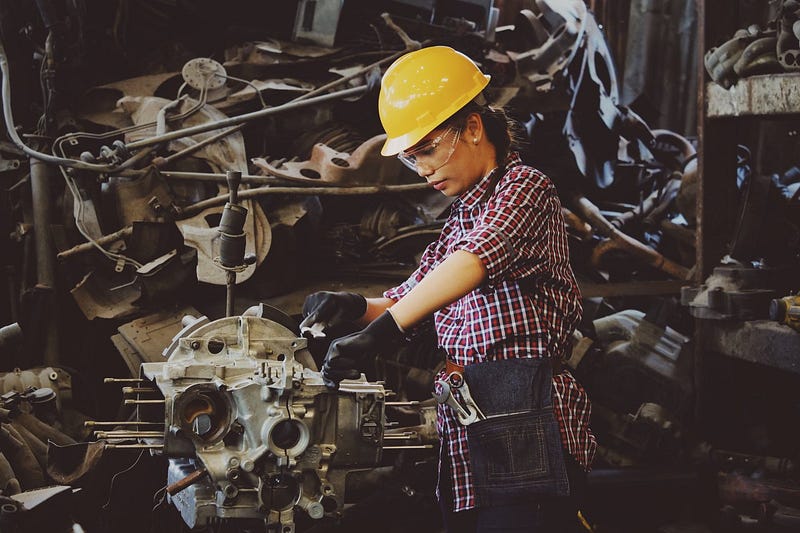
Equality is a mixed bag for men and women. Some things, like chivalry, men holding the door, bring nice pleasantries. The workplace, however, brings a lot of unwanted legacies. Modern women can fulfill roles traditionally held by men like working in construction or serving in the military. Even so, the gender gap still exists. Maybe we’ve lessened its impact, but it’s possible we haven’t done enough.
The Bureau of Labor Statistics says women earn 81% of the revenue their male counterparts earn. The gap widens more for minority women. And men at every age earn more than women.
The translation throughout a 40-year working life is that women earn $900,000 less than men, according to one study.
We’re Still Evolving
The term homemaker made its way into a dictionary as early as 1861:
Home-maker, “woman considered as a domestic agent,” by 1861, American English, from home (n.) + agent noun from make (v.).
But that was 1861, and women and their roles have evolved.
Why the gap exists seems to have something to do with the way we see females. Women are still seen as traditional caregivers and homemakers, and modern women struggle to shake the stereotypes. Part of the problem may come from the words we associate with each gender.
The word independent may or may not be flattering if you’re a woman. According to Pew Research, the character trait is 51% favorable and 49% unfavorable to females, but highly favorable for males at 89%.
Interesting that the word strong is also equally split. For women, strength is as much an attribute as it is a detriment, while the same word for men is admirable. Strength is a good character trait for men at 89%.
Americans are likely to use powerful in a positive way to describe men at 67% positive, than women at 92% negative.
The same study says multitasking, independence, and promiscuity are not desirable qualities for women. But brain, beauty, and caring are reflected as positive words.
And mixed views around caring for men, equally positive and negative 50/50%.
Beautiful is always used for women. Provider is only used for men.
The words we associate with gender roles are reflected in the segregation of careers each gender tends to hold. One study says, in the U.S. workforce, men still edge out women by a narrow margin — 53% of all workers were male in 2017, while 47% were female.
The differences are not only among the words we use for genders, but are also in how much money you bring home.
Pay Discrepancies
This study says higher concentrations of women are found in healthcare and teaching roles. In comparison, higher concentrations of men are seen in blue-collar heavy equipment, high labor or construction jobs, and engineering occupations.
Chron says, teachers, for example, earn $1000-$5000 more annually for a Master’s degree. And male teachers earn 10–13% more money than their female counterparts.
Glassdoor reveals a male engineer with less than three years of experience earns $70,533, while women with the same experience earn less, $68,237. Over the lifetime of a career, that’s nearly $100,000 difference in salary.
Male nurses still make about $6,000 more than female nurses.
But in the construction field, women make about the same — 95.7% — as their male counterparts. And about 9% of the construction workforce is maintained by women.
It seems the gender stereotypes and the words we associate with men and women survive, at least to some degree.
I wonder if the traditional stereotypes continuing to survive in the broader population are similar to ones I see echoed in my business. People argue with a woman more than they do a man. When my male counterpart says something to a customer, the matter is closed. But with women, there’s more likely to be a discussion or counter questions: “Why this decision? Can I get another look?”
It’s curious that when a woman says something, it’s okay to question the matter. But when a man uses the same language, the issue is accepted as closed.
It begs the question: Are the traditional roles still at play in modern society?
Watching men and echoing their body posture and mannerisms may be useful to close matters expeditiously. If you’re a woman in the business world, it may help to observe what male counterparts do well and consider leaning into behaviors that get the results you want.
How can women get more respect?
Stop Blaming Men
NewsSoftpedia says that women would rather have men as a boss. Now, ladies, you can’t go blaming the men when we’d rather not work for a woman ourselves. If you don’t want to work for a woman, think about why. Then make an effort to demonstrate the qualities you want to see in a boss.
Women think other women tend to be moody as a boss. If our traditional gender roles make us soft, then we can be more decisive and less conversational.
Maybe it’s partly the way women communicate.
Communicate Clearly
Men tend to communicate directly and without emotion. Men use fewer words to communicate, and women tend to be gossipy. Women are more tentative, polite, and use more words to express their meaning. Men are more assertive and dominant, according to one study.
Based on the Pew Study, one can logically assume that women are better listeners and listen with empathy. As nurturers, women are naturally intuitive and can often perceive needs that they can use to think through opposing viewpoints and win them over with persuasion.
Pew says, when a man is direct, he is powerful and authoritative, a good leader; however, when a woman adopts these qualities, it may be seen as cold and mean, without feeling.
Men are generally better to see the long-term vision of a business and provide clear direction to reach the end goal.
Stark differences and perceptions exist based on gender for the same qualities. Certainly, there are biological differences too, and we can’t choose the biology we’re born with, so let’s stick to the qualities of character.
How can we improve the gender gap?
Inc. references 54% of women are working longer hours and are less likely to abuse their sick time than men. The same study continues with the idea that women are likely to work longer hours daily, work on their days off, and even work during family vacations.
Are women more willing to work longer and harder than men to decrease the gap? Would it help or hurt if women maintain they will work extra hours for extra pay?
Overall, I’m in favor of hiring the best candidate for the job, but women, who reach leadership roles 1.4 years earlier than men are less likely to make it to the top. Something about this doesn’t seem right.
Final Thoughts
It starts at home, sharing household responsibilities, rearing the children, and taking those same values into the workplace by filling roles with diverse people. Women seeking and earning roles traditionally held by males continues a shift in thinking.
Maybe affirmative action isn’t a bad thing.
Open minds close the gender gap.