
We Gotta Stop Shaming Renters
Let people make their own decisions, especially when they’re out of options
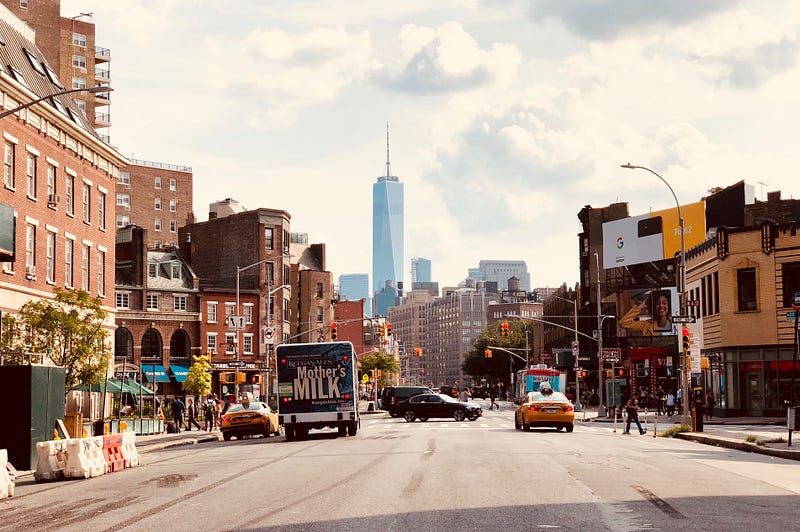
The median monthly rent in Manhattan is now $4,033. New York has always been expensive, but the 19% year-over-year increase is extortionate even by the City’s hallmark Usurian standards. It’s not much better in the outer boroughs: Brooklyn hasn’t been affordable in 15 years. Queens boasts the country’s third-highest raw-dollar year-over-year rent hikes. (Austin and Miami, take your bows.) Rent is up just about everywhere — often by record percentages, even on Staten Island.
Of course, continued drum-banging to the tune of “The Rent is Too Damn High” is the siren song of every personal finance guru and realtor within a 12-state radius. And you already know what they’re about to say:
“Why are you still renting? You’re just paying someone else’s mortgage. You could be paying yours! You could be building equity.”
No shit.
Dreams vs. Reality
It is nobody’s dream to raise two kids while paying rent on an Upper East Side walkup. It is nobody’s dream to go their life without ever owning a plot of land or four walls of their own.
Yet that’s just what’s happening nowadays. Although 62% of all households are owner-occupied, that figure’s warped by the volumes of older adults who bought decades ago. 65% of all renters are under the age of 40, and 45% of all adults can’t afford a home in the city they live in. Still, one-in-10 Americans own more than one piece of property.
Those figures may not raise eyebrows, but only because you’re not squinting hard enough. The share of 18- to 29-year-olds living with a parent or two became a majority in 2020 and has stayed that way. There are way more adults than households in the United States, and just 62% of all households are owner-occupied.
We haven’t built nearly enough homes to make them plentiful or affordable, and while we often blame private equity and corporate home ownership (along with short-term rentals in desirable metros) and passionate NIMBYs who never met an affordable housing supply-side policy, they didn’t vociferously shoot out of the sky, there’s also been a long-simmering labor and resource shortage in residential construction exacerbated by pivots towards lean manufacturing and just-in-time inventory management. Even if we wanted to build more homes — and we clearly don’t — we couldn’t. This is a perfect storm that’s been decades in the making.
Nearly half of all adults can’t afford a home, and those who could’ve in the past are increasingly priced out — Millennials are buying their first homes much later in life than previous generations — trapping sprawling swaths of adults in apartments or rental homes.
If You’re Not Well-Off Now, You Probably Won’t Be
Personal finance gurus and realtors often chalk up people’s doom-renting to a lack of fortitude, discipline, or home-buying know-how. By now, avocado toast and morning lattes are snickering shorthand for millennial financial mismanagement.
The shaming and moral superiority couched within frugality proselytizing run rampant. Dave Ramsey, Suze Orman, and Robert Kiyosaki built entire empires (empires that lined their own pockets quite handsomely, I might add) on berating young adults into getting their shit together, with their definition of “shit together” defined as merciless checkbook balancing. Discretionary income? Pffft … if you don’t have any, you haven’t earned it yet. Start a business. Buy assets. Pay down high-interest debt. Make your money make money.
They’re all missing the forest for the trees. In 2022, the median down payment on a house costs $49,056. In the era of six-figure college debt and wage stagnation, who’s got that kind of cash lying around? Certainly not the average American, who has just $5,300 in savings. [That’s to say nothing of the income and savings imbalances between racial groups, which is substantial but not nearly as eye-popping as wealth discrepancies overall.]
The answer, unsurprisingly, is people who snagged desirable, lucrative jobs early in their careers — the greatest predictor of your future income is your current income — or come from well-off families. The open secret among most young adults who own their homes is that they had help. Whether that was a family member paying their college tuition or pitching in on rent to help them save, an inheritance, or a quiet series of transfers so as not to tip off the IRS, young adults who own their homes often didn’t save a cool $50K in the first decade of their careers. At a 2011–2020 median income of $31,000, that means you saved 20% of your take-home pay over the past ten years. Did you? [Spoiler: Of course, you didn’t.]
The shortcut, of course, is to get a great-paying job. The problem, of course, is that the hiring practice is almost irrevocably broken. Too many applicant tracking systems exclude too many qualified candidates, and the lack of faith in the recruiting process leads hiring managers to work off referrals. Nowadays, your biggest leg up on the competition is the brand recognition of the company that just laid you off. If you only got axed by a midsized software distributor, you’re going to need to take your place in the queue behind those cats who just got railroaded by Facebook, Amazon, Twitter, and Salesforce. TL;DR — If you don’t currently have a great job, odds are you’re probably not going to get one.
For laypeople, financial advice websites often gear their recommendations for ponying up a downpayment towards people who are either already rich or indefatigable cyborgs with unlimited free time or energy reserves.
You could downsize to a studio from a one-bedroom, saving yourself an average of $7,000 per year — leaving you ten years closer (adjusted for inflation rates) to homeownership if you’re starting from scratch. You could burn yourself out by working nights or weekends.
You could also sell off stock. Novel! (I love when people suggest this. Anyone with a pulse knows if you’ve got a home downpayment’s worth of stock to sell off, you’re already a homeowner. Significantly fewer people own stock than a house.)
If you’re in your 30s and not well-off by now, I hate to break to you, but you probably also won’t be in a decade, short of a career change or some other windfall. [Candidly, 20% of you are waiting on your parents to die, and the largest intergenerational wealth transfer by several orders of magnitude happens.] Especially if inflation keeps outpacing asset appreciation. Inflation is already running circles around wage growth and has been on balance for almost half a century.
A Personal Story About Personal Finance
I graduated college with $32K in student debt. (Thanks, northeast Division-I private school!) At age 23, I made $24,000. By age 26, I was up to $37,000. By age 29, I was up to $40,000. I had only saved $17,000 by then, and that was all 401K, and I spent half of it when I went eight months without a job in 2012. At age 31, I made $55,000. I doubled that by age 36, but by then, the die was already cast.
See, when you go your first decade after graduating college scrapping and saving and just trying to get by, you tend to do two things:
- Have a garbage credit score. You can never really improve
- As Jay-Z put it, “Celebrate the minute you was havin’ dough.”
My credit score is much better than it used to be (low-400s, baby!), but it’s still only 593. I can barely get a prepaid credit card.
But when I was cash-flush — and I cannot stress this enough, I was flat broke until I was 32 — I did the things I couldn’t do for years. I traveled. I moved to a nicer place in a better city with more opportunities. I bought a car that wasn’t falling apart. I bought a nice guitar and did the singer-songwriter thing. I ran some marathons. I went to concerts and basketball games and shit. Mostly, I went to fucking therapy and paid out of pocket for it. When you go so long without comforts, you’ll splurge extra on the comforts you did without. After all, you earned them.
Along the way, I socked away $58K in my 401K, but by the time I had enough to buy a home, I realized I’d rather use that surplus to leave the country. Then came a pandemic and another lean wealth-generating period. Then I put up four months of rent for a security deposit on a house. Now I have much less (even if I made more in 2021 than I did before), and I would rather use what’s left to buy an engagement ring. I’m quite comfortable with the fortunate ones, but let me be clear, unless my writing really, really takes off, or until I go full SVU and whack one of my parents for one-sixth of the value of their modest suburban home plus whatever pension they’ve got lying around (minus taxes and administrative fees) there is absolutely no home on my horizon. I’m a forever renter, just like the rest of y’all.
Personal Finance Is Not So Personal
None of this is rocket surgery. Savings and homeownership aren’t dwindling because Americans have forgotten how to be good with their money. Every idiot knows to spend less than you make, just like we know to eat healthier and exercise more. [Yet, here the fuck we are, with a massive health crisis on our hands, but that’s a separate post.]
Young adults can’t get ahead and buy homes because there aren’t any homes for them to afford or even buy. Because it’s getting more expensive to live, because most good paying jobs get filled through referral or by prestige university grads, because real wages aren’t keeping up with inflation, because wealth stratification is only getting more pronounced, and because we aren’t building enough homes within reach for the mythical average American, one who:
- makes $31K
- accumulates zero interest-bearing debt
- can save $49K on their own over the course of a decade
Back-of-the-envelope math tells me that’s one cheese wire-thin line to walk. (Hey, if you’ve done it, lemme know if you’ve run that gauntlet before and how you did it.)
Until we start building more homes — and the ramp-up to that would be a herculean lift even if the NIMBYs would put a sock in it over property values — or employers started paying market rates (what market are you shopping at?) and diversifying their applicant pools, or cities institute some kind of utopian rent cap, or we get even a cursory handle on inflation, homeownership is going to continue to decline. People just can’t afford things, especially houses, and not through any real fault of their own.
You can’t shame these folks for decisions they’ve made when they really haven’t had any other options. Let them eat avocado toast!
Till then, the rent remains too damn high. But I guess it could be worse.
We could be paying too much to live on Staten Island.
Help pay my rent! Be kind and leave a tip. Or, I’m selling Brand Platform Presentation Templates complete with expert slide-by-slide advice to help freelance branding professionals charge higher rates, wow their clients, and deliver consistently high-quality results. I won a Cannes Lion using this exact formula. Could you? I sure hope so!
Ahem. Want more? Follow me on Instagram or LinkedIn, or you can even become a Medium member.