

We Found An Exoplanet With A Key Ingredient For Advanced Aliens
LHS 3844b is an exoplanet like no other, except Earth.
We have been searching for exoplanets for some time now and found tonnes of them! From gas giants many times larger than Jupiter that boil away as they orbit closer than Mercury, to tiny worlds no bigger than our Moon. We have even discovered a super-Earth with an atmosphere of hydrogen and helium. But, we are yet to find one that has the ingredients for alien life. But, we recently found a world with a crucial element for advanced aliens, and it isn’t what you think it is.
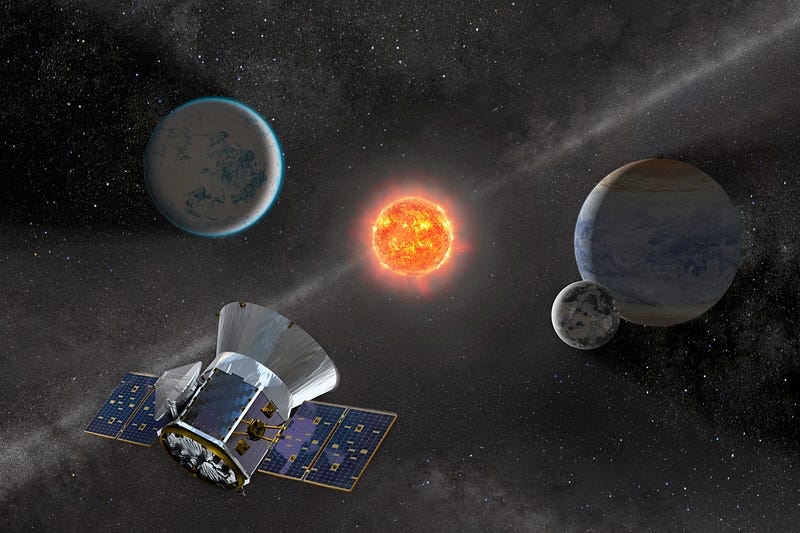
The exoplanet was discovered by TESS (Transiting Exoplanet Survey Satelite). The satellite looks for dips in luminance as exoplanets transit across distant stars, from this data, we can infer tiny rocky exoplanets and even deduce some fantastic facts about them. In September 2018, TESS observed such a dip from the Red Dwarf Star known as LHS 3844. They named this new exoplanet LHS 3844b! Never trust a scientist or engineer to come up with good names…
But this exoplanet is far weirder than any in our own Solar System. It has a low albedo (reflection), which suggests the surface resembles that of the Moon but has a mass 2.25 times that of Earth. It also orbits really close to its dim host star, about 0.006 times the distance of Earths’ orbit, meaning its year is less than half a day long. So on LHS 3844b, I would be over 18,250 years old!
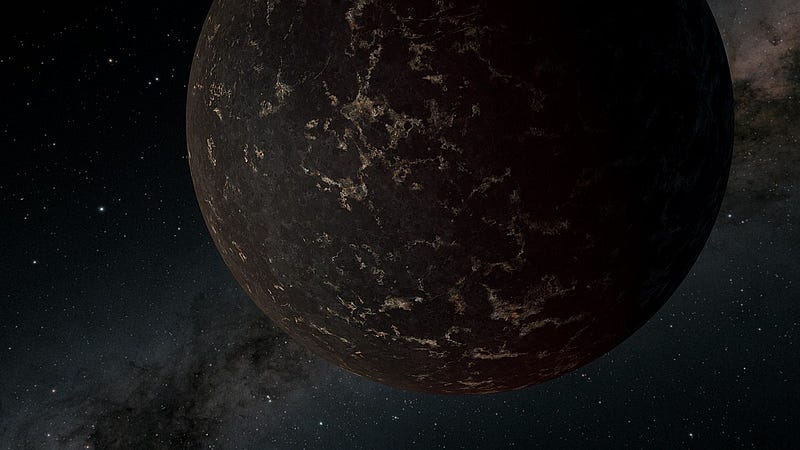

A bunch of scientists from the American Astronomical Society decided to run some simulations of this peculiar exoplanet to determine what it would be like. These highly accurate simulations give us an excellent idea of what happens in these alien systems and even some details about the exoplanets. After all, we have nothing similar to go off, a super-Earth orbiting a very dim star 166 times closer than Earth… It’s just plain bizarre!
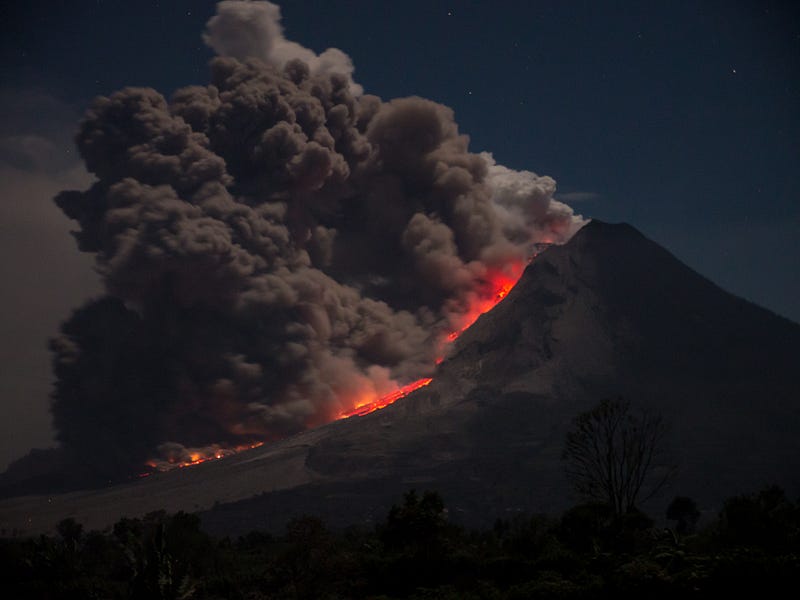
These simulations showed that even with a wide range of variables, the exoplanet is likely to have active tectonics and volcanoes. To us Earthlings, this seems fairly typical. We enjoy our mountain ranges, deep-sea trenches and spectacular volcanoes without realising that these seem to be a unique feature of our little world. But, we also forget that these features likely had a hand in starting life, and then pushed us to form multicellular organisms that move and think.
Currently, our best theory for the start of life involves organic chemistry around slow-flowing, hydrogen-rich hydrothermal vents. These environments have everything that life needs; the building blocks of proteins and enzymes floating in warm water, along with plenty of chemical energy. There is still some argument as to what came first, replication (RNA/DNA) or metabolism (energy use) or both simultaneously, but scientists are now in agreement that these vents were likely the start of life on Earth!
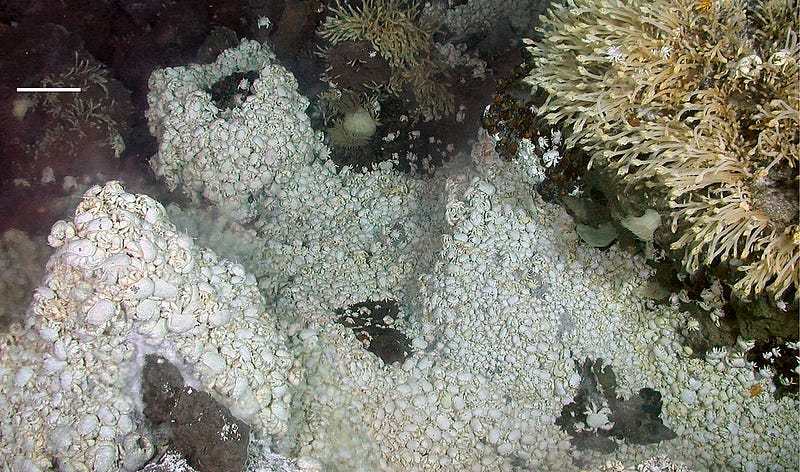

In this view, life is a complicated extension of geology, and to get genuinely complex geology, you need tectonics.
Amazingly we know of one other world with hydrothermal vents, Enceladus, a small moon of Saturn. Deep under its icy crust is a global sub-surface ocean with a rocky ocean floor. The squeezing effect of Saturn’s gravity and its other moons, heats this rocky core, powering a range of hydrothermal vents on the moon's south pole. This moon is our best chance of finding alien life in our Solar System, but not complex life, probably only single-cellular bacteria-like organisms.
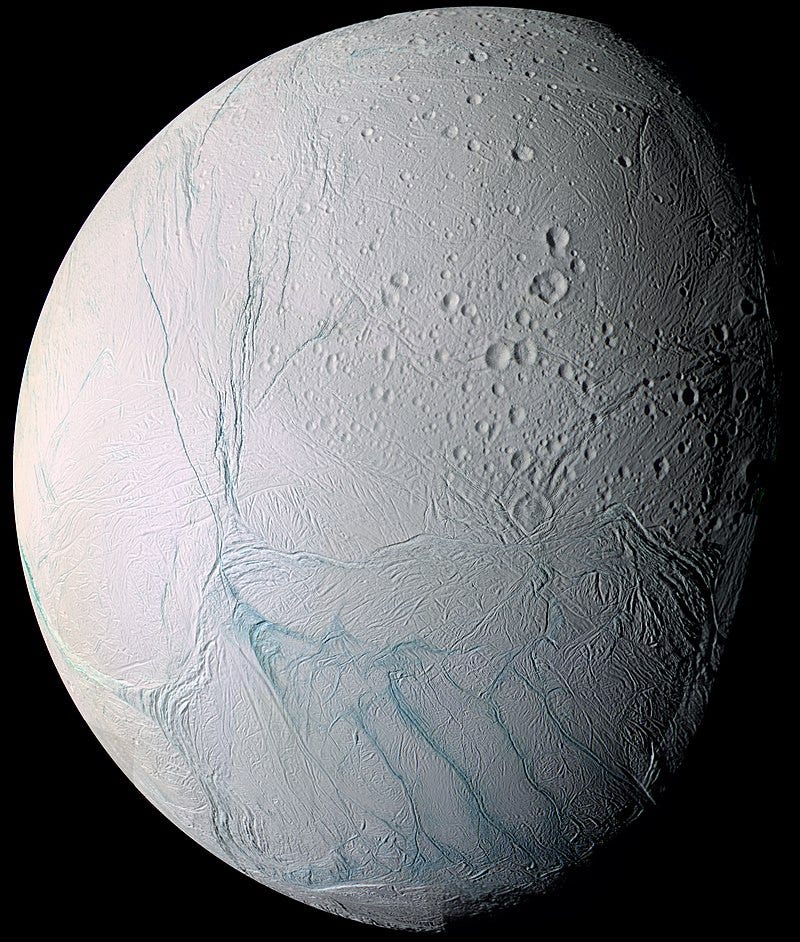

This is because Enceladus has hydrothermal vents, but it probably doesn’t have true tectonics like we do on Earth, with a mantle and tectonic plates. You wouldn’t guess it, but trenches, volcanoes, mountains and continental drift are crucial to life going from goop like mats, to insects, fish, birds, lizards and even a type of hairless ape that like to ponder at those bright things in the night sky.
Way back in the Ediacaran Period (635 Million years ago), life was starting to get more complex, but not by much. The atmosphere had been fully oxygenated by billions of years of photosynthetic creatures and the seas were warm and full of simple multicellular creatures like charnia. These 2 m long animals looked like massive leaves but were actually simple filter-feeding animals. There were little to no predators, and the pace of life was slow and simple.
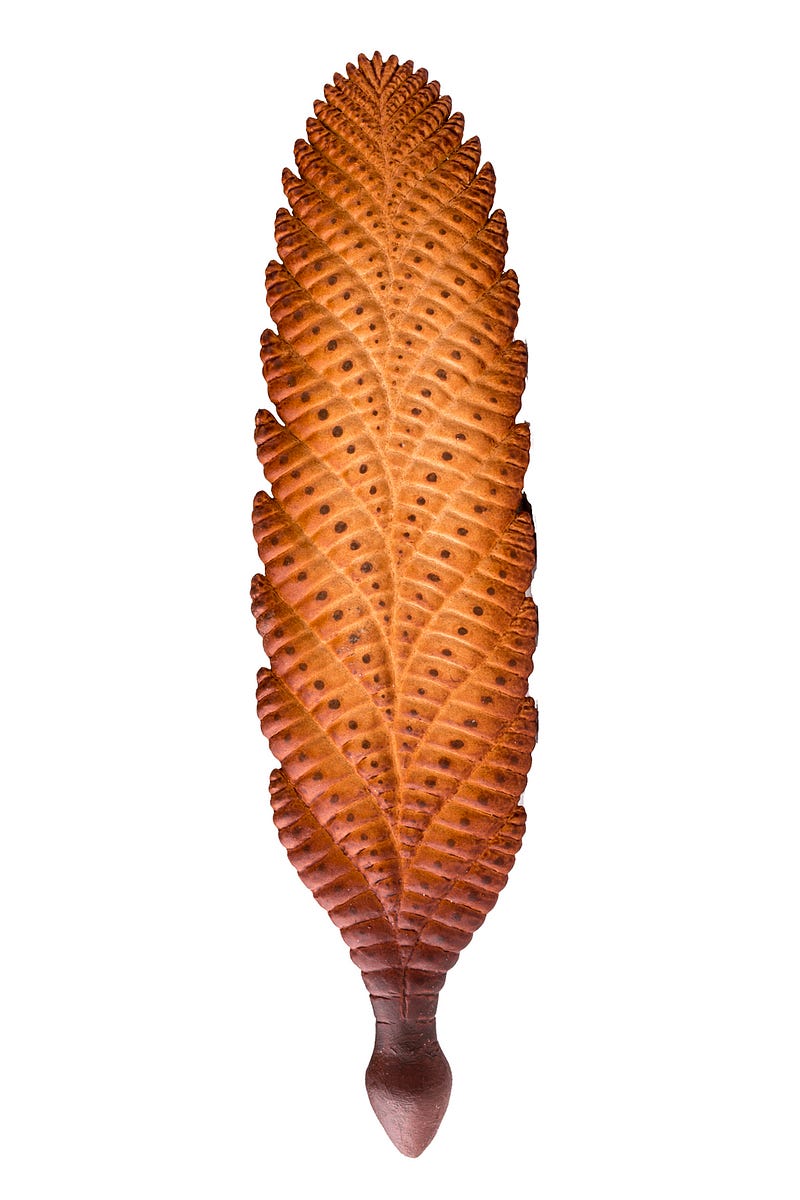

But this was because the oceans were nutrient-poor compared to today's seas.
Just before the fantastic boom of life that was the Cambrian Explosion, the Earth’s tectonics kicked into gear, creating mountain ranges and volcanoes, which also broke up land masses as the tectonic plates moved. Something that the Earth hasn't seen much of for a few billion years. As the mountains eroded away they washed nutrients and metals into the ocean, boosted periodically by massive volcanoes, dumping their nutrient-rich lava into the seas.
This abundance of essential elements meant that organisms could afford to build solid structures within and around their bodies, giving them a framework to move faster and more accurately. The increase in nutrition also allowed them to make fast movements and use plenty of energy in the search for food, as the food was now concentrated enough for it to be worth their while. All this excitable movement lead to huge ecological expansion and evolution which lead to the first eyes, limbs, brains, mouths, jaws, predators, terrestrial animals and eventually the invention of a good cup of tea.
To cut to the chase, if we are to find advanced aliens, then we need to search for exoplanets with tectonics. Otherwise, we will never find our equal amongst the stars, because to have intelligent life, it appears you need an evolutionary arms race set off by a geologically active planet. That is why LHS 3844b is so important as it is the first exoplanet we have ever found that appears to have tectonics.
So can LHS 3844b harbour an advanced alien civilisations or ecosystem similar to our own? Sadly not. Three things make this world a literal hell, these are heat, tidal locking and a lack of atmosphere. All of which are caused by how close the exoplanet is to its star.
As the star is a Red Dwarf, it shines much less than our Sun, so exoplanets could get much closer without being burnt to a crisp. But at 0.006 AU, the heat, solar winds and gravity of the little star are overwhelming! The exoplanet is tidally locked, so only one side of the world gets any light, forever baking in the heat and likely has temperatures of 770⁰C. While the dark side is freezing in -250⁰C. The exoplanet probably has a magnetic field that reduces the impact of solar winds, it is still scorched by these high-energy particles, stripping away any vestige of atmosphere it has left. Speaking of the atmosphere, if it has one, it is a thin sliver at a low pressure 10% that of Earth’s.
But to add insult to injury, the planet may have never had an atmosphere to begin with. The simulations suggest that it either formed very close to its star, far away from where gases and volatiles orbit or there is a gas giant exoplanet further out that robbed the gases away before the rocky planet formed. All of these factors mean that LHS 3844 is 100% a dead planet.
But that doesn’t stop it from being amazing! The simulations show that the tidal locking encourages convection currents in the exoplanets mantle, heating one side and cooling another. This suggests that the daylight side of the planet is covered in volcanoes and new tectonic plates forming. Meanwhile, the dark side of the exoplanet has little volcanoes but subducting plates with constant quakes and tremors as the crust sinks back into the mantle.


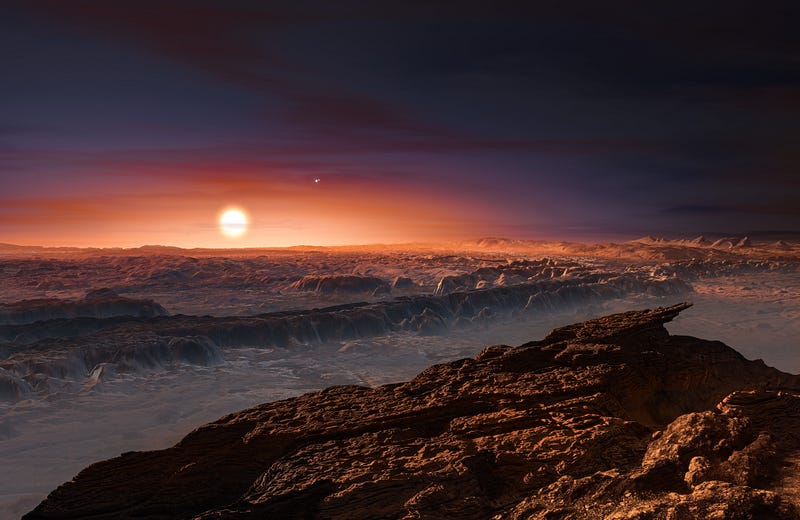
Not only does this mean that this world would look amazing! But it also shows that other similar worlds could have a similar mechanism for tectonics. Proxima Centauri b, the closest exoplanet to us, also orbits a Red Dwarf and is tidally locked. But unlike LHS 3844b, Proxima b orbits further out, it likely has an atmosphere and has a ‘ring’ of habitability in between its night and day sides. It is possible that a similar type of tectonics exists on Proxima b, meaning life could start and develop on our neighbouring star! As Proxima b is only 4.2 light-years away from us, we may one day land on the exoplanet and discover whether it has complex life in a few hundred years.
So, next time you see a mountain or hear of a distant volcano, be thankful because those giants of nature are part of the reason you are here. But also wonder at the possibility of alien worlds with their own tectonics and possible complex wonderful life.