
We Can’t Escape Covid, So What Should We Do?
Two of my friends came down with Covid while I was in Europe. Are we all doomed to catch it?
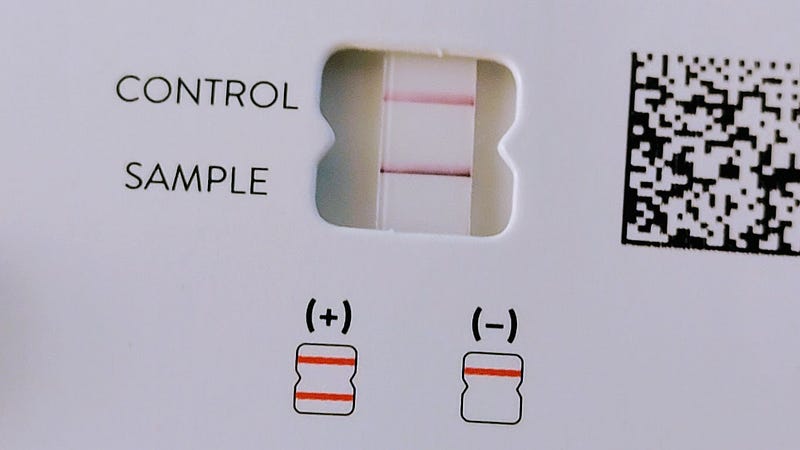
On my recent trip to Europe, the friends I was traveling with came down with Covid.
It happened about five days into the trip. We had been to the Passion Play in Germany, traveled to Salzburg, and were touring Austria.
James (not his real name) got sick first. Four Covid-19 vaccines that included two booster shots meant he was the most vaccinated among us.
But he still got sick.
He seemed fine at dinner. He didn’t cough or sneeze, but the next morning, we got this message: “I tested positive for Covid.”
He settled in for a five-day quarantine, which meant he couldn’t leave his cabin, even to sit on the sun deck, and those ship cabins are small. At least his wife was given a separate cabin, but two days later she got sick, too.
She had gotten two shots and one booster. The only reason she didn’t opt for a second booster was because she wanted to wait until vaccines were more effective against the Omicron variant, and she had heard those vaccines were coming out in the fall.
The ship medics didn’t prescribe any medications, but another couple we were traveling with shared their antibiotics. Our friends believe antibiotics kept the virus from going deeper into their lungs, since James had developed a deep chest cough.
By Day Five, after feeling rotten for a couple of days, they turned a corner and felt better. They had already planned to spend an additional two weeks in Europe, so I’m hoping they recovered enough to enjoy the rest of their vacation.
Is Everybody Doomed to Get Covid?
When I got home, I got a message from my aunt. “My friend who attended the Passion Play came down with Covid, so I wanted to make sure you’re okay.”
I assured her I was fine.
Maybe my husband and I didn’t get sick because we had Covid in April, although I’ve heard you can catch it again four weeks later.
Back in April when my husband tested positive, he called his doctor for meds and ended up with prescriptions for steroids, an inhaler and some antibiotics. He recovered in four days.
I don’t know why his doctor didn’t prescribe Paxlovid.
I didn’t call my doctor or take any medicine, and it took me a week to recover but two weeks to feel 100%.
When we returned from Europe, my brother called to say his daughter, who had been to Spain, came home with Covid. She works in the health field, so she was fully vaccinated. She recovered in a few days and was soon back at work.
When my brother and his wife traveled to Charleston, he got Covid despite being vaccinated, and they were forced to cut their trip short.
Is this virus going to be a regular part of travel until we have all contracted Covid enough times to build some immunity? Or will an annual Covid vaccine target whichever variant seems to be the dominant one, changing every year like the flu vaccine?
Few people on the planes were wearing masks. Few people any place in Europe were wearing masks. But when my husband and I travel again in September, I might wear one.
According to Dr. Brandon Brown, M.D., an associate professor in the University of California Riverside School of Medicine, it’s “absolutely safer to wear a mask, regardless of whether those around you are not wearing one.”
And according to an NBC news report, The type and quality of the mask matters. A CDC study found that people who consistently wear a high-quality mask in an indoor public setting appear to have the best chance of avoiding Covid.
Yet some people adamantly deny that masks help prevent Covid.
Should we Continue to Travel?
There are several things to consider before traveling.
One is that there are probably many more cases of Covid than are being reported. With at-home tests available and few therapeutics being prescribed, there is no real incentive to notify the CDC.
The idea of herd immunity that was touted early in the pandemic seems to be a thing of the past.
Public health reporter Jonathan Lambert writes, “The rise of BA.5 — the latest in a succession of omicron variants — exemplifies the need to let go of herd immunity. Despite the vast majority of the United States’ population having some form of immunity, the virus rages on, exploiting waning immunity while also evolving around it.”
A new vaccine called Novavax is coming out in the fall. It’s a protein-based Covid vaccine that relies more on traditional technology than the newer mRNA vaccines developed by Pfizer and Moderna. But from what I’ve read, it will only be available to the unvaccinated, and Novavax boosters haven’t been approved yet.
Does a high incidence of Covid, lack of herd immunity, and few vaccines that target newer variants mean we shouldn’t travel?
I’m convinced this has to be an individual decision based on a person’s comfort levels and risk averseness.
This is what I’ve concluded.
I will continue to travel and live my life as normally as possible because as a person over 65, I have seen friends die of cancer, Alzheimer’s, and other diseases. This has brought home to me the unavoidable truth that we are all going to exit this life one way or another, and it isn’t usually smooth sailing.
I don’t believe this virus is going away any time soon, but my friends and relatives who contracted it recently have recovered without lasting repercussions. This is a sharp contrast to the previous two years when so many people died.
I will do my best to stay healthy and continue to live my life as joyfully and fully as possible, which means traveling. But if living fully and joyfully for someone else means staying home, that’s also a good choice.
How can we judge another person’s choices when even people who are careful and have socially distanced for two years have contracted Covid?
There appears to be no right or wrong answer to the question, What should we do if we can’t escape Covid?
I don’t think we can escape it, nor can we live in fear and isolation. That’s not how people thrive. So my choice is to move on, try to stay healthy, and feel grateful that current variants seem to be less severe than earlier ones.
Covid smacked us from our complacency and brought us face to face with the limits of modern medicine. We have to decide for ourselves how to proceed from there.


