
We Become What We Believe Ourselves to Be
What we accept about ourselves based on what we receive from our environment shapes the person we become.
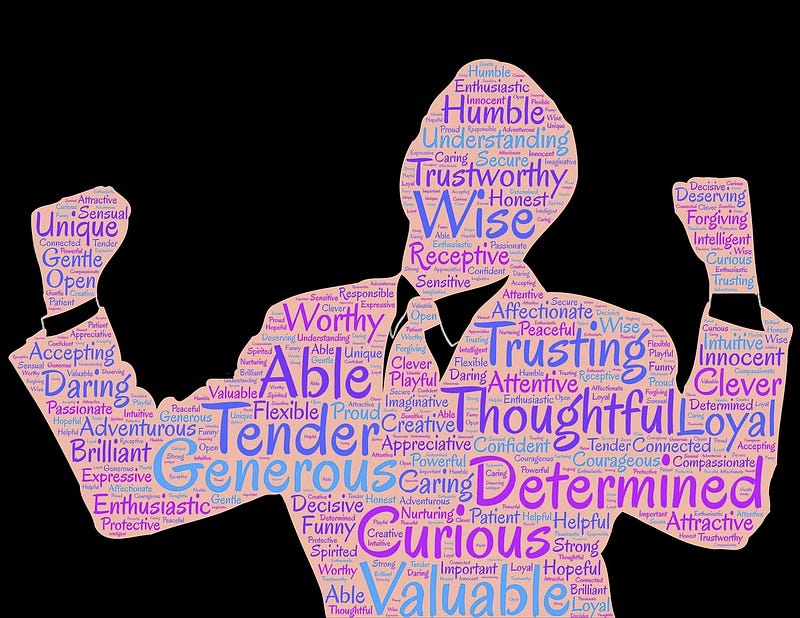
Feeling a little down in the dumps this morning, I was looking online trying to find something positive and inspirational or alternately, something that would help me reframe my thoughts. I’ve been going through a period of time during which a life time of negative messages that I had managed to push out of my mind, have come back en masse. This has resulted in me doubting myself in a lot of ways and I have found myself wondering if all of these negative things about me are true.
Now, I know they are not, and I know who I am, but I think when we start to internalize messages from others, it strongly influences how we think about ourselves. Eventually, they may come to overwhelm us as we let them take over, and believe in their veracity. This was the point I was at this morning.
Then I came across a quote attributed to Gandhi.
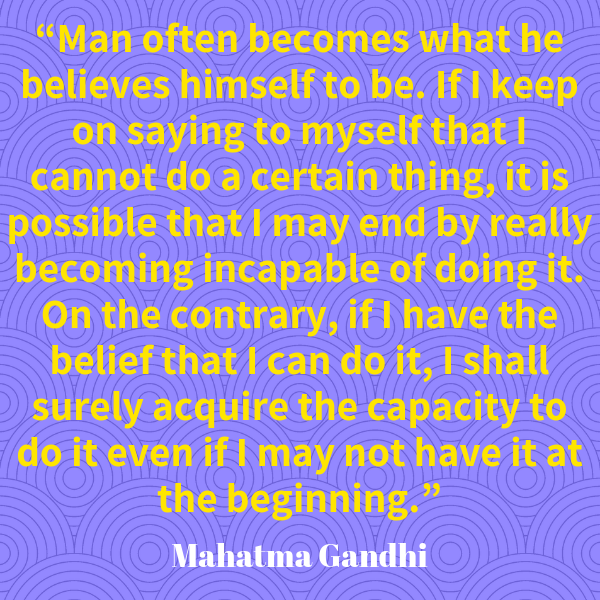
This quote hit me so powerfully.. It speaks to the idea of self fulfilling prophecies. When we go through failure situations, or are told repeatedly we are a failure, it is not unusual to become discouraged and wonder what we did to cause the problem. One of the most common memories I have of things going wrong involved me constantly being asked, “Well, what did you do to make that happen.” Though I knew I had done nothing in most cases, over time I came to believe many things were in fact my fault.
But this type of internal attribution for negative events can become a problem over time. Not only to we see ourselves negatively but we also may come to believe that we are unable to affect change in our lives. In some cases, this can lead to us no longer being willing to make a response at all because we are already certain that it won’t be successful.
Sometimes referred to as learned helplessness, this refusal to act is based on the assumption that whatever we do will result in failure. This occurs even when there is evidence that we will in fact succeed.
An example of this is an experiment that was conducted with dogs who were kept in an enclosed area. The area was cut in half with a partition that they could easily jumped over. The floor of their side of the enclosure was then electrified but they were able to escape it by jumping over the partition.
Then the same thing was done but this time they were prevented from jumping over and so couldn’t escape the shock. After several repetitions, the partition was once more lowered showing the dogs they could jump over it again. However, now when they were shocked, even though they could clearly see they could escape it, and had done it several times before, the dogs refused to try, remaining in the half of the enclosure where they were being shocked.
We will do the exact same thing. The key is to recognize that there is always some kind of different option to try. While we all have failures in life, this is usually limited to a particular situation and it doesn’t mean we aren’t good at anything. If a relationship comes to an end that doesn’t mean we are incapable of having relationships.
We all have strengths and weaknesses. Sometimes we can use our strengths to shore up our weaknesses. Sometimes we just need to accept that there are certain things we may not be good at and focus on those things that we are. Reminding ourselves that situations are transient can help us maintain our sense of self confidence. Continuing to try new coping strategies based on our strengths and resources can help us keep a positive mindset.
Surrounding ourselves with competent, positive people can also help, as they can serve as models for different behavior, we can turn to them for advice and suggestions. We can also, in turn, provide suggestions for them, strengthening our sense of self worth. Avoiding people who give us negative messages, to the extent it can be done, is another way we can help ourselves.
These things are incredibly important, because it has long been realized that the beliefs we hold about ourselves, strongly influence the person we become. Once we have internalized a series of these messages and come to believe them, it can be very difficult to reverse. Keeping ourselves in positive environments that are filled with light, love and hope will encourage us to challenge negative self-beliefs.
We will then be able to accept more positive beliefs about who we are and what we are capable of which will help us become a more positive, hope filled person. This in turn, will enable us to become a positive and supportive influence on others and to change our lives into what we truly want them to be.
Natalie C. Frank, has a Ph.D. in Clinical Psychology. She specializes in Pediatric Psychology and Behavioral Health.

If you enjoyed reading this article, you might like these as well:
You can find links to my other work on Medium and follow me here. Thanks for reading!