Summary
The article suggests that the media and the state are intertwined, forming a system that perpetuates misinformation and societal issues, and ultimately posits that the public's consumption habits are the root of these problems.
Abstract
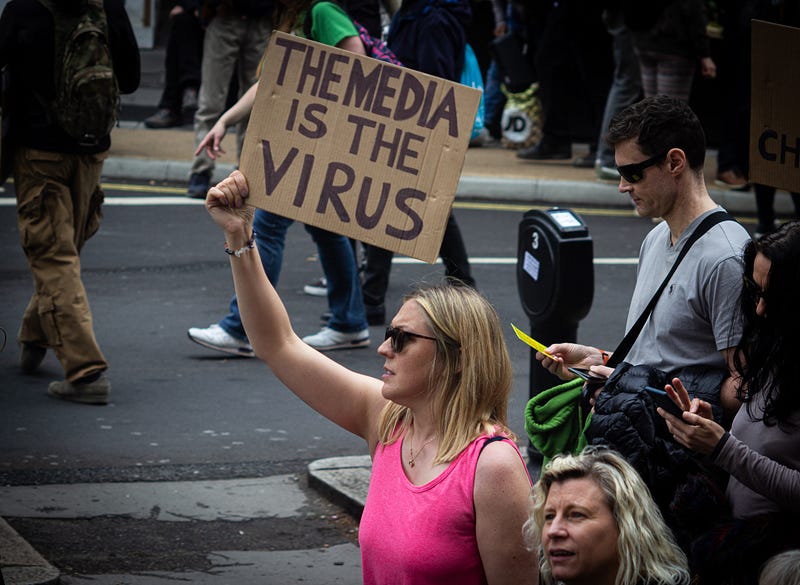
The author of the article expresses a critical view of the relationship between the media and the state, asserting that they function as a single entity. This perspective is encapsulated in the statement "Media = State," which implies that the state's influence is inseparable from media coverage. The author agrees with the sentiment that "the media is the virus," a phrase used by those dissatisfied with media coverage of the pandemic. Furthermore, the author extends this critique to the state, suggesting that both institutions contribute to the dissemination of misinformation and are detrimental to society, much like a virus. The article also references philosopher Joseph de Maistre and media mogul Rupert Murdoch to support the idea that the public is complicit in this cycle, as it is the audience's choices that drive the demand for sensationalist news. The author concludes by emphasizing personal responsibility, suggesting that societal change begins with individual actions. A related article titled "Two — Deck Reality" is linked, which presumably delves into how media constructs narratives of extremes.
Opinions
- The author believes that the media and the state are part of the same system and cannot exist independently of each other.
- There is an agreement with the notion that both the media and the state are responsible for the spread of misinformation, likening them to a virus.
- The author suggests that the public is also culpable for the current state of affairs, as consumer choices fuel the production of "junk news."
- Personal responsibility is highlighted, with the assertion that societal issues, including the quality of media and governance, start with individual consumption habits.
- The author hints at a deeper analysis of media influence in shaping public perception in the linked article "Two — Deck Reality."