
We Are The Bearded Women
The science behind and normalization of female facial hair
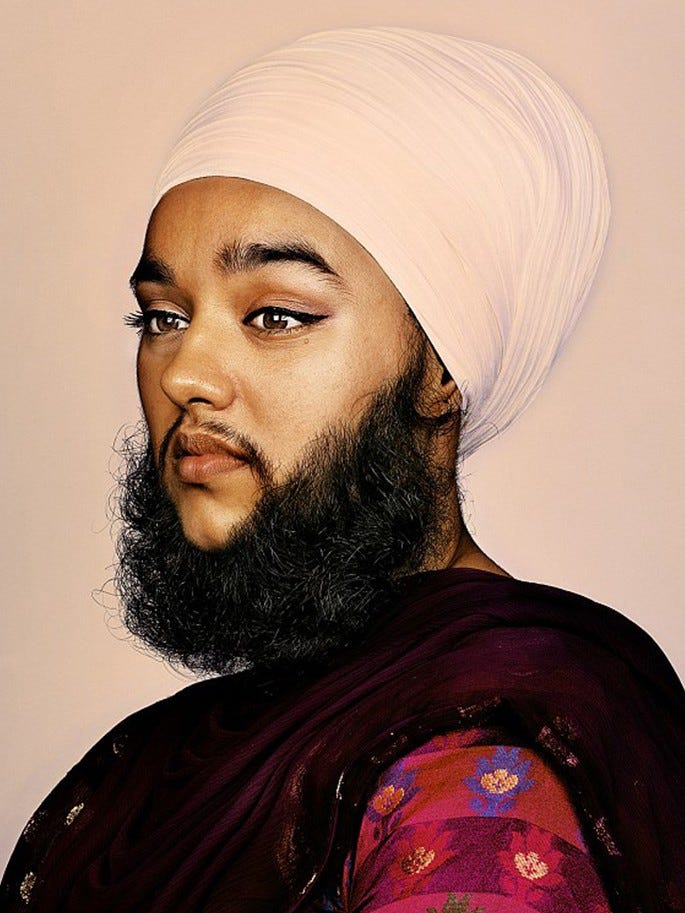
Hirsutism: the excessive growth of facial or body hair on women. This condition has been popularized in 19th-century circus acts of “the bearded women.” Due to this caricature and society’s general beauty standards, many women who present with this condition feel outcasted and uncomfortable with their bodies. We will delve into what causes the condition.
Prevalence of Hirsutism
According to Dr. Melissa Hunter and Dr. Peter Carek at the Medical University of South California, Hirsutism affects up to 8% of women.
Let’s run the calculation for how many people that might be. According to Statistics Times, there were 3.905 billion women in 2019. If we take 8% of that, there were
312400000, or three hundred twelve million, four hundred thousand women with hirsutism. Wow.
With this figure, we can appreciate how many women are affected and perhaps allow us to think of this condition as something that is not “weird” or “freakish,” but a normal part of life for many people.
The Causes of Hirsutism
Now, let’s get into how hirsutism develops. It results from medication side effects as well as:
- Polycystic ovary syndrome
- Late-onset adrenal hyperplasia
- Cushing’s syndrome
In this article and for clarity, we will only cover the condition of Polycystic ovary syndrome. I would recommend; however, if you are interested in a more thorough conversation on the topic, check out this link.
Polycystic ovary syndrome (PCOS) is the most common cause of hirsutism. PCOS is when a female’s body produces an excessive amount of androgens, a steroid hormone typically associated with males. Take note — androgens and estrogens are present in both male and female bodies. It is not a matter of androgen=male and estrogen= female. The excess of androgens causes cysts to develop in the ovaries. In addition to the hirsutism and cysts, acne, a lack of ovulation, and irregular menstrual cycles may be present.
Females with PCOS tend to also struggle with being overweight. It is known that when overweight or obese, women tend to overproduce androgens. Additionally, elevated insulin levels associated with being overweight or consuming an elevated amount of sugars can lead to higher levels of free testosterone, a type of androgen. These factors and others can combine with PCOS, further promoting hirsutism.
How Androgens Affect Hair Follicles
There are two types of hair follicles: vellus and terminal hair. Vellus hair is what we might find on the majority of the body. It is very fine and short. Terminal hair is contrasting; it is dark, coarse, and long.
When the vellus hair follicle is exposed to androgen, it might be converted to terminal hair. This is especially the case if the hair is hormone-sensitive. In people with PCOS, elevated androgen levels can lead to a higher rate of this conversion. Particularly sensitive areas are the upper lip, lower back, beard area, etc.
Treatments and Acceptance
For some females, their hirsutism is something they are ashamed of or just simply wish to be gone. To treat this, doctors can recommend birth control pills, androgen receptor blockers, prednisone, glucocorticosteroids, etc. On the cosmetic level, a person might shave or laser their hair off for a more permanent treatment.
One particular person of note is Harnaam Kaur, who is described on her website as a “body positivity warrior, motivational speaker, model, world record holder, and activist.” She held the Guinness World Record in 2017 for the youngest female with a full beard at 24 and shares her story to inspire others. I put her image as the cover photo for this article as it felt appropriate.
I argue that we need to advocate for more acceptance of this condition. Body hair is not dangerous or dirty, it is a natural byproduct of living. Body hair does not make one more or less feminine, it just is.
Written by,
Ivy
Enjoyed this article? Feel free to check out my others on my page here.
If you have any questions or wish to respond to the article, please feel free to do so! Please just ensure that the discussion is respectful.


