
We are Risking Acceptance that Doctors Being Replaced by AI is not that Far Off in the Future
If we have been trained to be comfortable with Zoom and Phone Medical Visits, then a Medical Chatbot can’t be far away.
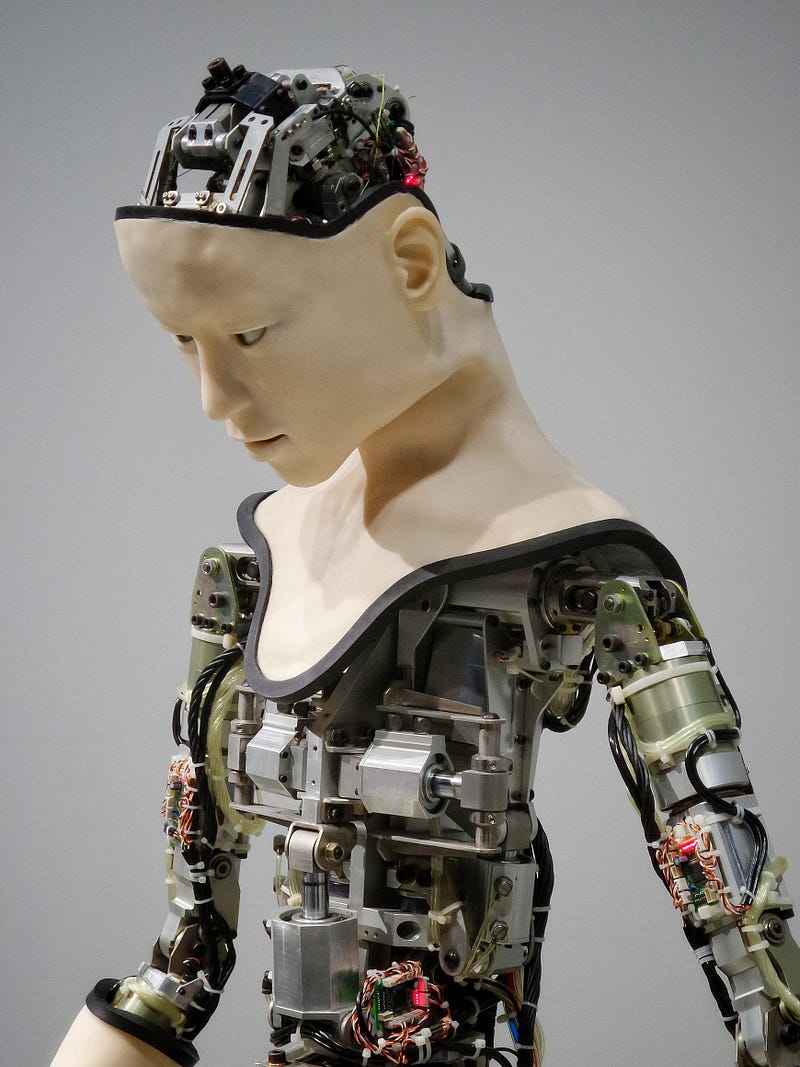
I love science fiction. I, Robot, was one of my favorite films. The BBC series, Humans, explored the world of artificial intelligence and robotics interacting in the home. And HBO’s Westworld was focused on the intersection of entertainment and humanoids. As a doctor, I never believed AI and robots could replace us. Now I am not so certain.
The pandemic has made all of us less uncomfortable with machines. Many doctors still utilize phones and video as optional to traditional in-person office visits. The pandemic finally forced insurers to reimburse doctors for these, which was forbidden in my years of practice.
The ratio of doctors to patients in the US has increased over the past decade but is predicted to decrease by 2030. However, physicians' administrative tasks have also increased, giving them less time for direct patient contact. Much of that doctor-to-patient time is now spent with the doctor looking at a screen, not the patient. And sadly, the industrialization of medicine has forced doctors to spend less time with patients.
Thus, the use of “physician extenders” (PAs and ARNPs) has grown significantly. As patients, we have all grown used to seeing someone who is not a “doctor” for our care. How far a leap is it then to see a Chatbot or robot for your office visits? I have no data to support this, and no one knows, but I predict as soon as five and no later than ten years from now.
All of us now consult “Dr. Google” before interacting with a healthcare professional in person. We then arrive at our web-based diagnoses and prejudices about treatment options.
Doctors who do not operate or perform procedures, like general practitioners, internists and some radiologists and dermatologists, will be the first to be impacted by AI. “Robotic” surgery drew skepticism at first but, in truth, has been around for more than fifty years. It still requires a surgeon to manipulate and control the robotic “arms” doing the surgery. But how long will it be before a robot takes over this task?
I hope I don’t live to see the day when my visit to the doctor, ER, or Walk-in clinic is with an artificial “human.” I strongly believe that a human-to-human connection helps a patient to heal. AI might be better with medical algorithms, but eye contact and human touch are irreplaceable. I need that connection. You cannot obtain the same thing by gazing into the soulless eyes of a machine.
Like the Internet and all technology, AI can be used for good and not-so-good purposes. A doctor struggling with a patient’s diagnosis can use AI to help wade through the most likely possibilities.
We are already using AI with tools like Alexa and Siri. They work ok, but we do not require them to solve life-and-death questions, and herein is the problem. A recent issue of Scientific America feels that AI for medicine is being overhyped. The authors have studied this field intensely and maintain that the more data fed into the AI systems, the less, not more accurate they become. Their reasoning is complicated, but they point to inputting the data as incomplete and “holding” out some data. The data held out is then used later to test the accuracy of the AI decisions.
I am not a statistician and don’t fully understand the reasoning here. But the bottom line is that there is still far too much about AI for us to know, particularly concerning medicine. And I might be willing to have a wrong diagnosis for a cold or a skin tag. However, most, if not all, of us won’t accept a bot that misses a cancer diagnosis.
All of this means that trial lawyers are licking their chops. An inherent error in a medical AI algorithm could result in class action lawsuits that would make tobacco and opioid settlements appear minuscule.
Place me with the technology gurus who want to tap the brakes on AI development. There is much that AI can accomplish, but on the other hand, there is a whole lot we can lose, including our health and our lives.
I am a retired MD passionate about writing, culture, health, fishing, sports, and food. Get an email whenever I publish by clicking this link:https://davidmokotoff.medium.com/subscribe
I will never spam you or give out your address.


