
We Are Being Used as Lab Rats
If you’re not paying for the product, you are the product.
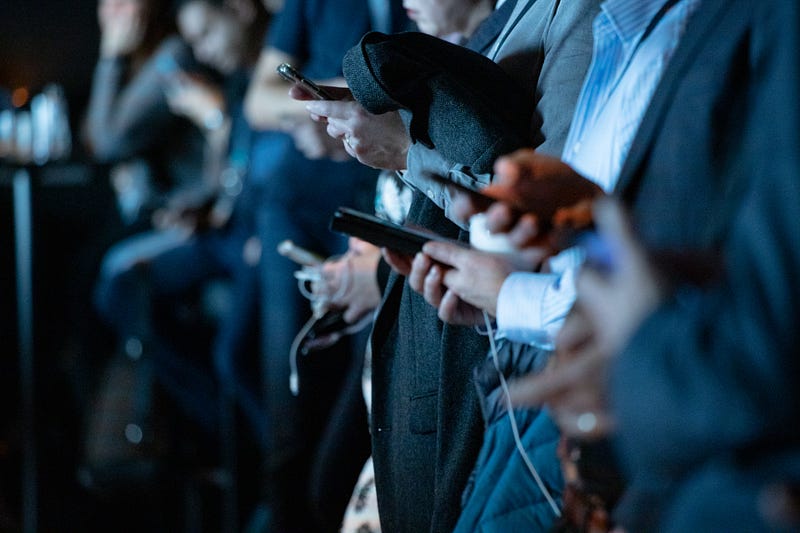
Social media symbolizes internet platforms through which people communicate. For millions of consumers across the world, it is a generally accepted leisure activity.
Through technological advancements, the sales and advertisement industry has witnessed a major spike in the use of social media as a marketing tool.
Consequently, the tech industry has created a social media addiction as a profitable means to yield value for companies that pay them for our attention.
These platforms provide never-ending stimulation and produce dopamine hits that target the same parts of our brains connected to drug abuse.
We’re constantly being fed with information, giving us the impression that the world is ever-changing so missing out would be a loss for us.
With fancy tools and icons, the tech giants employ psychological means to ensuring we’re addicted.
The ‘like’ button was an experiment on their faithful lab rats. Its success granted Facebook millions of users through its convenience: no need to type out words of goodwill when you can just tap a button.
With reference to the ‘Skinner Box’ model, the ‘like’ button also became a tool to administer rewards or punishment.
One of Twitter’s early founders, Noah Glass, said:
“People would use social networking to make them feel less alone. Whatever was happening to them – an earthquake, redundancy, divorce, a frightening news item or just boredom – there would always be someone to talk to. Where society was missing, the network would substitute.”
Every day, more data and private information is being overshared on social media platforms. This fuels the engine of tech industries as they’re able to predict what will arrest our attention and keep us locked for hours on end.
We are being used as lab rats by ‘experimenters’ through social media platforms. We no longer use them as tools of communication; conversely, humans are being used to increase profit for the capitalist industry.
Our minds are being hit consistently by dopamine highs because we now operate an economy that thrives on our attention.
The Algorithms behind the products we use have been designed to ‘know’ what we want and feed us just that. We live in ‘filter bubbles’ that expose us to information we already agree with.
The element of randomness doesn’t exist in the world of social media.
“Christopher Bail and colleagues from Duke University recruited hundreds of Democrats and Republicans who were active on Twitter, and paid them to follow a Twitter bot that would retweet content from the opposing side. After a month of exposure, the Democrats retained about the same attitudes—but the Republicans ended up more conservative than when they started the study! This result suggests that polarization in the U.S. could be driven by exposure to views people disagree with, rather than being separated from them by filter bubbles.” — Lee De-Wit, Sander Van Der Linden, Cameron Brick.
Propaganda is not a new concept. The internet, however, has increased the spread of fake news and propaganda wider than it has ever been before. In seconds, a tweet can be viewed by hundreds of people who’ll act in consequence of it without bothering to verify.
A study at the University of Pennsylvania found that high usage of Facebook, Snapchat, and Instagram increases rather decreases feelings of loneliness. Conversely, the study found that reducing social media usage can actually make you feel less lonely and isolated and improve your overall wellbeing. — Lawrence Robinson and Melinda Smith, M.A.
Kimberly Young, a psychologist and founder of the Center for Internet Addiction, provided symptoms of internet addiction to look out for:
- It takes up increasing amounts of your time.
- You feel restless, moody, or irritable when you try to cut down usage.
- It is used as an escape from personal problems or feelings of dysphoria.
You may need to ask yourself if you’re using the internet as a tool. Or, perhaps, you are being used as a lab rat to drive sales.
REFERENCES
- https://amp.theguardian.com/commentisfree/2020/sep/19/the-social-dilemma-a-wake-up-call-for-a-world-drunk-on-dopamine
- https://www.livemint.com/mint-lounge/features/-the-social-dilemma-review-can-we-clean-up-big-tech-s-big-mess/amp-11599831405678.html
- https://scholar.google.com/scholar?hl=en&as_sdt=0%2C5&q=social+media+addiction+for+advertisement&btnG=#d=gs_qabs&u=%23p%3DYbFEAAtReToJ
- The Twittering Machine by Richard Seymour


