
Modern Melon Mystery Brings Summer Melon Memories
Something’s missing in my melon: I think we need seeds
Updated June 20, 2022
I searched for “summer” themed articles on Medium and was surprised by how many people recalled memories of spitting watermelon seeds in their sibling’s hair. Maybe it’s because I’m an only child or I was taught that spitting anything at anyone is gross and “very bad manners,” but I couldn’t relate to that experience…
Yet, I do miss having watermelons with seeds. Where did they go? I’m trying to eat organic and non-GMO, so I started to research this melon seed mystery.
This year’s been blah, but late, last season I purchased my last whole melons, and they were horrible! I haven’t had a really good watermelon or one with seeds in the last few years and I wonder if there’s a connection.
To be fair, I only purchased 2 whole watermelons the summer of 2019 (because I hate the cleanup):
Melon #1: A beautiful personal-sized melon from Wholefoods with pale, pink seedless and partially tasteless flesh
Melon #2: A large melon, literally from the bottom of the box in Aldi that was also pink, seedless, and mealy.
I’ll excuse the Aldi melon because it was way after the season, and we’ve had some frosty mornings. My paternal Grandfather was a watermelon farmer so I’m a bit spoiled and biased. As a child, I went to his farm and was allowed to point out any melon I wanted.
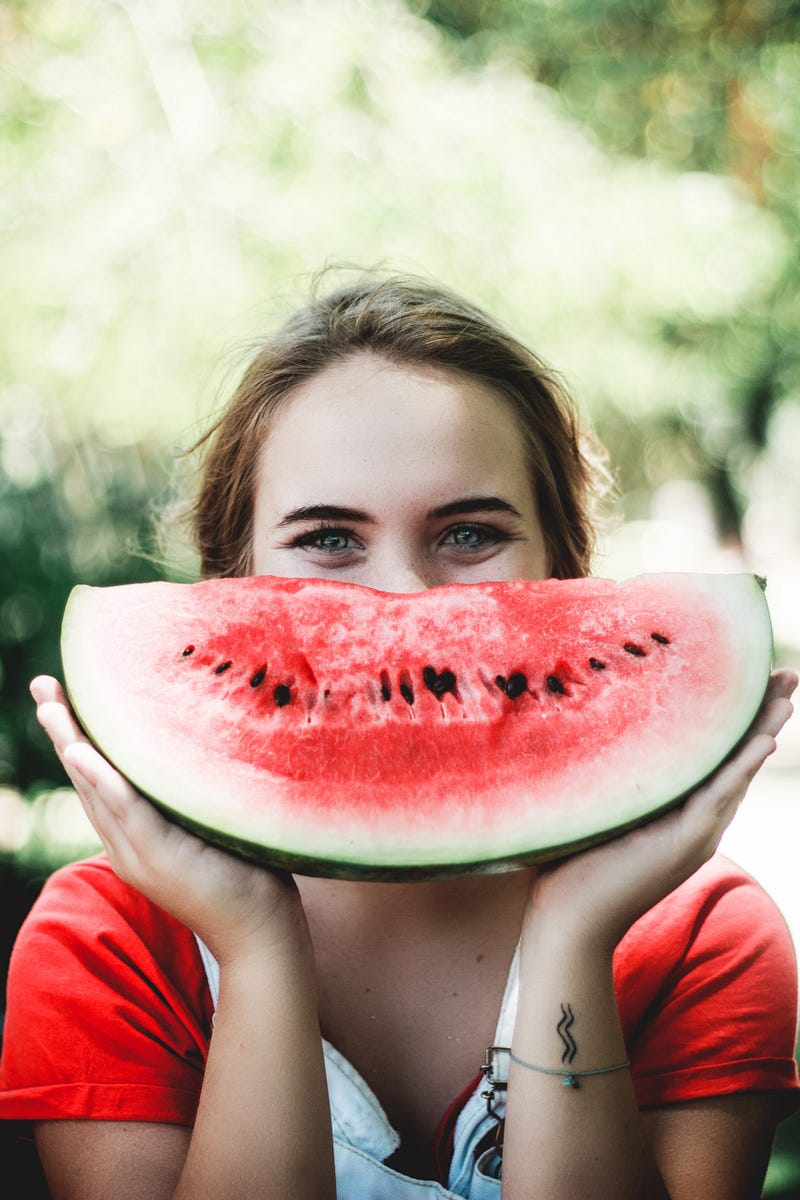
My Grandmother would happily cut it into big wedges that reminded me of a summer’s smile, and I’d sit and eat till my heart was content, happy, and full, sticky and soaked in sweet watermelon juice. I remember giggling as I’d spit the seeds into a bowl or on the ground when I was being a little naughty or uncouth. Sometimes the seeds would stick to my skin.
My Grandmother smiled as she watched me, and then she’d let me splash in a bucket of water to clean up or hose me down. It was one of my favorite summer rituals. I hate to say this, but I haven’t seen or tasted a watermelon like that since my childhood. I remember my excitement watching my Grandparents cutting a plump, green melon and watching the precious juice flow from the fruit. It was firm, not mushy and there were seeds — lots and lots of black seeds. Now I can appreciate and wax nostalgic on the beauty of the vibrant, vermillion fruit bespeckled with shiny, slippery black seeds. But as a child and to this day, I remember it was always delicious and satisfying.
I always brought one home with me, and my maternal Grandmother would repeat the process or make rind jelly.
My family lived and practiced organic, sustainable farming before it was trendy. Every vegetable scrap was composted in holes in the yard. Now as I’ve started gardening at home and managed a few school gardens, I’m learning new terms and I’ve discovered that my Grandmother was practicing a version of lasagna composting.
Investigating this bad melon mystery
According to the Watermelon Board, seedless watermelons are NOT GMO but are a hybrid melon where they were cross-pollinated to produce white-thin seeds versus the original, shiny black seeds. Seedless watermelons have been called “the mule” of melons in its development 50 years ago.
Call me nostalgic, but I just want my black seeds back. Maybe there isn’t scientific proof, but I think when watermelons lost their black seeds, they lost their flavor and soul. I’m going to see for myself and try to grow sugar babies next season and a funky yellow flesh variety that I discovered a couple years ago.
I haven’t had much luck in the past with my new gardens. One year, I accidentally planted watermelon and cantaloupe in the same bed and grew a mutant melon that looked like a cantaloupe on the outside and a watermelon on the inside. I never tasted it, but the gangster city squirrels loved them…
We shall see next season, but as far as watermelons go, the seeded variety is the only kind for me.
2021 State of Melon Update
I didn’t grow melons last year or this year and I still haven’t had a good melon.
I think we need to bring back the old varieties and get some expert growers on the case ASAP.
Did you know watermelons originated in Africa like okra, certain varieties of rice and yams?
Quick Foodie Facts:
Americans grow sweet potatoes, not yams — thank you for clarifying Ms. Jessica B. Harris, author of the book High On The Hog (with a Netflix docuseries of the same name).
But back to the melons — I suspect that our miserable melons stem from our short growing season, lack of expertise, and dare I say extreme contrasting temperatures due to climate change. According to the Gardening Channel, melons need 90 full days of warm sunny weather to ripen into the sweet juicy fruits I remember from my youth.
There’s something about cultural competency in food and that includes gardening. It’s funny how I grew up in an agrarian town, proud to have Black farmers and expert gardeners on both sides of my family. Yet, when I think of farmers and agricultural experts — I still think of white men.
My maternal Grandmother was an avid gardener, and she never bought any commercial fertilizer only manure and the compost from our yard. Her garden was vibrant, and her fruits and veggies were always flavorful.
My paternal Grandfather had a commercial watermelon farm and grew huge, sweet melons. I can only remember two varieties, there may have been more, but his business was booming. I remember seeing the large trucks filled with giant watermelons and the people working to harvest them.
Perhaps some of our watermelon farmers need to consult with southern Black and African farmers to develop better-growing methods. Our modern melons are horrible, and they’ve been bad for a while. And I’ve bought melons from bougie Wholefoods to my neighborhood markets and regardless of the location or price they just don’t taste the same.
In the meantime, just freeze your subpar melons and use them for natural slushy drinks. I’ve turned to cantaloupes and honeydews — it’s not the same but until our watermelon mystery is solved — they’re sweet juicy substitutes.
If you know any farmers in the Philadelphia Tri-State area that grow good watermelons let a sista know…
Final Fun Fact: Did you know you can eat watermelon seeds? They actually have some good nutritional value.
Recipe Time
My Quick Refreshing Melon Ball Slushy
In a blender pour:
1 cup of cubed, frozen watermelon or any melon of your choice
1 cup of cold unsweetened or sweetened green tea
1/2 cup of cold mint tea
Blend until smooth — I like to add fresh mint — to garnish or crush leaves in the bottom to add an extra hit of mint.
Thank you for reading.
For more information on the benefits of watermelon seeds:
Updated: July 16, 2021 Originally published Oct 13, 2019


