
Watered Down Charter School Reform Bill Falls Short
“CONFIDENTIAL — DO NOT SHARE”
- Minutes of LAAC meeting held at CCSA LA Office
Flush with funding supplied by billionaires, the charter school industry has bought itself a lot of influence in the halls of the state capital building in Sacramento. This caused a significant obstacle as state legislators attempted to pass the first meaningful updates to a 25-year-old charter school law. Using millions of dollars in campaign cash, deploying scare tactics, and pulling on heartstrings, those who seek to privatize our public school systems had managed to stall the proposed bills. Only ten percent of students in publicly funded schools attend charter schools, but once again it appeared that charter school operators would be given priority over 90% of students attending traditional public schools.
Under Governors Arnold Schwarzenegger and Jerry Brown, both with a personal history of being involved with charter schools, this defeat for public school students would have been final. However, in the last gubernatorial election, the charter lobby made a tactical error by backing Antonio Villalagrosa. This meant that the eventual winner, Gavin Newsom, a self-described “agnostic” on the issue, owed no debts to these publicly funded private schools. When the reform bills stalled, he forced both sides to the negotiating table and brokered a compromise. Students whose education is funded by the state will get protection from bad actors in the charter school industry after all.
In the compromise bill that will be voted on within the next couple of weeks, some important flaws in the law governing charter schools will finally be addressed. Unbelievably, for the first time, all new charter school teachers will have to be credentialed for the subjects that they teach and would “also have to have a state background check.” School districts would also “be allowed to reject new charter petitions based on the school’s potential fiscal effects on the district and whether the charter seeks to offer programs that the district already provides”. The state board of education will no longer be able to serve as a chartering authority. This is an important step as state officials have stated in the past that they do not have the resources to monitor the schools that they oversee. There is at least one case where they did not conduct any oversight visits during the entire time they were supposed to be ensuring that this charter school was following the law.
Unfortunately, there is one glaring flaw in the compromise that allows county school boards to continue to authorize charter schools. Unlike local school boards, many county boards, including the one in Los Angeles, are unelected and, therefore, have no accountability to the stakeholders. As it stands the law gives them the ability to not only overturn the decisions of elected officials but also the recommendations of denial from the county staff itself. To then have them oversee the operations of the schools without any input from local officials is a system ripe for corruption.
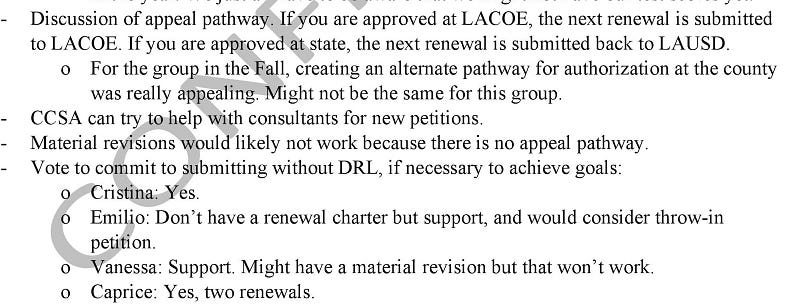
The treasure trove of confidential documents obtained by Michael Kohlhaas dot org from the charter school industry provides an example of why unelected county officials should not be given the power to overturn elected representatives. Last year, the California Charter School Association (CCSA) engaged in a battle (which they eventually won) to write the rules under which their private schools operate. To force the issue, the lobbying group had instructed some of its members to refuse to incorporate DIstrict Required Language (DLR) into their charter renewal petitions. On the surface, this appeared to be a risky move as the Los Angeles Unified School District (LAUSD) Board could have called their bluff and rejected the schools which would have threatened them with closure. However, the charter school lobbyists knew that they had an insurance policy in hand.
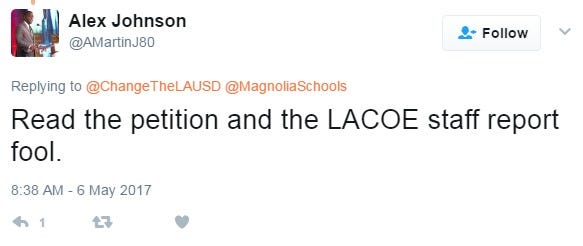
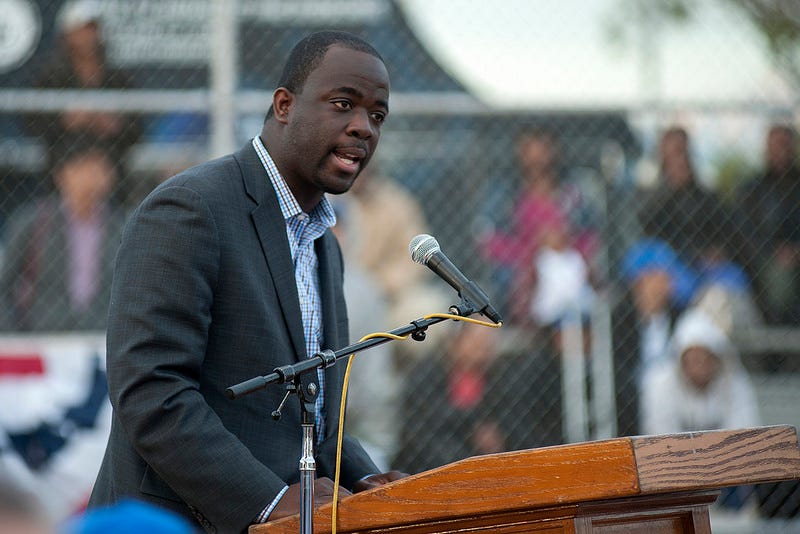
In 2014, Alex Johnson ran against George McKenna for a seat on the LAUSD School Board but was rejected by a majority of the voters. As a consolation prize, he was given a seat on the board of the Los Angeles Office of Education (LACOE) by County Supervisor Mark Ridley-Thomas, who is a lackey of Eli Broad. On this board, Johnson not only ignored the findings of the LAUSD and his own staff to authorize the charter of one of the Magnolia Charter Schools, but he also insisted after the fact that this school had “academic superiority”. In a report presented to recommend against authorizing the school, LACOE staff had declared that Magnolia Science Academy 1 did not have a “sound educational practice” and did not have the “ability to successfully implement [its] intended program”.
The County Board also overturned the LAUSD’s decision to deny the charter renewal for the North Valley Military Institute. It made this decision despite the fact that a current, certified copy of the school’s required annual independent audit had not been filed. This meant that county officials had approved the renewal of the charter even though they had no way to assess the school’s financial condition. They also failed to uncover the fact that the school was illegally charging students to attend summer school.
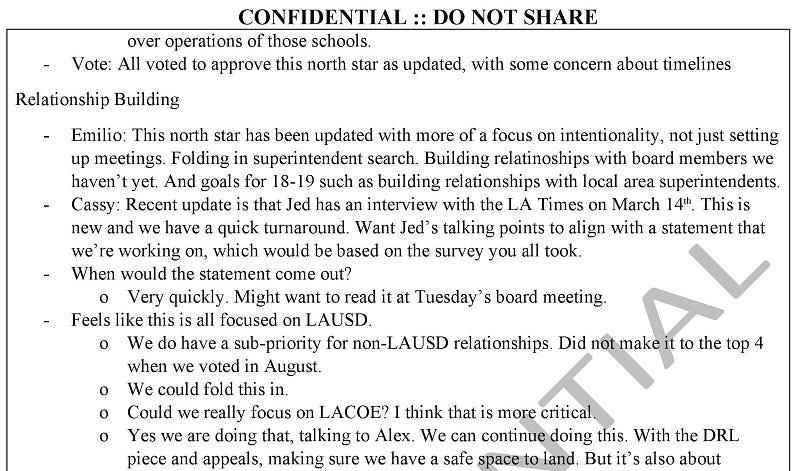
With Johnson’s willingness to approve schools that were failing their students, it is not surprising that the charter industry felt that they could rely on him to provide a “safe space to land” if their strategy to force the LAUSD to bend to their demands went awry. In fact, the minutes of a March 2018 meeting whose attendees included Magnolia’s Caprice Young and CCSA staffer Cassy Horton, show that after someone asked if they “could…really focus on LACOE,” the response was that they were “talking to Alex” about the “DRL piece and appeals”. “Creating an alternate pathway for authorization at the county was really appealing” to them.
While it would be a mistake to let “the perfect be the enemy of the good”, charter school reform that does not eliminate the ability of unelected officials to overturn the decisions of elected representatives is undemocratic and will allow continued abuse of the law by charter schools. Parents, students, and teachers did not stand in the rain during the strike in January so that corruption can continue to flourish. Any meaningful attempt at reforming the charter school law requires that local control must be established and that only school districts be allowed to authorize the charter schools operating within their boundaries.
________________________________
Carl Petersen is a parent, an advocate for students with special education needs, an elected member of the Northridge East Neighborhood Council and was a Green Party candidate in LAUSD’s District 2 School Board race. During the campaign, he was endorsed by the Network for Public Education (NPE) Action and Dr. Diane Ravitch called him a “strong supporter of public schools.” His past blogs can be found at www.ChangeTheLAUSD.com. Opinions are his own.


