
Water Drop Photography
Start of the test run…
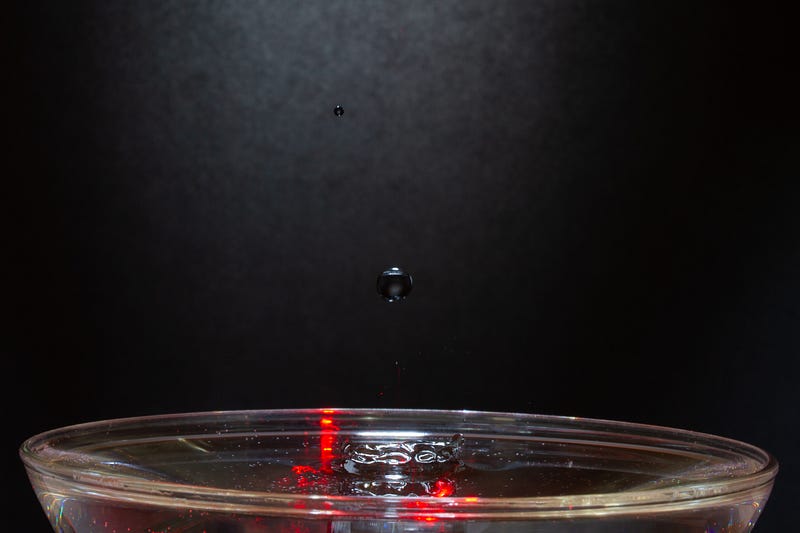
Late last year I started experimenting with water drop photography as outlined in the article found here.
Due to the many other things in life that demanded my attention, I put the project on hold until the correct amount of time could be dedicated to the level of detail necessary to engage this technique.
While hibernating during this weird winter in New England I have now carved out some time slots to jump back into this project for at least a few days a week.
After reconfiguring my equipment setup for a little more versatility I began a long series of test shots. Images in this article are from the test sessions.
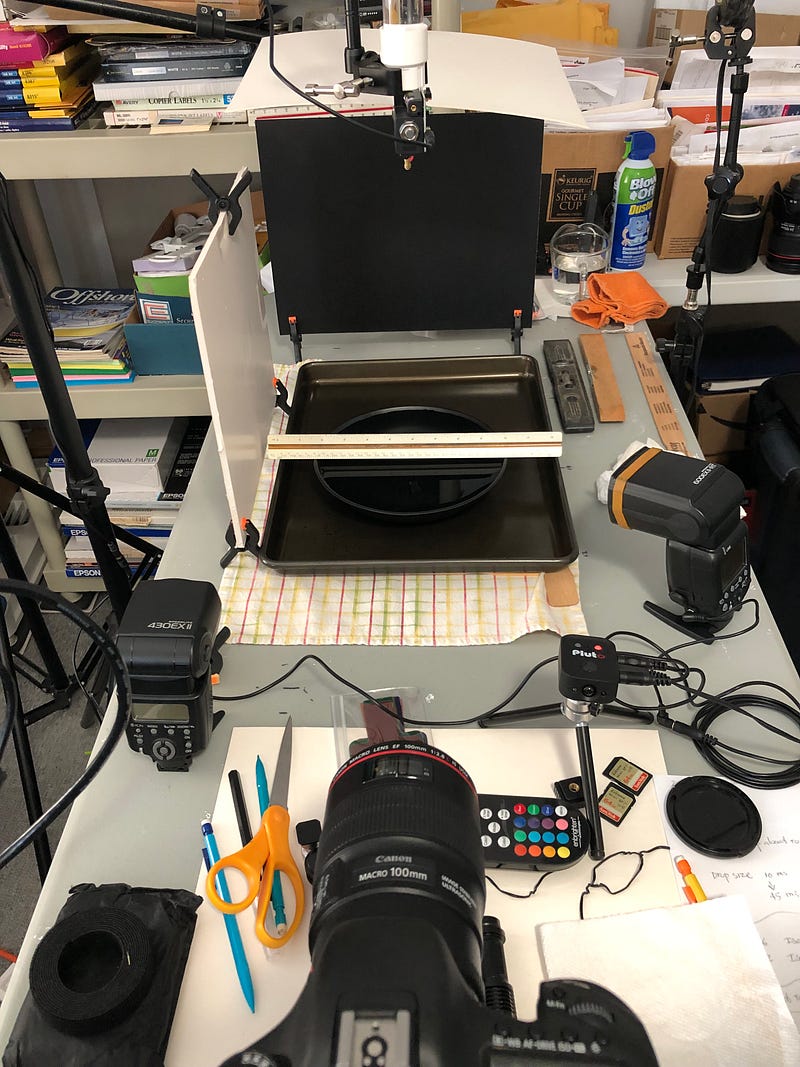
Of note in the image above is the “engineer’s ruler”. Placed below the drop dispenser and resting on top of the bowl of water, it is used as a calibration and focusing mechanism to be sure the water container was positioned correctly. It also provided a focus point for where the water drop was going to hit.
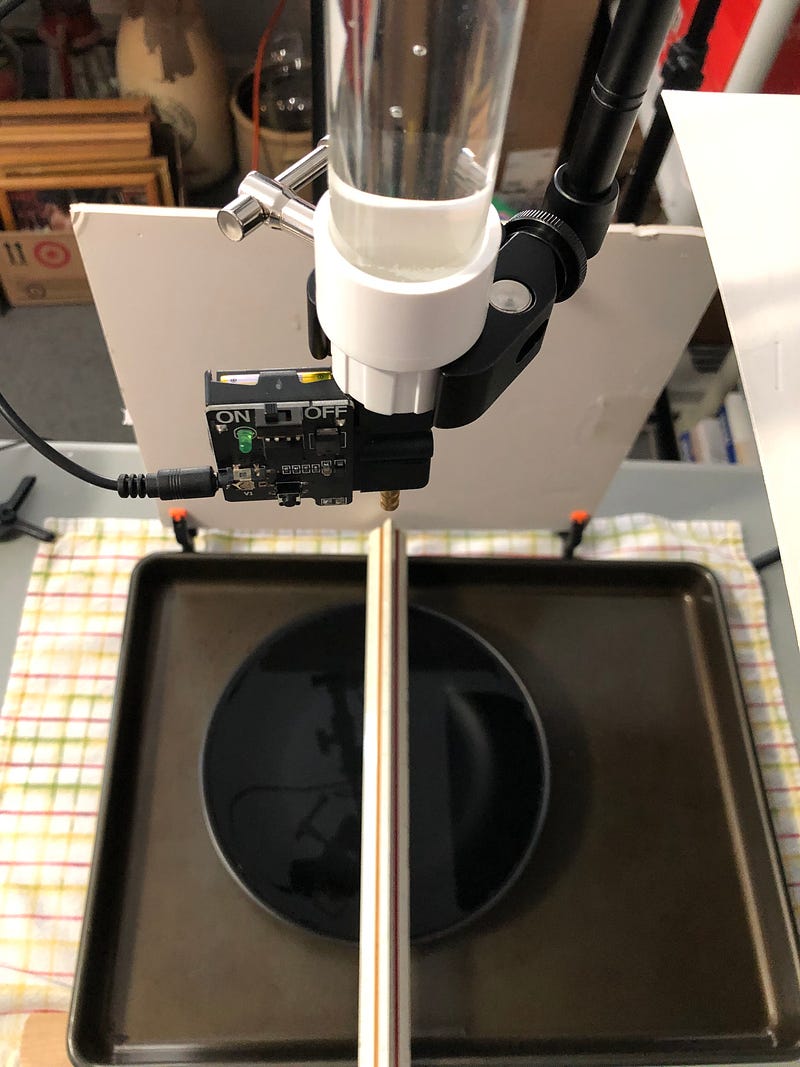
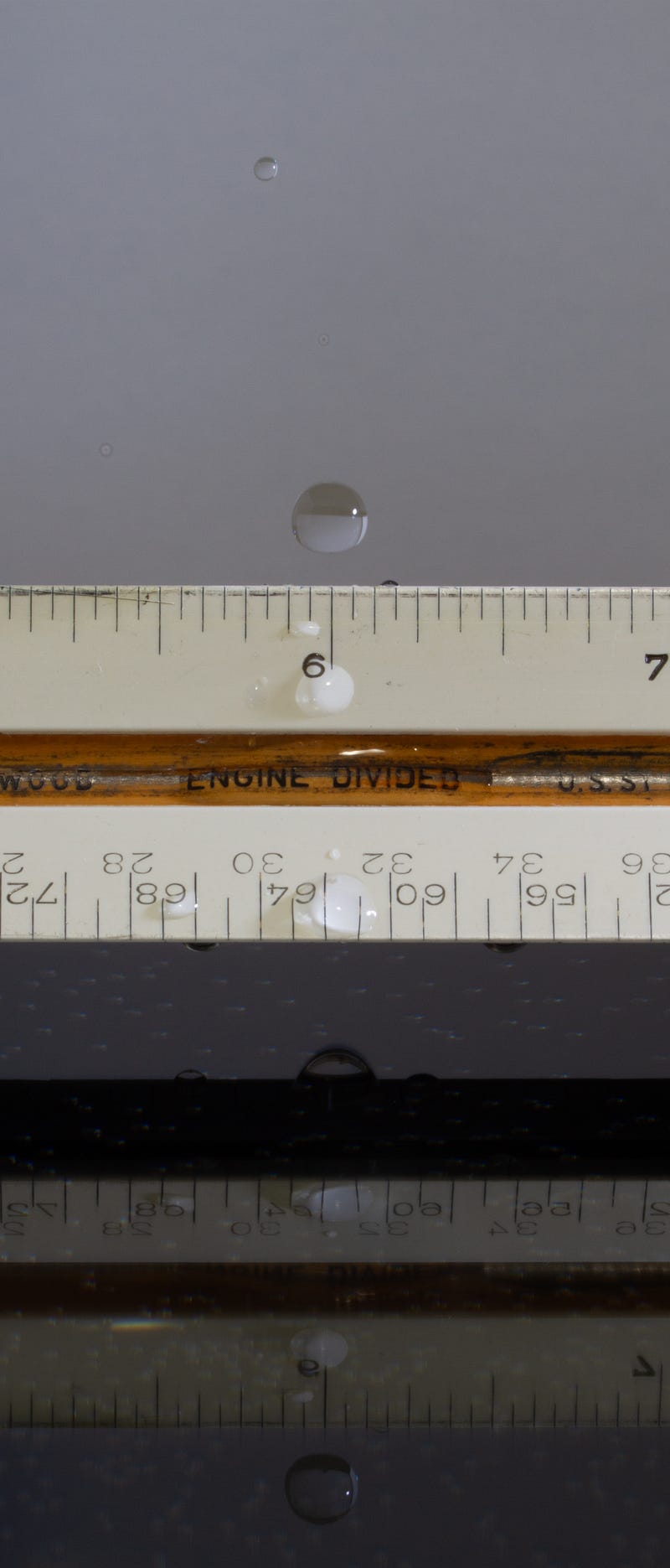
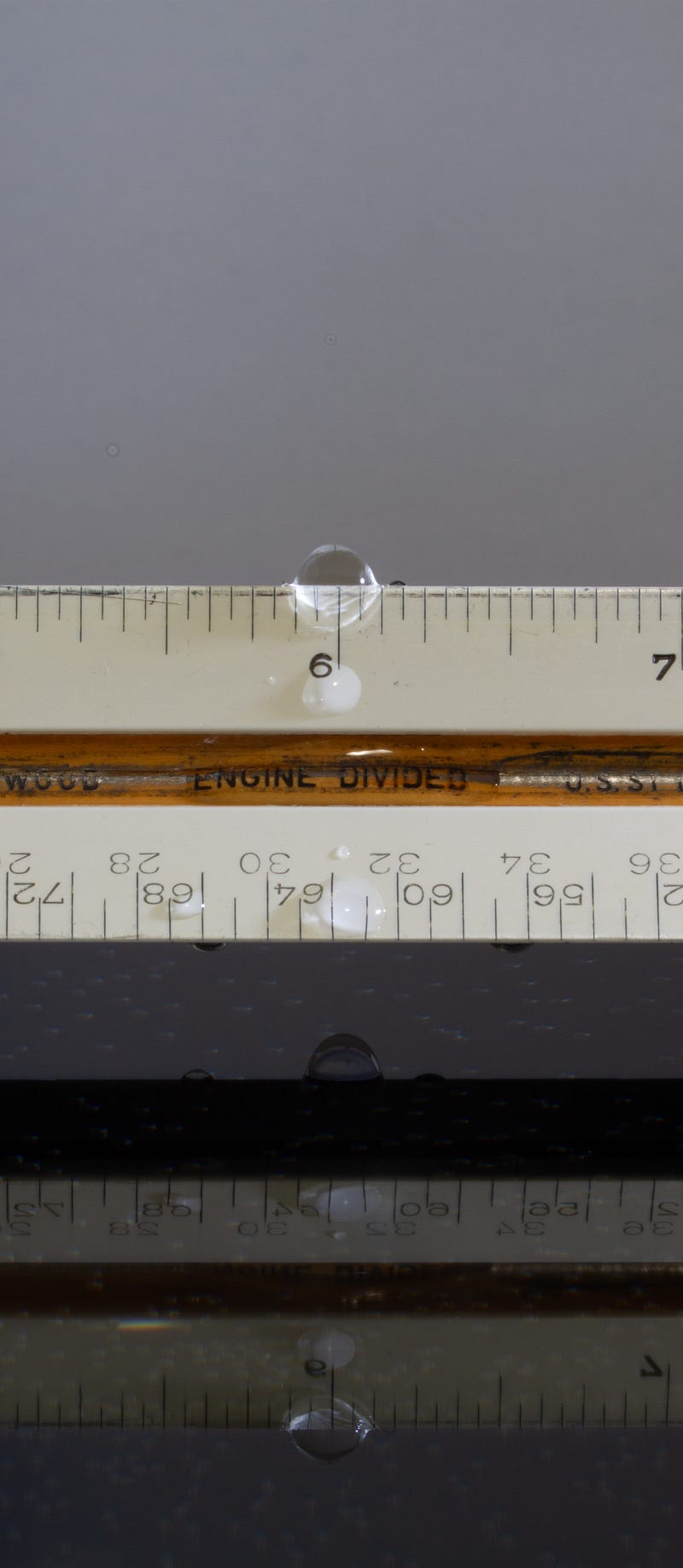
I can tell you, it’s worth doing a little homework before diving into an adventure like this. This link is to an article that was full of terrific tips, like the one above, that helped to avoid ‘reinventing the wheel’ and got this project off to a much quicker start.
Patience!
Be ready to have patience.
There are so many variables in water drop photography they are too long to list here, but in general terms, the following are key categories.
The camera body seems to be the only constant so far. After that, everything else is fair game.
The container shape, color, and depth impacts the image significantly. Black works nice.
Flash position and brightness impact the quality of the image.
Backdrop color(s) can have a big impact on the image appearance.
Just starting to tinker with camera lenses, so not sure where that goes. I started with a 100 mm macro.
Camera settings are the least flexible at this point. ISO @ 100–400, f11 to f22, and shutter @ 1–2 Sec.
Camera position/perspective is another high impact variable. A big creative element.
First and foremost, the Pluto iPhone app is what synchronizes the whole conglomeration of gear. The water drop, drop size, number of drops, flash delay to catch the drop, and the shutter release are all managed by the app. The app by itself has a dizzying number of variables.
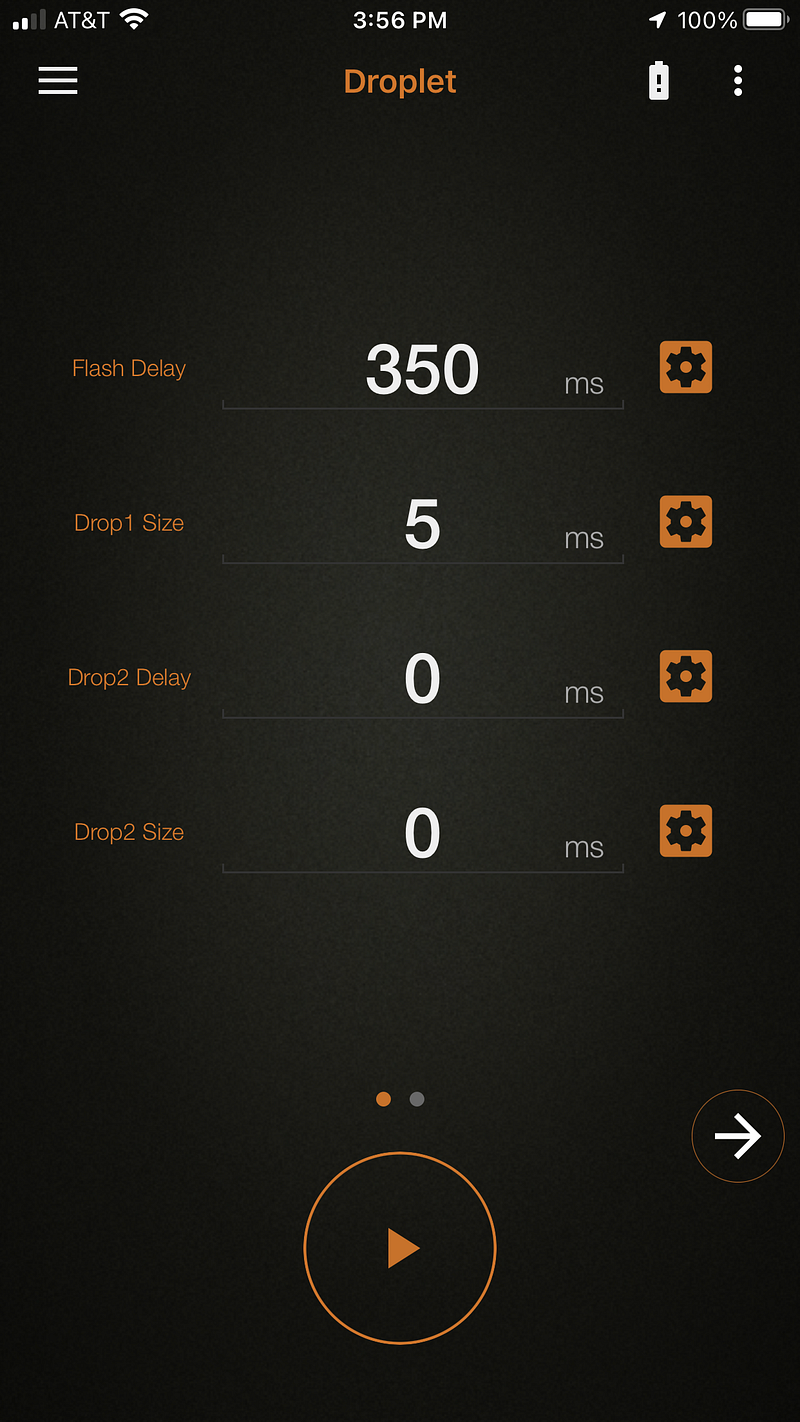
That said, here are some of the early results.
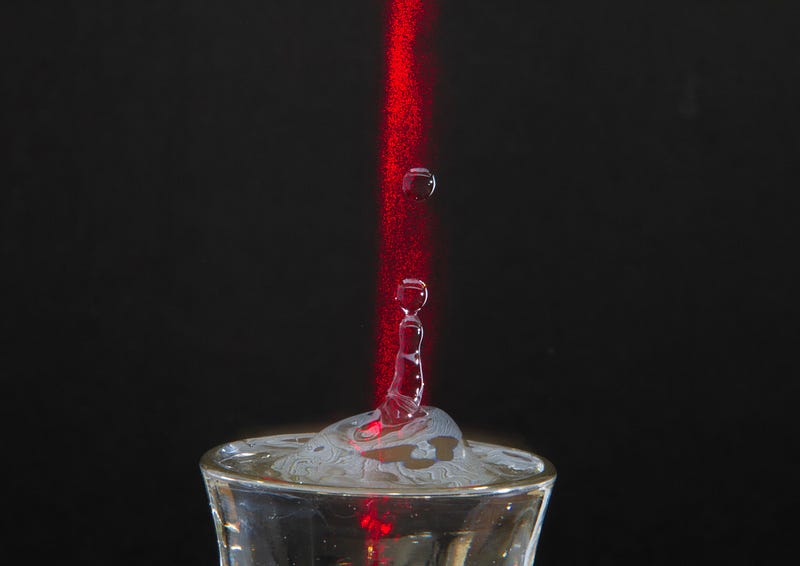
This is a shot glass with a black backdrop, and a laser reflecting off the base of the glass.
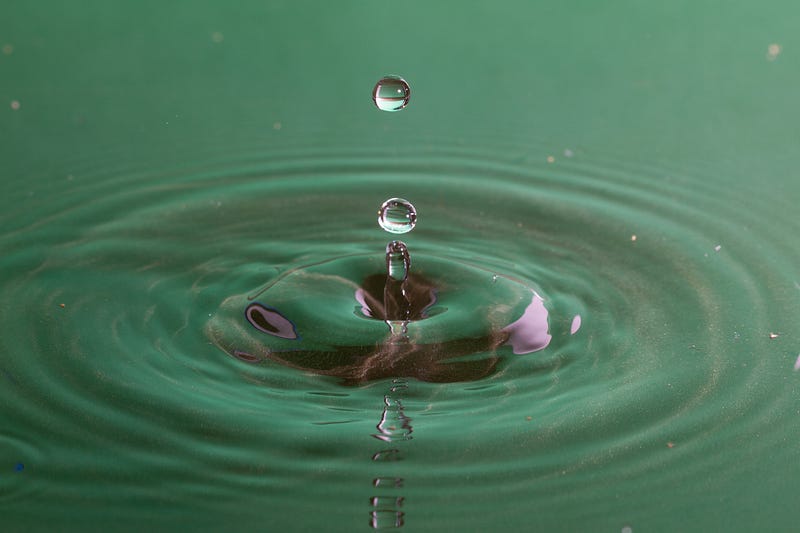
This is a baking pan container with a green backdrop.
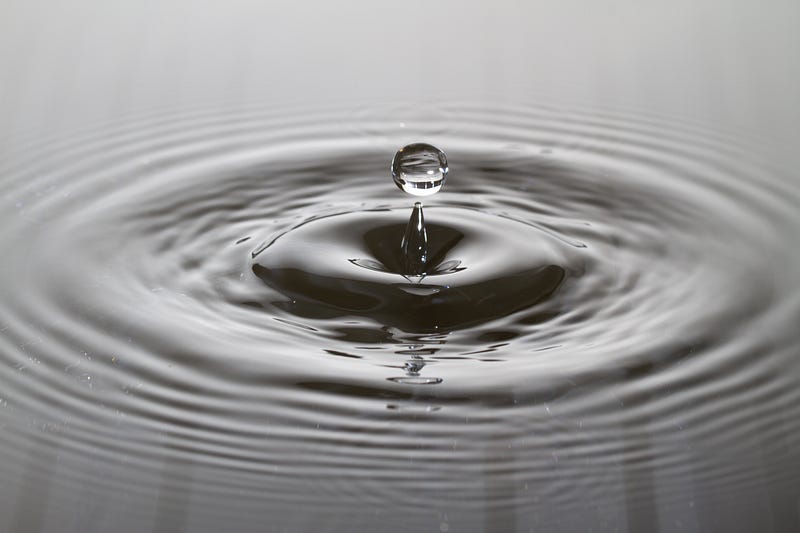
Black container with ribbed bottom and white background.
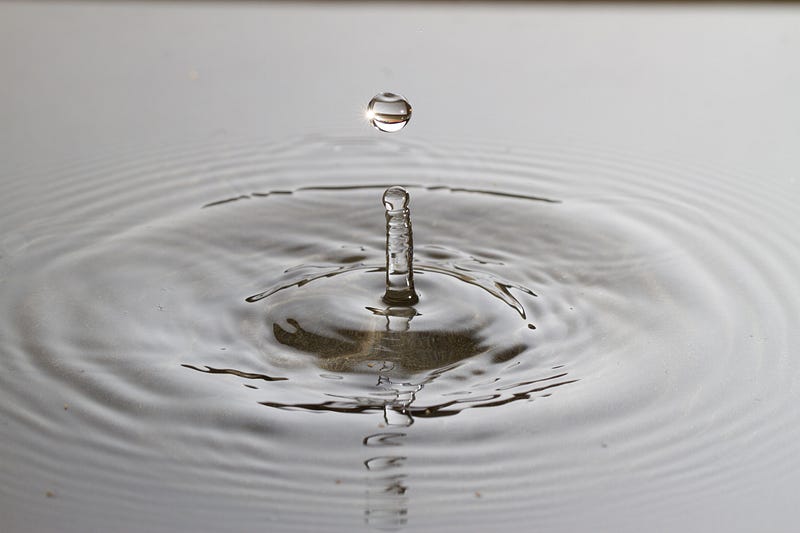
Black bowl with smooth, flat finish and a white background.
You get the idea.
This project has a long way to go, but it’s off to a good start.
Drop collisions, colored fluids, and fluids of varying viscosity are on the check list.
More from this writer:


