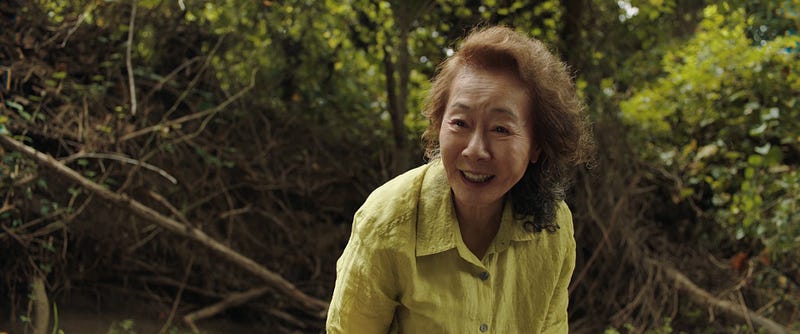
Watching ‘Minari’ With My Korean American Family
Would my kids sit through this ‘quiet’ movie?

(Warning: Spoiler alert)
A few nights ago, I finally herded my two kids into the living room to watch Minari as a family. I wanted my Korean American family to see their lives played out in glorious 4K. It took a month of finagling. I couldn’t understand why they weren’t running to the living room to watch a story of a family that spoke our language! At their age, I was desperate for someone who looked like me on the big screen, someone who wasn’t a martial artist. To my school friends, I looked like Bruce Lee, then Jackie Chan, then Jet Li.
My 10-year-old whined, “Why do I have to watch a movie about a Korean family living in Arkansas?!”
Was he bad-mouthing Arkansas? Like nothing happens in Arkansas, at least nothing worth turning into a movie?
But it also sounded like he was emphasizing the word “Korean” as if he were dismissing the movie because it was about a Korean family. As if “Korean families” didn’t have enough importance to be turned to main characters. A story about a family was just too ordinary, while a “Korean” family was not ordinary enough.
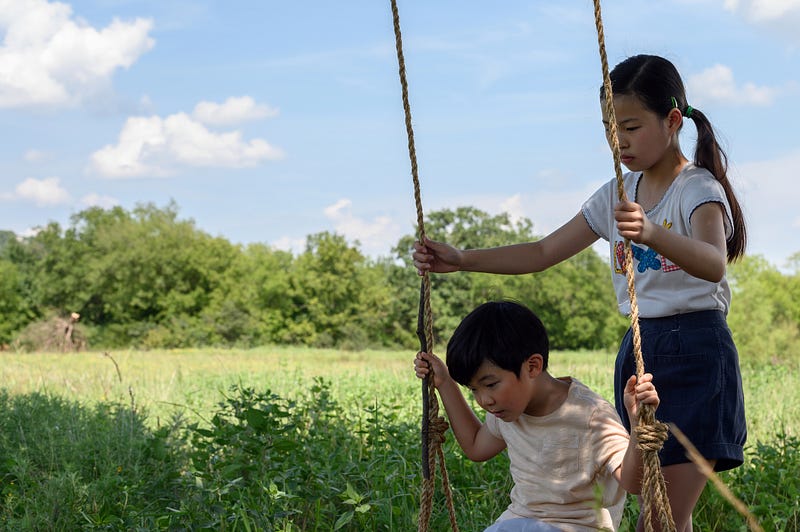
I pressed the voice command on my Google remote: “Find Minari movie.”
Google misunderstood me because I pronounced “Minari” in a native Korean accent. The Korean letter “ㄹ” represented by the letter “r” in English doesn’t actually roll like an “r.” Nor does it cut a crisp line like “l.” The Korean “ㄹ” is somewhere in between “r” and “l” but also nothing like those two sounds.
Google replied, “Here are nudity movies.”
It was Google’s best attempt at interpreting a sound foreign to its algorithm ear. I smashed the “home button” before the non-kid-friendly search result popped up.
“No Google, look for Minari!” I lost my temper with Google.
Google shot back, “Here’s your damned nudity movies, you pervert!”
I stopped imposing intention to Google, took a deep breath, and tried again. Speaking respectfully, holding the remote like it was a prayer stone, this time I said “Minari” — a Korean word referring to a uniquely Korean plant — the way an American would say it, rolling the “r” like a Westerner: “Minarhee.” Google showed the correct movie available for purchase for $15. To watch a movie about a Korean family, I had to pronounce a Korean word like an American.
This translation is what I do every day of my life: bastardizing my Korean words to English ears that don’t have the patience for other languages and sounds. Here’s a classic example of the systemic nature of racism. Google is not racist. Google doesn’t have intentions. Google is just following rules. And those rules say there are normatives, and anything slight outside of those normatives can’t get access. You have to assimilate for full access.
A similar algorithmic exclusion made Minari win in the Golden Globes category of “best foreign language film,” even though the story is as American as it gets — what is more American than an immigrant family tilling the land to provide security for the family? Minari was pigeonholed as a “foreign” film because any movie with dialogue that doesn’t have English words 50% of the time can’t be American. The United States, though, doesn’t have an official language.
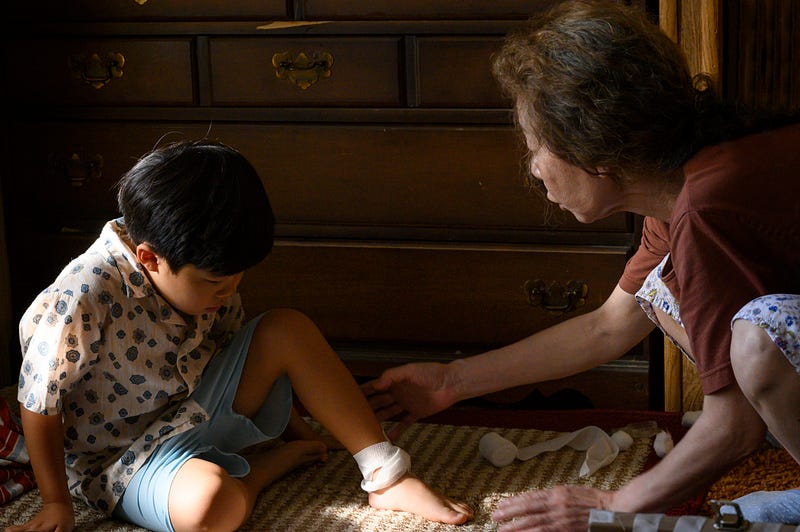
I was sure my kids would dash back to their rooms midway through the movie because there are a lot of still and silent shots. No words to move the plot along, or music to manipulate emotions. Just a father who is afraid to word his sense of deep disappointment at himself because if he did, he would explode in anger. But both my kids sat through it until the end. They didn’t even peek at their phone’s notification (spoiler alert):
- There are the two kids telling their grandma that she’s going the wrong way, that home is back there where the fire she started is still raging.
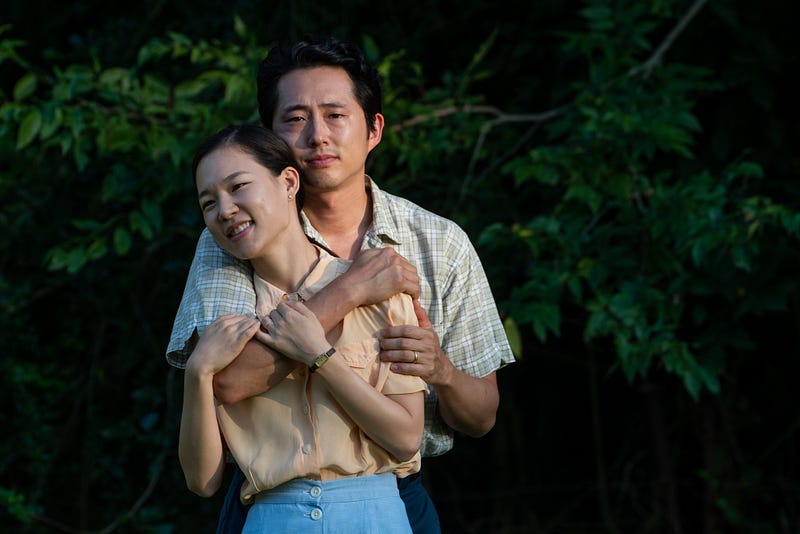
- There’s the wife and the husband looking for another plot with underground water to start sowing again.
- And there’s the closing scene of the father and his son, picking some Minari/미나리 leaves by a riverbank where grandma planted them.
All through those quiet but emotional scenes, my kids didn’t reach for their phones.
As the credits started rolling, my 12-year-old daughter commented that it was a sad movie.
My 10-year-old son said the boy “David” reminded him of himself, and suddenly had the urge to call his grandma.