

Feature
Watching Jim Carrey Climb Into a Giant Hand Is Unforgettable
Dave Holstein’s visionary TV series ‘Kidding’ is a gift to our wrecked soul.
Jim Carrey is one of Hollywood’s most peculiar actors. In fact, I’m going to call him a weirdo, but I mean that in the best possible way. He’s unpredictable. He can be the funniest clown you’ve ever encountered, but he can also seem like the saddest human being on earth. Sadder than Keanu. He has an entire universe in him that usually nobody else is allowed to see, but sometimes he lets us take a peek at it. Dave Holstein’s series Kidding is one of those rare occasions.
It’s as close as you can come witnessing a mental breakdown in a comedy series.
“Kidding is a comedy, but also a character study of what happens when everything matters and nothing is forgotten.” — Alexis Nedd, Mashable
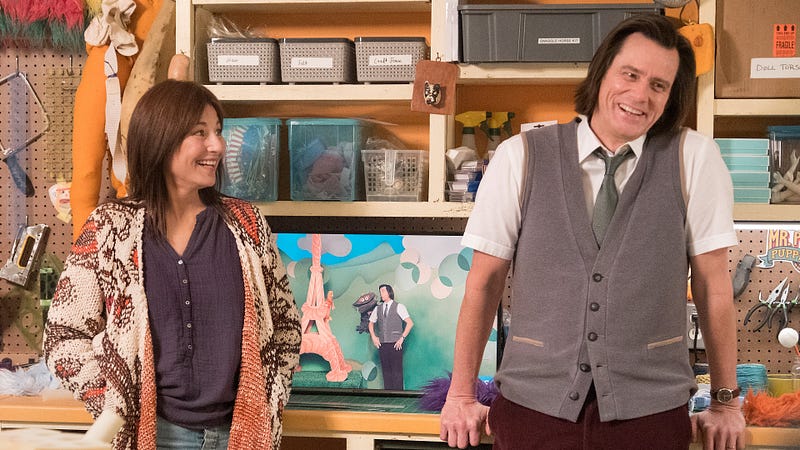
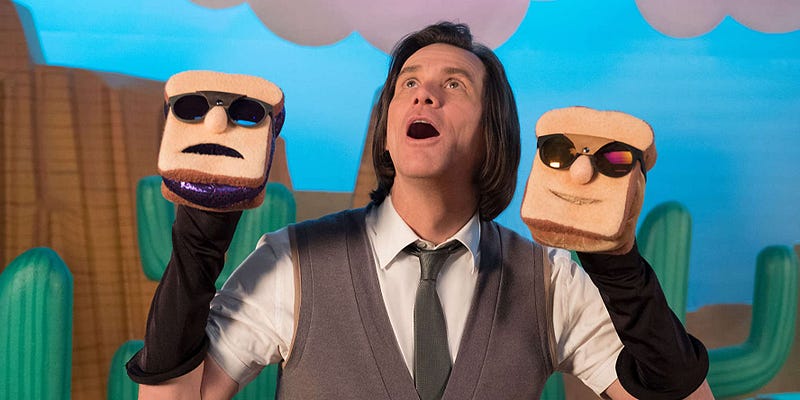
Jeff Pickles is the star of a children’s puppet show called Mr Pickles’ Puppet Time, loved by millions all over the world. But a year after losing one of his sons in a car accident, Jeff decides to talk about his loss on television — believing it’s a good idea. “Every pain needs a name,” he explains. Everybody around him, including his family, thinks otherwise.
Over 20 episodes, Kidding addresses many issues we face in today’s society: grief, trauma, depression, and drug abuse, among others. Despite its lighthearted tone, the show weighs heavily on those topics quite often.
“The story of a children’s TV host (not Mr. Rogers, but Rogers-adjacent) whose inability to express negative emotion after a lifetime of repression is as relevant as ever in 2020, when the question of what to do with bad feelings generates unyielding discourse on mental health, trauma, and masculinity.” — Alexis Nedd, Mashable.
There’s an obvious similarity between the protagonist and Carrey’s real-life persona, and Holstein doesn’t hold back layering that into the character.
Carrey hid his spiritual and philosophical side from the world for many years, playing a buffoon and comedian on camera. Entertainment was always a part of him — even as a child, he often imitated his jovial father to make his mother happy. However, there’s always been a serious artist inside Carrey. He paints, writes stories and poems, practices Transcendental Meditation, and even gives inspirational speeches. He’s more complex than many imagine from seeing his slapstick movies. Sometimes, if you observe Carrey during interviews, you can spot a sort of sorrow lurking behind his big grin. It’s as if he only tells jokes to convince the world he’s alright.
“I wanted to convince the world that I was a miracle. And now I want to convince the world that I’m just like them.” — Jim Carrey.
Jim Carrey and Jeff Pickles are alike on many levels. In the first season, we learned that Jeff couldn’t figure out how to deal with the tragic loss of one of his sons. He believes affectionate caring and thoughtfulness are the remedies for his pain and lets himself be everyone’s emotional punch bag, forgetting that sometimes he needs to throw a punch, too. Forcefully practicing love and acceptance only make him angrier. His negative emotions are bottling up but he refuses to notice — and even when his family points them out to him, he denies it. He’s a ticking emotional meltdown, and we’re just as aware of that as his loved ones…
And so, eventually, Mr. Pickles breaks — catastrophically.
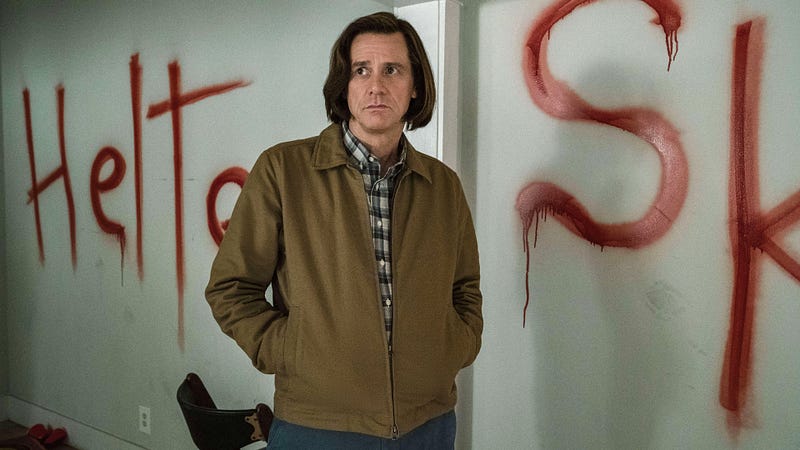
Season 2 deals with repercussions and consequences. By doing so, Holstein and his team (including director Michel Gondry) employ every bit of the show’s surreal and magical outlets. Trauma and pain blossom through talking puppets, musical inserts, and unlikely violence.
For moments, it feels like you’re tripping on LSD, but before you’d flee too far inside of your consciousness, the show pulls you back to earth with a gut-wrenching blow. It’s not always obvious. Kidding requires attention the most when you least expect it.
It emphasizes mental health by unraveling negative emotions. However, if we look at it as a whole, it portrays every emotional scar from childhood to adulthood and underlines its consequences. It’s a stunning complexity of feelings that I don’t think has ever been depicted using such unique methods.
Jeff and his audience learn the importance of pain, both physically and emotionally. His transformation happens just as much on the outside as on the inside. The surface always cracks under too much pressure, may that be caused by a neglecting father or a car accident.
“What Holstein, Gondry, Carrey, and the ‘Kidding’ gang have accomplished is bold without reaching, sweet without turning saccharine, and thoughtful without getting pushy.” — Ben Travers, The Independent.
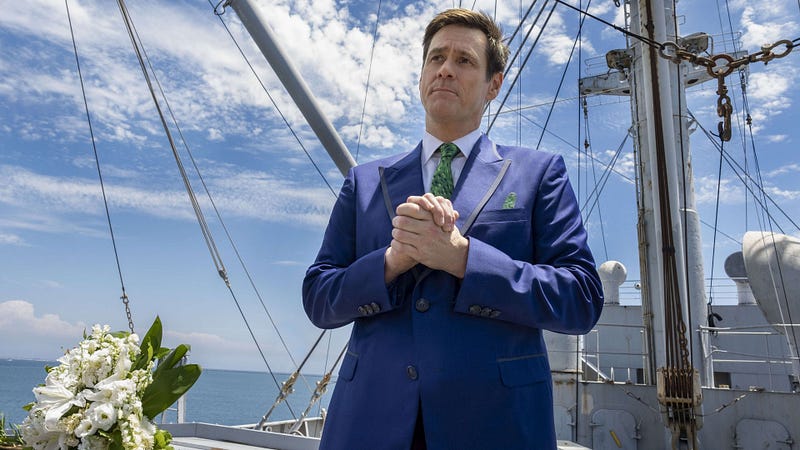
There are episodes in the second season that go from almost unbearable lows to genius heights. Often, humor’s there to soften the pain, but sometimes it goes overboard by doing so. One thing is for sure: there are no taboos in Kidding, but that’s also what makes it uneven at times. The balance is never absolute, just as our feelings are never completely right or wrong. The core message is we should never stop searching for an emotional balance that makes us content.
Ultimately, Kidding proves that moving on is possible if we face the bad decisions we’ve made and forgive those who did wrong by us when we were too young to oppose. It’s about the parental sins we buried so deep inside ourselves that we haven’t even noticed we passed them onto our children.
Jim Carrey will lead us there by the end of the show and, as IndieWire’s Ben Travers wrote, “watching him climb into a giant hand is a lovely, unforgettable image.” Just like the journey we’ve been on together.


