Summary
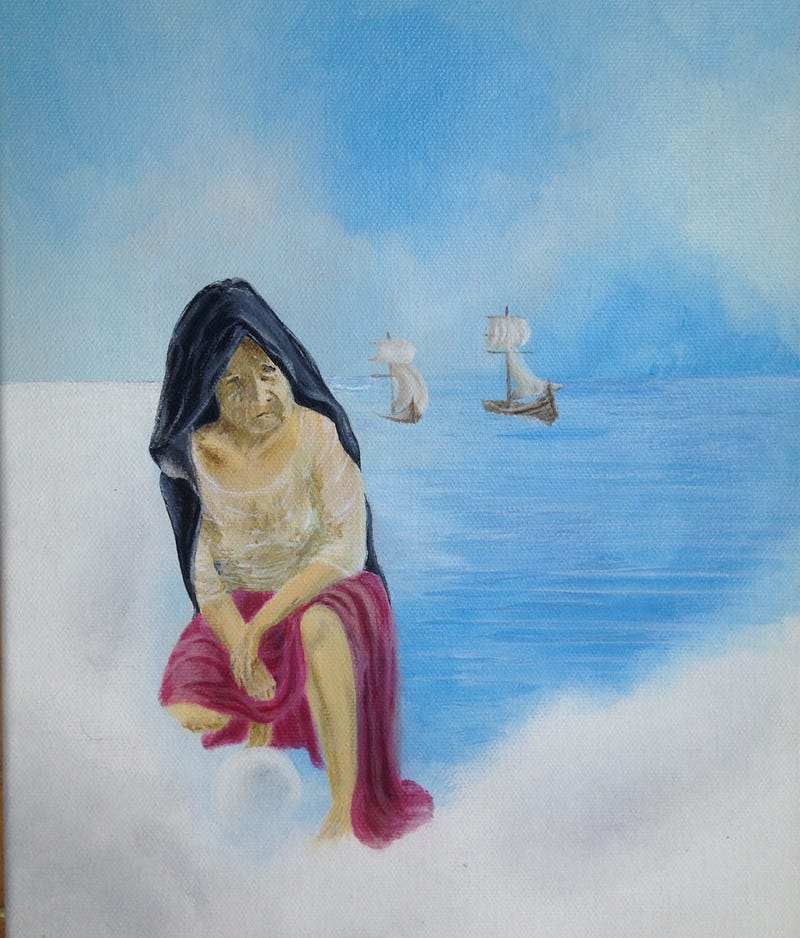
"Watch Over the Moon" is a poetic reflection on a serene, otherworldly landscape where celestial and terrestrial elements intertwine in a dance of light and darkness.
Abstract
The poem "Watch Over the Moon" paints a vivid picture of a tranquil nocturnal scene, where the moon's watchful gaze is a central theme. The imagery of abandoned boats and a silent quay sets a tone of stillness and abandonment, while the personification of the moon as a "sleepy, silvery lady" pulling oceans with her yawn suggests a cosmic force in a state of quiet power. The narrative touches on the passage of time marked by a clock frozen at a tragic moment and the moonlight that dims, symbolizing a loss or change. The poem also alludes to the interconnectedness of sky and river, challenging the perception of space and depth, and introduces a trawler's gas lamp as a beacon amidst darkness and suffering. The constellation Aquarius is humorously depicted as flawed, and the poem concludes with a philosophical note on the vessel of destiny, sparking with potential and the human race's arrogance in believing it can control its fate.
Opinions
- The author views the moon as a powerful, influential entity over the natural world.
- There is a sense of timelessness and permanence in the scene, as indicated by the frozen clock and the ongoing celestial activities.
- The poem suggests a critique of human arrogance, particularly in the lines about the "vainglorious race" that believes it can awaken or control its destiny.
- The imagery conveys a world where human activity has ceased or become irrelevant, with nature and celestial bodies continuing their cycles undisturbed.
- The tone towards the constellation Aquarius is playful and ironic, implying that even the celestial order can be turned on its head.
- The poem reflects on the interplay between light and darkness, both in the physical world and metaphorically in the human condition.