
Watch Out! Eight Medium Publications Own the Rights to Your Writing Forever
Did you read the small print before submitting it?

I love Love.
It may not look obvious because I never wrote about it specifically, but I was waiting for the right moment.
Medium lost a beautiful publication when P.S. I Love You closed just before I joined. So the natural replacement I found was Hello, love.
Today I decided to apply as a writer.
When something doesn’t fit
I am a writer for around 40 publications, and I’ve seen very different formats to submit, but this was different than any other.
There is an external submission form that forced me to register. This is a first — I thought.
But I kept going until, just before clicking “submit form,” there was a checkbox to accept their Terms & Conditions.
Gullible me thought it would be a link to the Medium curation guidelines; after all, they are pretty reasonable, no hate speech, check your grammar, etc.
It was a jaw-dropping read.
I suspect many writers are publishing there because they are a big publications, but they never got to read those terms.
I’ll just say that I’m surprised Medium allows them because they are usually very careful regarding authors’ copyrights.
Eight publications share those terms
These Terms and Conditions apply to all these Medium pubs:
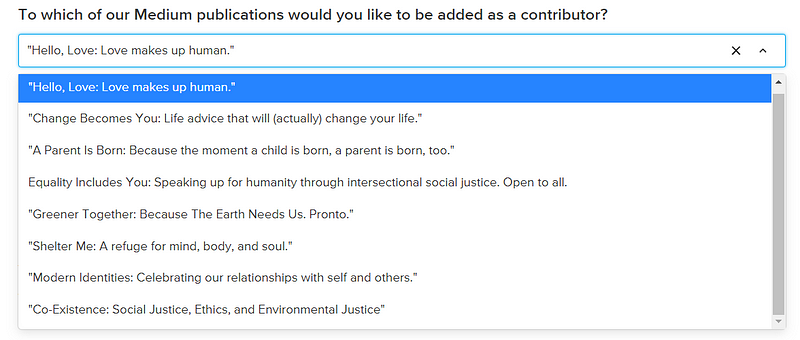
Let’s break down the document writers agree to.
The beginning is kind of boring. They reserve the right to reject our piece and not publish it. They also reserve the right to make some adjustments or edits before publishing. Many big pubs do.
They can also publish and promote your article on their website and social media, which is cool. Again, many big publications do, and it’s great for promotion.
This is where things get interesting.
Note: They call themselves “Company” in Terms of brevity.
#1 They reserve the right to distribute our content in perpetuity
And it’s also irrevocable and royalty-free.

#2 They can translate your article and publish it anywhere
And can also combine your article with other works and sell, copy, publish, record, transmit, or telecast it. They can make foreign versions and translations of it, and also license others the right to use your article (I don’t think they need the author’s permission if they already signed these terms).
This means you could be on your honeymoon in the Caribbean, grab a magazine while you wait for your mud bath spa, find your article in Spanish, and be the last one to know.
This also means they could collect the best articles and make them into a best-seller book, and its legitimate owners wouldn’t have a say on the subject. Even worse, the authors would have to compensate the “Company” if they claim their rights back (yes, you read it right, keep reading).
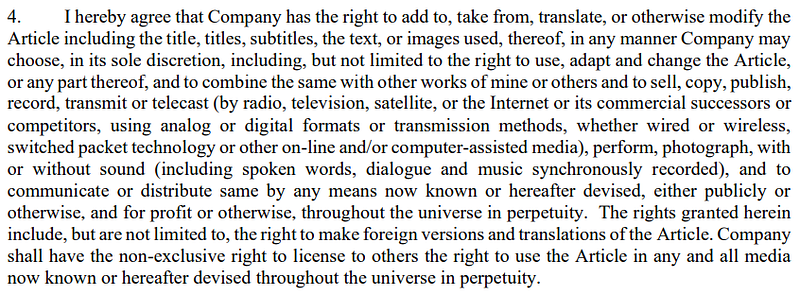
#3 You lose your “moral rights”
Not only of the changes they make to the article, but you lose the right to withdraw the article from distribution. You can only sit and watch them do whatever they want to do with it.

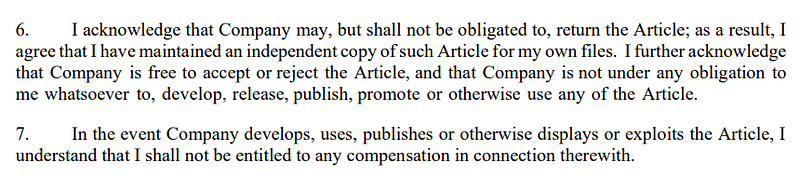
#4 They aren’t forced to return the article when you ask for it
They ask you to keep a copy just in case because they have no obligations to return the article to its legitimate owner (or, in this case, owners, because it’s clear that they co-own the article with you in perpetuity).
By the way, according to section 7, you can’t ask for compensation when they make a profit from it.
#5 If you claim your rights back, you have to indemnify them
You are agreeing to indemnify and hold them harmless from and against any claims, expenses, or liabilities.
Especially when it comes from any breach of representations and warranties you gave them when you accepted their terms.

#6 Get ready for some shouting
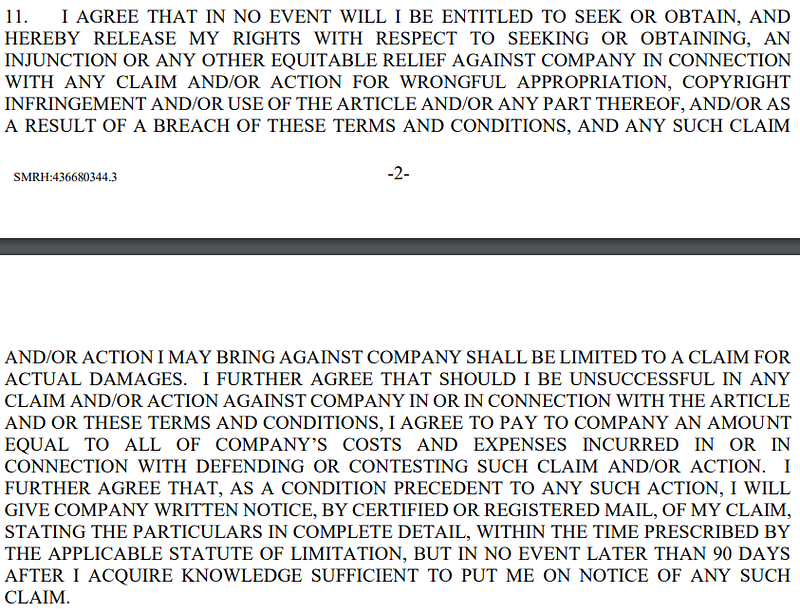
I guess this is a sensitive topic because they broke the writing etiquette and started shouting for no reason.
It basically says that you aren’t entitled to sue them for wrongful appropriation, copyright infringement, or use of your article (their article?). If you do, be ready to compensate them and pay all the expenses.
#7 In case you didn’t understand what “in perpetuity” means
These terms also apply to your heir, successors, and anybody who could have a rightful claim over your writing.

Conclusion: Be careful where you publish your work
My first question is, is this even legal? And the second is, does Medium have other Terms and Conditions to protect writers’ rights?
I don’t know who would agree to those terms. Those publications are big, so I guess there are many writers willing to give away their creativity, ideas, and hard work, but somehow I doubt it.
There’s so much noise out there, and we are so busy nowadays that we sign anything without reading it.
In my case, I went to the end of the submission form because I trust Medium. I know how this platform preserves our copyrights, so I was extending my trust to all Medium publications. Not anymore.
I find it hard to believe that Medium writers are sending their work to a place where they will lose their rights forever, including their heirs and successors. Where they renounce the right to get their piece back, or monetary compensation after they translate and use it wherever they want.
Maybe all their writers know what they are signing up for, and I would be glad if that’s the case because you can write anything on a contract (within legality) as long as both parties agree.
But are you sure you knew what you were signing up for?