
Health | Pain Management
Wasting Away in Margaritaville
Dosing my pain one pill at a time

I injured my shoulder three days into 2024 and have been in unbearable pain since. I wish I could say that it was caused by veering over a cliff on my bike, stretching my body to its limits in a yoga standing bow pose, driving the ball too hard for a pickleball tournament for a win, or possibly from catching too many perfect long waves in Malibu.
I wish I could say it was caused by something exciting so that I had a tall tale to tell when asked why I have this excruciating look of pain and anguish on my face. I don’t. It was the ordinary domestic routine that turned into the extraordinary.
I injured my shoulder, placing down a cup of Joe on my washing machine, which turned into an avalanche of stabbing sharp pain, the type of pain that lingers then dulls for an hour or two when I’m in a drug-induced coma.
So begins 2024, just when I was sticking to my New Year resolution of adding hot yoga to my daily exercise routine of hiking, pickleball, biking, and high-intensity training.
My New Year’s commitment to my exercise plan seems silly now, when all I want to do is stand straight without slouching over in pain. I’ve been in pain since the coffee cup incident. So much pain that I went to the Emergency Care Clinic and then was transferred to the Emergency Hospital because of a possibility of a stroke or heart-related issue.
Ten hours later — all the X-rays and scans revealed it was nothing related to my heart, and I was sent home with Fexxeril and told to contact my primary care doctor.
Herein lies the problem. I can’t get in to see my primary care doctor until next week. I can’t get in to see an orthopedic sports injury shoulder specialist until the last week in January.
This year, this month, this week, I’m supposed to be getting back into surfing after a four-year reprieve. I’m supposed to be enjoying visiting my brother in Sayulita for his birthday and enjoying some surf sessions as well.
Then life happened. Out of the blue! Bam! Life changed. Life is unpredictable, the ordinary morphing into the extraordinary in the blink of a cliched eye. Things are not the same. I push through. It’s in my nature to do so. Keep on keeping on.
So, I shoulder the pain both metaphorically and literally. Oh, the power of free will in the face of fated circumstances. I’m here, alright. Here, in a gringo surfing community in Mexico, to surprise my brother for his birthday.
Surprise, Bro. Your crippled sister is here!
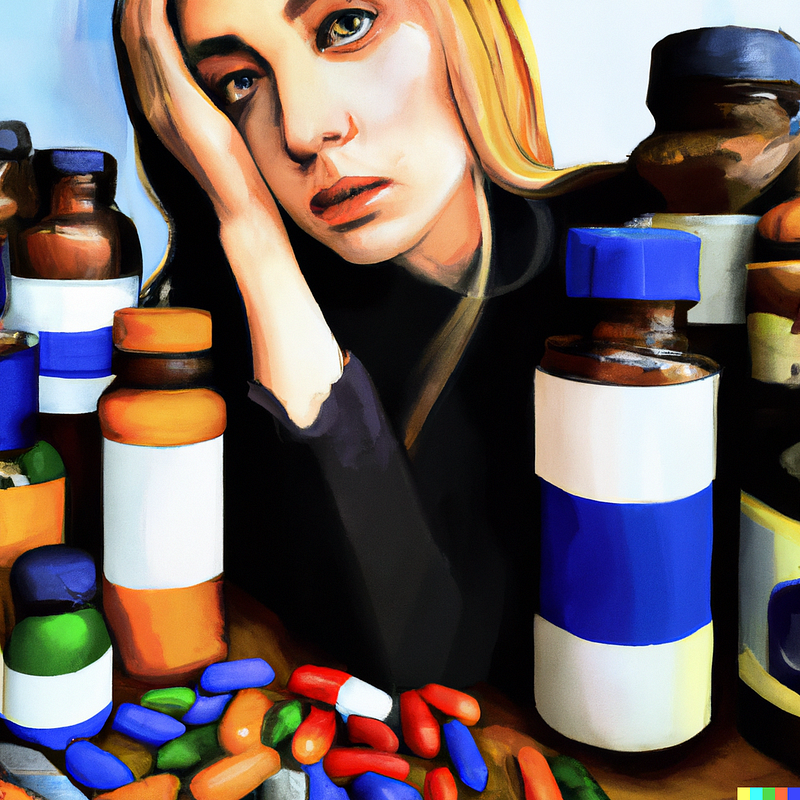
I sit now, writing this, gobbling painkillers like Skittles, each pill a miniature escape from the relentless grip of pain. The red is for reducing inflammation; the white is for mild to moderate pain relief; the oh-so-tiny yellow one is for muscle spasms and unbearable stabbing fits of pain; the dark chocolate blueberry edible is to ease my anxiety produced by the pain.
The Margarita is to wash them all down.
I find myself traversing the “Valley of the Dolls,” looking for that perfect elixir that will kill the pain — numb my body into oblivion.
I’m quickly becoming part of the statistics for Pain Medication usage. Not a surprise as the United States leads the world in pain prescription medications. According to a 2019 National Institutes of Health report, “3.1% (or about 8.7 million people) reported misusing prescription pain relievers in the past 12 month.” A year later, 2020. 9.3 Million People Aged 12 or older reported Misuse of pain relievers.
These increasing stats underscore the widespread use of pain management and raise critical concerns about the common misuse of prescription medications. It also doesn’t help when doctors oversubscribe painkiller medication. According to the Center for Disease Control, more than 131,778,501 opioid prescriptions were dispensed in the United States in 2022. In 2019, approximately 51 opioid prescriptions were written for every 100 people.
No, I’m not on Opioids, but I can certainly understand how an individual can get hooked when nonsteroidal anti-inflammatory drugs (NSAID) like Ibuprofen, aspirin, and Aleve can’t alleviate the pain. Luckily, I don’t have access to any of these opioids, as pain can cause an individual to throw caution to the wind.
NSAIDS OVERUSE
NSAIDs rank among the most extensively prescribed medications in the United States, with around 70 million prescriptions being dispensed annually, which has led to Overuse and Misperceptions. Since 2019, the worldwide market for NSAIDs has been steadily rising from $15.58 billion to a project market value of $24.35 billion by the year 2027.
Many users, like me, combine different NSAIDs and exceed the recommended dosage. According to the National Institute of Health:
NSAID misuse was common, with 19% using more than the recommended dose and 24% using multiple NSAIDs concomitantly. NSAID use appears to have increased since 2002 but the level of NSAID awareness and pattern of NSAID misuse has not changed.
One study conducted by Dr. David Kaufman of Boston University revealed that adults surpassed the recommended maximum daily dose for ibuprofen (Motrin, Advil) and other NSAIDs such as aspirin, naproxen (Aleve), celecoxib (Celebrex), meloxicam (Mobic), and diclofenac (Voltaren).
The Alliance for Rational Use of NSAIDs, a public health coalition committed to educating the public about the safe and proper use of NSAIDs, confirms the widespread overuse of NSAIDs. The Alliance also argues that the increased accessibility to these drugs poses public health concerns underscoring the importance of public awareness regarding the appropriate use of NSAIDs and the risks associated with their misuse.
Public Health warnings about the side -effects of NSAIDs (Nonsteroidal Anti-Inflammatory Drugs) are crucial for people like me in the grips of pain who are willing to down just about anything to feel better.
In my pursuit of pain relief and taking way too many NSAIDs this week in Salyulita, I’ve discovered the hidden dangers of NSAIDs.
Here’s what I did not know before pounding the pills:
Gastrointestinal Issues: NSAIDs can cause irritation and damage to the lining of the stomach and intestines, leading to issues such as gastritis, ulcers, and bleeding.
Cardiovascular Risks: Prolonged NSAID overuse may increase the risk of heart attacks and strokes, especially in individuals with pre-existing cardiovascular conditions.
Kidney Problems: NSAIDs can affect kidney function and may contribute to conditions such as acute kidney injury or chronic kidney disease.
High Blood Pressure: Some NSAIDs can lead to an increase in blood pressure, posing risks for individuals with hypertension.
Allergic Reactions: In some cases, NSAIDs can cause allergic reactions, ranging from mild skin rashes to severe anaphylaxis.
Liver Damage: Rarely, NSAIDs can lead to liver problems, including liver inflammation and damage. Probably, not good popping the pills and washing them down with Margaritas.
Fluid Retention: NSAIDs may cause fluid retention, leading to edema or swelling in various parts of the body. I can testify to this. I’m an achy, drugged-out bloated whale at the moment.
Increased Bleeding Risk: NSAIDs can interfere with blood clotting and increase the risk of bleeding, especially in individuals taking blood-thinning medications. These also lead to increased bruising as evidenced by the recent bruises all over my arms and legs.
These seemingly innocuous medications are sadly quite dangerous.
While it is crucial to use NSAIDs as directed by a healthcare professional, my Emergency Care doctor did not clarify the recommended dosages and durations to minimize the risk of these potential side effects.
My trek through the “Valley of the Dolls,” seeking the perfect elixir to alleviate my pain, is a testament to the challenges many individuals like me face navigating health care in our new segmentalized medical system.
To my surprise, despite the stabbing pain, I am here in Sayulita, armored with an array of NSAIDs —yet now aware of all the effects, both good and bad.
For now, I will celebrate my brother’s birthday in this Mexican surfing haven and wait until I get back into the States to figure out how to proceed with my pain alleviation.
For now, I’m washing down two Advil and an Alleve with a Passion Fruit Margarita.
¡Pa arriba, pa abajo, pa’l centro, pa dentro!
Mary Cappelli is a groggy writer suffering from shoulder pain. In her spare time, she stares at a blank screen and wills herself to write.


