
Was Tupac Shakur the Voice the Black Community Desperately Needs?
Black rights, women rights— he stood for it all but died too soon
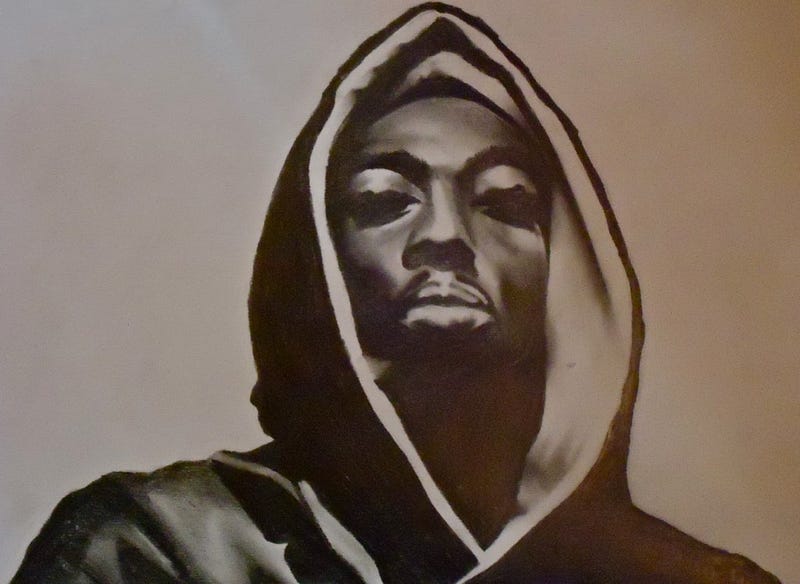

I recently wrote a story about the unsolved murders of rappers Tupac Shakur and the Notorious B.I.G. It was in the aftermath of that story that I was educated about things that I had not known about Tupac. My fellow writer and friend Holly Kellums told me about how the murders were a huge talking point for her generation and how they had shaped and influenced many lives.
It wasn’t until she reminded me that I fully appreciated the causes that Tupac Shakur raised his voice for and the injustices that he sought to fight.
So, I decided to look deeper into his life, and I didn’t have to look much further than the lyrics of some of his most popular songs, to realize, that this was a man who at the very young age of his early 20s was out to use his platform and art to fight some bigger battles of equality and justice.
For anyone else out there who was born after Tupac’s generation, and had failed to appreciate what a loss his death was to some important social causes, here is a glimpse of the many causes I believe he stood for.
There’s also probably not a better time to talk about his contributions, and the legacy he leaves behind, than Black History Month — the perfect time and platform to highlight and amplify voices that may have been forgotten, but must be remembered.
Fighting Injustice Against Blacks
The theme of discrimination against the Black community shows up in a variety of ways across most of his songs. In general, he was someone who spoke about the potential systemic oppression that put the black community in a vicious cycle of bad fortune.
The systemic racism in the world and especially in the American community against blacks often shows up in different forms. Whether it is the much-talked-about incidents like George Floyd, the Amy Cooper incident that gave birth to the “Karen” memes, or my own experiences as an exchange student in Cleveland, where each campus crime incident started with the subject line “unidentified black male,” each of these make the non-Black communities sub-consciously believe that the Black community breeds criminals, or that skin color has anything to do with a person’s criminal tendencies.
Tupac raises these systemic issues beautifully in many of his songs including, most famously, in the song Trapped.
“You know they got me trapped in this prison of seclusion Happiness, living on the streets is a delusion Even a smooth criminal one day must get caught Shot up or shot down with the bullet that he bought Nine millimeter kickin’ thinkin’ about what the streets do to me Cause they never talk peace in the black community”
Respecting and Empowering Black Women
It is often the people within the community that mistreat their own people in ways that they don’t consciously realize, but end up adding to the overall discrimination. The constant objectification and stereotyping of black women, whether it is to do with body types, fashion style, or any other characteristic, often comes from within the black community in the form of music, narratives, or commonly accepted language.
There are even studies and research around the misogyny that is rampant in Rap and Hip Hop music, whether lyrically or in music videos that paint black women in a certain light. The conclusion in the study does talk about discrimination against women showing in varying degrees across music, and may not have just rap to blame, but there is often a higher and more drastic degree of discrimination in rap vs. other genres.
Although women are presented as subordinate to men in a majority of rock and country songs as noted earlier, rap stands out for the intensity and graphic nature of its lyrical objectification, exploitation, and victimization of women. Other genres, in the aggregate, make more subtle allusions to gender inequality or present more muted criticisms of women.
Tupac, however, was one of the few artists who went against the grain and encouraged black women to be proud of their roots and feel empowered to get rid of any shackles that are put on them by dependence on men who don’t treat them right. His song, Keep Ya Head Up is the strongest example of such messaging.
“Some say the blacker the berry, the sweeter the juice I say the darker the flesh then the deeper the roots I give a holla to my sisters on welfare 2Pac cares if don’t nobody else care And I know they like to beat you down a lot When you come around the block, brothers clown a lot But please don’t cry, dry your eyes, never let up Forgive, but don’t forget, girl, keep your head up And when he tells you you ain’t nothing, don’t believe him And if he can’t learn to love you, you should leave him ’Cause, sister, you don’t need him”
Challenging the Economic Disparities
We’ve all come out of a four-year period where we saw Donald Trump lead America, in what many believe the worst kind of leadership culminating in the Capitol Hill incidents of a few weeks ago.
Tupac saw through the man in 1992, when he was little known to the world, beyond being a business tycoon who was infamous for his greed. In this 1992 interview, Tupac talks about the greed of rich people, and how he felt it was every rich individual’s duty to ensure they gave back to society in whatever way possible. He believed that it was grossly unjust that some people piled on millions in wealth while others starved to death.
He also talks about how the black community needs to stop talking about being enslaved and being wronged because everyone knows that, but about how they need help to get back on their own two feet. How America is now a powerful and rich nation that can help the weaker parts of its society to grow in an inclusive manner, by just spreading the wealth among those that most need it. He painted the real problem in a way that looked for solutions than just going on and on about all the injustice done to the community.
There are countless other songs, interviews, and incidents where Tupac talks about what needs to be done to address some of the most pressing issues that plague our society, and a short article is probably not enough to address them all or do justice to his efforts, that were cut short by an untimely death.
Yet, I’ll leave you all with one of the most important messages he left us with, in a time when BlackLivesMatter wasn’t a nationwide rage, and the world hadn’t stood up to take notice of the inherent atrocities of discrimination. In a song, aptly titled White Man’z World, Tupac left us with these deep thoughts, quite simply put:
“Eatin’ Jack-Mack, Starin’ at the walls of silence Inside this cage where they captured all my rage and violence In time I learned a few lessons, never fall for riches Apologizes to my true sisters, far from b — ches Help me raise my Black nation, reparations are due It’s true, caught up in this world I took advantage of you So tell the babies how I love them, precious boys and girls Born black in this white man’s world”