
The Real Reason Why the Lusitania Was Sunk!
Learn Facts YOU Did not Learn in School
The sinking of the Lusitania was featured in my debut historical novel Fateful Decisions. It plays a major part in the story where the main characters meet and their lives after the tragedy.
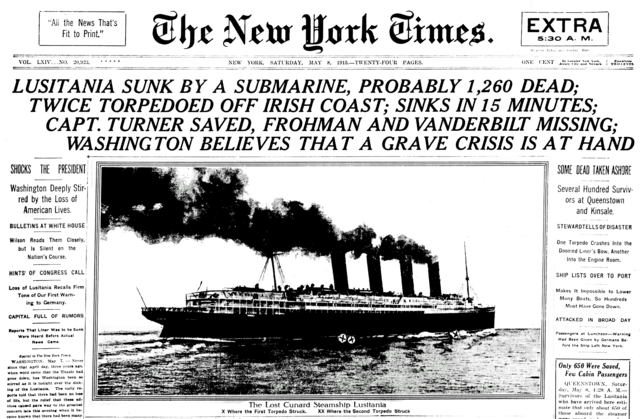
May 7, 2022 was the 107th anniversary of the sinking of the Lusitania. It set sail from New York to the United Kingdom carrying with it 1,960 (some sources say 1,959) passengers and crew, consisting of mostly British and Canadians but also included 159 Americans. Its destination was Liverpool, England.
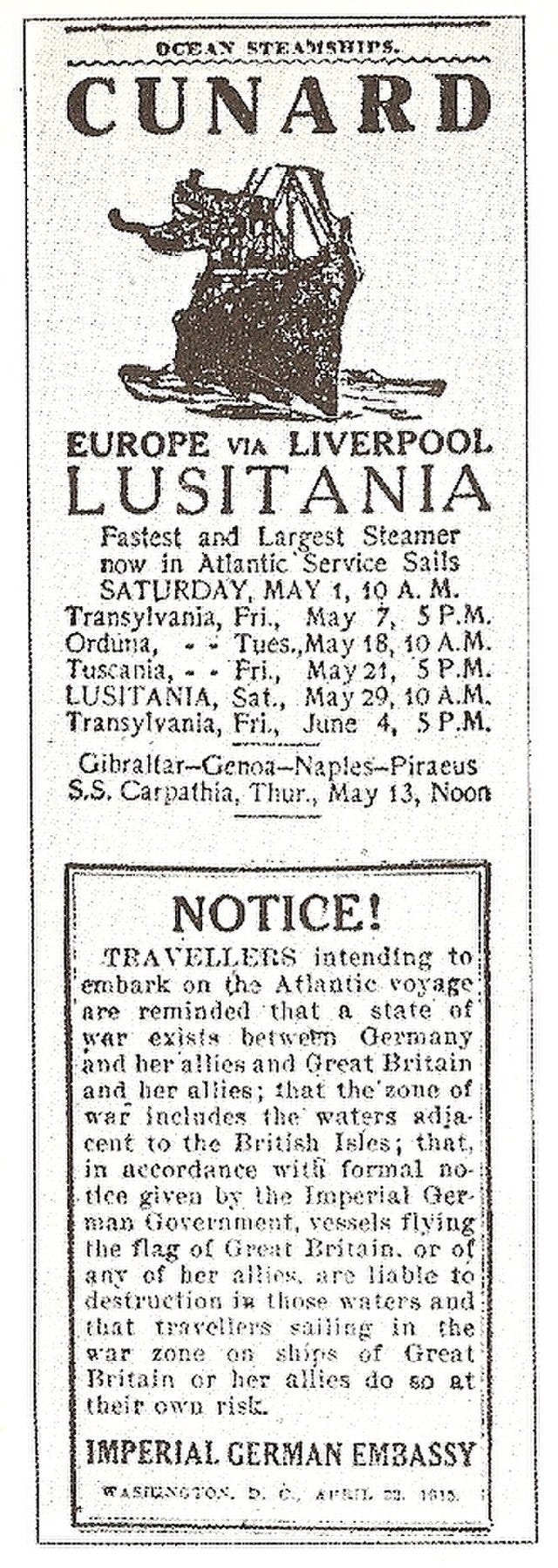
Before it set sail there was a warning in 50 American newspapers posted by the German Embassy in Washington D.C. on April 22, 1915, that Americans travelling on board the Lusitania should be careful as there could potentially be torpedoed by German U-boats in the middle of the Atlantic Ocean.
Many don’t know this, but there were also three stowaways on board the Lusitania discovered behind the steward’s pantry. They had a camera with them that was confiscated by Captain Turner. They were German nationals suspected to be spying for Imperial Germany as it was also known then, and were imprisoned below deck, possibly in a cabin. All three were presumed to have died in the sinking. If there were three stowaways, there could possibly have been others who were not discovered. We may never know.
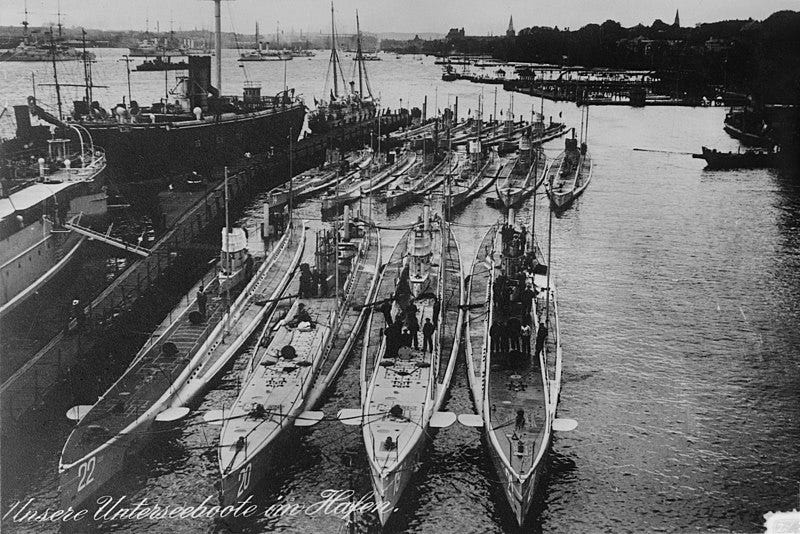
German U-boats were patrolling off the coast of Ireland and this was known to the British government. Germany had earlier on February 4, 1915, declared the seas around Britain a war zone. On May 7th 1915 as the Lusitania came into view after going through a fog it was torpedoed by a German U-boat (U-20) commanded by Kapitänleutnant Walther Schwieger. After the first explosion, due to the torpedo hitting the starboard side behind the bridge, according to the account from the survivors there was a second explosion within the ship’s hull, making the ship flounder more rapidly. It sank in just 18 minutes coming to rest 300 ft on the ocean floor just 11 miles south of the Old Head of Kinsale, Ireland. Some accounts claim that when Schwieger saw the second explosion, he too was surprised at the its intensity that he noted in his diary, he could see the ship would stay afloat for only a few minutes and he could not fire another torpedo at the people trying to save themselves. So, he gave the orders for the U-boat to submerge and go away.
It took with it many lives including that of 128 Americans on board. Even though it was close to the Irish coast, many of the Irish fishermen came with their fishing boats to rescue the passengers, but the water being cold, some perished since it took a long time for the boats to get there. Only 289 bodies were recovered, of which, 65 were not identified. Some bodies were seen floating as far as the Welsh coast. There were poignant accounts of dead mothers clutching their dead babies to their bosoms found floating in the ocean. 885 victims were never recovered. Those recovered, were either buried in Queenstown or at Church of Multose in Kinnsale. Only 767 survived whom 4 later died due to their injuries bringing the total death count to 1,197.
Captain Turner survived the sinking, but the Admiralty brought charges against him. Even though he was later exonerated, he was haunted by the charges, and lived in seclusion for the rest of his life. Schweiger was killed in action when his U-boat was sunk by the British in 1917.
World War I had just started in 1914, when Gavrilo Princip assassinated Archduke Franz Ferdinand of Austria and his wife Sophie on the streets on Sarajevo on June 28, 1914, escalating an already volatile situation in the Balkans. At that time, America was neutral and not yet involved in the war. Many Americans wanted to stay out of the war and felt that it was Europe’s problem. After the Lusitania sank, it changed America’s opinion about Germany and some Americans wanted to go to war. Many British men joined the armed forces against Germany and anti-German riots broke out in London. However, President Wilson held out from joining the war.
Even in 1916, Woodrow Wilson ran for reelection on an anti-war platform, which enabled him to get reelected. Nevertheless, in 1917, he got America involved in WWI on the side of the allies against Germany. The war came to an end in 1918, but at the cost of numerous American lives.
Even back in 1915, there were rumors that the ship was carrying weapons. The German Embassy had some knowledge about munitions being transported on the ship and that is why they put out the warning in the newspaper warning American travelers. How did they know? One can only assume that they had a network of spies in the immigrant community working in the dockyards who could have seen these munition cases or even other weapons being loaded into the ship’s cargo area. Germany claimed that the Lusitania even though it was a civilian ship was carrying weapons for the British, to kill German soldiers, which was vehemently denied by the Americans. When the ship was torpedoed, there was one explosion witnessed by all those who saw the torpedo hit the ship, but then the second one also gave rise to the confusion that the German U-boat had fired two torpedoes. However, some survivors said that the explosion seemed to come from within the ship and not outside, like former Army officer Joseph Marichal a French survivor who testified during the enquiry stated that the explosion had sunk the ship quickly because the ammunition triggered the second explosion, which sounded like “similar to the rattling of a maxim gun for a short period” and came from beneath the floor. He was quickly shut down.
In 1918, a series of actions were brought against the Cunard Company by the survivors or by the families of the passengers who had lost their lives for various reasons, in New York. One of the reasons was, that the Lusitania was transporting highly explosive materials, which exploded when the ship was hit by the German torpedo, and she also carried gun cotton (nitrocellulose), nitroglycerine, dynamite and other munitions, and highly dangerous explosives. It was also painted grey to have the characteristics and appearance of a war vessel. A New York court, did establish that the ship was carrying 4,200 cases of small arms ammunition aboard, but did not carrying explosives. The cartridges had been stowed in the forward section of the ship 50 yards from where the German torpedo had been struck — a fact, which was also stated by Jim Coombes a senior government lawyer at the Treasury Chamber in 1982.
In the 1940s and 50s the British Navy used dept charges on the Lusitania sinking site. Some people say that it was for target practice. But others say that it was because they wanted to destroy the evidence that the ship was illegally carrying weapons to Europe when it wasn’t supposed to.
In 1993, Robert Ballard, the US oceanographer, who is famous for discovering the Titanic’s final resting place in 1985, discounted the armament theory and stated that the second explosion was due to the coal dust after the ship was torpedoed. Others claimed it was due to the boilers exploding as the sea water crept in, which possibly hastened the ship’s sinking.
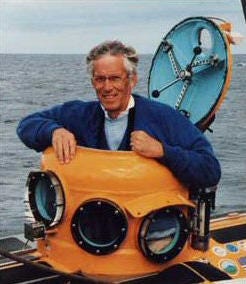
In 1982, there was a warning issued to a diving team that wanted to explore the wreck, to be careful that there could be some explosives within the wreck that could still possibly explode. However, the dive didn’t yield evidence of any explosives. In September 2008, Lusitania’s American owner, Gregg, Bemis, who bought the wreck for $2,400 from Liverpool & London War Risks Insurance Association in 1968, allowed a dive team headed by Eoin Mc Garry a County Waterford-based diver. They used a remote operating vehicle to get into the wreck and identified a huge amount of ammunition in a part of the ship not believed to be part of the cargo. Among them were the Remington .303 caliber bullets, which was used by the British military during World War I. Ten bullets were brought up as samples.
So, if the ammunition was found in an area where the cargo wasn’t listed, then that means that the ship was operating more than as a trans-Atlantic passenger liner. However, more investigation into the ship’s cargo has been stalled by the British (possibly) and Irish governments. The ship is rapidly deteriorating due to environmental abuse, dishonest divers who can access and steal from it and also from fishermen’s nets, but Bemis was denied the opportunity. Sadly, Bemis died in 2020. As far as the classified files concerning the Lusitania, some websites say that all the files have been released to the public, whereas some say not all, but whatever the case may be, there is still no doubt, there is a lot more investigation that needs to be done.
If the Lusitania were indeed functioning as a ship secretly supplying weapons to Britain, then this means that the Germans were well within their rights to have torpedoed the ship regardless of any passengers on board, which was what Dr. Bernhard Dernbug, the former German Colonial Secretary said in his statement in Cleveland, Ohio on May 8, 1917 and the German Embassy took steps to warn civilians by posting the warning in the newspapers. So, this also means that the US and British governments lied about the ship just being a passenger liner and knowingly sent more than a thousand innocent men, women and children to their deaths. In 1982, when the diving team was preparing for their dive, the Treasury Chamber was speculating that if illegal munitions were found on board, the survivors or the victim’s families could possibly sue the American and the British governments for reparations as some survivors were still alive then. Also, theories have been swirling around that the British authorities knew that German U-boats were patrolling the Irish sea coast and that the Lusitania was supposed to have naval destroyers like HMS Juno as escorts, but did not. It was also ordered to reduce speed. Some say that Captain Turner reduced speed due to the fog. But nonetheless, it was this low speed that enabled the German U-boat to torpedo the ship, which would not have been possible if it had been travelling at high speeds. So the ship was deliberately allowed to be a target for the U-boat to bring America into the war on the side of the allies, as Germany was winning the war at that time. Also, the U-20 had sunk a merchant schooner, Earl of Lathom in the same area with gunfire after allowing her crew to first escape on May 5, 1915. So, they knew that the U-boat was in the area.
Whatever the reason for its sinking, it is sad to notice that among the dead were 94 children out of 124 children on the ship. And out of 35 infants 31 infants perished. Can you imagine the contributions these children/infants could’ve made to society (optimistically speaking) if they had lived? Also killed were many prominent people who contributed positively to society at that time. A few of them were: Thomas O’Brien Butler (Irish composer and conductor), Justus Miles Forman (American novelist and playwright), Rev. Dr. Basil W. Maturin (British theologian, author and Catholic convert) Alfred Gwynne Vanderbilt (sportsman, millionaire), Lothrop Withington (American genealogist, historian, editor and singer), Marie Depage (Nurse) and many others. What a waste of lives! What else could they or their descendants could have contributed if they hadn’t died on that fateful day? One can only imagine!
Please clap for the article and also leave comments, follow me and also please consider joining medium to get full access to every article by clicking here.
To see my website, articles, novels and short stories, please visit my website www.trevordsilva.com