
Was Plato Right?
Lessons from Allegory of the Cave
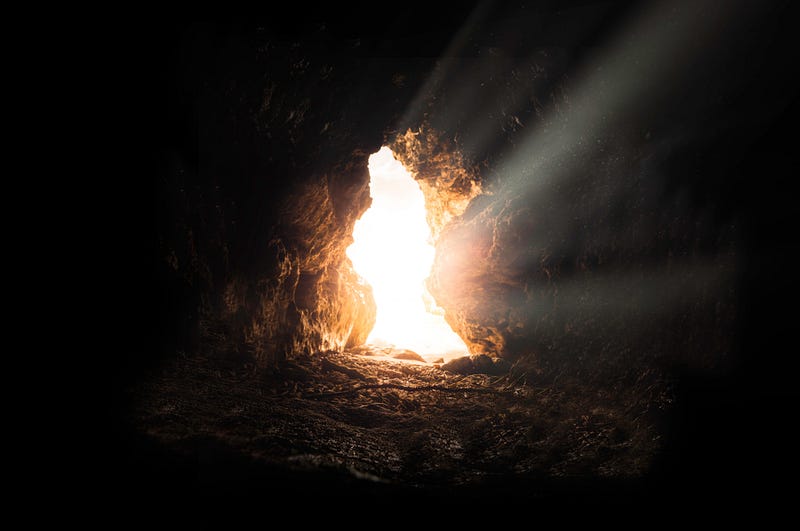
From the Ancient Greek philosophers to the modern-day gurus, philosophy has always been a subject of constant skepticism, misperception, and unwarranted criticism.
Most of us have this image of philosophy as an elaborate abstract exercise and a collection of utopias. However, that’s not the case. In reality, philosophy is quite a useful skill — can be learned and practiced by all — and it can be used as a tool to enlighten the masses and to punch a hole in their wrong perception of reality.
Luckily, Plato was aware of this utility of philosophy and even 2400 years ago, he was sure about using philosophy as an apparatus to give masses some idea about their true reality and the meaning of life.
Plato — inspired by his mentor, Socrates — was against Athenian democracy and spent most of his life, disparaging the Athenian socio-political order.
Plato had this goal of awaking people, who were comfortable in their ignorance and weren’t in favor of rectifying their false perception of reality.
Thus, he wrote this book Republic that later became one of the most popular texts in Western Philosophy. Being a critic of Athenian democracy, in Republic Plato envisioned an ideal society by taking into account the subjects of justice, truth, and beauty.
However, this piece is aimed at only understanding a short excerpt from Book VII of Republic, Allegory of the Cave. Like most of his books, this allegory is also written in the form of discourse, between Plato’s brother, Glaucon, and his teacher, Socrates.
In the Allegory of the Cave, Plato carefully uses different metaphors to explain the effect of education and the lack of it on our nature.
Compare the effect of education and the lack of it on our nature. [1]
Socrates, being the narrator, tells Glaucon the story of humans, who live in a cave, being chained and forced to face a blank wall. As they are chained, they can only look at the shadows, flitting on the blank wall. Also, they have been in the cave since their childhood so, they don’t have any idea of what lies beyond the cave.
The people have been in this dwelling since childhood, shackled by the legs and neck. Thus they stay in the same place so that there is only one thing for them to look at: whatever they encounter in front of their faces. But because they are shackled, they are unable to turn their heads around.[2]
The prisoners have perceived these shadows as real, which flutter on the blank walls, appearing to be dancing over a fire behind them.
Between the fire and the prisoners there is a raised way; and you will see, if you look, a low wall built along the way, like the screen which marionette players have in front of them, over which they show the puppets.[3]
Plato uses this to tell us the true reality of the physical world, which is being controlled by superior authorities. He tells that, just like prisoners in the cave, we only get to see what we have been allowed to see.
Just like these phantoms in the cave, fame and success among other things are not as real as they appear to be because our society has projected them on the blank walls of our minds and manipulated us into thinking of them as real entities. Plato is of the view that our perception of reality is not based on the truth, rather it is based on illusions.
Socrates, who is the narrator, then tells Glaucon that one of the prisoners somehow gets free and escapes the cave. When he gets out, he sees the sun for the very first time. Being unaware of this majestic and heavenly body, he finds it quite difficult to look at the sun and struggles with this new reality of the physical world.
Whenever any of them was unchained and was forced to stand up suddenly, to turn around, to walk, and to look up toward the light, in each case the person would be able to do this only with pain and because of the flickering brightness would be unable to look at those things whose shadows he previously saw.[2]
Slowly and gradually, he then gets to know the truth about the shadows, which he and his friends had been seeing in the cave since their childhood.
Firstly, he gets confused but with time, he succeeds in wrapping his head around the fact that the shadows in the cave were not real things, rather the physical word, which he is experiencing right now, is real.
What he saw before was an illusion, but that now, when he is approaching nearer to being and his eye is turned towards more real existence.[3]
Here, Plato uses the metaphor of the sun to help us understand what it is like to be enlightened. Sun is the enlightenment, that we — prisoners in the cave — have no knowledge of because of our skewed reality of the physical world.
Upon discovering this new reality, the freed prisoner goes back to the cave to tell his friends about his experience of the true physical world. However, his friends, being unaware of the truth, think of him as stupid and ultimately, reject his ideas. They find him attacking their illusion of reality and therefore, they resist him to prevent any disruption of their false perception of their existence.
The prisoners — just like most of us — are conformed with their skewed reality and they don’t want to change it.
And would they not let him know that he had gone up but only in order to come back down into the cave with his eyes ruined — and thus it certainly does not pay to go up.
Here, Plato gives us some idea that what it feels like to be a philosopher, who tries to educate the public but ends up getting alienated. Plato makes it clear that all the truth-tellers should expect this form of alienation from the people who’ve not devoted their lives to finding the truth or to understand the true reality of their lives.
Moreover, Plato uses this analogy to highlight the innate characteristic of most of us that — just like the chained prisoners of the cave — we are comfortable, being in the dark.
Our predicament is, most of us are reluctant to venture on this journey of enlightenment because we have found comfort in ignorance and anyone who tries to get us out of this deep dark hole, must become a victim of our anger and hostility.
And if they can get hold of this person who takes it in hand to free them from their chains and to lead them up, and if they could kill him, will they not actually kill him? [2]
However, the philosophers can use the Socratic Method to carefully administer philosophical education. In this way, by owning up to ignorance, the philosophers can impart knowledge and wisdom to those, who don’t know it yet.
In conclusion, Plato doesn’t leave us in the lurch, rather he also suggests the solution to our predicament, bestowing us with a plan to get out of this dark cave of ignorance?
For Plato, the best way to do this is to educate ourselves. However, educating ourselves — just like the ascent out of the cave for the prisoners — is quite difficult as it requires assistance and even sometimes coercion.
He is reluctantly dragged up a steep and rugged ascent. [3]
Moreover, educating ourselves is not only about changing some ideas or changing some practices rather this process requires a complete turn-around of the mind. We have to shift our soul from one set of ideas to another set of beliefs and this transformation requires a lot of effort.
The process, I said, is not the turning over of an oyster-shell, but the turning round of a soul passing from a day which is little better than night to the true day of being, that is, the ascent from below, which we affirm to be true philosophy?[3]
Plato makes it clear that this transformation from darkness to light is a difficult one and not all of us have the desire or courage to turn around our souls. Thus, those who go through this difficult transformation to enlighten themselves are the only ones with the true knowledge of their reality.
To conclude, yes, Plato was right vis à vis the significance of philosophical education in transforming ourselves from chained prisoners to enlightened humans.
Resources: