
Was I Crazy to Drive All That Way to a Place I’d Never Been?
Sometimes crazy is good
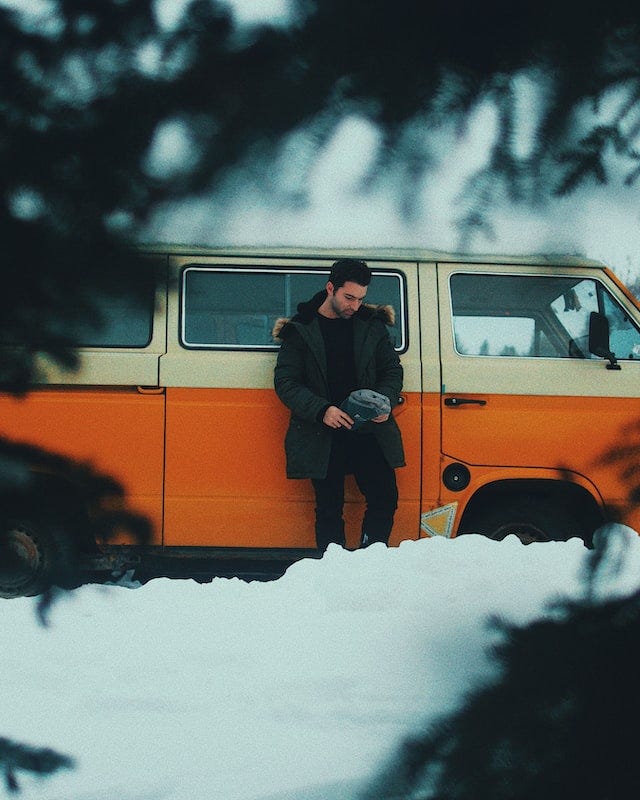
I sat in the car for a time, delaying the inevitable moment I’d swap my car’s warmth for the biting cold outside. Winter had arrived with a vengeance bringing a light dusting of snow, but worst of all, it wrapped me in its icy tentacles, so I was permanently cold.
I looked around me and shook my head. How had I ended up here? Shit, I’d become a sun-loving Australian and didn’t deserve to be in what felt like the coldest place on Earth. Earlier that morning, I’d got in the car, stabbed my finger randomly at a spot on the map, and chosen it as my destination. Stupid? Probably. Impulsive? I had been known for it.
“Oh fuck!” I said aloud, which didn’t matter because I was the only one reckless enough to be outside in the cold.
I don’t usually swear, but this had to be the coldest friggin place on the planet. I had on my corduroy pants, a singlet, shirt, sweater, duffle coat, and scarf, and I was still friggin cold. My balls had retreated to where they’d been before I hit puberty. Keeping my head warm was a bright red beanie that mum knitted me, and I swore I’d never wear. Thanks, mum.
But I was as cold as ever. Maybe I’d warm up when I started walking, or perhaps I was kidding myself thinking that.
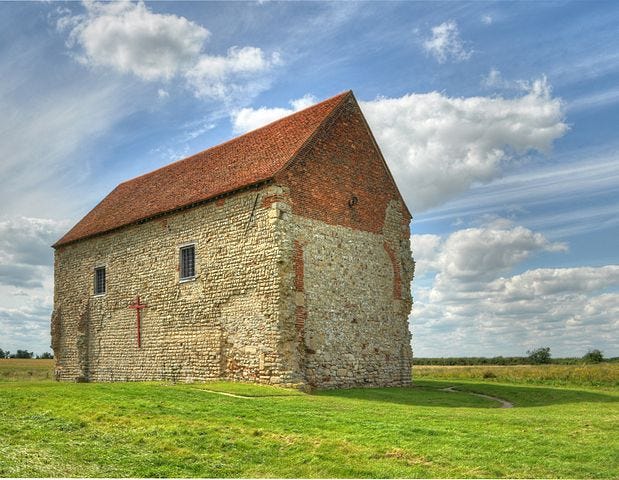
Saint Peters-On-the-Wall was the name on the map, and for some unknown reason, it intrigued me. I was curious because the map showed it standing alone in the middle of nowhere and at the end of a farm track. Now, looking around me, all I could see ahead was farmland, and beyond it, in the distance, the church. Not that it looked much like ones that I’d seen before. I couldn’t see much beyond it because of the seawall, though I knew from the map that there were some salt marshes and the North Sea.
Why did they build it out there and not inland, where there were people? I mean, what’s the use of a church without people?
I had a mile-and-a-half round-trip hike ahead if I was going to see the reason for this trip. Shivering, I had a feeling that I was going to end up regretting my impulsiveness.
Leaving the scattering of houses and the local pub behind me, I set out, and after five minutes, I wondered if it was getting warmer. It was more likely that I’d become conditioned to the weather. Sure, my nose resembled an ice block, and my ears? They were undoubtedly cold, and there was a tingling sensation at the tips. I nearly forgot to add my toes to my list of gripes. They were freezing just as badly.
Still, taking it all in, I had to admit that, though flat and rural, there was something extraordinary about the scene. I imagined one of the Dutch masters painting it — they were good at making the most out of bleakness. Already I’d forgotten to feel sorry for myself as I marveled at how the grass, white with snow dust, was already frozen by winter frost and gave a satisfying crunch when I stepped on it.
In the distance, northwest of where I was walking, there was The Bradwell Nuclear Power Station, standing out against the horizon. Like everywhere on that crisp winter’s day, the buildings stood as sharp outlines against the sky. In these surroundings, though, they seemed sinister — they didn’t belong. Back when this all happened, the Cold War was still going on, and the threat of nuclear annihilation hung over our heads. The word nuclear was tainted.
I knew from the map that there was an abandoned World War Two airfield between me and the powerplant. There didn’t seem to be much of it remaining, leastways, nothing that I could see. Regardless, I paused to look and wonder how many young fliers took off from there and never returned.
Here, in this place, even the air around me had an unexpected crispness that was the difference between town and country. Out here, on the Dengie Peninsula, there would be no escaping the arctic blast that would be carried across the North Sea until it hit landfall.
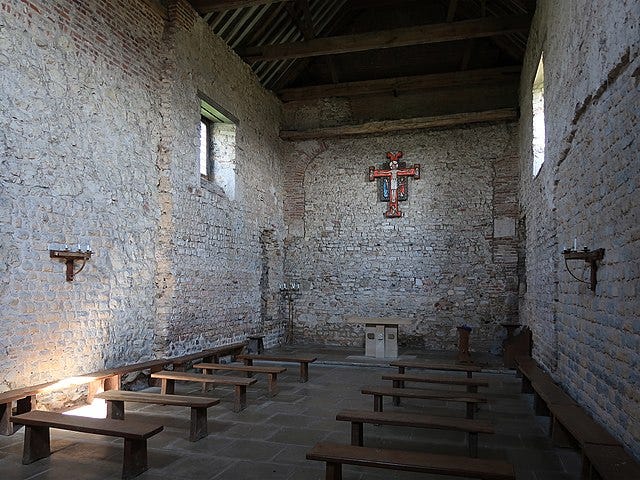
I’d been so absorbed in my thoughts that I reached the chapel before I knew it. There was nothing ornate or special about the building because it was simple and unpretentious. Unfortunately, it was locked up, which meant that I wouldn’t get to see inside, not unless I came back another day when it was open. I checked the opening times shown on the noticeboard. I don’t know why I bothered because I knew I wouldn’t return.
Despite it being closed, I wasn’t overly disappointed. The walk to the chapel had been special enough, and St Peter-On-the-Wall was just a bonus. The structure is special because it’s all that remains of a monastery founded by St Cedd. The stones of what had once been a Roman fort had been used to build it.
But it was the place itself, all the other intangible qualities that made it special.
*I’ve included an up-to-date photo of the interior although I couldn’t go inside.
Behind the chapel, the seawall fell away to the shoreline and the North Sea. I wondered what it would have been like before the sea wall, back when St Cedd, sent from the monastery at Lindisfarne, landed on the Essex shores for the first time.
Beginning my walk back to the car I felt a tremendous sense of peace and well-being. I think that more than anything it was the remoteness that had cast its spell on me. I wasn’t a believer in any religion though I had been once. Nevertheless, I’d admit that there was a spirituality to the place.
I’d walked for around five minutes when I heard a sound. My ears were not well-tuned for the sounds of nature, and I had no idea what it was. If anything, it sounded like a dry hinge being repeatedly opened and closed. I stood looking up at the wintry sky and eventually I saw it.
What I saw, the source of this incredible sound, was a creature so magnificent that I found it impossible to continue walking. I had to stop and stare skyward. I was afraid that if I moved, I might ruin the moment.
It was a swan flying solo, and despite it being high up, the crispness of the winter morning carried the sound of its wings beating and a whooping cry timed with the beat of those powerful wings.
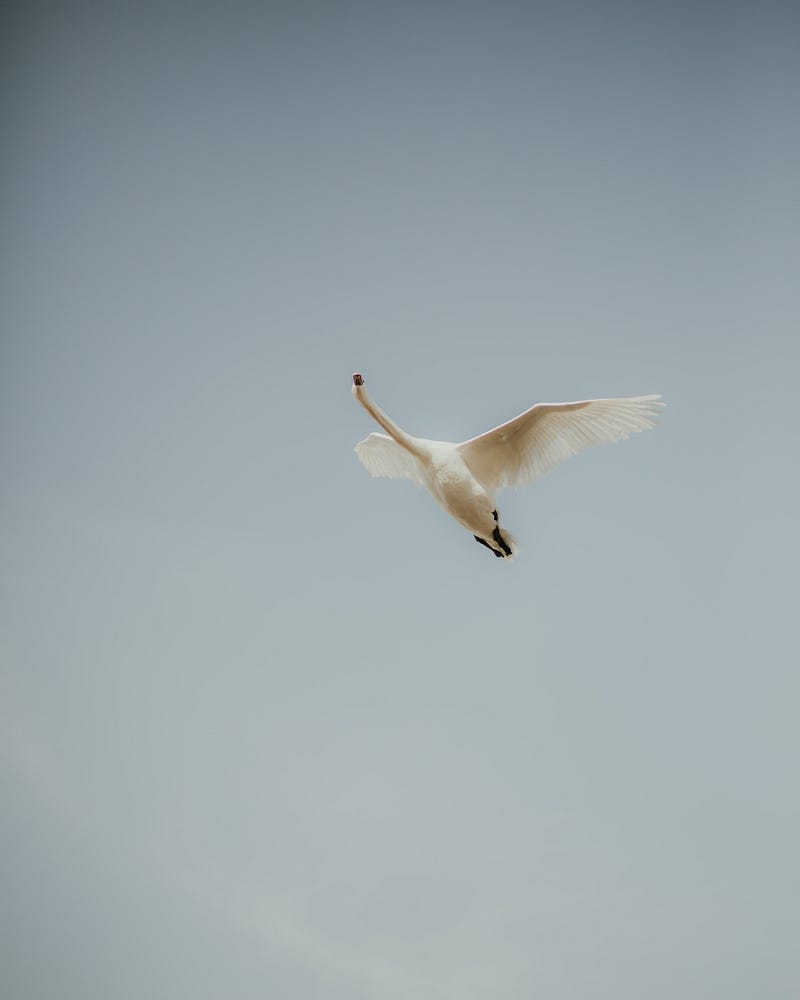
I was totally captivated by what I’d just seen, so much so that I never moved until there was nothing left to see but a distant speck above the horizon.
I think that out of all the things I’ve seen in my life, the sight of that swan against the wintery sky was something I’d never forget. A beautiful creature in its element on a perfect cold, crisp winter’s day. Ten incredible minutes.
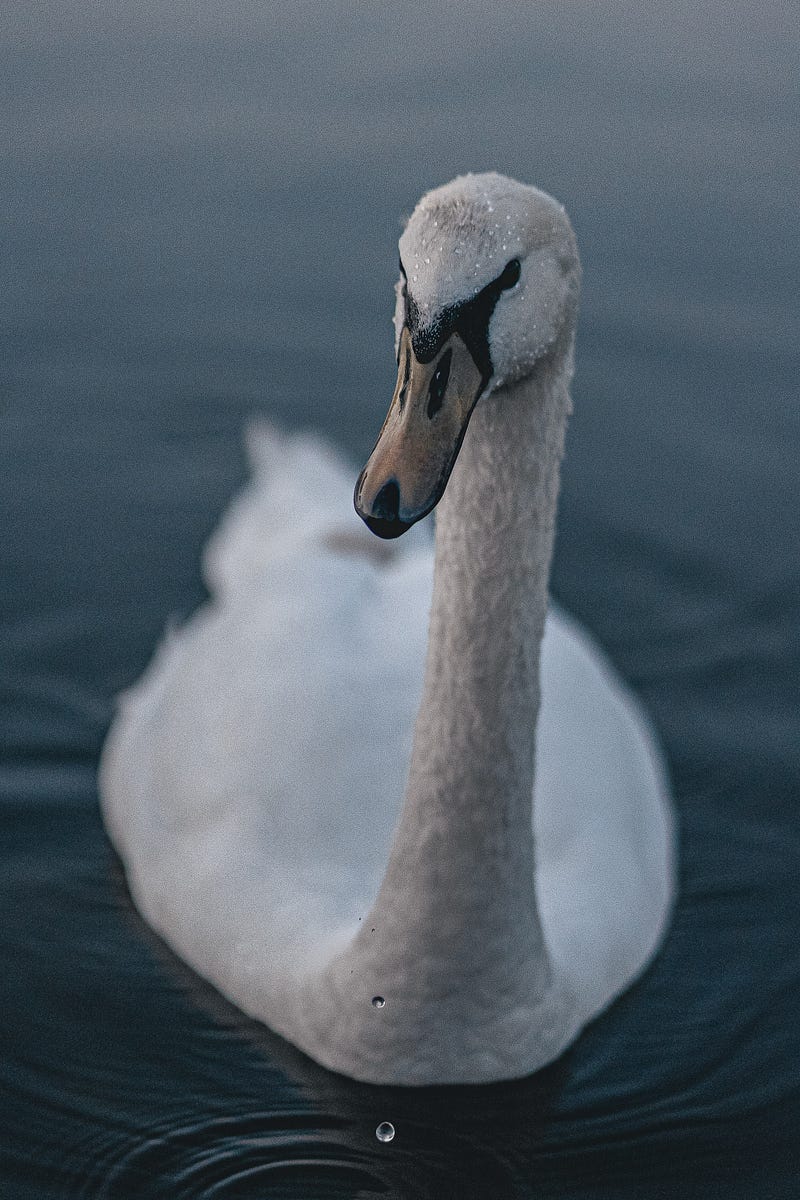
A vivid experience such as that one is rare, and that’s in all probability the reason it will always be precious and unforgettable for me.
Below is a link to a YouTube video of swans flying.