Was Artist Georgia O’Keeffe A Sex Goddess?
She was a trailblazing artist and “wild” woman
Famous 20th-century American artist Georgia O’Keeffe lived an unusual life for a woman born in the 1800s. While she was a revered artist, she also lived a non-conventional life. She married an older man and mentor and she had a love affair with a much younger man.
Was Georgia O’Keeffe a sex goddess?
I wanted the answer to be yes for the purposes of this article. While my research hasn’t turned up a definitive answer, it has reaffirmed my suspicion that O’Keeffe was a woman ahead of her times.
She earned a college education, became a teacher and an art model, and moved on her own to New Mexico. Early in her career, she fell in love and had an affair with a mentor, the photographer, Alfred Stieglitz, and eventually married him. When he cheated on her, she eventually moved to New Mexico and gained back her independence.
Okay. In my mind, yes, Georgia O’Keeffe was a sex goddess.
Mother of American Modernism
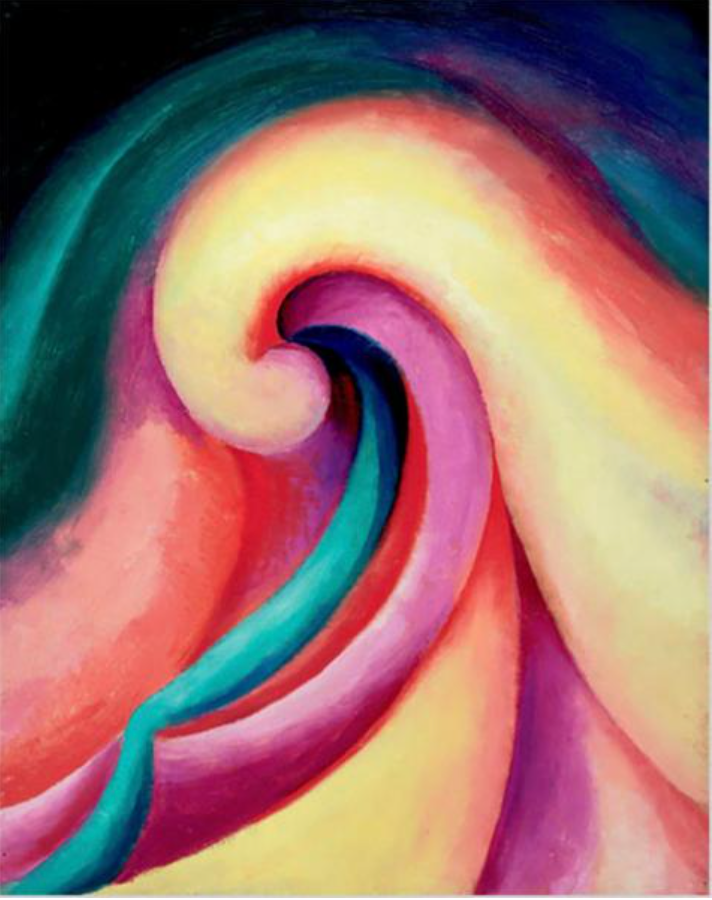
O’Keeffe is often referred to as the “Mother of American Modernism.” Her art includes depictions of flowers, skulls, desert landscapes, and even some cityscapes.
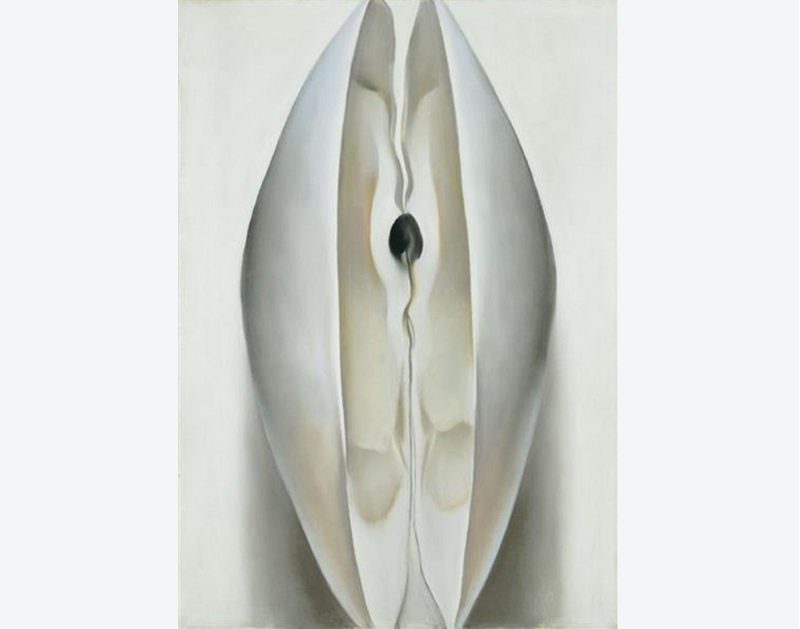
O’Keeffe was born in 1887 and passed away almost 100 years later, in 1986. Most people I know associate O’Keeffe’s distinctive art with flower imagery suggestive of genitalia, especially labia and clitorises.
Though it’s hard for most of us not to see the sexual imagery in her flowers, she denied that was her intent.
This is where I’d make the argument to separate the art from the artist.
Does it matter what the intent of O’Keeffe was with her flower art?
In college, I discovered O’Keeffe’s “Jimson Weed” and other floral art. It captured the beauty of what I’d known as a moonflower. Around this time, someone pointed out to me that many of O’Keeffe’s flowers resemble labia and clitoris. That’s not what I had seen. But, when this observation was shared with me, I went back to her work and I saw it, both the beauty of the actual object represented and the beauty of the soft folds of labia and the powerhouse of the clitoris.
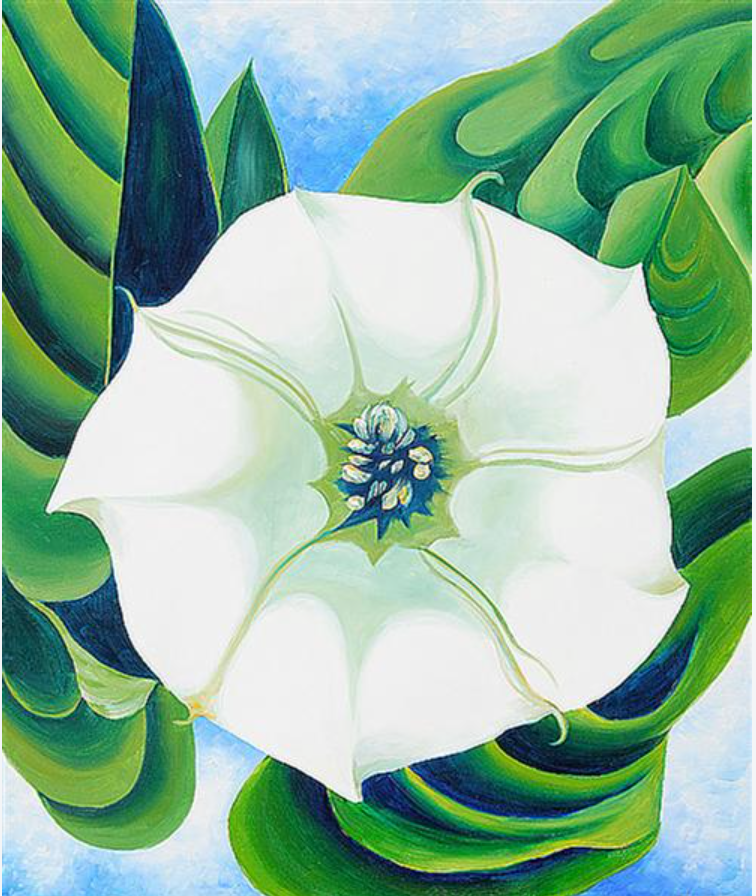
Even in the above depiction of Jimson Weed, I can see the suggestion of the vaginal opening. There’s something unspoken, strong, feminine, beautiful — goddess-like that emanates from O’Keeffe’s paintings. They make me feel empowered to own and initiate my divine sexuality. Sexuality in its highest form is art and for me, O’Keeffe’s art speaks to this.
O’Keeffe had the good fortune of natural talent, direction (she knew from age 10 she wanted to be an artist), work ethic, and meeting the right people at the right time. This combination helped catapult her into the art history canon.
“O’Keeffe’s artworks are in nearly every major museum in the U.S., and she is seen as the mother of American modernism. O’Keeffe is one of only two women in the top 100 artworks sold at auction as well.” — Zimra Chickering
After discovering the desert landscape in 1929, she fell in love with the area and lived out most of her days at Ghost Ranch in Abiquiu, New Mexico.
She Loves Me, She Loves Me Not
While I’m impressed that a woman born in 1887 earned a college education and became a famous artist, this article focuses on O’Keeffe’s personal life, which is not as well documented as I wish it were.
Georgia O’Keeffe’s fascinating rebellious sexual and romantic history begins with Alfred Stieglitz. Georgia and Alfred met in 1916. She was an unknown Texas artist and art schoolteacher at 28 years old and he was a world-famous photographer and Manhattan gallery owner, 24 years her senior, at age 52.
The two began a letter correspondence that spanned from 1915–1933. There are over 700 pages of this collected correspondence, some of which is gathered in the book My Faraway One.
“He’s beginning to yearn. Miserable in his first marriage, he starts to see her not as O’Keeffe the artist, but as O’Keeffe the woman. Years later, he will photograph her — with what she described as “a kind of heat.” — Susan Stamberg, Morning Edition
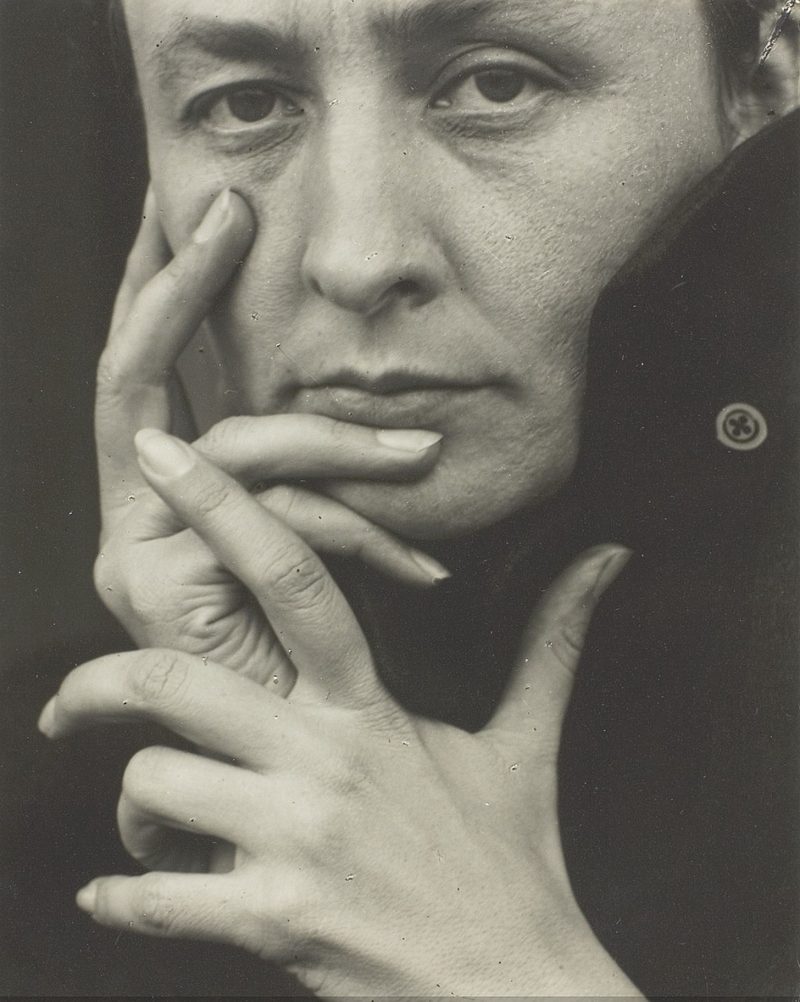
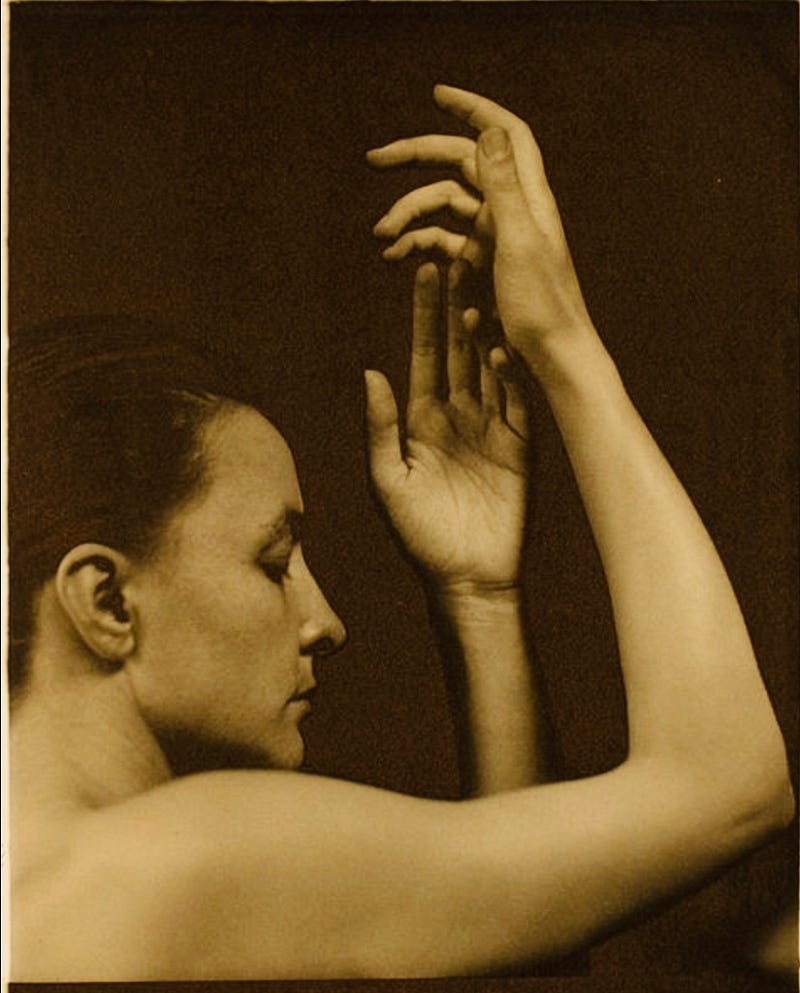
You can view the gallery of Stieglitz’s nude portraits of O’Keeffe here. It’s obvious she’s comfortable in her body and that Stieglitz enjoyed documenting her goddess-like and unusual beauty — she appears confident and brusque, soft and curvy.
Their courtship was slow at first as they exchanged letters and began baring their hearts. In 1918, O’Keeffe decided to move to New York, where Stieglitz set up a studio space for her. They began living together almost immediately, not marrying until 1924, after his divorce.
She was his art model, often posing nude, in these stunning portraits. Stieglitz was married at the time. O’Keeffe and Stieglitz married soon after they were caught in their affair. Later, O’Keeffe was deeply hurt when Stieglitz took a lover without her knowledge. She even spent some time at a facility to recover from a breakdown in the 1930s.
Research points to Stieglitz and O’Keeffe having an open marriage, and that she was likely bisexual. But, for someone so famous, there’s still dispute and mystery around Georgia O’Keeffe’s sexuality.
We do know that Georgia O’Keeffe was involved in at least two same-sex relationships with Rebecca Strand and Mabel Dodge Luhan. She had a Black lover, Jean Toomer. There are rumors O’Keeffe and Juan Hamilton were lovers when she was in her 80s and he was in his 20s. What he received from her will, he donated back to the O’Keeffe estate.
When Stieglitz began an affair with his young assistant in the late 1920s, O’Keeffe went to New Mexico, and it there she mostly remained, throughout the rest of her life. O’Keeffe and Stieglitz remained married for decades but did not often see each other. Stieglitz was pivotal in catapulting O’Keeffe’s art into the public eye and she was fierce and strong enough to thrive on her own as an artist in New Mexico.
O’Keeffe could be called a rebel, troublemaker, free-thinker, queer, polyamorous creative. A “wild” woman. Gotta love those women goddess trailblazers.
Many Women in Their 40s Flourish
O’Keeffe, now 42, is coming alive in New Mexico. She finds the subjects and colors that will place her work in every major museum. Her letters are full of adventures and sunshine — Susan Stamberg
It seems once she was in New Mexico, she found the source that drove her creativity. She could take or leave Stieglitz at this point. That broke his heart, but from reading the letters, she felt empowered in her choice.
In making this decision, O’Keeffe was an early role model for women putting ourselves first — filling our cups to the brim — before extending our hands to others.
It seems a universal truth that women begin either completely succumbing to toxic patriarchal assumptions about us in middle or old age OR we embrace the goddesses we realize we are becoming.
Georgia O’Keeffe embodied the goddess-discovery in herself and her art.
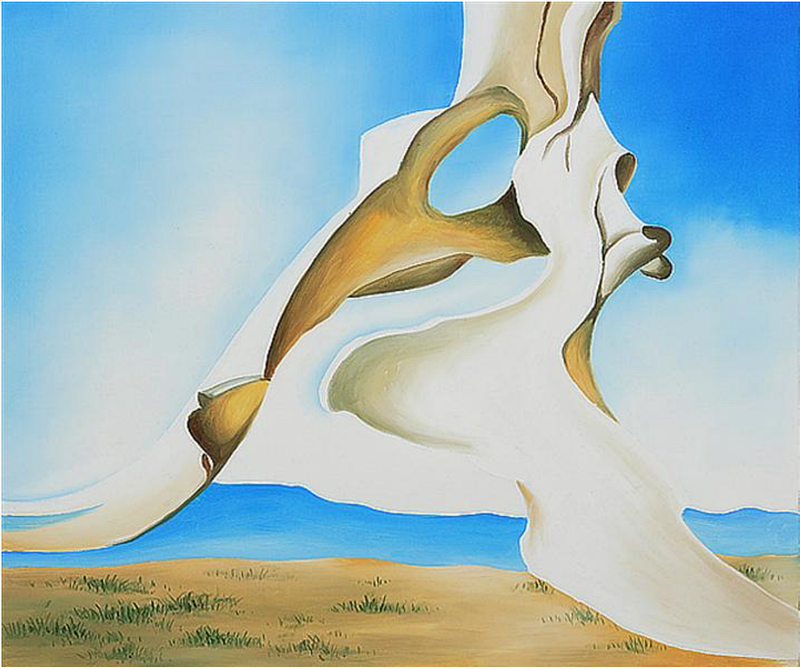
I appreciate how she puts the pelvis skeleton in “Pelvis With the Distance” in the foreground, almost putting it on an altar with the natural landscape — showing us the mystic and powerful aspect of sexual creation/creativity.
Audacious Sex Goddesses for the Win
Were the artists of centuries’ past ahead of their time with respect to identifying on a sexuality spectrum and being open to polyamory? Is there something in artists that allow them to have a larger capacity for love? Is there something that ignites their sexual drive even more than others?
Zimra Chickering astutely observes:
“Being straight and cisgender is presented as the default, but it frequently is not, especially in the case of art history. O’Keeffe, Charles Demuth, Donatello, Robert Rauschenberg, Frida Kahlo, Leonardo da Vinci and Hannah Höch are all household names when it comes to art history, but rarely when it comes to queer history, despite likely being members of the thriving LGBTQIA+ community.”
On the one side, we observe the misogynistic behavior of renowned artists like Picasso, yet on the other side, we see O’Keeffe, taking her life, her art, and her sexuality into her own hands (yeah, I see what happened there).
There are detailed historical accounts of Picasso’s love affairs while O’Keeffe’s love life is veiled in secrecy. The treatment of the male artist delves into his love life and gives viewers the chance to determine whether or not we think he was a misogynist, an artistic genius, or both (in my opinion, both). Our culture is still so awash in patriarchal precepts and mores that art historians are still skirting around O’Keeffe’s love life. Is this because we want to see women as either creatively pure or sexually provocative, but not both at once?
O’Keeffe didn’t have access to our modern discourse around sexuality. However, she had plenty of confidence:
“I have things in my head that are not like what anyone taught me — shapes and ideas so near to me, so natural to my way of being and thinking.” ― Georgia O’Keeffe
“O’Keeffe played against a myriad of gender norms in her dress and behavior, as she wore clothes outside of the “feminine” mainstream of the early 19th century and fearlessly spoke her mind. She would wear top hats, strip naked to paint in her studio and stand her ground against her husband, Alfred Steiglitz. She lived boldly and unabashedly herself, which is a major goal of the LGBTQIA+ pride movement and a major goal of my own life.” — Zimra Chickering
She may have been misunderstood. She may have disappointed Alfred Stieglitz. But, she lived a transparent and honest life. Because she had the audacity and courage to do this, future generations of women are inspired to embrace that we, too, are sex goddesses — that art is around us and within us.
Yes, Georgia O’Keeffe was most definitely a sex goddess.