Was Borley Rectory Really “The Most Haunted House in England”?
Or did Harry Price pull off a convincing hoax?
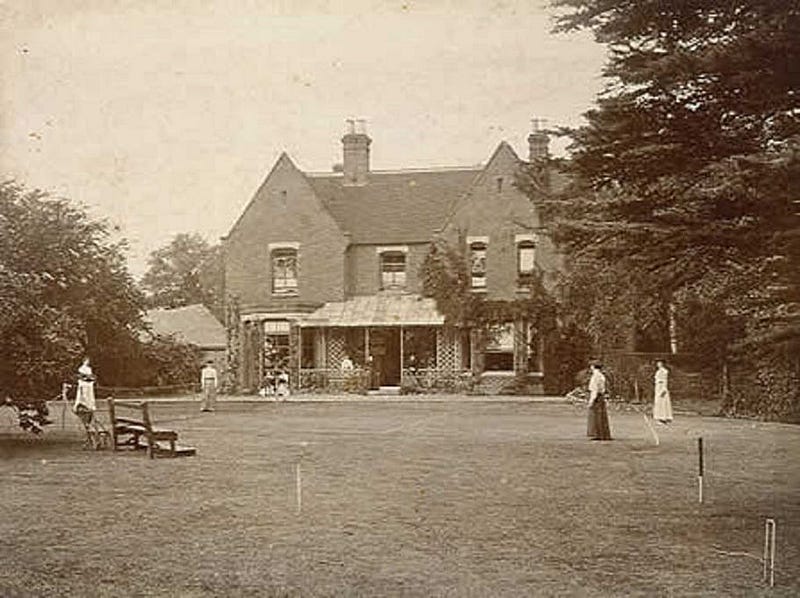
Borley Rectory was formerly known as “the most haunted house in England.” Between 1929 and 1938, the house was a popular site for psychical researchers, but the presence of any supernatural phenomena is unknown and hypothetical.
Borley Rectory
The Rectory was built in 1863 for Reverend Henry Bull, the rector of Borley near Sudbury, Suffolk, although the village is located just across the border in Essex. The house was expanded to accommodate Rev and Mrs Bull’s increasing family, which eventually numbered fourteen children.
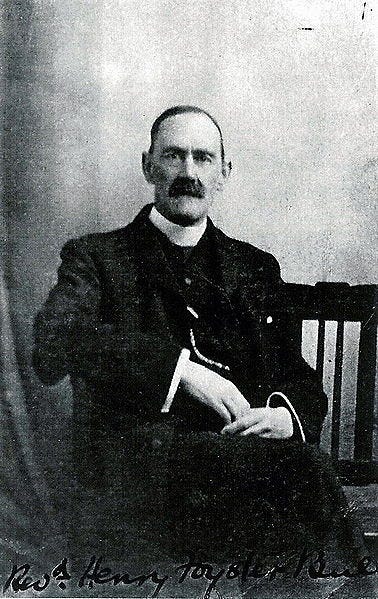
In 1900, one of the daughters, Ethel Bull, reported seeing a ghostly nun in the garden, which was the Rectory’s first strange event. This corresponded with a local legend claiming that the rectory site had been that of a monastery in the 13th century, with a nunnery close by. It is said that a monk and a nun were in love but were killed before they could escape together.
Ethel quite likely heard the story and became so convinced by it that she began to imagine the ghostly nun. Ethel lived to be 93 years old and always asserted that the spirit existed; nonetheless, this is far from conclusive evidence that the story is accurate. Research has confirmed that there was never a monastery in Borley, showing that the initial claim was incorrect.
Harry Price investigates
Harry Price, a psychical researcher, became intrigued by the Rectory in 1929, due to reports from the then residents, Rev and Mrs G E Smith, of various unusual occurrences such as strange sounds and smells, objects being moved, bells ringing, mysterious writing on walls, doors closing abruptly, and fires breaking out spontaneously.
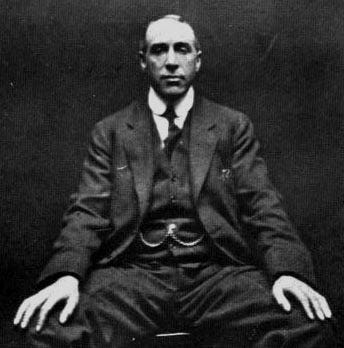
Harry Price held a séance where the medium identified the spirit responsible for the phenomena as being none other than that of the late Reverend Bull!
The Smiths left the Rectory, and Reverend Lionel Foyster and his wife Marianne took their place. The poltergeist phenomena got worse alongside Harry Price’s inquiries.
When the Foysters had had enough of the phenomena, or maybe it was Price’s continual presence, they left the Rectory and Harry Price took over the lease of the house. He recruited a team of scholars to stay overnight in the Rectory to document their observations, in addition to taking extensive notes himself.
In 1940, Harry Price produced a book entitled “The Most Haunted House in England” that summarised his findings and conclusions. What he wrote persuaded many others at the time, and the house’s reputation became widely known.
The aftermath
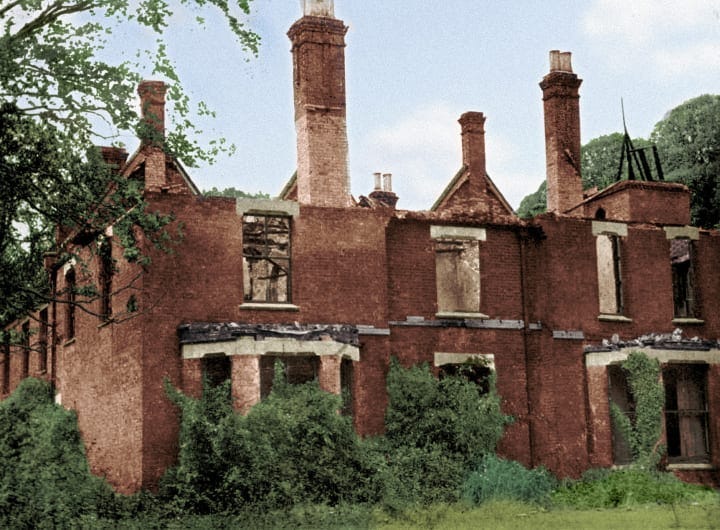
In 1946, the rectory burned down, and a spectral figure was reported to have been visible at an upper window. The question of whether the fire was set intentionally or by accident is open to debate. When bones were discovered buried beneath the house, it provided more “evidence” for the side of the dispute that claimed the hauntings were genuine. However, it remains unclear whether the bones were human or those of farm animals.
Harry Price died in 1948, leaving his extensive collection of books and documents to the University of London Library. During a brief stint as a trainee librarian there in 1974–5, the author became acquainted with the Harry Price collection. The copy of “The Most Haunted House in England” that I read was Harry Price’s copy. What surprised me most about the Harry Price collection was the sheer number of volumes on conjuring and magic tricks, as well as more esoteric stuff on witchcraft and the occult. Therein lies a crucial clue to the entire Borley Rectory saga.
Harry Price was a trickster who started his career by exposing the tricks used by others. In addition to using some genuine scientific methods to investigate strange phenomena, such as measuring temperature changes and photographing evidence, there is every reason to believe that many of the incidents were staged, being little more than conjuring tricks and that purely natural events were given greater significance than they deserved.
For example, Price’s 40-person investigation team was primarily made up of known mediums and students. A medium’s reputation is built on their ability to detect spirit presences, therefore they are unlikely to claim otherwise when offered such a golden opportunity. For the students, it was doubtless far more entertaining to claim that something strange had happened than that it had not.
One of the most incriminating pieces of evidence against Price is that, while an independent investigator was being taken around the property after being told that things were thrown around for no apparent purpose, he was hit on the head by a small pebble. Harry Price’s pockets were later found to be filled with pebbles.
Another reason to mistrust Price’s assertions was Mrs Smith’s declaration in 1949 that, contrary to what Price had written in his book, the phenomena he described had begun after he arrived at the Rectory, not before.
The Borley Rectory tale is an example of a narrative that got out of hand. Harry Price, who had no qualifications for the job and no scientific background, was keen to be recognized as a legitimate psychical researcher. He needed an opportunity to prove himself, and Borley Rectory provided that opportunity. He understood the type of proof that should be present in a truly haunted house and was completely capable of generating it, which he did.
As a side note, I have often wondered if J K Rowling made use of the Harry Price Library to research her Harry Potter books — she would certainly have been well advised to do so. The description of the library at Hogwarts School does indeed bear a close resemblance! And is that why Harry Potter was called Harry?
(This is an updated revision of a story first written in 2021)
Did you like this? Maybe not! Either way, your comment will be very welcome!
For other similar pieces, see my List:


