
Warren Buffett Gets Caught with Shady Stock Trades
Meanwhile, Berkshire Hathaway is underperforming the S&P
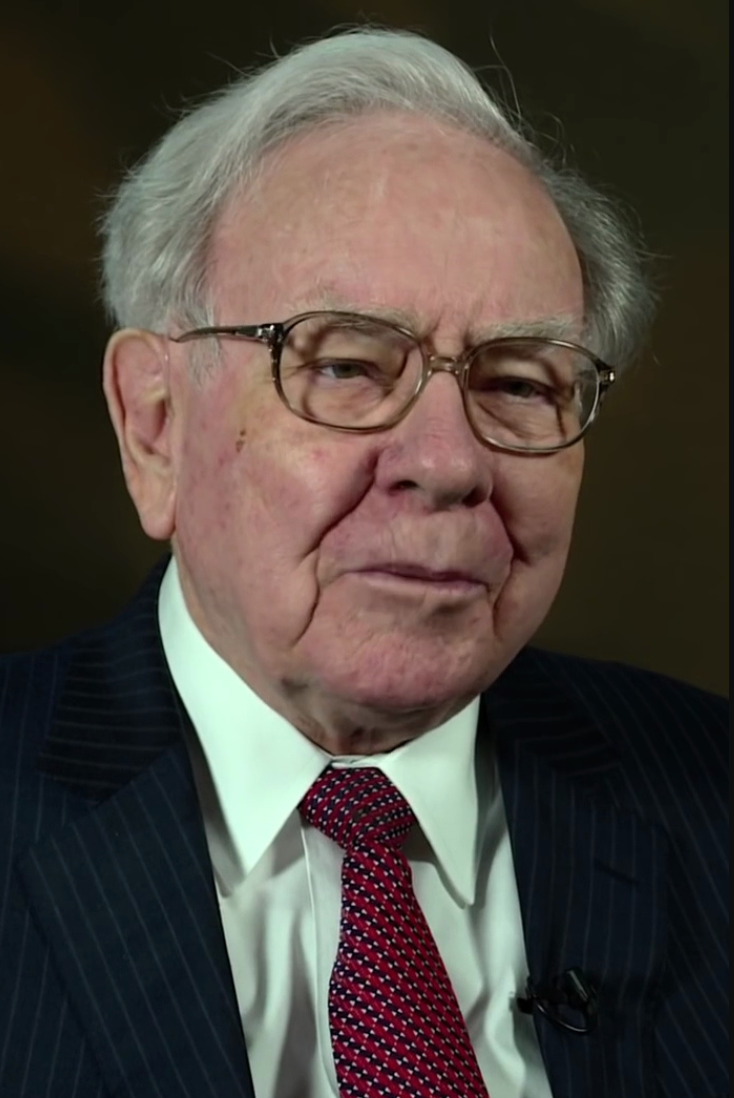
Warren Buffett is not all that he is cracked up to be. He just caught with his hands in the cookie jar — buying and selling stocks in his personal account — appearing to violate Berkshire Hathaway’s employee trading policies.
The stock emerged yesterday, Nov. 9, in a story published by ProPublica: “How Warren Buffett Privately Traded in Stocks That Berkshire Hathaway Was Buying and Selling.”
The article details three instances where they have found that Buffett personally traded in stocks that Berkshire was trading. The article implies that such trading by Buffett would be a conflict of interest based on Buffett’s policies and words.
It will be interesting to see if the SEC investigates Buffett, given how quick it was to start an investigation into another billionaire, Elon Musk.
His Buybacks Still Aren’t Working — Except for Buffett Personally
I have long been a skeptic of Buffett and have written numerous articles about my issues.
For example, one article, from two years ago, detailed that the company’s share buybacks haven’t done much for the company. That article, “Warren Buffett’s Stock Buybacks Haven’t Worked,” was written on Nov. 9, 2021.
The same thing is occurring this year. On Nov. 4, 2023, Berkshire Hathaway released its Q3 results. The 10—Q report shows that the company has bought back almost $7 billion of its shares ($6.98 billion) so far this year.
That means on an annualized basis, if Berkshire keeps this pace up, a total of $9.33 billion will be spent on share repurchases. That works out to 1.22% of its $762 billion market capitalization.
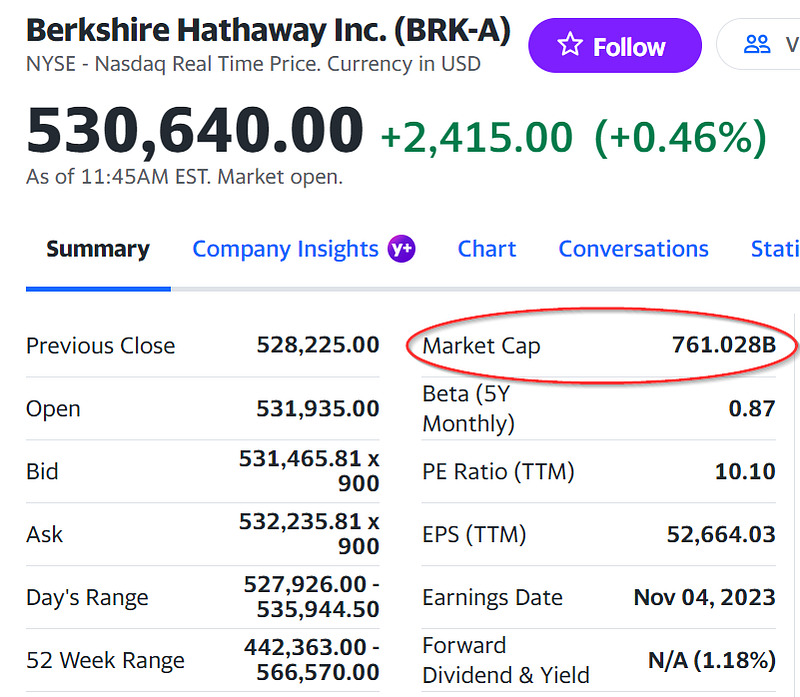
The problem is that BRK stock has underperformed the S&P index so far this year. That means that the share buybacks have had no effect, at least none that benefits shareholders other than Buffett.
For example, BRK stock is up about 13.5% so far this year. But the S&P index is up 14.2%.
Buffett’s Stake Has Risen Despite Giveaways of His Shares — All Due to Buybacks
But one person has benefited greatly from all the company's buybacks: Warren Buffett.
His stake in the company, on a voting basis, has risen, despite giving away shares over the past 6 years.
For example, look at the Proxy statement below from 2018:
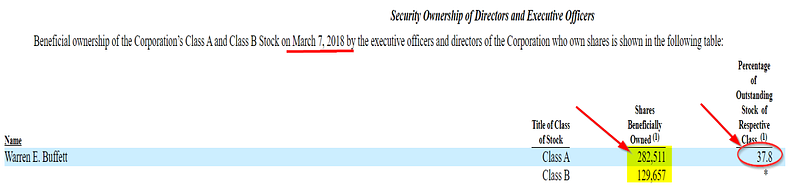
This shows that he had a 37.8% voting stake and held 282,511 Class A Shares, as well as 129,657 Class B Shares.
But 5 years later, his economic stake had fallen, as he had given away a number of shares. But even after doing that, his voting stake had actually risen.
Here is the proxy statement for Berkshire Hathaway on March 17, 2023:

This shows that despite having given away or sold 55,095 Class A shares (i.e., 282,511–227,416) as well as 129,381 Class B shares, his stake in the company has risen to 38.5%.
That is solely because Berkshire has been buying back its shares.
This is because the remaining shares he owns in the company (the numerator) have numerically been higher, on a percentage basis, since the total number of shares outstanding (the denominator) has dropped due to buybacks.
In other words, the buybacks have done nothing for the company as a whole in terms of its performance, but it has benefited Warren Buffett and his family’s control of the control if he dies or leaves the company.
Don’t ever expect Buffett to point this out to his shareholders. He might have some explaining to do, especially due to the ProPublica article, during next year’s annual meeting.
Maybe, it is time, after all, for him to step down, given these self-serving actions that have come to light.
This is not financial advice and you should not rely on my analysis to buy or sell any stock, as I am not undertaking to induce you to buy or sell securities. I am relying on the “publisher’s exclusion” in the Investment Advisers Act of 1940 to provide this information without any personalized or individualized investment advice.
This represents my analysis of Berkshire Hathaway and it is not meant to provide you with specific advice in your situation. I do not presently own Berkshire Hathaway or related securities, but I may buy some of these in the coming weeks.
If you like this article, don’t forget to comment, clap, or like it — and even if you don’t like it — let me know why.
I write articles for Barchart, Kiplinger, and NewsBreak on financial items and other related news. In addition, I work as a Chief Strategy Officer for Foldstar Inc., a tech startup in New Jersey, as well as Chief Strategy Officer for AnaChart.com, a new sell-side stock analyst tracking service.


