
HISTORICAL FICTION — SPECULATIVE FICTION
War With The Mohawks
Chapter Twenty-Nine — Winter was the more dangerous enemy
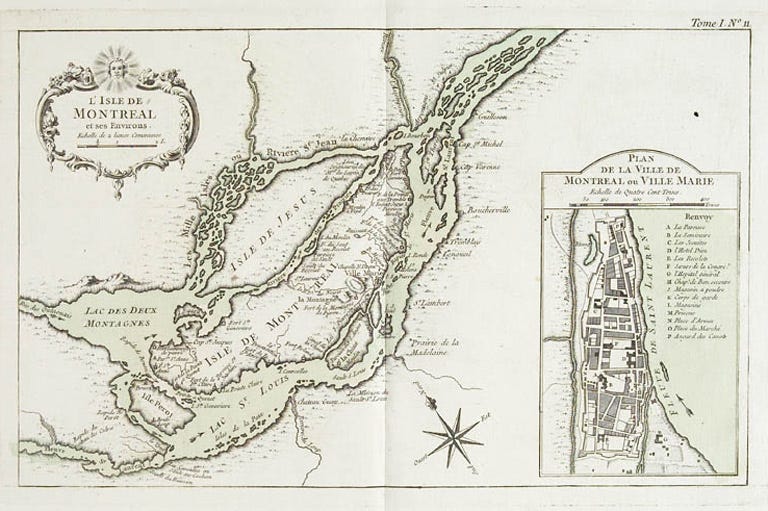
At the end of January, 1666, five hundred men and officers of the regiment, along with two hundred men who had already settled into the new land as habitants, set off to track and defeat the Mohawk. Following the Richelieu River heading south, the stopped at Fort Chambly to stock up on provisions for the campaign.
“Mon Dieu!” complained Bernard as they trudged through the deep snow. Unlike many others, he was wearing snowshoes that allowed him to walk with a bit more ease. “Where are those devils? We’ve been walking for more than three weeks and all we’ve seen are rabbit and deer tracks.”
“Be thankful we haven’t found them, mes amis,” said Guillaume to his two friends who were scouting ahead of the main force of the army. Three other scouts were included in their scouting force, along with a handful of friendly natives who were often invisible as they ranged even further forward.
“The way most of our troops are struggling with the snow, we’d be sitting ducks for Mohawk arrows. The Lieutenant says more soldiers from the other companies are sick. Another two died during the night. We’re lucky we have snowshoes or we’d be back there struggling through the snow and getting sick,” Guillaume added in frustration.”
“Our Indian guides have said we are nearing a settlement,” interrupted François, “We’ll be able to get needed supplies there, perhaps even some snowshoes for more of our friends.”
François had become less superficial and less of a trickster as their march through the wilderness took its toll on the regiment’s numbers.
“There’s the village,” Bernard called out.
Less than an hour later, the military force came upon a small native encampment. Soldiers rushed to the attack firing their rifles at the rude dwellings of the winter village. The fighting was fierce and uncoordinated. When the smoke cleared, only two of the villagers were dead and another two injured. Somehow most of the villagers had escaped into the dense forest nearby.
The sound of their battle had carried into the forest where a small group of Mohawk warriors that had been trailing the army, were in hiding. Seeing an opportunity to inflict sure death on the soldiers who were now searching through the crude dwellings, the Mohawk warriors screeched their war cries and sent arrows into the disorganised soldiers. Guillaume and his troop mates, being the only ones to have snowshoes, rallied to engage the Mohawks in the forest.
“God-damned savages,” cried Bernard in frustration. “Why can’t they stand still and fight like men.”
No sooner had he uttered those words, when an arrow pierced his chest. Guillaume saw François fall and traced the direction of the arrow to see the man who had fired it. Aiming his rifle with care, his shot dropped the man. Close engagement followed between the Mohawk and the soldiers, the melee resulted in a few more deaths on both sides before the Mohawk turned and disappeared into the forest.
Guillaume and Bernard carried the body of François back to the village where most of the soldiers were still engaged in the attacking the locals who were firing arrows from the trees at the edge of the village. As the rest of the men gathered bringing the others killed and wounded following the skirmish, a white man road into the village at the head of a group of other men on horseback.
“Who is in command here?” demanded the man who appeared to be the leader of the horsemen.
The man was the Burgomaster of Schenectady which lay only a few kilometres distant.
“You are in the territory of the Duke of York. If you stay here, you will be attacked by my forces in Schenectady, as well as the English forces in Albany,” he informed the officers who had gathered. “I order you to stop this attack on innocent people or suffer the consequences. You are the enemy here.”
Knowing that the troops were in no condition to fight against the English forces, the leaders agreed to the cessation on the condition that the Burgomaster would supply them with enough provisions for their return back to New France, a condition the Burgomaster agreed to without hesitation. He didn’t want to engage such a large force of military in the dead of winter.
Two weeks later the remnants of the Carignan-Salières arrived back in Ville Marie. The campaign had taken them three hundred and fifty kilometres south into New England. Of the five hundred soldiers that had begun the campaign, only one hundred remained. The real enemy had been winter, not the Mohawk. Also responsible for the military disaster was the incompetence of the governor of New France.
Not long after their return, the plans for a second military campaign began to be put into place. Because of a new European war which had been declared during the summer. The objective, to take the war to the English and Dutch at Schenectady and Albany, an objective which would first require the French forces eliminate the Mohawk threat.
In September 1666, the Carignan-Salières set out with a force of only one hundred and twenty, all armed and carrying as little as possible in order to allow them to move swiftly through the forest. They followed the Richelieu south as before, only this time on the western side of the river.
Guillaume and Bernard found themselves ranging ahead of the smaller army as scouts. Guillaume had already learned more than a few words of the Abenaki language used by the native guides. Bernard, on the other hand, had very little success. It seemed no matter how much he tried, he would forget even the most basic phrases.
“Look ahead,” directed one of their native guides. “That is a Mohawk village.”
“There’s still smoke coming from the fire pit at the centre of the village, but I don’t see anyone moving around in the village,” Guillaume noted in response.
“They’ve gone. It’s too hard to surprise them with the army marching here, regardless of how fast we move since we decided to travel with a minimum of supplies.”
“Bernard,” Guillaume directed. “Hurry back to the main army and let them know about the village.”
The Mohawk had fled their encampments as the French force approached. The abandoned villages provided the soldiers with needed provisions and even useful weapons. Four villages were seized, then burned. The officers chose then to return to Ville Marie with the loot taken from the Mohawk villages. They all returned as heroes. The land around the four Mohawk villages were claimed for New France. The war with the Mohawk Nation had ended.
Previously
Thanks to my readers of this story for acknowledging my story with claps, comments, and/or highlighting.
Carrie, Author, D. Denise Dianaty, Brian Lageose, Mariana Busarova, Rena Aliston, Julia A. Keirns, Michael Cappelli, Daniel Shaw, and Luis Ruiz, Robert, Arzuman Mamishov, Adda Maria, Love, and Mariana Busarova