
War! What is it good for? Pt. IV: Toys and games
Over the course of history, war is undeniably one of the main drivers of innovation. Countless consumer goods, technologies and medical procedures stem from conflict or its aftermath.
In my previous articles, I treated medical science, food and beverages, and fashion. In part IV, we’ll take a look at which games and toys were inspired by warfare. For some the connection is obvious, while others are merely by-products of research.
This article is far from exhaustive as I included only a few notable board games and I left out video games and sports altogether.
The items listed below have a long history that seems distant and only factual, while some highlights have a past that is more recent and, for some, very personal.
To illustrate with an anecdote, I’ve had the chance of taking a historic war tour in Zagreb, Croatia, where the guide told us about his experiences in the Balkan wars of the 90s.
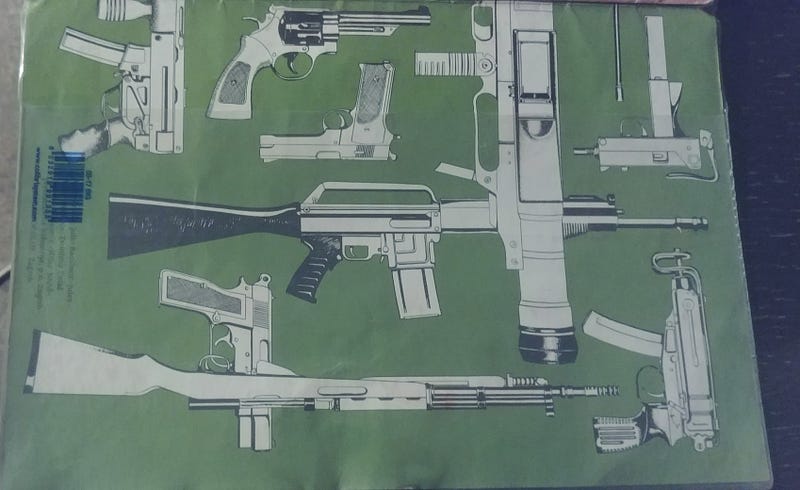
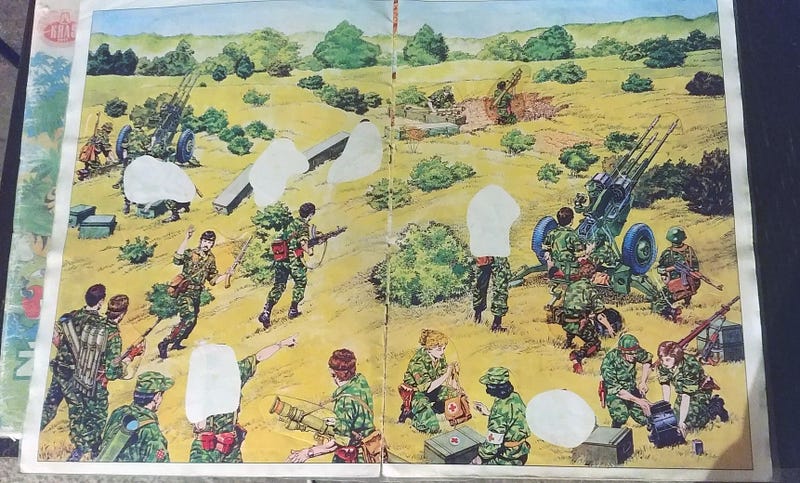
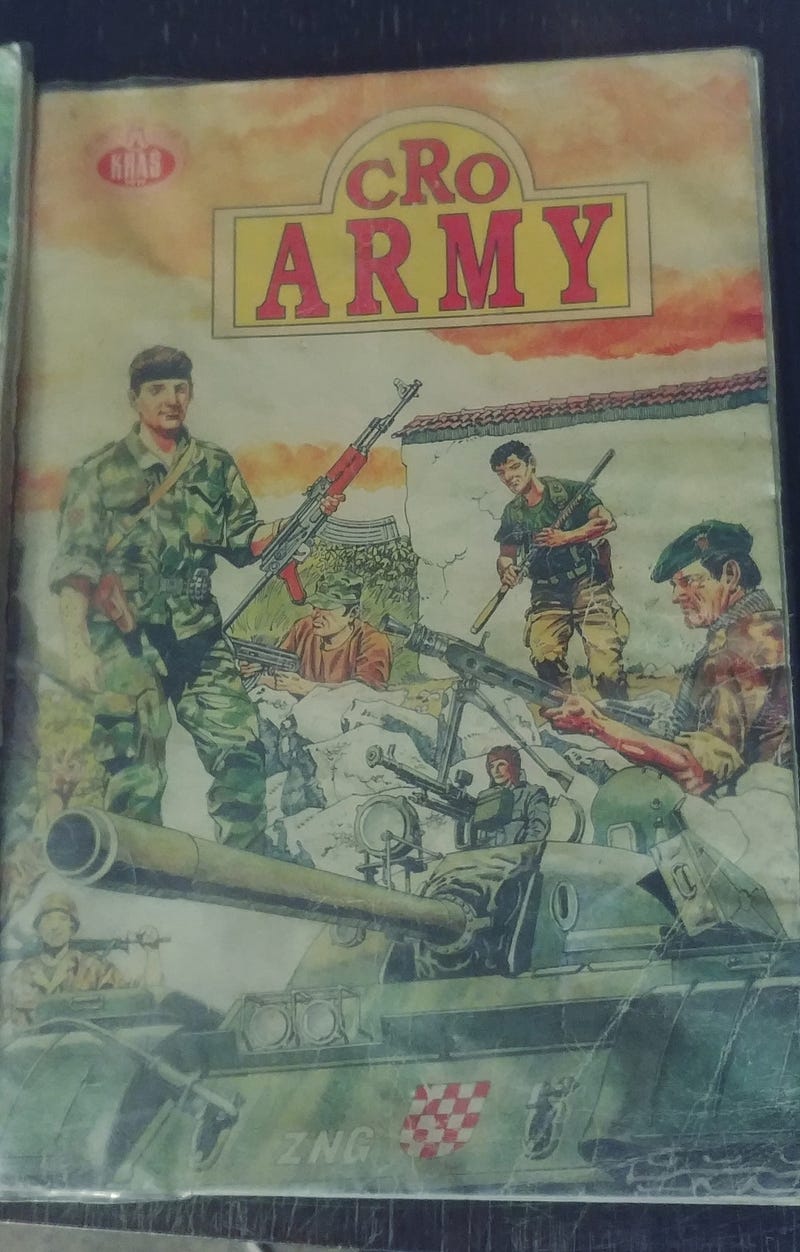
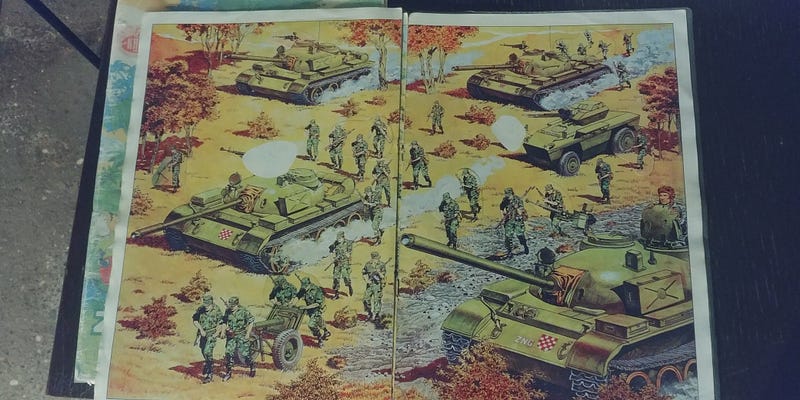
In a bomb shelter that had been converted to a museum, one of most the gripping artefacts was this sticker book published by a brand of chocolate. As our guide put it: “a child should not be familiar with weapons as if they were pokémons.”
Another display had toy soldiers. The guide told us that when the air raid siren went off, the children would greet it with excitement as they would soon be underground playing battles with their friends.
Creating entertainment out of war can seem cynical when looking back from peacetime, but those who lived through it were simply inspired by everyday reality. As play theorist Brian Sutton-Smith put it:
The kind of existential threats that are most valued in society find expression in the appropriate forms of play.
Now let’s take a look at some toys and games.
Toy soldiers
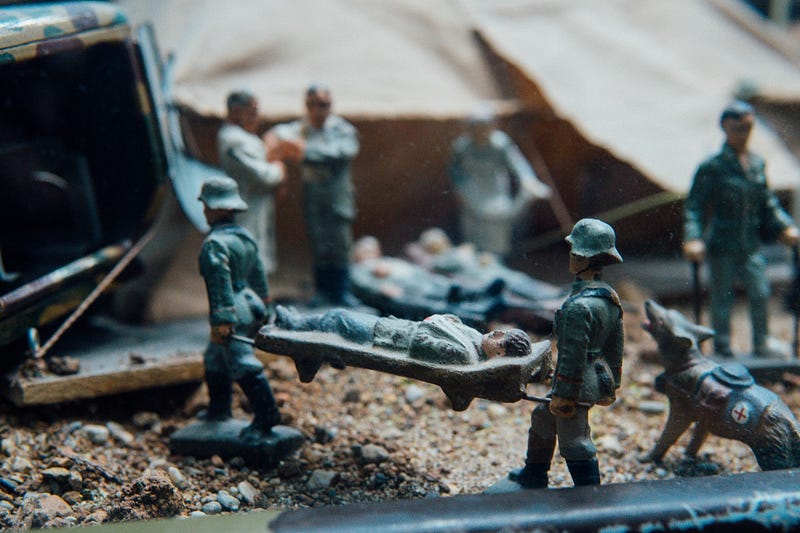
Around 4000 years ago, prince Emsah of the XIth dynasty was buried with painted wooden figurines. One set represented Egyptian heavy infantry and one was Numidian light cavalry. Whether their significance was recreational, educational or religious is a matter of speculation. The same can be said of other figurines that were unearthed from Mediterranean cultures over the course of the following milennia.
Toy soldiers as they are known today appeared in the eighteenth century. They were manufactured in Germany by molding tin between pieces of slate. In 1775, the Hilpert brothers from Nuremberg were probably the first to mass produce them on an assembly line. Before this, metal soldier figurines were the privilege of the rich. Thanks to the military prowess of Frederick The Great, the 18th century was particularily inspiring for the toy makers. Miniatures were also used up to the 19th century by strategists to plan battles.
Cheaper versions were made from various mixtures of sand, clay, plaster, sawdust and glue. The first plastic Army men were made in 1938 out of cellulose acetate by Bergen Toy & Novelty. After WW II, better plastics entered the market. First there was polystyrene and from the early 1950s manufacturers switched to polyethylene, a softer plastic that formed better.
From the 1960s to the 1980s, Vietnam era GIs were popular models. A company called Processed Plastic started selling them by the bucket, which became so iconic that they were used in the movie Toy Story (source). However, production had already begun to shift to Asia and US manufacturers were mostly pushed out of the market. All this didn’t stop plastic toy soldiers from remaining a playroom staple. The most recent evolution is the inclusion of Army women.
Chess
Chess was born around 600 AD out of the Indian war game chaturanga, Sanskrit for “the four branches of the army.” The pieces represented elephants, chariots, cavalry and foot soldiers.
From India, chaturanga spread to Persia, where it became chatrang. After the Muslim conquest of Persia in the seventh century, the game spread throughout the Arab world. It reached European shores in the 10th century by way of the Byzantine Empire and the muslim held Iberian peninsula. Initially, only the upper classes had the means and the time for the game, but over time, merchants would spread it across all layers of society.
Today’s pawns are essentially the same as the foot soldiers of chaturanga, who represented the front line in a classic battle formation. They march forward, hold the line and are as good as cannon fodder.
Neither did the knight change much. Ancient cavalry typically did not charge forward but outflanked the enemy line, hence the diagonal movement.
Just like its movement range, the elephant’s evolution to bishop is far from straightforward. The slow beast originally moved only two squares diagonally. As it migrated westward, the strange and foreign elephant evolved to a position of power that would be familiar to Europeans. At this time, power resided with the church, and the chesspiece became a bishop. Allowing the bishop unlimited diagonal range was one of the ways Europeans sped up the game.
The rook took its name from the Persian term rukh which means chariot. In India and Persia, chariots were used for their speed on the battlefield. However, with the crenellations on the sides of the chariot, Europeans may have taken this piece to be a castle or a tower. War wagons and siege towers may also have been an influence in its evolution from chariot to a tower.
The queen developed out of the firzan or advisor, which was added as chaturanga migrated from India to Persia. With a range of one square diagonally, the advisor initially had little power. However, when chess eventually conquered Europe, the piece was promoted to queen. With all her power and with the increased range that would also speed up the game.
The king from chaturanga essentially did not change, and neither did his range of one square in any direction. However, stalemate and castling rules did change during the game’s evolution to chess. In chaturanga, the king could be captured which ended the game. Chatrang introduced warning the king, or “check” in modern terminology.
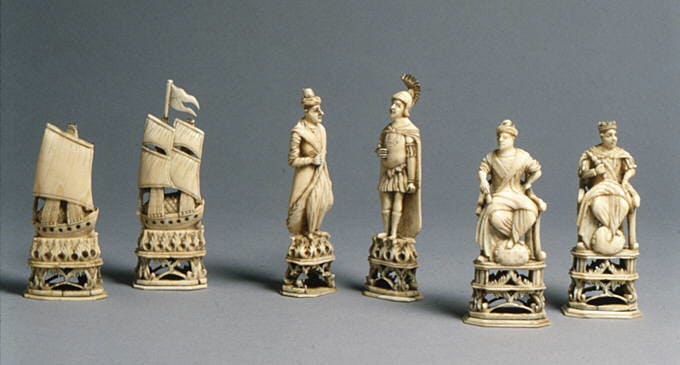
The look of today’s chesspieces was determined by three Englishmen. Howard Staunton was a prominent player of the mid 19th century, who had grown frustrated with the confusing diversity of pieces. In Russian sets for instance, the rook resembled a ship and the bishop was still an Indian elephant. Staunton set to work on a standard design, and partnered with newspaper editor Nathaniel Cook — who happened to be his brother in law - and with wood manufacturer John Jacques.
Clean and elegant in their simplicity, the new pieces were based on neoclassicist columns. By 1849 the patented design had become commercially available. With Staunton’s endorsements published by Cook, Staunton chess sets rapidly became the new standard. The Jacques of London company still manufactures these high-end sets to this day.
The history of chess would come full circle during the Cold War, when it once again became a battlefield for the greatest minds.
Risk
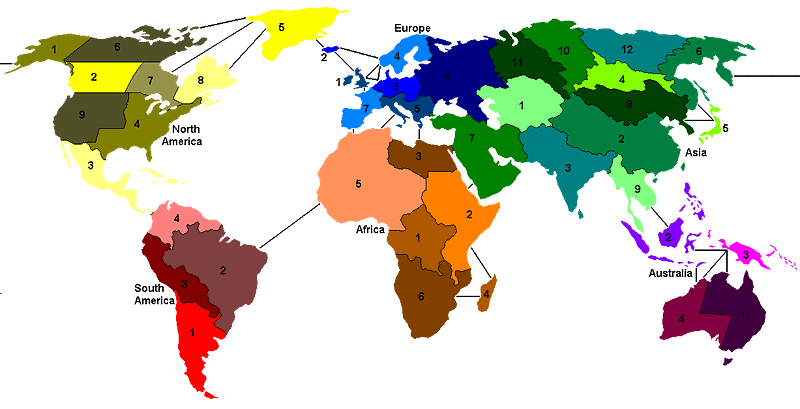
To some extent, Risk is also a product of the Cold War. It has abstract elements of military strategy, such as assessing strengths and weaknesses of the adversary, raising armies from conquered territories, making use of geographical choke points and bridges, and being dependent on fate, represented by the roll of the dice.
Albert Lamorisse was a French film director and amateur chess player. In the 1950s he devised the predecessor to Risk while on holiday in the Netherlands.
It was a multiplayer tabletop game that guaranteed action from the very start. After Lamorisse patented La conquête du monde (the conquest of the world) in 1954, he sold it to French game publishers Miro.
Miro let philosopher and game designer Jean-René Vernes take a look at it. His revisions included removing the ships and changing the rules of the dice throws in favor of the defenders.
After Parker Brothers acquired the rights, they found that players would have to chip away at defenders time and again. Wanting to speed up the game, they limited the power of defenders by allowing them no more than two dice per throw.
Unlike the North American version, the European version was launched with the secret missions cards that could shorten games from potentially days to just hours. Parker Brothers would eventually expand American sets with secret missions in 1993.
As for Albert Lamorisse, he would enjoy success as a film maker, even winning an Academy Award, while Jean-René Vernes would use the profits of the game to fund his 20 year long research into the card game bridge.
Parker Brothers would release a multitude of theme versions, often based on pop culture such as Star Wars or Lord of the Rings. Also belonging to the legacy of Risk are the board games Axis & Allies and Settlers of Catan.
Stratego
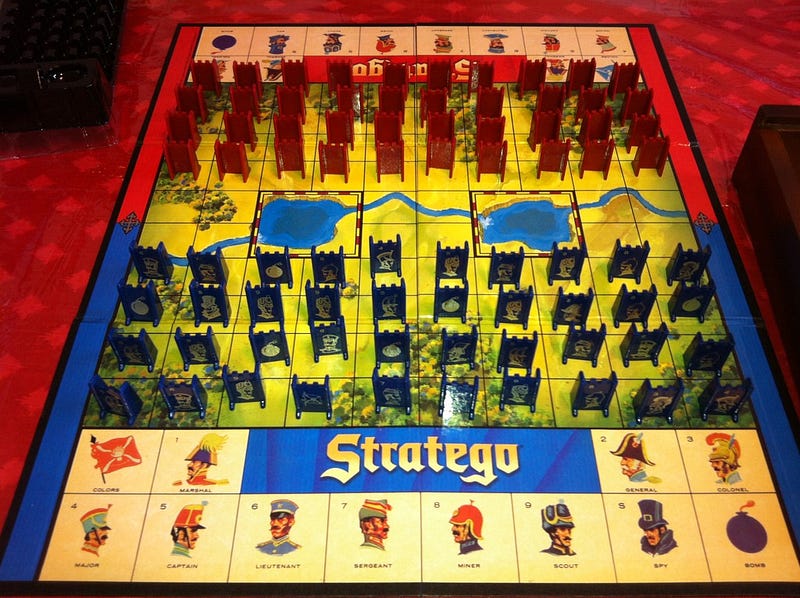
In 1908 a Hermance Edan, a Frenchwoman, created a board game called l’Attaque. It had some similarities to chess but instead of a king, players had to capture a flag. The pawns were military ranks contemporary to the early 20th century.
Secrecy and bluff added another dimension to gameplay. L’Attaque was one of the first modern games where players could not see the rank of their adversary’s pawns, so they could not know if their attacking piece was superior to the opponent’s.
As opposed to chess, where players think as far forward as possible, players needed to remember which moves the adversary made and keep count of revealed pawns.
Over the following decades, l’Attaque would be largely forgotten within France, but it would know more success in Great Britain and its colonies.
During WW II, M. Voorn was a teacher in the Netherlands who operated a safehouse. Among his guests was a downed Canadian pilot who asked his host to put together a board game to combat boredom. Following the pilot’s instructions, M. Voorn created a game he called “Tack”. The game would soon spread through the network of safehouses, where Jacques Johan Mogendorff would eventually discover it and make his own version of it, which he called Stratego.
After the war, Mogendorff licenced Stratego to the company Smeets en Schippers for the Netherlands. In 1946, Hausemann und Hotte acquired international distribution rights. Hausemann und Hotte would sublicence the game to Milton Bradley which would be acquired by Hasbro in 1984.
First editions were made of cardboard, but players disliked thumbed and damaged pawns so the switch was made to wooden pieces that resembled dominos. Unstable as they were, any piece falling over would reveal its rank. In the 1960s, the pieces were changed to plastic with a stable base.
Stratego would go on to sell over 20 million copies (or 40 million depending on the source) worldwide, and remains particularly popular in the US, the Netherlands, Belgium and Germany. Various theme versions were launched over the years, such as the sci-fi version, the edition celebrating the 200th anniversary of the Battle of Waterloo and several movie based editions.
It is worth noting that another classic, Battleship, was also inspired by L’Attaque.
Sources
Toysoldierco Encyclopedia.com El-templario.com Plasticstoday.com Goodmorningamerica.com Britannica.com Learn-and-play-online-chess.com Thehistoryreader.com Scholarworks.uni.edu/cgi/viewcontent.cgi?article=1067&context=etd Ultraboardgames.com/stratego/history History.chess.free.fr/papers/Horn-Voogt%202008.pdf