
War on the Frontline
It is difficult
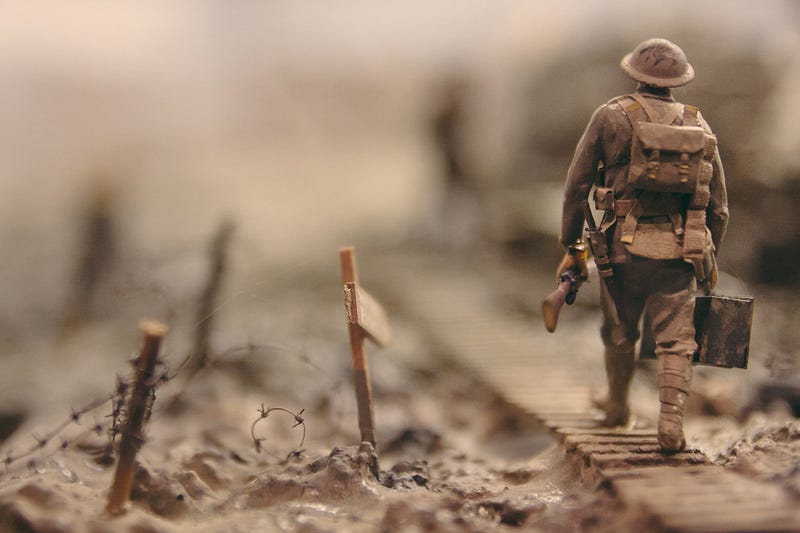
Self sacrifice. I really dont believe in the term. As healthcare workers we assess the risk of treating a patient with the risk of danger to our own lives. This time, however, it is slightly different.
Going into work there is a sense of good will, team work and companionship. It was always there but this time it is more palpable. Greetings are more sincere, conversations are more reflective and agreements are now more common than disagreements. You may be surprised by this but working in a hospital means managing expectations and it can eventually take its toll on everyone.
Everyone wants the best for their patients. We also want the best for each other. For instance phrases I have heard more commonly over the last few weeks:
‘Have you taken your break?’
‘Dont worry I will see the patient’
‘Please take a break’
‘There is food for you upstairs’ (My favourite)
‘Theres a coffee machine installed upstairs- free coffee’
Then reality
Hearing the news that two colleagues had passed away in the same department I work in perhaps brought reality more to the forefront of my mind after a few weeks of blind patriotism.
I, and hopefully you as the reader, wish their families ease during this time.
Each morning we decide who goes to the respiratory side of the emergency department. It is here we examine suspected COVID cases, start treatment and escalate appropriately.
Care is taken to minimise possible transmission when you are working on the respiratory side, but as I sit there behind my surgical mask and plastic apron I cant help but wonder the statistical likelihood of transmission to and amongst the majority of those working in the department.
Possibly. Likely. Actually more than likely. Almost certain.
*Snap out of it, negative thoughts have no good use*
We reconvene, share cases and discuss care plans with seniors. More reassured I, along with my collegues, head back to seeing newly admitted, usually elderly patients.
But this time it wasnt an elderly man/woman. It was a young, fit patient, actually the exact same age as me. I review the CXR- it isn’t pleasant. I will keep from sharing more information on an open platform such as medium.
That same night when I finally got home, I read a few different articles on COVID, the disease, its progress from 0 cases the prior year to now >20,000 in such a short time period. I read into the pathophysiology, its origins and read into one or two review articles on pubmed.
This is a weird disease. I am very junior but it isnt like that which I have read before. Although having said that I know a good friend of mine who has published a lot on Chikungunya- what a name! The name is derived from the Makonde word meaning “that which bends up” after the stooped posture it causes its victims.
I use the term ‘weird’ sparingly, most often to describe things that interest me, that have no straight answers, that require more in-depth reading and researching. I guess it is like the time the interesting patient with a rare disease showed up on a ward and 100’s of medical students gathered round to peak at them. It isnt the fault of the student nor the patient.
It is curiosity.
A condition that has no treatment, takes on all forms of presenting symptoms and disproportionally impacts certain groups of people, of which we have no answer as to why. A clinician-scientists dream; funding in abundance and labs working 24/7.
Once finished shift, I change, go home and shower. The weekend trips to home to see my family have shrivelled up, I consider myself a vector of the disease now, I wouldn’t want to bring potential COVID to my family home. Skype is good, but fasting away from home is difficult as some of you will agree.
And we go again. Most days and nights depending on the rota.
I enjoy the work, I must admit. I have good fun with my colleagues and we bounce off of each other. No, it is not like Greys anatomy (unless you are thinking of the anatomy text book) or the other overly dramatised US medical dramas.
People do die; it is hard, people do get sick, families do worry, it is tricky sometimes; balancing reality with family expectation. Communication is important. Clear cut. I am still trying to improve mine.
I have to say after all of this, I take my hats off to nurses especially intensive care nurses working under extreme conditions, porters and cleaners of the hospital. Some of you have sacrificed more than just your time for taking care of patients.
Some of you have sacrificed your lives.
Managing public expectation with what we see in hospital is challenging. It has been noted that COVID-19 typically impacts those of colour, the BAME community and I have, in a prior post, elaborated a-bit more on that:
I read on twitter that there is a suspicion that BAME are approaching hospital at a later date, concerned that they will be intubated or taken to ICU. I can only reiterate the given answer; please seek care when you need, ignore those who pass on the theory of the ‘bad’ hospital.
To summarise, thank you to those working on the frontlines, police officers, social workers, mental health teams and everyone out there.
We really are in this together.
Please stay safe.