avatarGary Every

Summary

A Vietnam War veteran grapples with regret over the destruction of Buddhist temples, while a personal connection to a miniature war game Buddha statue offers a sense of redemption and reflection on the war's impact.

Abstract

The narrative revolves around a Vietnam War veteran who, after returning home, is haunted by the memory of destroying ancient Buddhist temples during his service. The story intertwines with the author's personal experience of discovering a small Buddha statue meant for a Vietnam War reenactment game while helping move merchandise from a struggling hobby store owned by the author's stepfather. The author's choice of the Buddha statue as a reward for helping with the move led to the creation of a collection that holds a place of honor in their home. This collection serves as a reminder of the war's lingering effects and the potential for peace and love, even for soldiers, as symbolized by the Buddha.

Opinions

  • The veteran harbors deep regret for the destruction of Buddhist temples and artifacts, which he views as the only negative aspect of his service in Vietnam.
  • The author values the miniature Buddha statue as a symbol of preservation amidst the chaos of war, suggesting a desire for healing and reconciliation.
  • The act of choosing the Buddha statue as a memento reflects a personal stance against the glorification of war and perhaps an attempt to reclaim a piece of history in a peaceful context.
  • The author implies that the Buddha's teachings encompass compassion for all, including soldiers, which contrasts with the destructive nature of war.
  • The narrative conveys a subtle critique of war games that trivialize the complexities and moral dilemmas of real military conflicts.

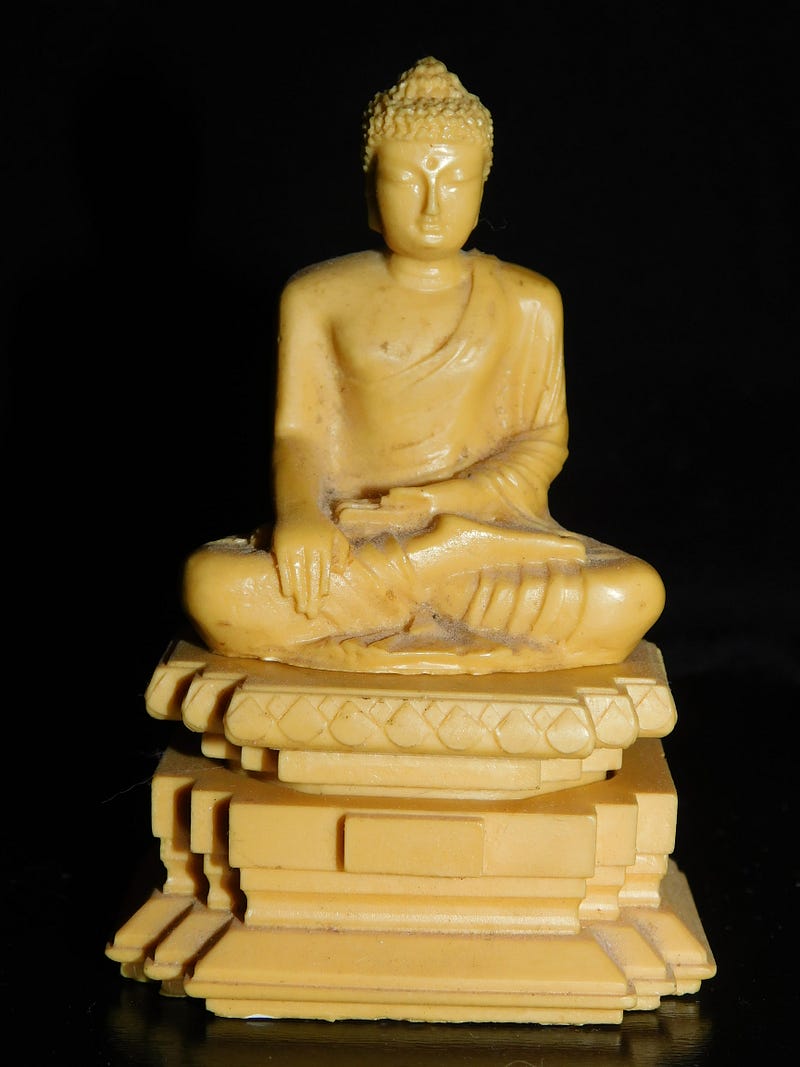
War Game Buddha

photo by Gary Every

By the time he was back stateside he could not even remember how many ancient temples he had destroyed, how many buddhas he had blown to smithereens. It was the only thing about his service in Viet Nam that he regretted but those temple explosions reappeared in his dreams again and again.

My stepfather used to own a hobby store. One time, when the business changed locations, the family and friends all pitched in to help with the move, carting box after box in and out of the moving van. Because the business was struggling, we worked for pizza. When we were finished, we were all rewarded with our choice of one piece of merchandise. My choice was not expensive. While shuffling boxes I had noticed something surprising. It was a box for a war game piece, the kind where the fates of imaginary soldiers and civilians are decided by rolls of the dice. Often fans of these types of games are obsessed with historical detail and build miniature landscapes to scale. This piece was for those who wished to reenact the Viet Nam War, perhaps seeking a U.S. victory this time. It was a tiny little buddha statue, set to 1/15th scale.

This was the buddha who originated the little collection of many tiny buddhas, seashells and polished stone which sit in a place of honor on my bookshelves. He is still my favorite. My uncle is dead and has been dead for a few years now, but I wish I could still phone or write him a letter and let him know that at least one Buddha has been saved from a war game, and let him know that near as I can tell the Buddha loves soldiers as much as anyone.

Buddha
Buddha Statues
Spirituality
Vietnam
Vietnam War
Recommended from ReadMedium