
Want to Sound More Natural in Japanese? This Trick Might Help
Learning Japanese is easier when you approach it with the mentality of a singer.
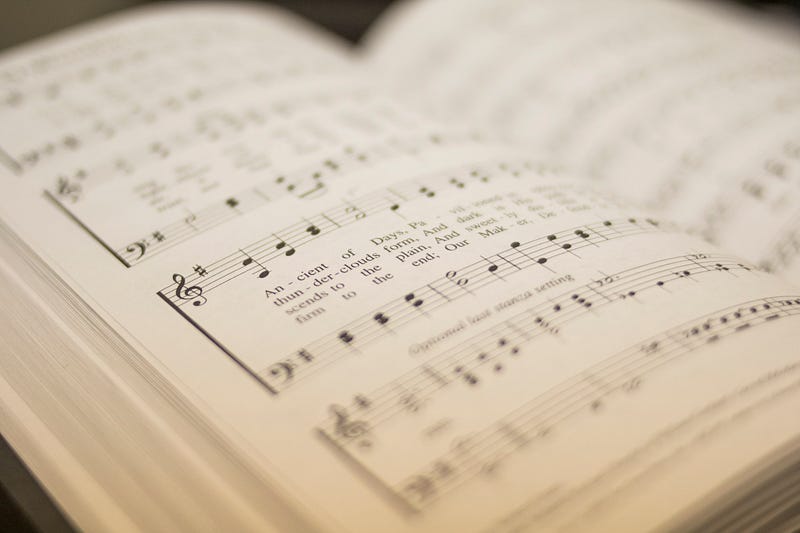
When people hear me speak Japanese for the first time, many of them ask me where I learned my Japanese, thinking that I must have some secret tip or two.
I’m not trying to brag — I am certainly not perfect.
I make just as many mistakes as every other non-native Japanese speaker, but I believe I discovered a secret trick to sound more natural.
I speak Japanese as if I’m singing a song.
The Music of Spoken Japanese
Have you heard somewhere that Japanese pronunciation is “flat?”
This is not completely accurate since Japanese has a variety of pitch accents, also called 高低アクセント (high-low accents, koutei akusento).
Dogen, a popular Japanese language YouTuber, has a funny clip about this.
He also goes into great detail about this in a separate video if you’re interested in deep diving into this topic.
In any case, pitch intonation is what often catches foreign learners of Japanese off-guard. It’s no wonder foreign speakers of Japanese are sometimes not understood by Japanese people.
In one of my online melees on Instagram discussing the finer details of Japanese language learning, I was particularly annoyed when someone insisted that there was no observable difference in pronunciation between chopsticks (hashi, falling pitch) and bridge (hashi, rising pitch):
“Japanese is not a tonal language. Intonation should not matter. Pitch does not matter. 橋 and 箸 are pronounced exactly the same.”
I don’t know what dialect of Japanese this person was referring to, but in modern Standard Japanese, this is completely wrong.
This is such a fundamental point that companies have invested money into creating systems that can reproduce correct-sounding intonation, like the system advertised below.
Learn the Musical Phrasing of Spoken Japanese
If pitch intonation matters, perhaps we can think of Japanese sentences as musical phrases.
When I first started studying Japanese all those years ago, I had over four years of choral singing experience. I transferred what I had learned from the art of singing to the skill of speaking Japanese.
When I did my Japanese sentence drills, I practiced them like I was rehearsing a passage from my music score.
I thought of a clause — and I still do — as one single musical phrase that must be sung in a precise manner and arrangement of musical notes.
So, my first secret trick is this: Memorize commonly used sentences — pitch intonation included.
Learn how to duplicate the exact intonation — at least in the beginning. Once you build up your Japanese musical repertoire, you’ll be able to know what sounds natural and what doesn’t.
Most of the time anyway.
I’m still not perfect. I still mispronounce words and phrases completely, either causing a look of bewilderment or unbridled laughter when it happens.
So, keep at it. Do so until it becomes second nature to you.
In practice, you can deviate from the score and people will still understand you. In real life, no one speaks Japanese like NHK announcers.
Have a Metronome in Your Head
There’s a certain rhythm to Japanese that makes Japanese people particularly attuned to the length of time.
Spoken Japanese is like a series of beats. Each syllable is one beat long beat and long vowels take two beats.
A few days ago, I was talking to my colleague about a Chinese name, and he completely didn’t get it.
Turns out I was the one who messed up by speaking the name by one beat too long. And yes, extend the timing too long, and it becomes a completely different word.
こと (thing) is completely different from 口頭 (こうとう, by mouth, as in word-of-mouth).
So, my second piece of advice to understand the rhythm of spoken Japanese is to grapple with it.
Grasp it, hear it, and listen to each vibration.
But there is also a more subtle element. I speak of the rhythm — the back-and-forth of spoken Japanese.
Note the Rests-Not too Long and Not Too Short
Every musician knows that time must be kept. Score music has notations to address the length of notes or silence.
If you’re a musician, you’d know what this symbol means:
𝄽
A rest.
Music is not just an endless string of sounds. It is sound punctuated by silences that give meaning to music.
How do speakers interject? How long does it take for speakers to react to a question? What is the appropriate pause or delay?
It’s the same with the Japanese language.
Know where and when to rest. A short rest is fine. A long rest leads to discomfort.
All these subtle cues can only be picked up through actual conversation. Nowadays, it is far easier to pick this up by listening to podcasts and other media readily accessible through YouTube.
And here is my third piece of advice: Manage your “rests.” Use filler words.
If you struggle to piece sentences together, I recommend you fill in the gaps with ano and eto, or even words like sou desu ka.
In English, speakers often advise you not to use fillers too much as it makes your speech sound unconfident.
For Japanese, I think you shouldn’t follow this rule. Of course, overusing them makes you sound unsure of yourself. But not using them at all makes you sound cold and impersonal.
Use filler words. Manage the pauses and silence. At the back of your head, there is a metronome ticking away…
A Japanese Dialogue is Always a Duet
My final trick to speaking natural-sounding Japanese is to think of spoken Japanese as a duet rather than a solo.
You should always be listening to your conversation partner, ready to jump in with additional harmonies.
Throw in an aizuchi or two while the other person is talking. These expressions show your speaker that you are listening; you acknowledge what has been said.
Use the words “hai,” “ee,” or “un” liberally. These don’t mean that you agree with what the speaker is saying. They mean that you hear the speaker and acknowledge what has been said.
Of course, these expressions exist in English as well — yeah, hmm, right, and so on. But in Japanese, the quantity of it is dialed up.
Case-in-point: some other aizuchi like hee, sou nan da (written in Japanese as へえ~、そうなんだ) — which is used when you learn some new information — might sound a bit over the top for non-native speakers. But it feels even more unnatural if you don’t react when the situation calls for it.
Above all, make your Japanese come alive. It’s particularly pertinent in an age of ever-encroaching AI.
Don’t talk like AI.
Instead, speak like a human. Speak like a singer.
And approach Japanese with the mind of a musician.
You don’t need to have perfect pitch or impeccable timing. You can go slightly “out-of-tune” and “off-rhythm” and still be understood. And I promise you, once you start to feel the music in Japanese, everything will start to sound so much more natural.
© Alvin T. 2023
The author is an editor of Japonica, a Japan-focused publication, but also writes more generally about culture and society. Discover more stories about Japan by the same author in the link below!


