
HISTORY
Want to See a Real Life Example of Whitewashed History?
Look no further than presidential candidate Nicki Haley denying the racist motives of Dylan Roof.
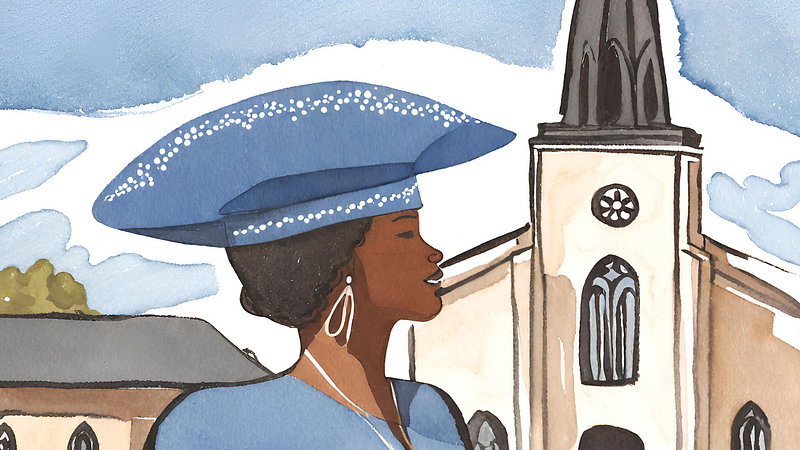
Often, when we speak about whitewashed history, we're referring to something that happened long ago. Some people exploit gaps in the public's understanding of historical events. It's in this gray area that white lies can become cemented, making it difficult to separate fact from fiction. While whitewashing is a strategy often applied to events that happened long ago, it's not confined by any timeframe. If you're looking for a real-life example, look no further than Nicki Haley's presidential campaign. Whenever someone asks her about historical events involving racism, she's found a way to insert faux, whitewashed narratives.
For instance, when a New Hampshire voter at a town hall meeting asked Nicki Haley what she believed was the cause of the Civil War, she stumbled over the question. Or, as Sidney Blumenthal, an author and former presidential advisor, noted, "she reacted as if she were being physically threatened" by the question. Perhaps Nicki couldn't provide a straightforward answer because she has a warped view of American history, one that attempts to portray the nation as colorblind despite its legacy of systemic racism. Despite secession documents clarifying the motives, Nicki Haley leaned into a whitewashed narrative. After feeling the backlash, Nicki changed her tune and offered a correction, but as Blumenthal noted, this was no "gaffe" or Freudian slip. Undermining the role racism played in historical events, like the Civil War, has become part of the broader conservative political strategy of serving up so-called "patriotic history."
Denying the cause of the Civil War had anything to do with slavery is only one example of Nicki Haley's whitewashing campaign. For instance, when asked about the 2015 shooting at the historic Emanuel African Methodist Episcopal Church in Charleston, South Carolina, on The Breakfast Club morning show, Nicki once again struggled to speak honestly about the racial motives—this time, referring to Dylan Roof, the convicted shooter responsible for the attack. "The national media came in, and they wanted to define this," Haley said. "They wanted to make it about guns, they wanted to make it about racism, they wanted to make it about the death penalty." Hearing this response, it's hard to believe Nicki Haley is grounded in the same multiverse.
Her response suggested Dylan Roof's decision to kill nine Black churchgoers had nothing to do with racism, as if journalists wrongfully injected race into the storyline. However, Roof's testimony makes his motivation clear. Why did he choose this location? According to Roof, he decided to pick "Charleston because it was" the "most historic city in" the "state, and at one time had the highest ratio of blacks to Whites in the country." Anyone who read his manifesto or his testimony provided in court would realize that Dylan Roof is a self-proclaimed white supremacist: "We have no skinheads, no real KKK, no one doing anything but talking on the internet. Well, someone has to have the bravery to take it to the real world, and I guess that has to be me."
Nicki's response is a real-life example of how someone whitewashes a historical event. Journalists never needed to assume Dylan Roof's motive because he clearly stated the reason for the attack. He blamed public schools for instilling "a subconscious white superiority complex" by centering their successes and subjugation of other racial groups. However, he readily endorsed the myth that White people were "in fact superior." Like the gaggle of white supremacists who came before him, Dylan Roof made a plan before the attack, deciding to become a lone wolf. After purchasing a .45 caliber Glock handgun using birthday money from his parents and taking numerous selfies proudly displaying Confederate flags, Dylan decided to kill as many Black people as he could in the hopes of starting "a race war."
It's not as if the Charleston Massacre happened hundreds of years ago. Most adults in America have a very recent memory of this event. Who could forget officers buying Dylan Roof a hamburger from Burger King after they arrested him for nine counts of murder and a weapons possession charge? Law enforcement referred to him as "quiet" and "polite." We see through Nicki's response that whitewashing has no time restrictions. Someone can lie about our nation's history, even when the events happened in recent memory. What matters beyond that is how wide a reach they have to spread misinformation. In the case of Nicki Haley, who is currently running for president as a Republican but is not expected to garner enough support to dethrone Donald Trump, she's been able to use this national spotlight to push whitewashed narratives into the mainstream.
Sidney Blumenthal was right in his critique of Nicki Haley. These missteps represent an intentional effort to whitewash history, not thoughtless gaffes. Even when someone like Dylan Roof acknowledges his actions were driven by racism, there will always be someone like Nicki to deny that and, in doing so, lie about their motives. And that's because the logical response to acknowledging the national security threat white supremacists pose is to allocate attention and resources toward mitigating the threat. Colorblind racism, in this case, acts as weaponized ignorance, providing a safe cover for conservatives to deny the racism Black people experience. We know that the victims of the Charleston Massacre, Rev. Clemente Pickney, Cynthia Hurd, Tywanza Sanders, Sharonda Singleton, Rev. DePayne Middleton-Doctor, Susan Jackson, Ethel Lance, and Myra Thompson were targeted and killed because of the color of their skin. And lying about the racist motives of Dylan Roof is a real-world example of whitewashing.
🌹Learn more about the author here.


