
Want to lose weight: why cutting calories does not work?
The shortcoming of calorie-in calorie-out hypothesis
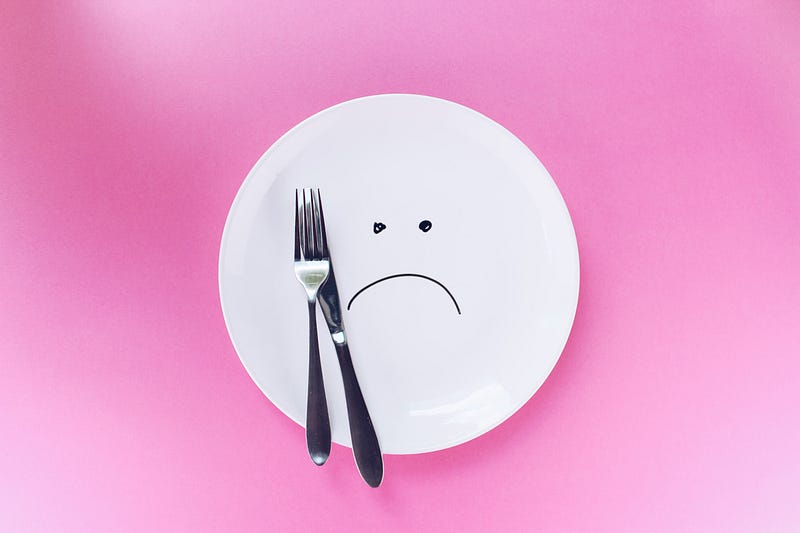
Many of us at some point tried to lose weight we seek advice from conventional books and the advice goes like this — reduce the amount of fat, reduce the total calories in your diet, the higher-calorie restriction will make you lose weight much quicker.
It starts with meticulously calculating the amount of food we eat each day, count the calorie for every grain of rice, enter it into a calorie calculator. The initial enthusiasm will push you to do it even though it is time-consuming. You restrict your intake to 1600kcal per day, and you start reducing weight.
The enthusiasm starts to soar as results are visible, you continue the diet and may even intensify it. But As the days progresses you notice your weight is not reducing as it should be, so you try restricting even more. Slowly you start to feel more tired, your sleep duration increase, skin feels lifeless, hair fall starts, motivation plummets and on top of that you start having food cravings.
Not wanting to give up, you give it one final push and cut calories further literally staving yourself. Even after this a small initial weight loss is followed by a standstill. As the weight plateau some family occasion or festival comes to finally break your diet, after which you essentially stop caring. You check your weight after some days only to find you circled back to your original weight, if not higher. There may be some changes here and there, but this is how a script of a calorie-restricted diet plays out.
So why does this happen? Theoretically this should work right?
The basic premise of a calorie-restricted diet is when the body gets fewer calories than it needs the net difference is provided by burning body fat stores. So essentially if you establish a calorie deficit of 300kcal per day you should burn about 35 grams of fat per day, and larger the deficit the more you burn. At first glance this theory seems reasonable — input is less than output so to make up the difference fat is burnt
So why does this not work?
The above theory is flawed in two ways
The theory assumes that the net output for certain age and height is stationary
The fact is that the output is also dynamic, as soon as you start calorie restricting the net work done by the body also decreases. The immediate effect will be on the brain because of less energy provided to it — you start feeling less motivated, increases the amount of sleep to conserve energy, you feel labored to do mental tasks.
As the calorie restriction becomes more chronic body goes into a starvation mode and it starts affecting other internal organs and you will notice poor general well-being, less interest in physical activity, skin becomes dry, hair becomes less lustrous, hair fall starts, and you feel a continuous craving for food and sugars.
This is because the output decreases to match the input given to the body, the deficit will slowly decrease, and the net difference becomes zero. At this point most of your internal organs and brain will have gone into a partial lock-down mode and your weight reaches a plateau.
The theory assumes the weight loss will be mainly if not exclusively from fats.
The fact is that we lose muscle and fat with a higher proportion of muscle loss in comparison to fat. Initially we start losing glycogen stores in the liver after which the body notices that there is chronic energy deprivation. Muscle is very energy expensive and burns a lot of calories to maintain them, so the body wants less muscle during starvation to conserve energy. On the other hand, fats cells are energy-friendly they consume very less energy for maintenance and provide a densely packed store of energy. The body burns up more amount of muscle for energy causing muscle loss and hoards the fat stores.
This sets up a vicious cycle of decreased energy expenditure due to muscle loss, increased fats, decreased calorie deficit, further lowering of calorie intake, and thus the cycle continues.
So, what happens after you stop the calorie cutting?
The immediate effect would be seen in the mood and motivation, as your brain immediately starts receiving more energy. Following which the shutdown organs slowly open and your vitality returns.
The fat stores increase initially followed by a plateau and the muscle rebuild will be much slower. On the whole it will cause us to return to our original weight if not higher.
The return to a particular weight is very characteristic, can be even referred to as a set point. Thus, Calories restricted diets do not work long term and it has been proved in many studies, I have taken some liberties in my explanation to simplify the concept.
Originally published at https://drvikranth.com on May 27, 2020.