MINDFULNESS
Want to Break that Habit?
Tap into your brain’s grooves
Mike is a nail biter. He’s tried everything from nasty-tasting clear polish to dipping his fingers in tabasco sauce to help tame his habit — sans success.
The habit started when he was a kid.
“My brain knows it’s a bad habit, but my body has other plans.”
Actually, it’s the brain on both accounts: aware that it is judging a behavior negatively and “trained” by years of said repeated behavior.
Our brains are like an interconnected highway of neurons that work together. A habit is something that was once upon a time a mere action that, with repetition, became second nature.
“Neurons that fire together wire together” — Donald Hebbs
Emotions and Habits
Unaware, we can allow our brain to go on autopilot, accepting our emotions as us instead of souls experiencing them.
Or…
We can foster self-awareness and not attach ourselves to our emotions, merely observing them.
Many negative habits form with an often unaware reaction to an unwanted experience:
- Your parents fight and you bite your nails.
- Friends are smoking, so you do the same to try and fit in.
- You are robbed and decide to start checking locks twice, maybe three times.
The negative habit is often our attempt to self-soothe.
Unconsciously, we begin to associate the temporary comfort with staving off a negative emotion.
Over time, we often no longer recall why we started performing the negative habit, but we find ourselves unable to break it.
Finding Your White Whale
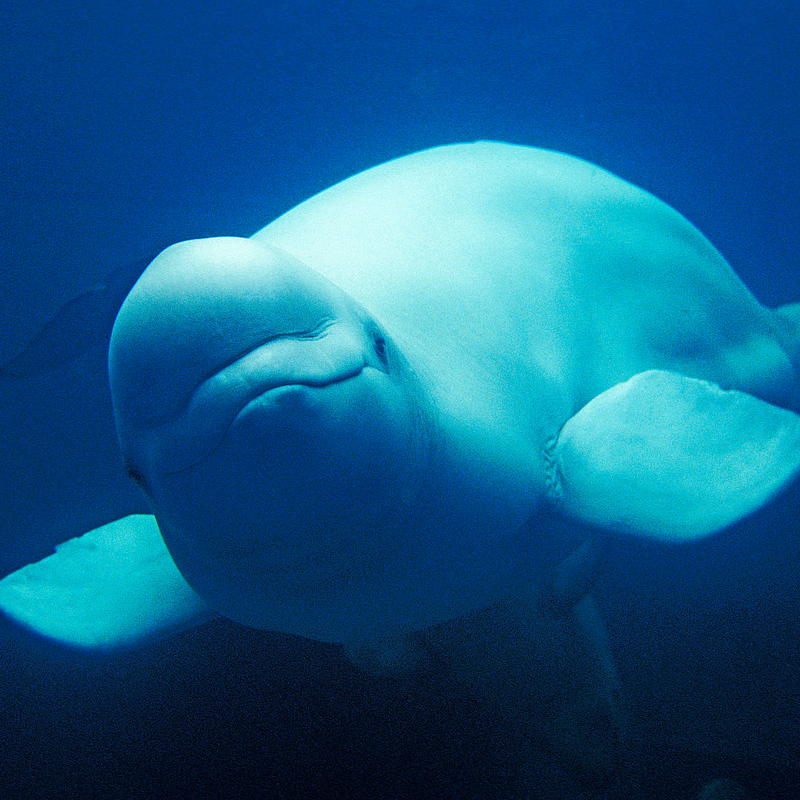
Mike had always loved white whales. As a kid, he was obsessed with studying them.
Recently, he went on a trip of a lifetime, spending a week studying them up close.
“On the plane ride home, I noticed my nails had grown. The entire time I was living out my dream, high on the ecstasy of seeing the great whites, I never felt the need or desire to go to town on my nails.” Curious, Mike decided to put his fingers to his lips.
“In that moment, I knew I was at a crossroads. I could easily go back to biting my nails. The grooves were already in my brain, just waiting for me to make them deeper. But I caught myself. I made myself remember how amazing it was to be with the whales, and with little effort, my desire to bite my nails went down significantly.”
By identifying the positive emotion with the lack of desire to nail bite, Mike had fired up new neural pathways.
Creating New Grooves
We are the stories we tell ourselves.
A habit is just a thought you continue to think.
By becoming the Objective Observer (as Mike did), we can create new neural pathways.
When we find ourselves craving a cigarette, we can grow still and resist the urge to go down that well-worn groove in our brain. We can “pull a Mike” and consider a time when we weren’t craving nicotine.
Avoidance Habits
Sometimes, we hide from something after an unpleasant experience. We can find ourselves avoiding:
- highways after experiencing a car accident on one
- intimacy after experiencing a betrayal
- flying after losing a family member to a plane crash
Again, the narrative we continue to tell ourselves determines our behavior, the neural pathways we’ve formed growing ever-stronger.
Or…
We can allow ourselves to feel discomfort and with self-compassion, choose to:
- drive on a highway
- go on a date
- board a plane
The discomfort and anxiety felt after altering our behavior is our brain’s way of trying to protect us.
Like a toddler, a change in routine is likely to cause a “temper tantrum”, the mind’s defiance against the new neural pathways.
But each time we perform the new behavior, the old neural pathways will start to fade. A new, healthier habit begins to form.
And just like Mike acknowledged, the temptation to return to old, familiar “grooves” will likely remain. Thank you free will.
The Objective Observer’s Power
Abraham Lincoln once said:
“People are just as happy as they make their minds up to be.”
When we grow still, we have the power to observe the monkey mind, observing it as an Objective Observer. We are no longer a victim of our mind’s thoughts, we are a nonjudgemental and compassionate observer.
Cravings and habits are the monkey mind’s drugs of choice.
By growing still and observing the hankering for example, nicotine, we can give ourselves self-compassion, acknowledging our discomfort as we choose a different neural pathway, a different choice.
The Caveat
I am not a medical professional. I am an observer of life on this planet for almost half a century. And when my friend Mike shared his experience, I asked him if I could share his insight (He gave me the green light:-).
How cool is it to know we can alter our brain’s chemistry by choosing different thoughts?
Every minute of every day, our bodies are physically reacting in response to the thoughts that run through our minds. Just thinking about something causes our brain to release neurotransmitters that allow it to “speak” with parts of itself and our nervous system.
Those neurotransmitters control all of our body’s functions — from hormones to digestion and our very emotions!
As the late and great Dr. Dyer said:
Change your thoughts, change your life.
We each have a veritable apothecary at our disposal. It starts with the very thoughts we think.
When we change the way we look things, the things we look at change.-Dr. Dyer
*Name has been altered to respect person’s privacy.


