
Want Some Salmonella With Your Chicken?
Some frightening realities about food inspection uncovered
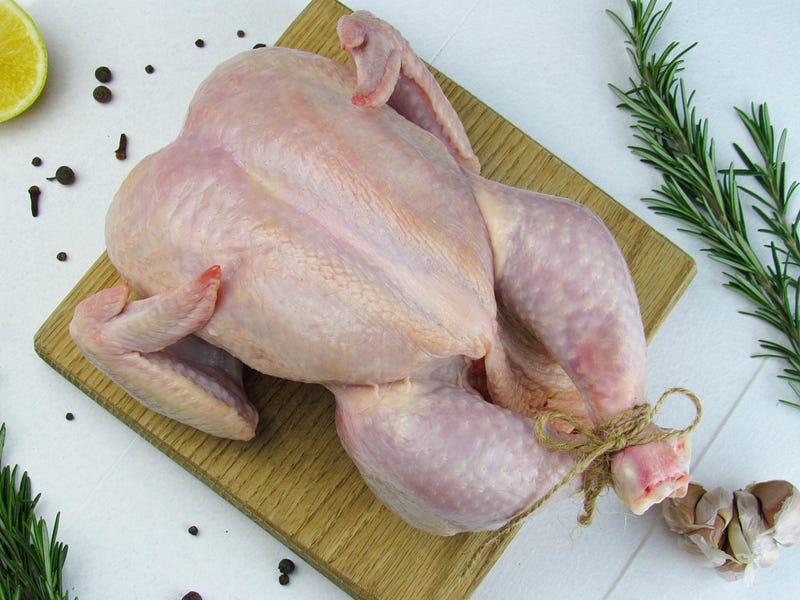
As I watched the Netflix documentary ‘Poisoned; The Dirty Truth About Your Food,’ I was feeling sick to my stomach by the end of it. Based on the book ‘Poisoned. The True Story of the Deadly E.Coli Outbreak That Changed the Way Americans Eat,’ by Jeff Benedict, the messages were still ringing in my ears when I was grocery shopping the next day.
If you buy chicken from a grocery store your assumption should be that it will contain campylobacter and salmonella; raw poultry is a biohazard. And, believing the USA has the safest food system is laughable.
Food safety 101
We know the importance of washing our hands before preparing food. It’s also common sense to wash any part of a vegetable that’s been sitting on a shelf or in a bin. I rinse greens even if the packaging claims they’ve already been washed.
Storing raw meat above the refrigerator vege bin or prepping a salad straight after handling meat is a big no-no. Most of us are aware of the dangers of thawing meat at room temperature, undercooking poultry and hamburgers or leaving food out in warm temperatures for too long.
We check labels for caloric content and use-by dates. We trust that the food we buy has passed some sort of governmental inspection before hitting the supermarket shelf. It’s been handled by several humans and travelled through conveyor belts and machines that have presumably been appropriately sanitized.
In the US, the Food and Drug Administration (FDA), the United States Department of Agriculture (USDA), and a whole host of other subsidiary agencies have rules and regulations to ensure people don’t get sick.
But people do, by the thousands each year. Some die. Others are left with life-changing health conditions, all because something they ate was contaminated.
WHY?
Why is this still happening when the US claims to have the safest food in the world?
There are four main reasons:
- Bacteria are invisible.
- Manufacturers see food as a commodity.
- Consumers — that’s you and me — are expected to do their part.
- Inspection only starts at the processing level.
1️⃣ You can’t see bacteria
All bacteria are microscopic. Unless they have started working their magic and you can smell a piece of meat, you cannot see if they are lurking on food. But, you can’t just work on the assumption that it’s good to go if it passes the sniff test. It can still be there.
Escherichia Coli — or E.coli — is a bacteria that is naturally present in both human and animal intestines and plays an important role in the digestive system, facilitating the breakdown and digestion of food. However, you don’t ever want to ingest a cow's E. Coli or eat food that your buddy — or, sigh, the chef at a restaurant — cooked after taking a poop and forgetting to wash his hands.
Raw meat has a tremendous likelihood of harbouring pathogens. Those nicely packaged pieces of meat from your local supermarket or that rare steak or tartare you ordered at a swanky restaurant could be loaded with more than you bargained for.
While the U.S. Department of Agriculture requires producers to test poultry for salmonella, a processing facility is allowed to have the bacteria in up to 9.8 percent of all whole birds it tests, 15.4 percent of all parts, and 25 percent of ground chicken. Producers that exceed these amounts are given what amounts to a warning, but not are prevented from selling the meat.¹
Feel like turning into a vegetarian after those statistics? I hate to tell you, but leafy greens aren’t safe either. There have been several romaine lettuce and spinach scares over the past few years where the products have been contaminated by E. Coli, presumably from irrigation systems.
2️⃣ Manufacturers see food as a commodity
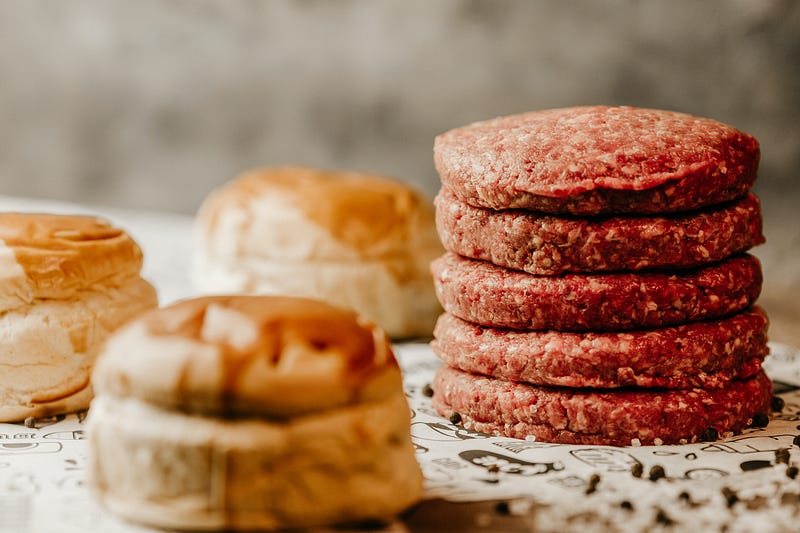
In 1992, 73 Jack in the Box² Restaurants in the USA were linked to an E. Coli outbreak that killed four children and infected hundreds more. The source was tracked back to several slaughterhouses that supplied the restaurant chain, but also, the restaurants were undercooking the burgers. They said cooking them to the recommended 150 degrees made them tough.
Even worse is the lies and deception from companies. Blatant forging of ‘Certification of Analysis’ papers by the Peanut Corporation of America³ in 2009 has its CEO, Stewart Parnell, serving a 28-year prison sentence. He knowingly rubber-stamped and shipped salmonella-tainted peanut butter for human consumption.
At the slaughterhouse, there are numerous opportunities for the meat to become contaminated⁴ — if it isn’t already — from how the hide is removed from the carcass to the leakage of intestinal fluids over the carcass before the meat is processed. Throw in human error — oops, I dropped my knife — a deadline for quotas and machinery cleanliness, you have a potential pathogen party going on before the meat hits the supermarket shelf.
3️⃣ Consumers are expected to bear the burden of food safety
There is an expectation that you, the consumer, will read the labels on the food you purchase. The manufacturer suggests safe preparatory techniques on packaging to avoid foodborne illness. However, it’s challenging to wash E Coli off leaves because of their undulating surfaces, so isn’t the best way of preventing infection not to get the greens contaminated in the first place?

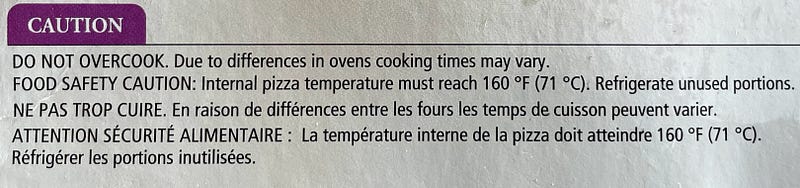
Lawyer and food safety advocate, William (Bill) Marler, argues that it shouldn’t be left to the consumer to protect themselves from pathogens present in food. He has won countless legal battles for victims of food poisoning⁵ and was one of the main contributors to the Netflix documentary.
I agree. It’s unacceptable that US industry regulators allow a percentage of a pathogen to be present on a product. There should be none, like many European companies tout⁶. Bill cites European food safety standards where supermarket meat comes with the label ‘pathogen free’ and animals being raised in clean facilities that are inspected frequently as important components to a safe food chain from farm to fork.⁷
Why can’t the US be as stringent?
This leads me to point #4…
4️⃣ Inspections only truly start at the manufacturing level
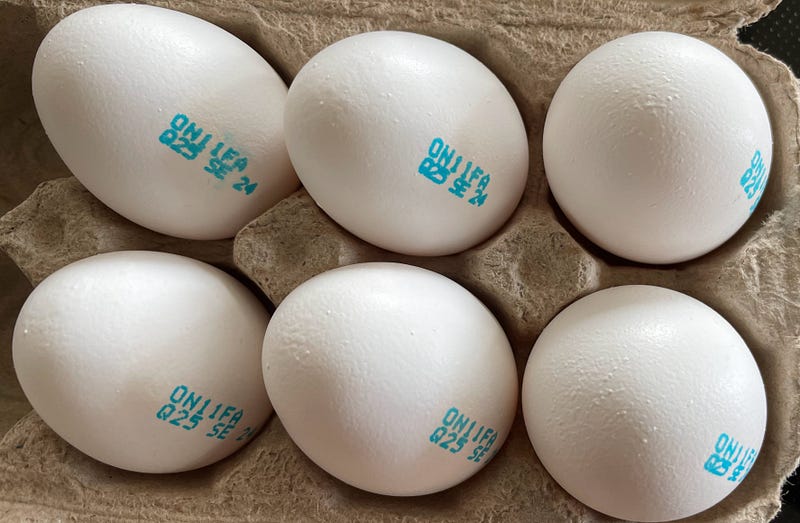
In 2010, the FDA recalled over 550 million eggs after 56 thousand people became sick with salmonella. Jack DeCoster, the owner of the company Quality Egg, was imprisoned for 3 months after it was discovered his farms were rodent-infested and unsanitary.⁸ Surprisingly he got away with employees falsifying papers and paying off an inspector with a bribe.
Surprisingly, the eggs had the USDA’s seal of approval before they hit the consumer shelves as only the exterior of the eggs were inspected and they passed the ‘sniff’ test. The USDA knew Salmonella had been found at DeCoster’s farms, but neither they nor the FDA could decide who was responsible for following up on the claims.
E.Coli O157 was behind 33 outbreaks of food poisoning in the USA between 2006 and 2022.⁹ Initially, they were predominantly linked to beef, but the pathogen has also been found in cake mixes, flour and leafy greens. The biggest culprit is contaminated irrigation systems, such as the Wellton Canal that runs in close proximity between feed yards and crops.
The problem is that there are many regulatory agencies that monitor and inspect food and processing plants, but there are few — if any — regulations for farmers. There are recommendations, but the food lobbyists are a powerhouse who will do their utmost to stall the implementation of new laws against how farms are run. They interfere at the highest levels of the government.₁
…when Tyson, the largest poultry producer, bought IBP, the largest beef producer, the poultry industry suddenly had a reason to oppose legislation that impacts the level of salmonella in ground beef. Capitol Hill staffers confirmed Foreman’s assertion, saying lobbyists for the National Chicken Council, whose members account for nearly 95 percent of the chicken sold in the country, were out in force last fall, lobbying against the legislation.₂
Although the Food Safety Modernization Act (FSMA) was formed to implement food safety rules,₃ most of them have been pushed back by farmers and lobbyists citing complexity and expense.₃
The bottom line is that food-borne illnesses can kill
I’ve had salmonella after ingesting a reheated piece of Hawaiian pizza. It took 12 hours for the stomach cramps to kick in. A few more hours later, I didn’t know whether to sit or curl around the toilet. I was off work for a month with persistent, excruciating stomach cramps and diarrhea.
I was lucky.
CDC estimates Salmonella bacteria cause about 1.35 million infections, 26,500 hospitalizations, and 420 deaths in the United States every year. Food is the source for most of these illnesses.₄
When you see images of a four-year-old dying in an ICU and hear stories of near-death situations caused by food-borne illnesses, it’s horrifying. Listening to a food professor — whose son died because of food poisoning — declaring he will never eat cantaloupe, sprouts or bagged lettuce because of the high potential for contamination is sobering. Bill Marler’s advice when ordering a hamburger? Ask for it to be cooked to 155 degrees.
When top levels of government can be easily persuaded to stall laws aimed at human safety, I get scared — and angry. We all should be. How many more people need to get sick and die before the higher powers take action?
This food saga is — literally and figuratively — a shit show.
The human food chain must be protected from the grassroots. The farms the animals are bred and raised and the fields where the seeds are sown must be regulated, inspected and held accountable when in breach of the law. Initiating regulations at the manufacturing and processing point is clearly too late.
When it comes to food, money shouldn’t talk. Safety must.
Although I could write a list a mile long, here are my four pieces of advice:
➡️ Wash your hands before prepping food. ➡️ Wash your food thoroughly. ➡️ Wash your hands after washing the food. ➡️ Cook meat to the instructed internal temperature.
For more guidelines on how you can ensure your food is safe and view the latest outbreaks and recalls please click here for the USA and here for Safety hints in Canada and Food recalls, Canada.
References:
I have sourced several documents to corroborate the notes I took while watching the documentary and support this story.
The documentary: Poisoned; The Dirty Truth about Your Food ¹ Source ²Jack in the Box E.Coli Outbreak ³Peanut Corporation of America; Stewart Parnell ⁴Slaughterhouse practices ⁵Bill Marler ⁶Atria Group Zero Tolerance for Salmonella ⁷EFSA’s role in foodborne illness prevention ⁸Jack DeCoster prison sentence ⁹E.Coli 0157 outbreaks ₁Food lobbyists ₂Pushback against agriculture water use ₃FSMA’s proposed new rules for food safety ₄Salmonella Statistics