
Wandering Around Madrid
With no destination and no purpose in mind.
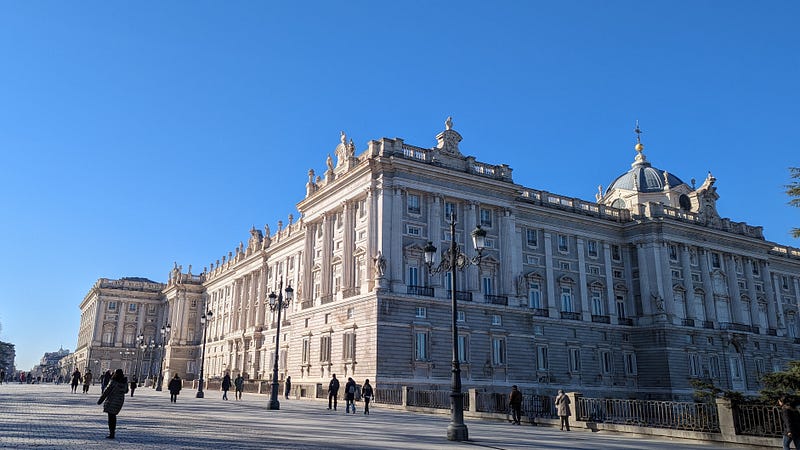
As slow travel has quickly become my favorite way to explore new and even familiar (or should-be-familiar!) places, I’ve come to discover practices that make the experience a lot more delightful and meaningful.
One of which is starting with long walks on the streets of whatever place I find myself in, with no idea as to what’s around. My goal is to get a feel for the place and not be constrained by the must-sees so much that I miss other curious sights.
Other than choosing my starting point, I have no destination, which — if I have to be honest — was a bit unnerving at first because I was so used to making sure I maximize my time in a specific destination.
When only in a place for a few days, I wanted to cover as much ground as possible. I did a lot of research beforehand to identify areas of interest and planned meticulously as to what to cover, when, and for how long.
No more.
In fact, I’ve realized that by allowing myself to simply venture out for a walk, I’m not only able to see most of what others would recommend I see, but I also encounter so much that may not make a 10-places-to-visit list.
Even with the must-see places, I experience them more fully, for two reasons really.
First, I have the time to “discover” the place with no agenda, no pressure, and no expectations. And if I come across something I’d be curious to learn more about, I take note and come back for a thorough exploration. Multiple times in some cases.
Second, I often visit during times of the year/week/day that are not popular with tourists, which allows for a less hectic and more meaningful immersion that leaves me with deeper knowledge and appreciation of where I happen to be.
This is exactly what’s happened the past few months in Madrid.
Though my ideal approach is to walk everywhere all the time, when in a city the size of Madrid, especially when I’m staying in a suburban area, I choose a starting point and use public transport to get to it.
Plaza de Espana was where for me the first time I decided to hop on the metro for a few hours of wandering around Madrid.
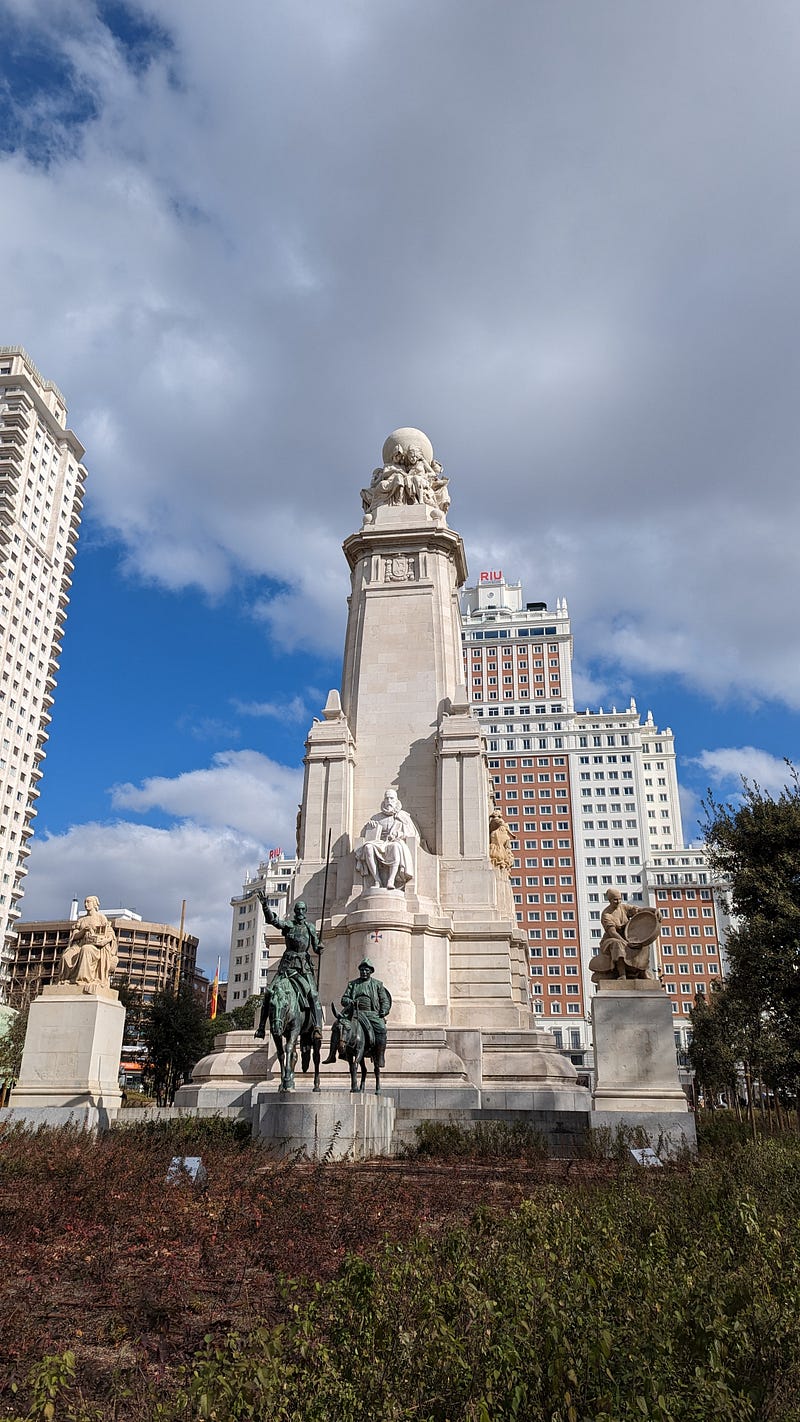
Immediately upon exiting the metro station and starting my walk, I came across the Miguel de Cervantes monument located in Plaza de Espana, which was a surprise and a treat, as the story of Don Quixote de la Macha and his squire Sancho Panza happens to be a favorite.
Even before I confirmed whose monument that was, I recognized my two favorite characters, located in the front of the monument. You can find other literary works by the famed Spanish author around the monument, but it’s the one in the front that was a highlight for me.
The walk was off to a good start, and I had the sudden urge to re-read one of my favorite novels!
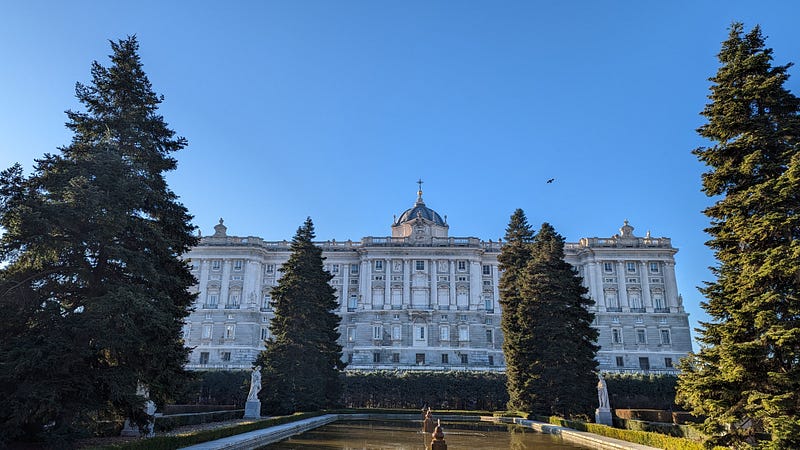
Not far from the monument, I peeked at the Royal Palace (Patrimonio Nacional), which I already knew about from my sister. Walking toward it, I came across Jardines de Sabatini, a garden with fountains, statues, and a green labyrinth. Not crowded at all on a sunny but chilly winter day.
After leaving the gardens, I headed in the direction of the palace, walking by the entrance and noticing the line of people waiting to get tickets. I knew I’d love to come back for a guided tour and learn more about this building, but when I do, I’ll be getting my ticket ahead of time.
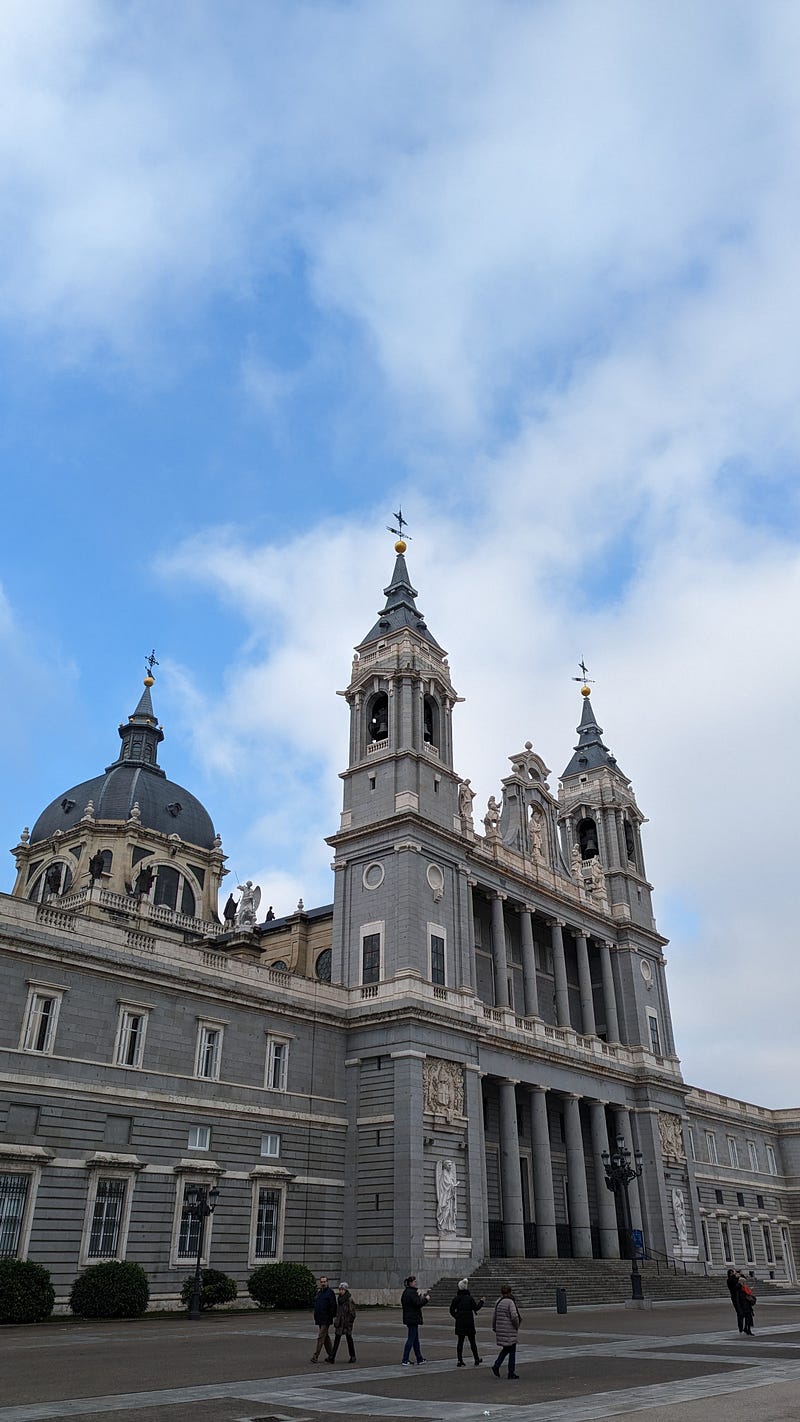
Across from the south side of the palace, I found the Almudena Cathedral, an impressive building. Because of the morning chill, I was tempted to enter but decided to keep walking and come back separately for a visit.
When I reached the end of the square between the palace and the cathedral, views of snow-capped mountains greeted me. Here I have to admit, I had no idea I could enjoy mountain views from Madrid, and I still haven’t learned the names of these mountains, but I have made a note to myself to figure out a way to get there.
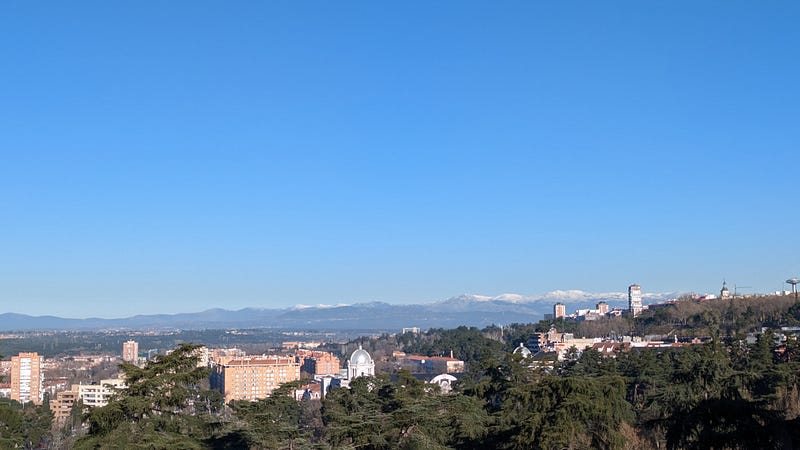
Aside from the gorgeous mountains, I also noticed what looked like a park right ahead. Any green area tickles my fancy, so I started looking for a way to get to that park. I did get there, eventually, by taking the much longer route, as I discovered later. Ah, the joys of exploring with no preparation!
The green space turned out to be Campo del Moro, historical gardens created by Philip II that are free to the public and open all year. When I visited, the garden still mostly sported its winter attire, but I could already imagine how vibrant and full of life it probably is in spring and summer. Needless to say, I’ll be coming back, with snacks and a book.
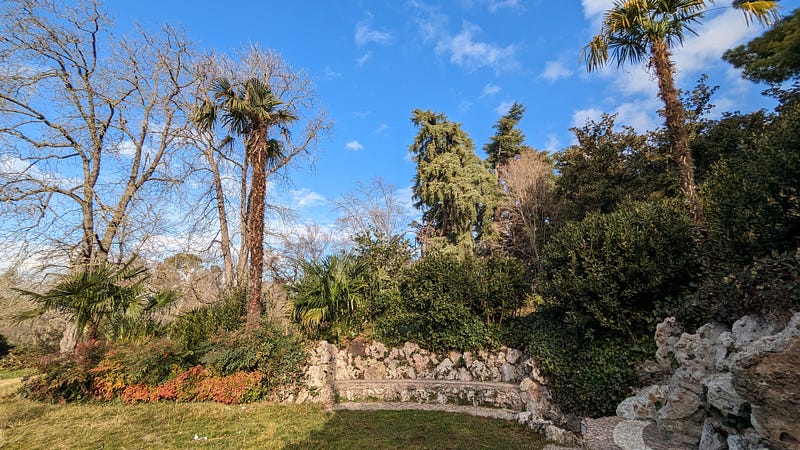
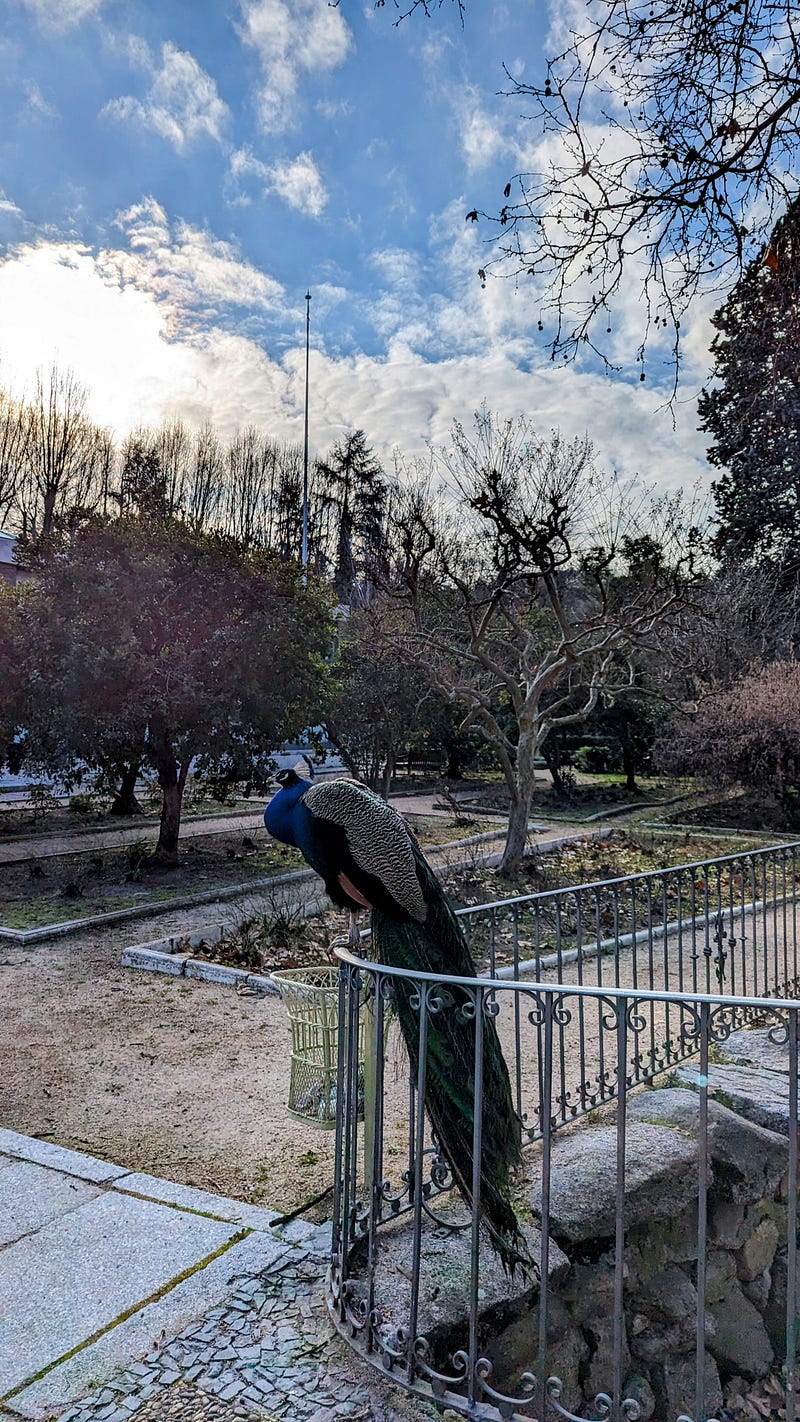
Even in winter, strolling through the park was lovely and quite peaceful, probably because I was one of few people wandering about. The highlight — and only scare of the day for me — was coming across a peacock perched on a fence.
I now know peacocks roam free around this and other parks in Madrid, but on that walk, with the sun in my eyes, I had initially registered this as a feature of the fence, until I was right next to it and it screeched (Yes, I screeched right back at it!). Beautiful, though!
After leaving Campo del Moro, I ended up at the Sabatini Gardens again, so I quickly passed the palace and cathedral — again — deciding to turn left on Calle Mayor.
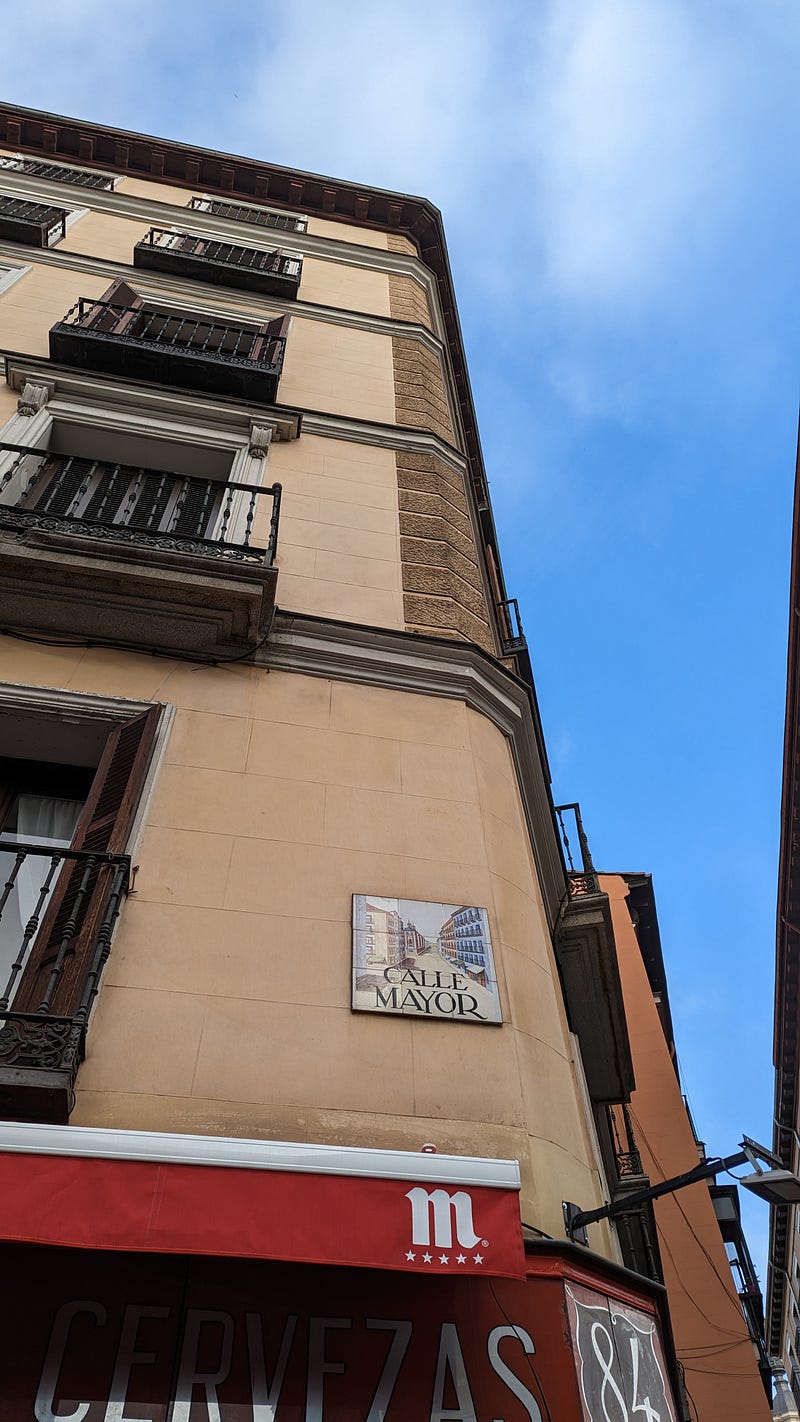
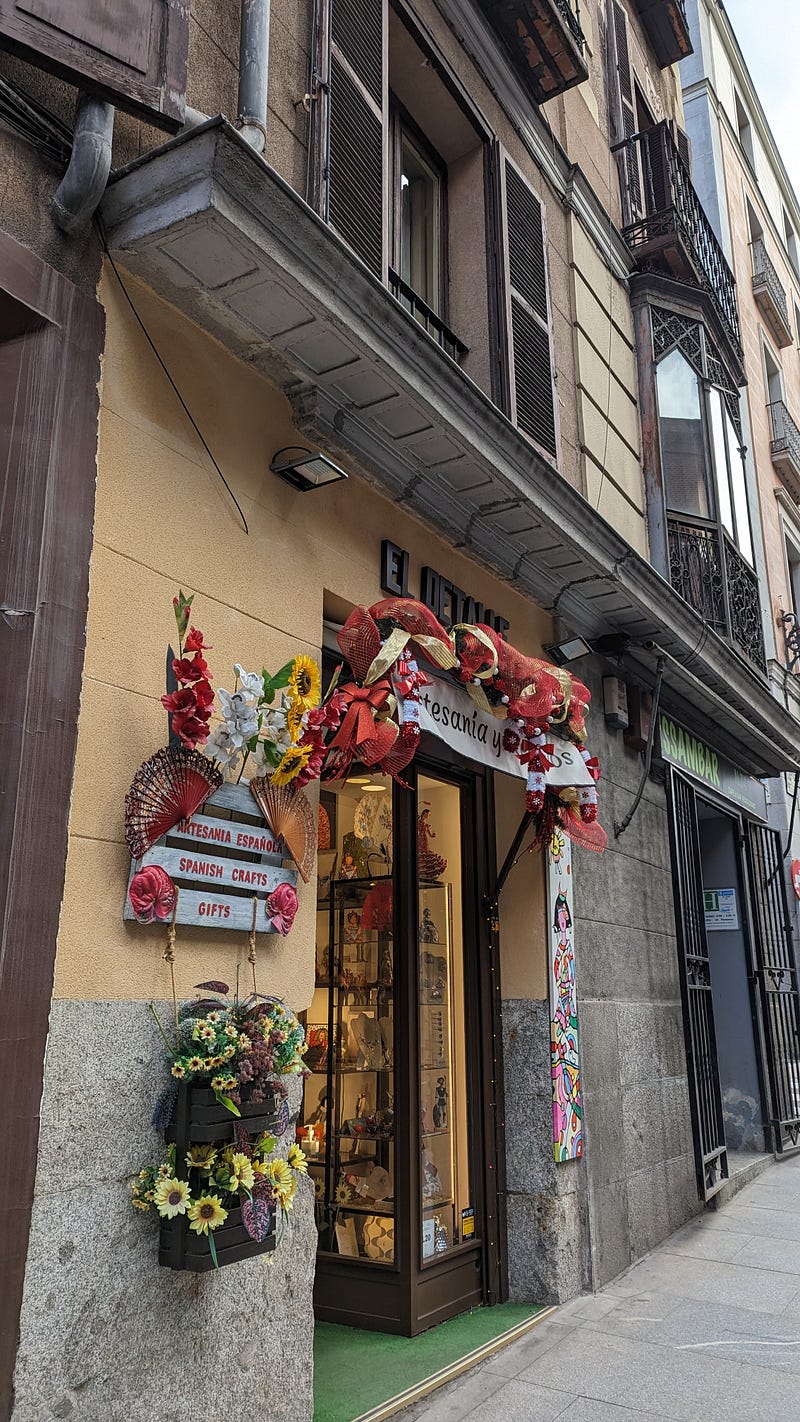
And I’m so glad I did.
The street itself is lined with lovely shops and restaurants, but me being me, I ventured on the side streets, drawn by the twists and turns of narrow roads and alleys, one of which led me to the San Miguel Market, where I promptly made the decision that it’s time for a break and a treat :)
You know that’s one place I’m coming back to!
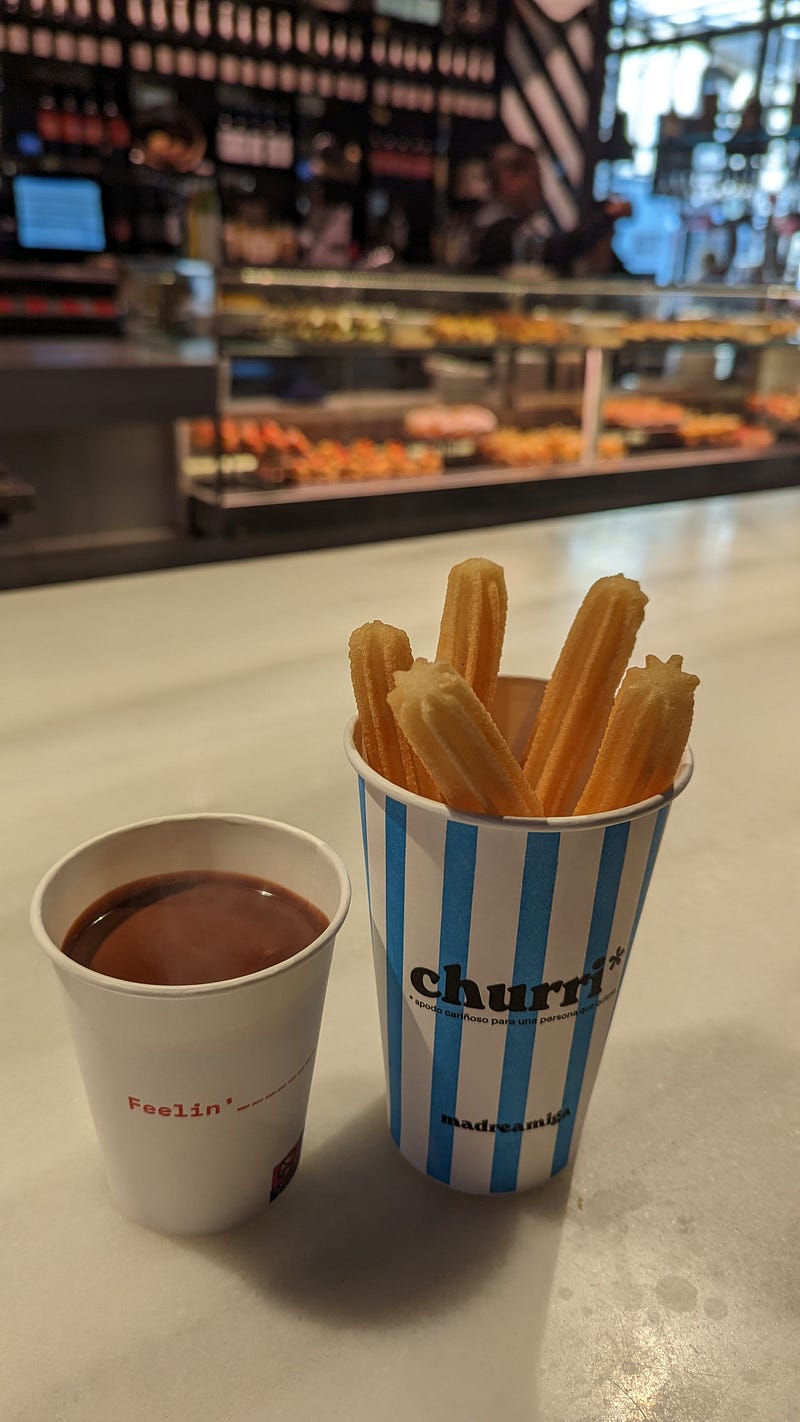
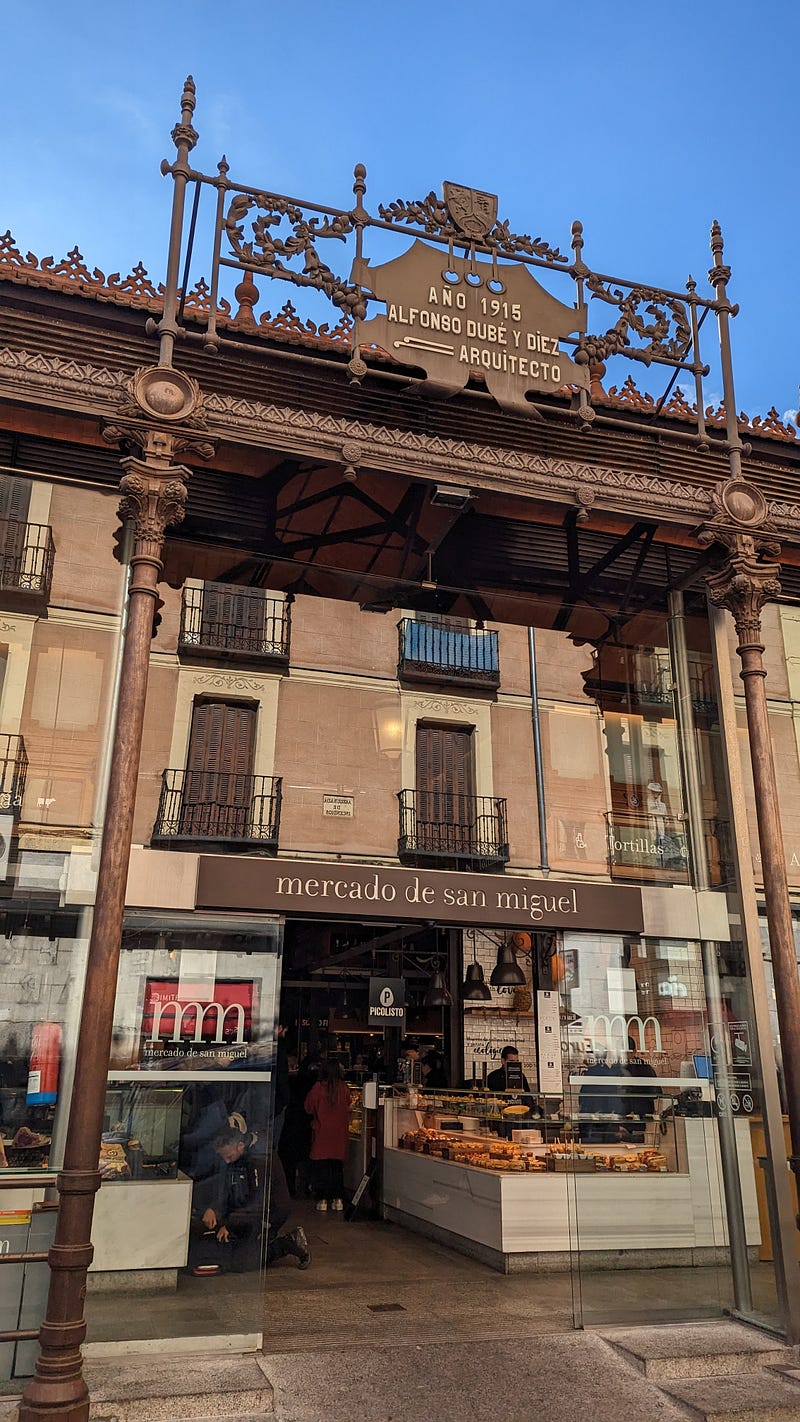
Once I had my sweet treat, I got back to Calle Mayor, and soon after I resumed walking, I ended up at Plaza Mayor, Madrid’s grand central square, which I later found is located in the oldest part of the city.
Street performers, tourists, tons of restaurants, and a statue of King Philip III are all indelible features of this location. A tourist information center can be a good stopping point to generate ideas on what to do in the city, but I took advantage mostly for the warmth and the free WiFi.
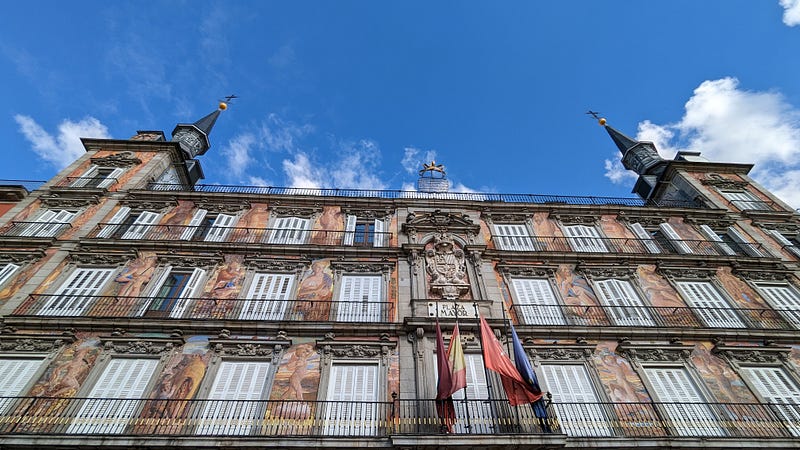
From Plaza Mayor, I took one of several streets leading out and found myself in what looked like a giant construction site, which turned out to be Puerta del Sol, the busiest and most popular public square in the city.
Despite the multiple construction work areas, the place was crowded, so I can only imagine what it must look like with no construction blocking most of it. That said, I’d love to come back when it’s not under construction, if only to locate Kilometer Zero, the point from which distances in Madrid are measured. I had no idea it’s there on that first walk, and I have the suspicion it’s probably not accessible because of the construction (still being done as I write this) at Puerta del Sol.
I did, though, spot a long line of people waiting to take photos with — and rub! — a statue of what looked like a bear kissing a tree, and immediately intrigued, I lined up as well. From the family next to me, I learned that this is Madrid’s symbol — Oso y Madroño (the Bear and the Strawberry Tree).
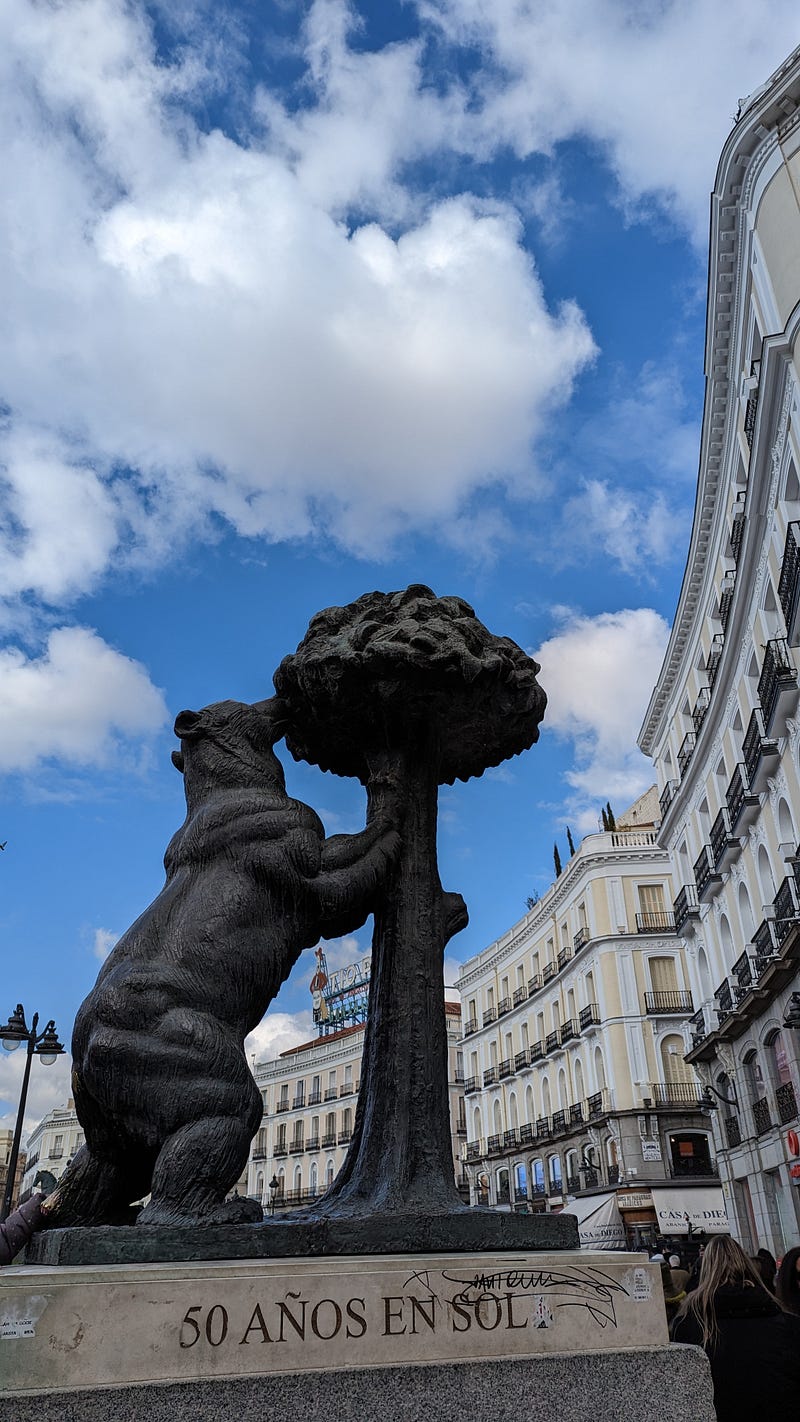
As you can already determine, on this one walk, I was able to come across quite a few of the must-sees when one visits Madrid, and though I’ll be going back to check out many of them in more detail, I enjoyed coming across them with no prior information on what to expect.
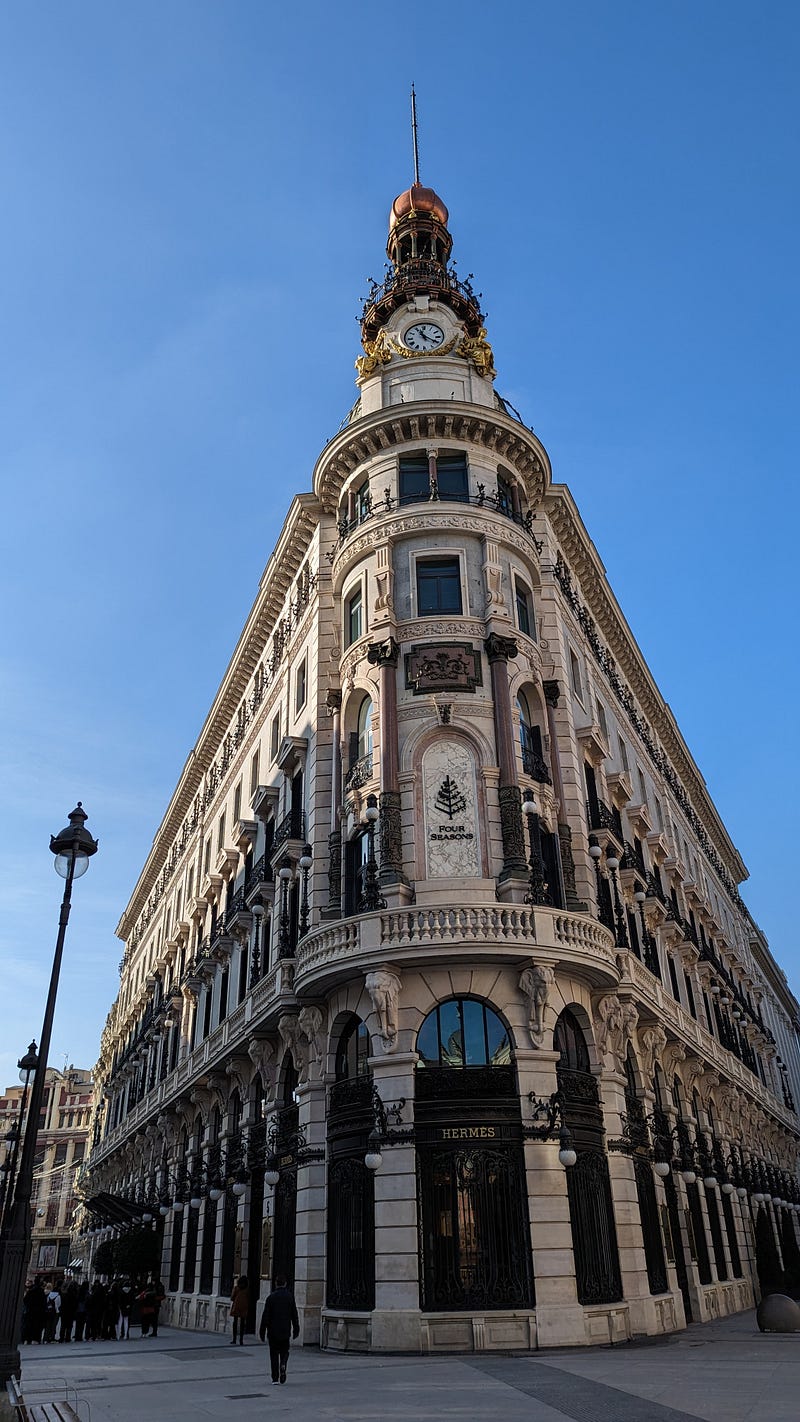
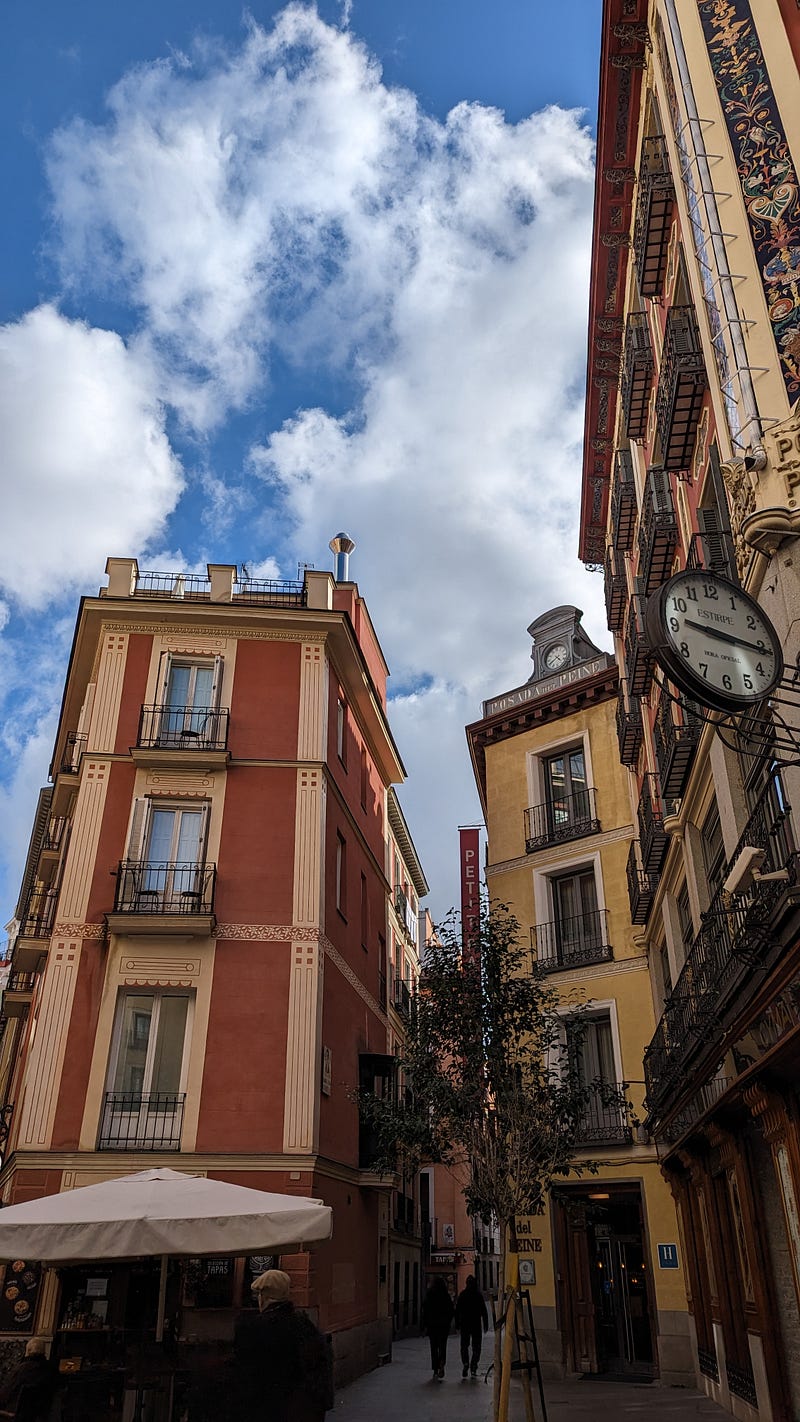
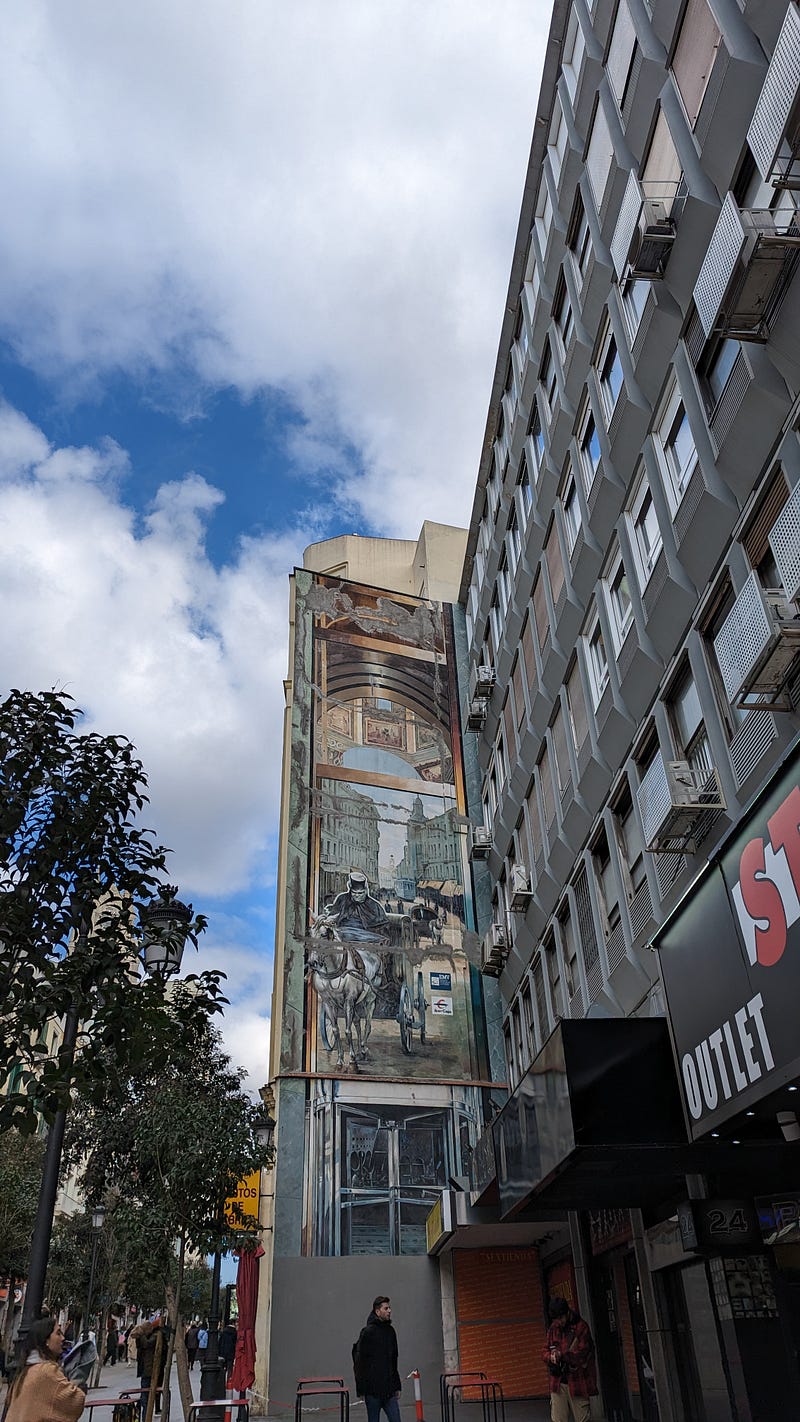
Having written that, I have to admit that what stood out the most on that first walk were the parts that may not be found on tourist brochures. An attention-grabbing building, curious wall art, and an intriguing corner: maybe not worth making a trip to Madrid for but nevertheless making my experience a lot more rounded.
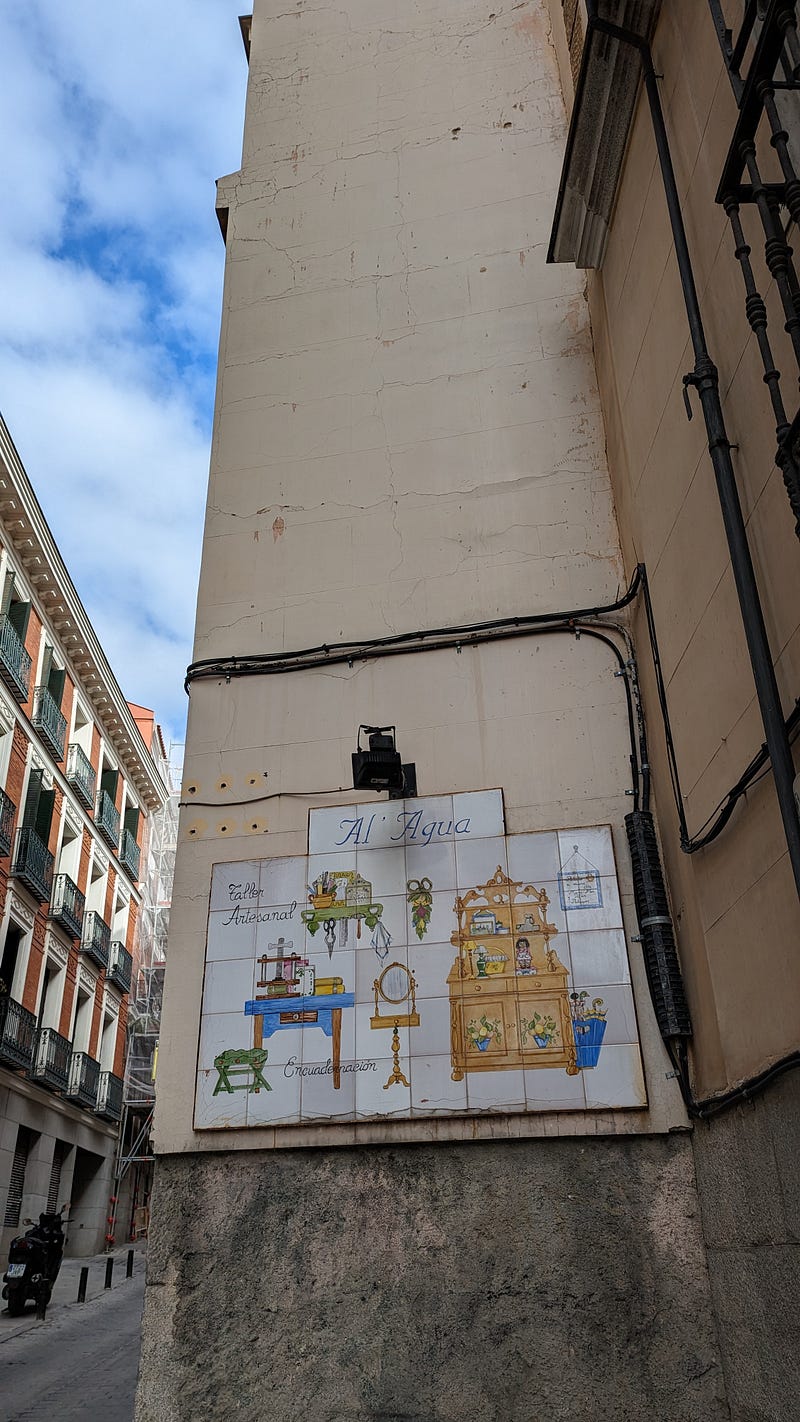
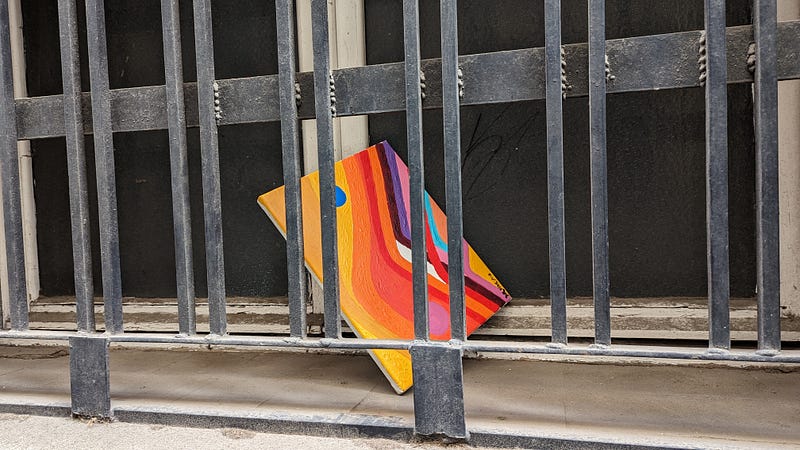
I mean, look at this splash of color I came across while wandering along one of the side alleys. Such a bright spot in an otherwise pretty bland building and window. No idea who put it there or why, but it caught my eye and threw my storytelling brain into overdrive. Feel free to share your story of what’s happening here in the comments!
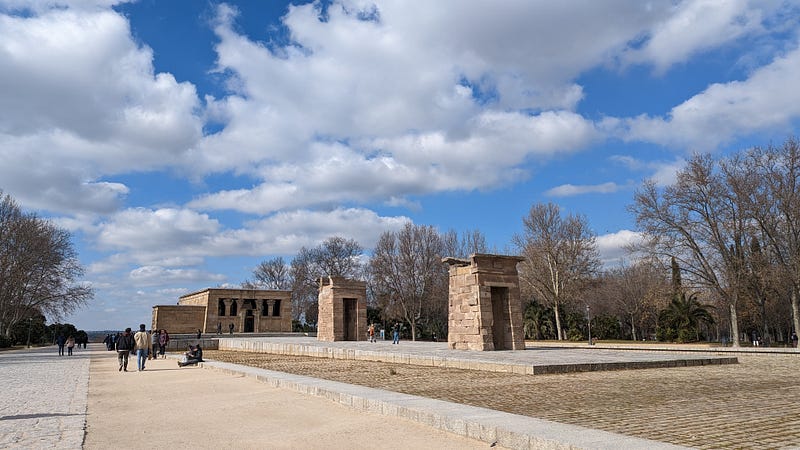
Once I left Puerta del Sol, I felt pretty much done with my walking for the day, so I started going in what I thought was the direction of Plaza de Espana. Somehow, however, I ended up next to an Egyptian temple.
Donated to Spain by the Egyptian government to prevent it being damaged by floods, Temple of Debod stands at the top of Cuartel de la Montaña Park, another beautiful spot to relax and enjoy views of the city.
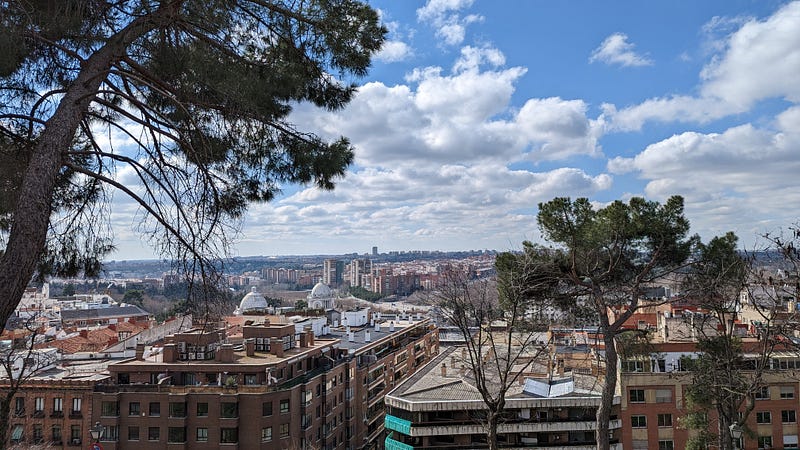
And with that last view of the city, I was off to the metro station.
So if anyone’s curious, I can confirm: slow travel allows for a more immersive and relaxed experience, without the pressure to do, see, go, go, and go at the speed of light. The best part is that even if I can’t commit to a longer stay in a specific location, the experience of slow travel has helped me develop habits that make even shorter trips enjoyable and relaxing.
If you have the chance to try the practice, don’t hesitate. It’s totally worth it.
Want to get to know me more? Connect with me on Instagram!
Thank you for stopping by :)


