
Walter Tsukamoto Was A Japanese American Leader
He was also a U.S. veteran
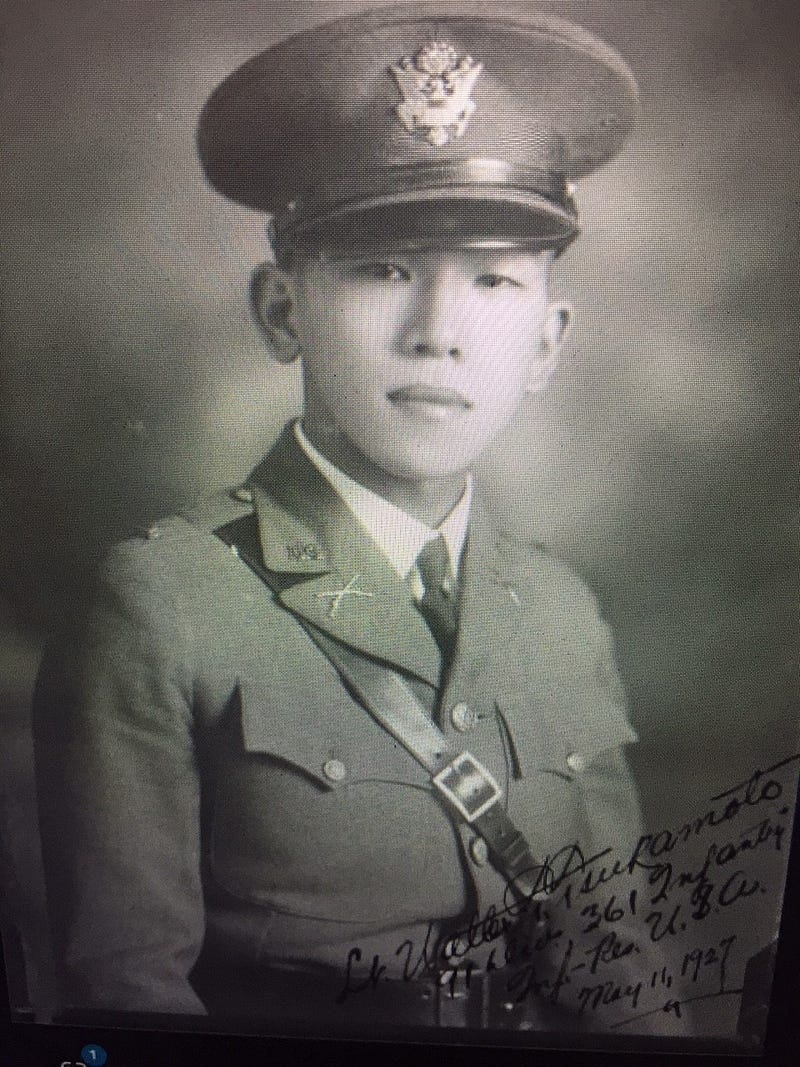
An American hero
Walter Tsukamoto was a Japanese American who was born in Molokai, Hawaii, on September 15, 1904. He became a lawyer and lobbyist before the years of World War II. He was a national president of the Japanese American Citizens League (JACL), the largest and oldest continuously operating Asian American civil and human rights organization in the nation. He worked toward enlistment of Japanese Americans into the U.S. Army. He was a Colonel in the army who became a military counsel postwar. He spent his life as a champion for civil rights and fought against racism.
A few months after Tsukamoto was born, the family moved to the Sacramento, California, area. He graduated from Sacramento High School in 1923 after which he attended college at the University of California, Berkeley. He became the first Nisei (second generation Japanese Americans born in the U.S.) to serve in the U.S. Army Reserve Officers Training Corps (ROTC). He achieved the rank of cadet major.
After earning a B.A. at Cal Berkeley, he entered law school at Boalt Hall (U.C. Berkeley). He graduated from law school in 1929 and was admitted to the California Bar.
Tsukamoto settled in Sacramento, where he established a private law practice, He and his wife Tomoye had six children. He was active with the JACL, which was formed in 1929 as a national organization. He served as the Sacramento chapter president from 1931–1936. In 1937, he was made a captain in the U.S. Army Judge Advocate General’s office. He worked against the alien land laws. Tsukamoto was elected national president of the JACL in 1938. He continued to work against discriminatory legislation affecting persons of Japanese ancestry in California. He persuaded his local school board to abolish racially segregated schools.
After the attack on Pearl Harbor, Tsukamoto petitioned the army to place him on active duty instead of the reserves. He was thirty-seven years old at the time. The War Department barred Japanese Americans from serving in the military in April 1942 as they had been reclassified as non-citizens or enemy aliens. They formally refused Tsukamoto’s request to serve.
After President Franklin D. Roosevelt signed Executive Order 9066, which caused the removal of Japanese Americans from the West Coast of the United States, Tsukamoto’s family was removed from their home. They were held at the Sacramento Assembly Center before being unjustly incarcerated at the Tule Lake Camp in California.
Tsukamoto again asked to be able to serve in the U.S. Army but was denied. All the white officers on the reserve list had been called up. He applied also unsuccessfully to serve in the Military Intelligence Service of the army.
He received permission to leave the camp in November 1942 to attend a special emergency meeting of the JACL in Salt Lake City, Utah. When he returned to the Tule Lake Camp, Tsukamoto wrote an amicus brief on behalf of the JACL. He was limited because of not having access to a law library, but he was the main signer of the final brief. It was dismissed by the appellate court.
Because of his involvement with the JACL, there was some harrassment at the camp because inmates at Tule Lake were anti-JACL. Tsukamoto and his family were relocated to Cincinnati. He again asked the War Department to allow him to go on active duty with the army. In March 1943, he was placed on active duty and ordered to report for training at Ann Arbor, Michigan. He spent several weeks wth the school for the Military Intelligence Service at the University of Michigan after which he was sent to Fort Snelling to serve as a trial judge advocate. His request for overseas service was refused, but he was promoted to the rank of major in Demcember 1944.
He wanted to prove his loyalty and patriotism to the United States of America. In 1946, Tsukamoto became likely the first Japanese American lawyer admitted to the Supreme Court bar.
Soon after that, he was sent to Tokyo as judge advocate officer with the U.S. Army occupation forces in Japan. He served in the Tenth U.S. Army Corps during the Korean War. Then he served in Europe with the U.S. Army.
Tsukamoto was faced with being discharged in the late 1950s due to age. He applied for an extension and was successful. He had been promoted to the rank of full Colonel in October 1960. He was serving with the army on active duty in Germany when he died of a heart attack in January 1961 at the age of fifty-six. He is buried at the Presidio of San Francisco Military Cemetery with full military honors.
Despite losing his law practice and his family being incarcerated in an American concentration camp during World War II, Colonel Tsukamoto had a great desire to serve his country. He is an example of service and should be remembered as a true American Patriot.
[Sources: encyclopedia.densho.org, javadc.org, The Japanese American Story As Told Through A Collection Of Speeches And Articles, www.thejapaneseamericanstory.com]