Travel
Walking with the Dead in Bali
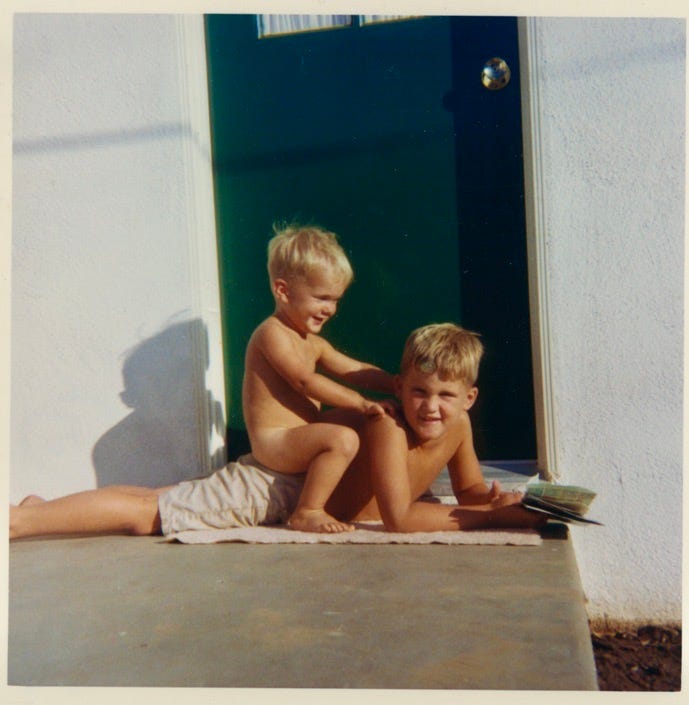
The ancient festival brings my brother back to me each year
“The past is not dead, it is living in us, and will be alive in the future which we are now helping to make.” — William Morris
There was a quietude as I looked across the river ravine this morning.
The mornings are always peaceful where I live here in Bali. But today there was a tangible presence that even the animals sensed.
The dead come back to us today as we begin the ancient Galungan festival.
My brother will be with me for the next ten days.
Galungan happens every 210 days, once a year in the Balinese calendar.
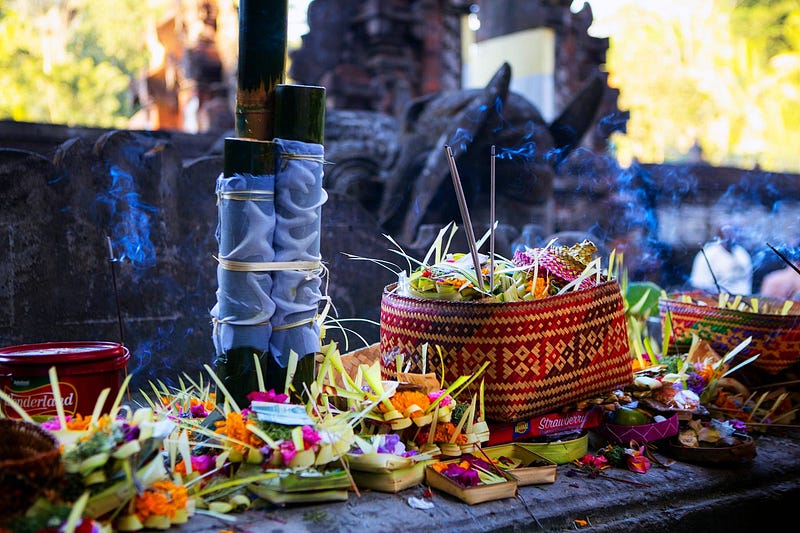
All around Bali penjors — tall bamboo poles decorated with fruit, coconut leaves, and flowers — are placed as offerings to the spirits. I see them as similar to our Christmas trees that we put up once a year.
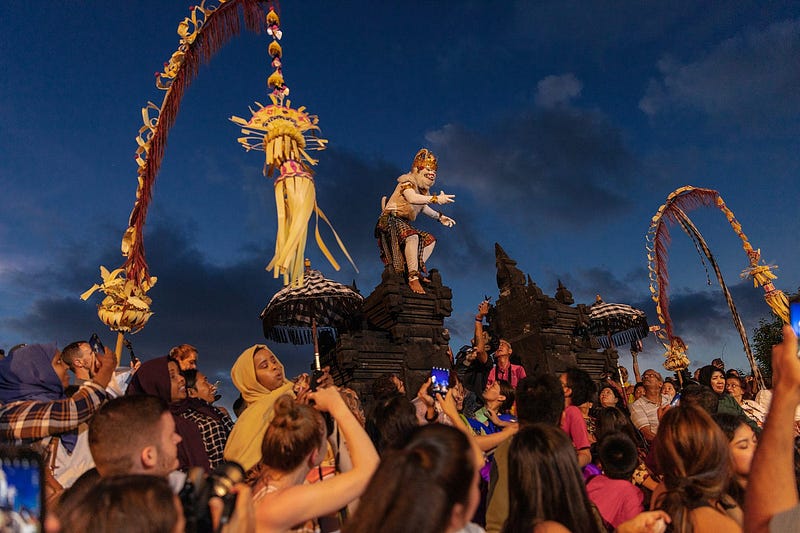
Galungan is the most important event in the Balinese calendar, honoring the creator of the universe and the spirits of the honored ancestors.
It marks the time of the year when the spirits of our ancestors visit Earth.
The three-day festival symbolizes the victory of good (Dharma) over evil (Adharma). The preparations begin several days before the actual day.
- Three days before Galungan — Penyekeban — families begin their preparations. Penyekeban means the day to cover up, as this is the day when green bananas are covered up in huge clay pots to expedite their ripening.
- Two days before — Penyajahan — is a time of introspection as well as a time to make Balinese cakes known as jaja.
- The day before — Penampahan — is the day to slaughter sacrificial animals for the temples and altars as offerings.
- On the day of Galungan, the Balinese Hindus return to their ancestral villages to pray at the temple and make offerings to the spirits.
A highlight of the festival is Ngelawang. Ngelawang is an exorcism ceremony performed by a barong — a lion-like creature who is the king of the spirits and the leader of good.
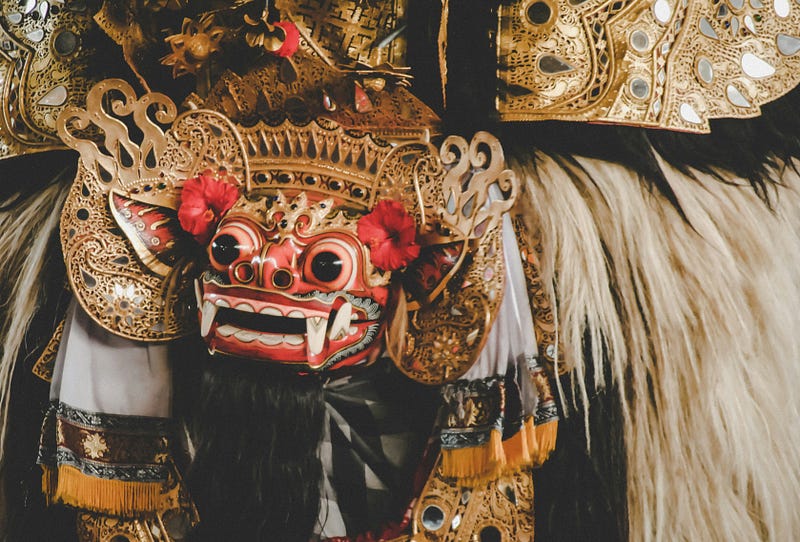
The barong is paraded through the villages performing an elaborate dance. Balinese invite the barong into houses as he makes his way through the village. It is believed that his presence is meant to restore the balance of good and evil in a house. The residents of the house will pray to the gods before the dancing barong. Once Galungan is finished, the Balinese visit their families and closest friends.
The tenth day marks Kuningan and the end of the festival when the spirits ascend back to heaven.
In our modern and fast-paced world, we sometimes forget about the culture and ceremonies that came before us.
Or we just don’t want to take the time to remember.
I find the ceremony comforting as I imagine my brother, dad, and other family members who have died to be walking along with me. I feel them around me.
We tend to intellectualize these ceremonies and dismiss them as primitive. Why can’t we just accept them for what they are? I do not believe in the concept of good and evil but I believe there are good and bad things that happen in the world. I believe that my brother still walks with me not just through this week but every day.
These ancient ceremonies offer us an opportunity to stop and reflect on our lives, to focus on what is important.
And there is something comical and comforting to consider that my brother might be looking over my shoulder right now as I type this.
Welcome back, John. 🙏 🦋