
Walking with Reindeer
In Scotland’s Cairngorm Mountains, you can walk with them all year round, not just for Christmas
“Coming through!”
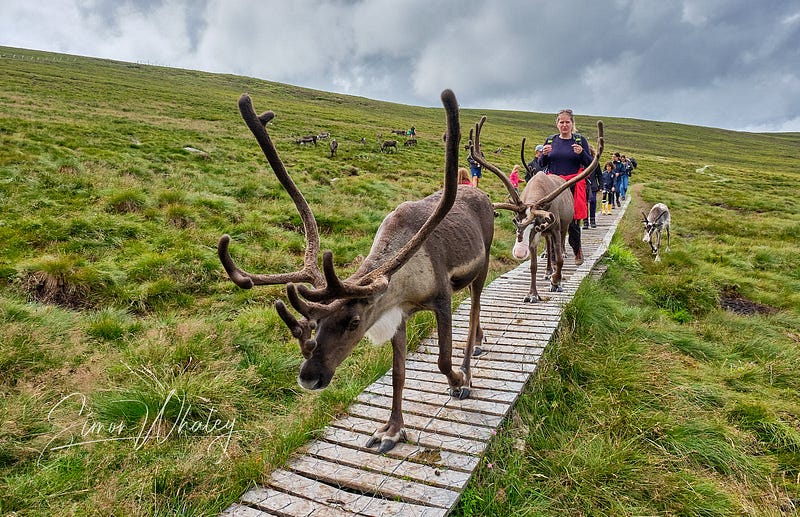
Without looking, I jump off the wooden path onto the soggy sedgy grassland and land with a squelch. The advice to wear walking boots turned out to be a sensible suggestion. I spin round in time to see a herd of reindeer galloping straight towards me.
With a clatter and a clicking (more on that later), they hurry past, keen to see today’s walk leader, Harry, carrying a bag of food. Clearly, reindeer are not stupid animals.
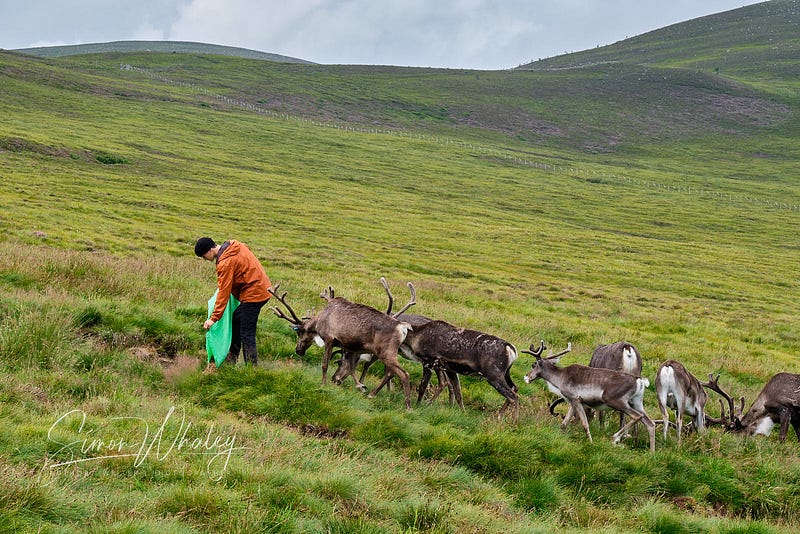
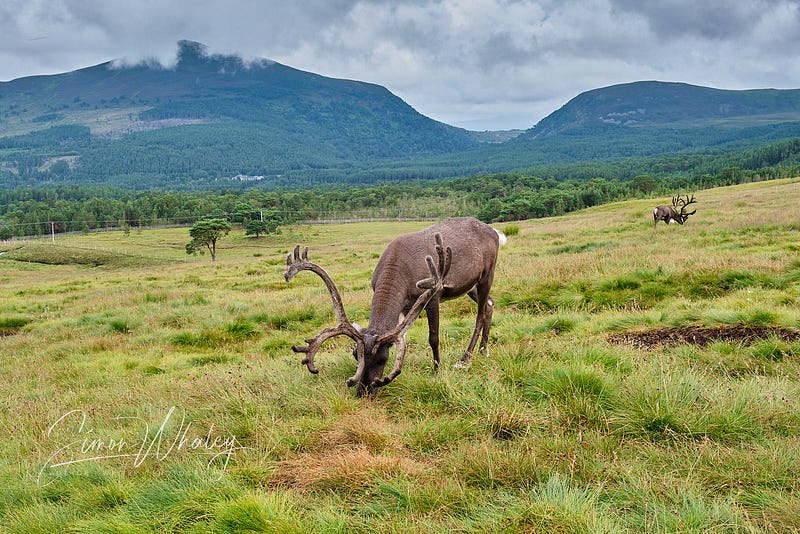
I’m about 2,000-feet up Cairn Gorm, one of Scotland’s highest mountains (4,085 feet), in the Cairngorm National Park, which is also home to Britain’s only free-ranging herd of reindeer. This is one of their highly popular walking with reindeer experiences.
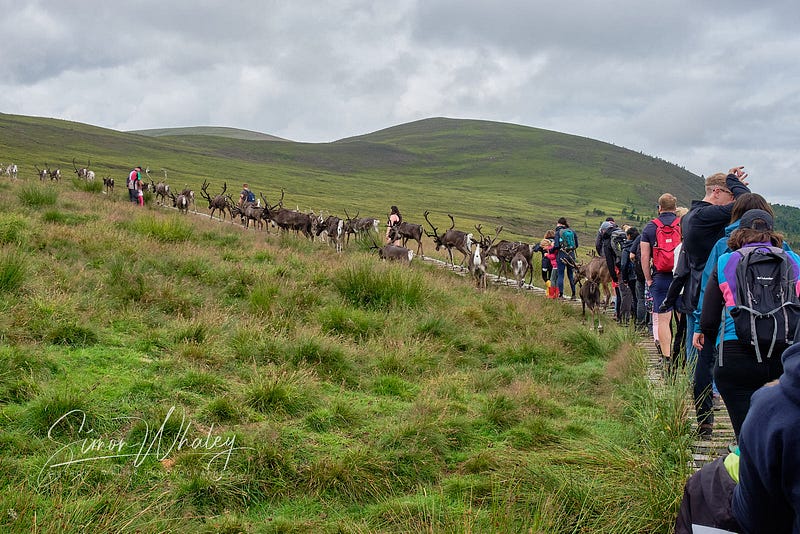
As we follow Harry leading the reindeer further out onto the open hillside, there’s a rather surreal moment of feeling part of the herd.
There are about 150 reindeer in the herd in total, although they’re split across two sites: here at Cairn Gorm and then at Glenlivet, nearly thirty miles away.
Reindeer walks run most days (except Christmas Day — obviously, they’re shattered after helping out Santa the night before — and January 1st), although they often close from early January through to mid-February, mainly because the weather conditions at this altitude make walking a little more challenging.
So, what can you expect on a reindeer walk?
Well, you need to allow at least two hours, if not longer because there’s a thirty-minute walk from the car parking area to where the reindeer are. It’s not challenging — it’s on relatively good paths, and when I did it, there were families with young children (some of whom had worked out this was far easier sitting on Dad’s shoulders).
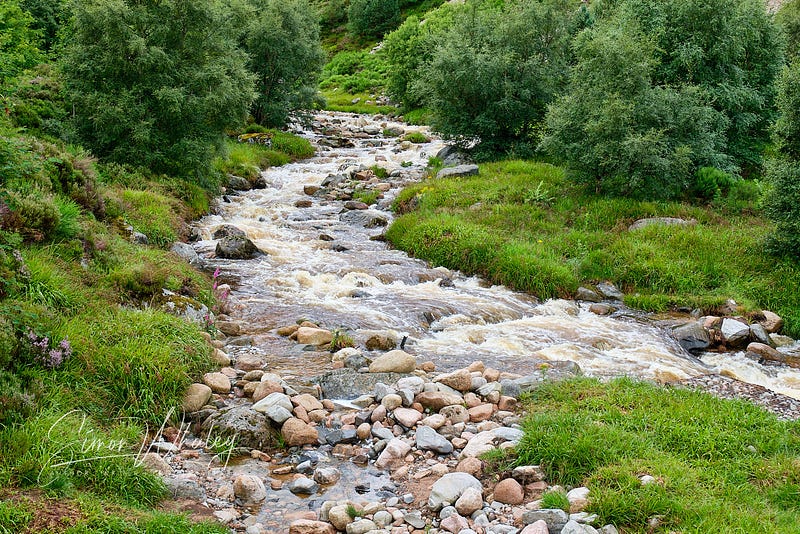
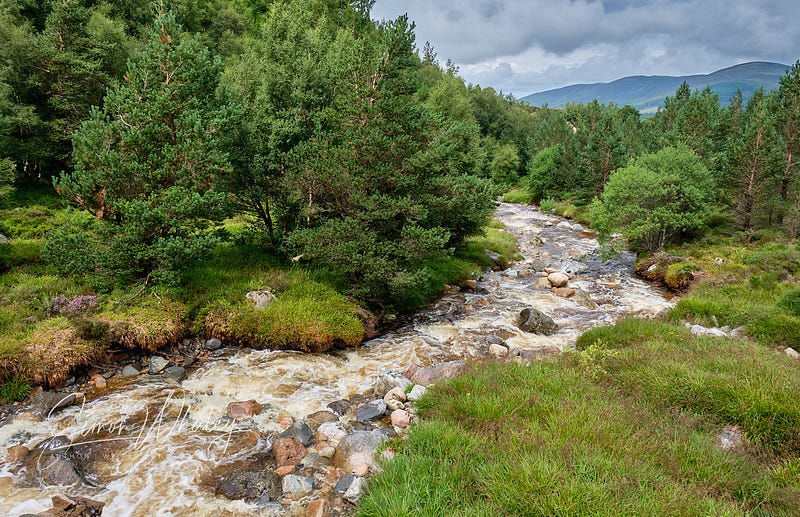
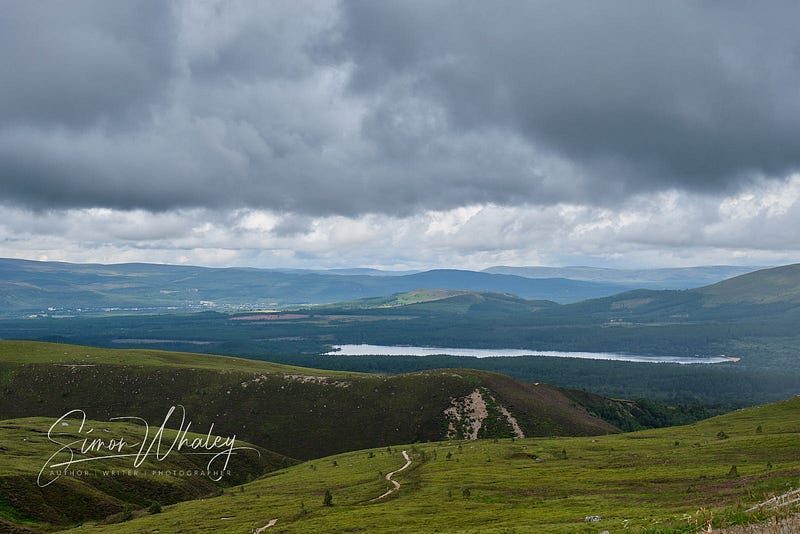
It’s a beautiful walk across a stream (Allt a Choire Chais), and then out onto the open mountainside of Cairn Gorm. In the distance, both Loch Morlich and the Highland town of Aviemore might be spotted if the weather is clear enough.
Once on the open mountainside, Harry spread some reindeer food (a mix of barley, sugar beet and some dark grains that are a by-product of the nearby whisky industry — no wonder they came galloping towards him), along the ground, calling them as he did so.
These reindeer are, surprisingly, tame. There’s been a herd here since 1952, and they can, if they wish, graze over 10,000 acres of the mountainside.
Without Harry’s food inducement, reindeer will normally live on lichens, heather, and sedge because in cold winter climates that is all that is usually available.
Remember the clicking noise?
I’m used to my knees clicking, but with reindeer it’s their back feet. Every time they take a step, a tendon slides over a bone, ‘snapping’ as it does so. This allows reindeer to hear when others are nearby, which is useful in wintry conditions, when snow muffles the sound of their feet crossing rough or bare ground, and they may have their eyes shut to keep driving snow and sleet from their eyes. When a herd moves together, they use the sound to ensure they’re keeping up and moving in the same direction.
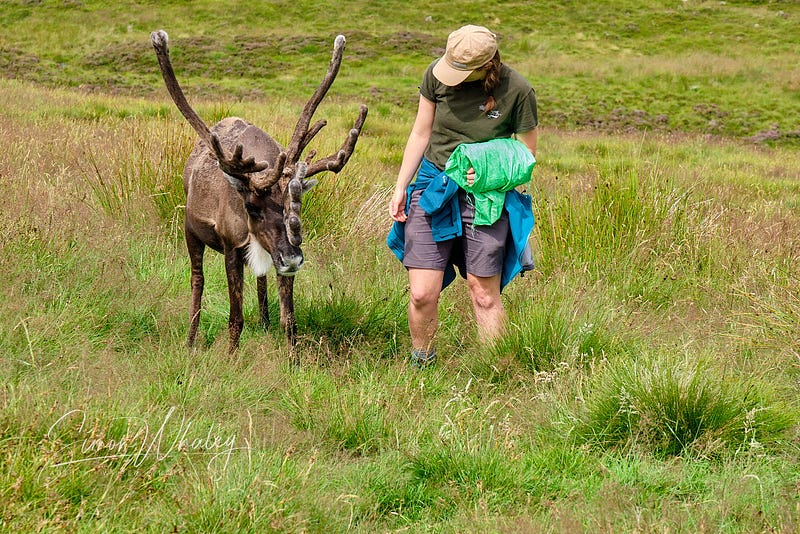
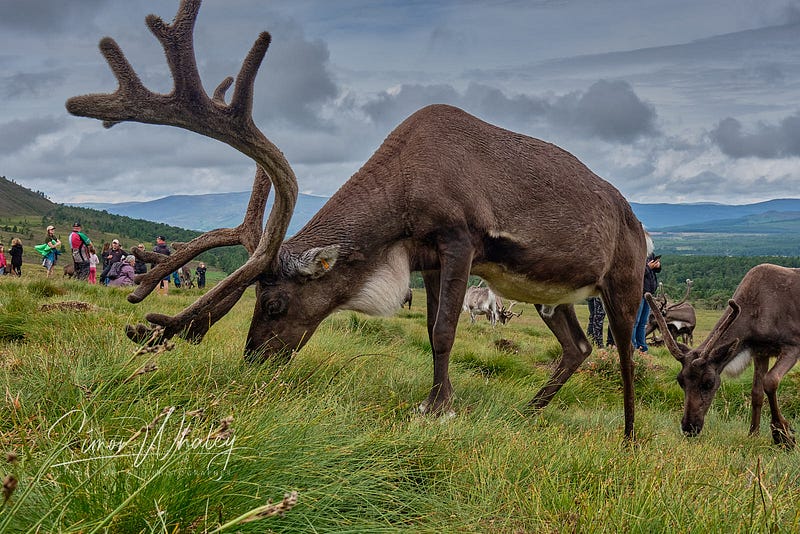
Harry and his helper, Kate, share their knowledge of the reindeer for about twenty minutes, and then we’re free to wander among the reindeer for as long as we like. There’s no pressure to snap a couple of quick photos and head off. We can mingle, watch them munching the grass (or any of Harry’s treats that stumbled across) and explore their environment.
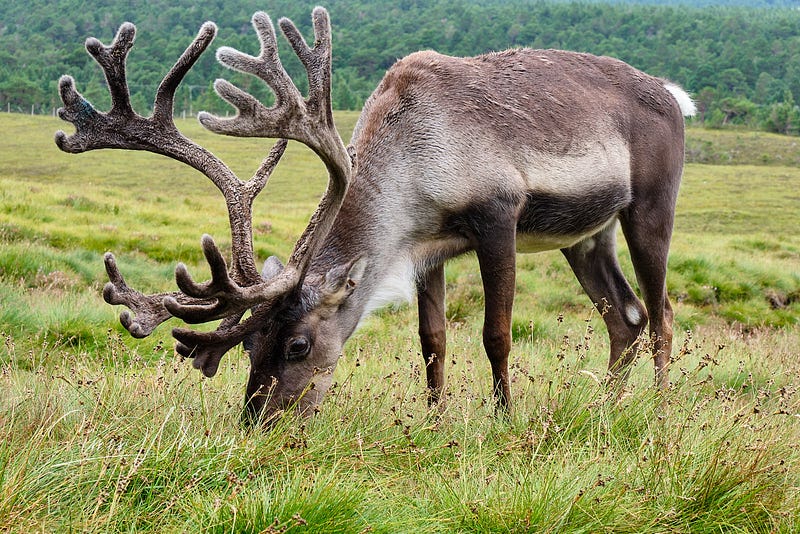
Reindeer produce two coats a year: a darker and shorter summer coat, followed by a thicker and lighter-coloured winter coat. Both male and female reindeer have antlers, which are grown and later shed and renewed each year.
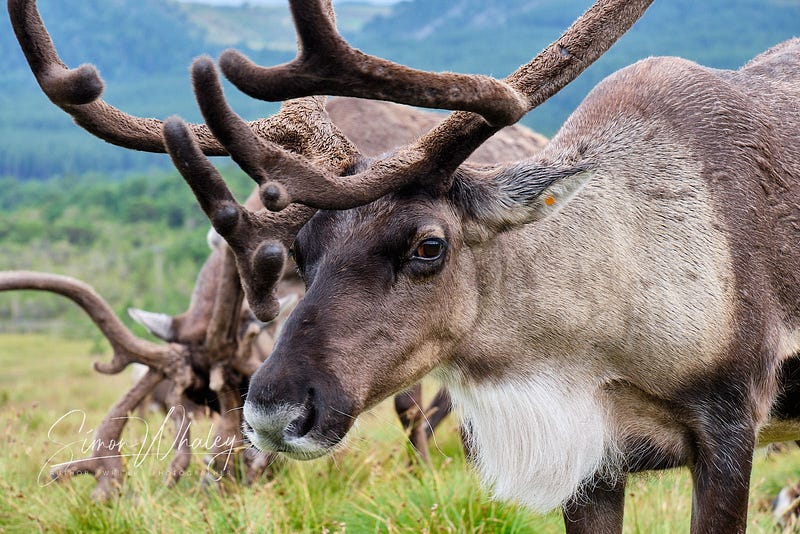
Being able to get up so close and personal with them, I can’t help but marvel at these tree-like structures growing from their heads. There’s a fine, velvety fur covering them. On the one hand, they look so strong and dangerous in a fight, yet on the other they look soft enough to cuddle. (Note: cuddling of antlers or reindeer is not permitted. It used to be possible to pet the reindeer, but this was banned during COVID-19 restrictions in 2020 and 2021, and staff noticed the reindeer were much more relaxed with this restriction and have kept it in place.)
Large antlers are not always a positive. While they often denote superiority among the male members of the herd, growing them takes a lot of energy. If the reindeer can’t get sufficient nutrients from the lichens and heathers they graze (which are low in nutrients, anyway), their bodies typically transfer nutrients from their skeletons. Their neck muscles also need to strengthen over time to enable them to carry the weight.
Of course, at this time of year, the Cairngorm Reindeer are frequently called up to liven up a visit to local schools, shopping centres and garden centres when Santa is paying a visit.
Amazingly, two hours soon fly by as I mingle among some of Santa’s most important helpers, and it’s time to retrace my steps back to the car park.
Hang on! Does that one over there have a red nose? He turns and buries his nose into the ground again, nibbling at the grass. Hmmm. I wonder if I’ve just spotted Rudolph.
Fun Facts
- In North America, the Indigenous name for reindeer is caribou.
- Their noses work in a way that ensures the air they breathe is warmed up enough before it reaches their lungs.
- Their feet change size throughout the year. They shrink slightly during summer months, but expand in winter and spread out to spread their weight across the snow.
Further Information
If you’d like to go walking with reindeer in Scotland, prebook your visit from the website here: https://www.cairngormreindeer.co.uk/hill-trips/
There’s some excellent advice on what to wear: https://www.cairngormreindeer.co.uk/footwear/
For more information about what else to do in the Cairngorms, visit: https://cairngorms.co.uk/