
Walking with Horses.
I escape the concrete jungle to breathe!
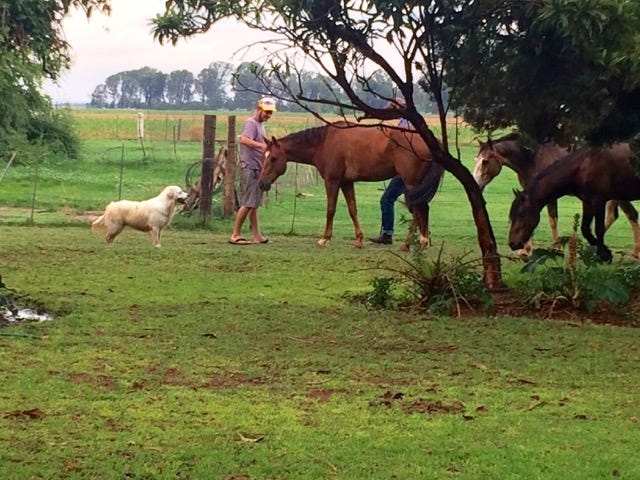
There comes a time, it may be anytime in the year, when I have to get away from it all; “I must go down to the sea again”, as in John Masefield’s poem, but not necessarily to the sea. It is an escape to anywhere out there, to the country, the mountains, farmlands, pastures, and fields, where I can expand the lungs of my inner being and refresh my spirit.
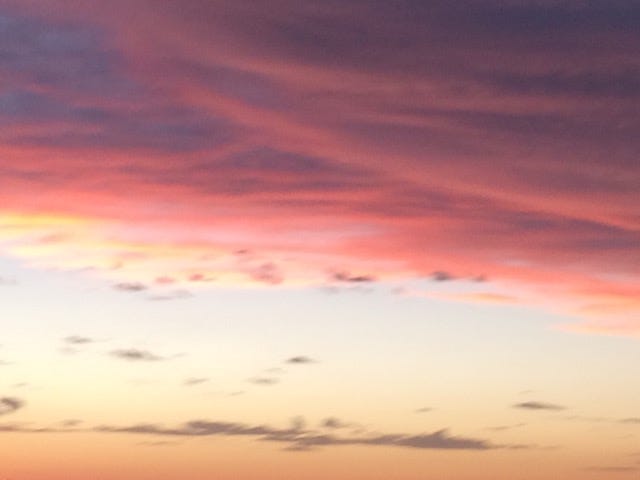
Someplace I love, where I can reach for the sky, listen to the wind in the treetops, stretch out my arms to the stars, sit beside a fire in the darkness beneath the starry sky watching the moon rise, hear the birds welcome the rising sun, and walk with horses.
There is such a place.
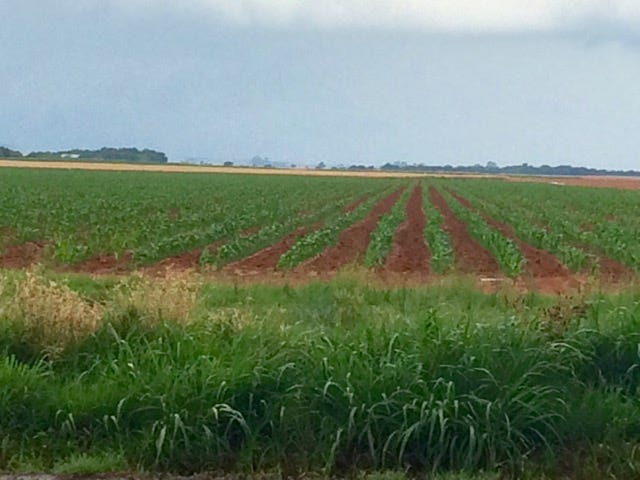
I am here now, I am breathing, reconnecting with the earth and the creatures around me. Surrounding me are maize fields stretching far into the distance; I see the tractors planting precious seeds before the rains fall, seeds that will mature to full cobs bursting with goodness, the fruit of the earth to supply us with nourishment.
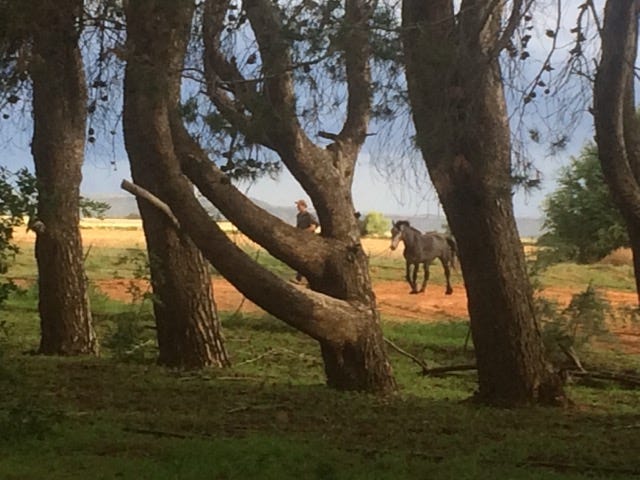
The rains come in mighty thunderstorms.
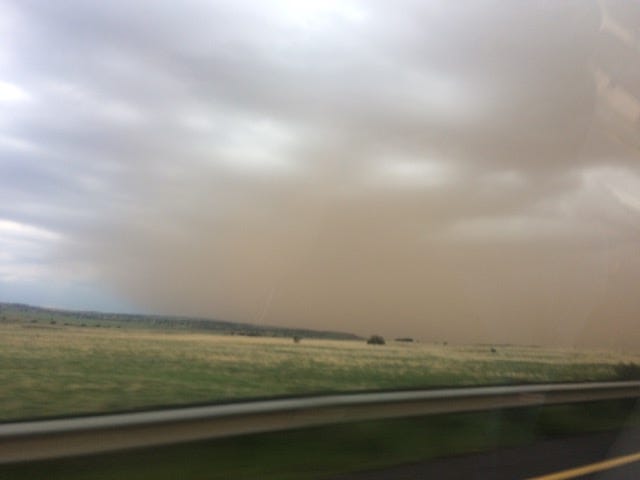
The rains arrive suddenly, sometimes preceded by duststorms which appear unannounced, at times accompanying the thunderstorms, running side by side across the land, until the dust is enveloped in falling torrents of rain. I hear the breeze, I am immersed in a story on my laptop; I glance up and see in the far distance a brown haze approaching as the wind gathers momentum. I shout the warning: “Here comes a dust storm!”
The alarm is given, we race around the house closing windows and doors, shutting out the brown powder about to discolour the curtains and settle on the wooden floors; once, we are caught unawares and afterwards, the soft-bristled broom is put to good use, sweeping up the fine dust, and the house is clean again until the next time.
Walking with horses.
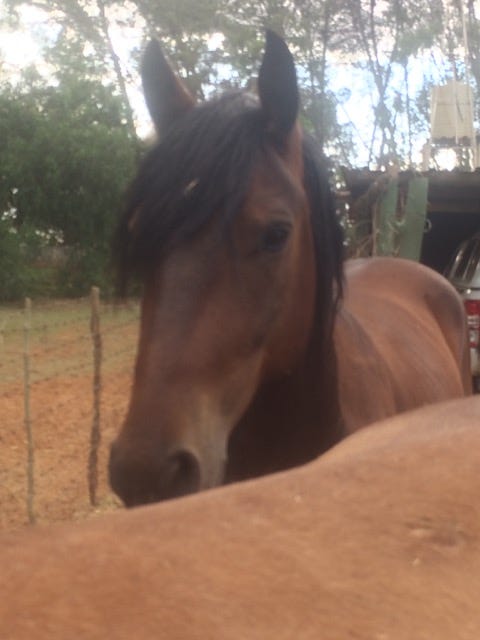
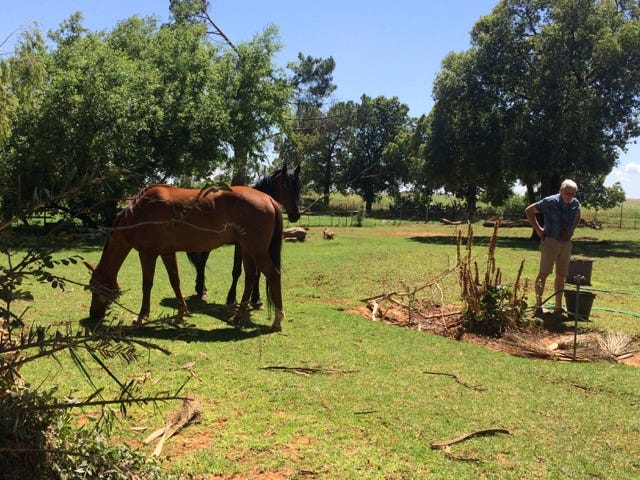
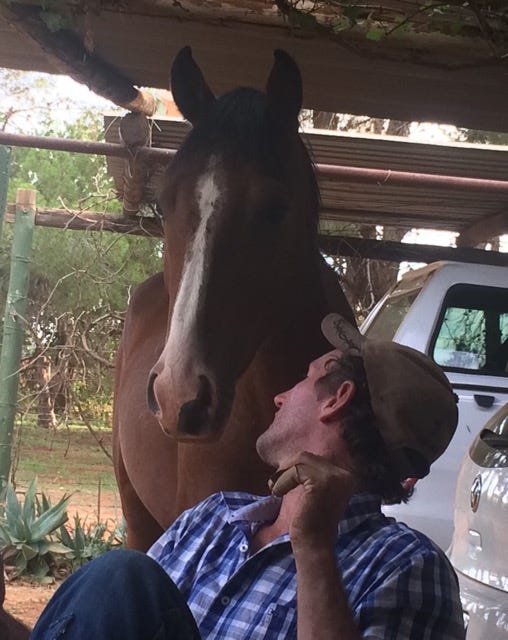
The horses greet us on our arrival, coming to the gate as they see us approaching, following the car; as we get out, they are there to say ‘hello, it’s good to see you’. I stroke each one, give Criolla a hug, stroke his mane, then Pacheko, white diamond down his muzzle, and Colorado, with a neat little diamond on his forehead.
The dark one, who has only recently been given a name, and I forget it every time, comes to me and we have a conversation. I do the talking while he listens intently, eyeing me throughout and taking it all in; of course, he understands everything I say. His name has come to me, it is Swartie, which is Afrikaans for Blackie.
Capulin remains in a special paddock, as he has a habit of jumping fences, and we cannot risk him eating young mealie plants in the adjacent fields! Besides, he and the others tend to get into fights, so for his safety, my son keeps him on his own. He is also communicative and we make sure he does not miss out on treats.
Treats
The horses have a liking for marog, which is pronounced as though you are saying the word ‘maroch,’ as in ‘loch’, an indigenous plant that grows abundantly in the fields and can be cooked as you would spinach. They are fed tef, hay and lucerne as well as pellets, besides the good grazing grass; and there is a bonus, for they keep the grass short and trim.
Visitors.
Years ago, in the days when people trekked by ox-wagon from the coast northwards to the interior, the trekkers found shelter at farmsteads along the route with relatives and friends. Families do the same today, staying overnight on their way home from their coastal holidays, usually after New Year, to be in time for the new school term.
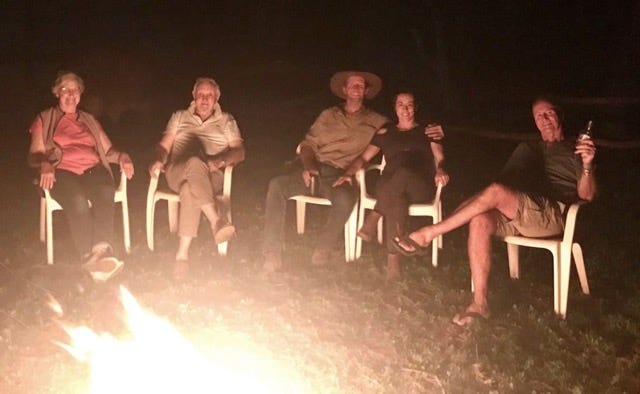
Our stay is enhanced as family groups join us for a night or two, and we have braais (BBQs) under the stars seated around the glowing coals, talking the night away, catching up on news of relatives and holidays. We sleep outdoors, wrapped in blankets and sleeping bags for the early morning is often cool and sometimes, cold.
Orion’s Belt.
With the aid of apps such as ‘Guide to the Stars’, which I am not sure is the correct name, we see the wondrous night sky, and trace our position to under Orion’s Belt; I look up, and as the clouds clear between the trees, there it is, three bright studs in a perfect line above me. I am awestruck to be a minute part of his vast universe, sitting here on the earth looking up into the darkness. This is what I call awesome.
We do not need an app, do we? No, we can find the Southern Cross, Venus, and other constellations; but the app makes it come alive in a way not possible before. We do not switch off our iPhones, we keep in touch with children and grandchildren far away; but the significance of the mobile phone pales in the day to day experience of being here, in this little paradise.
The rising moon appears and owls screech.
The moon appears behind us, shining above the neatly ploughed fields, and an owl hoots somewhere in the trees; there are three spotted eagle owls, they call at night and early morning. We hear one of them screeching, the first time I recall hearing an owl screech. He is objecting to the cats playing on the grass beneath the tree in which he is sitting. The cats, a mother, and her fully grown kitten which catch farmyard mice, helping to keep the numbers under check, do not take much notice of him, and he flies off to another perch. Crickets croon in the background, and we keep the mosquito repellent handy but tonight there are none bothering us.
The Farmhouse.
A typical farmhouse, built how long ago? We do not know, but it is charming, with wooden pine floors, soft underfoot. Old-fashioned fans hang from the ceilings and we sleep under their gentle whirring sound when the nights are hot and stuffy; you cannot compare these fans with the modern sterile airconditioner box on the wall which is so bland and unattractive.
The kitchen has a table in the centre, typical of the old farmhouses; the cupboards are pine, built-in long ago and in good condition; the pantry is large and cool; a scullery adjoins the kitchen; the house has a tin roof and it oozes old-time atmosphere. There is an enclosed verandah where I sit with my laptop with a view of the garden. It is a convenient home with rooms and a bathroom close to one another; I love it here.
“No Worries”.
I will return home renewed in body and mind, having breathed in the wholesomeness of rural life. There is in all of us a need to melt away into nature, to be reunited with things that grow and reproduce, plants, animals, creatures great and small, forests and trees, rivers, lakes, and streams.
The smallholding is part of a large, prosperous farm, called ‘Wilson’s Fort’; no doubt there is a history behind the name, and it may be linked to events of the Boer War.
However, my son has named his home “No Worries”. “As you cross the line”, he says, “leave your worries behind you”. That is not difficult to do.
Copyright: L. Clements, 2020.
.


