
Walking the Garden-November 26–30
Winding things up …
My last Walking the Garden ended with the period of Nov 15 — til Nov 18, which I managed to submit out of order. Grrrr.
Anyway, in addition to things slowing down in the garden, after Nov 16, my enthusiasm for wandering about outside with a camera was dampened by feeling very ill. I had to resort to getting my husband, Bruce, to go out November 18 and grab a few shots for me. So that was nice, and I was finally able to finish the November 15 to 18 piece.
On Nov 26, finally feeling a bit stronger, I went out and was somewhat heartened to find a few bits of color.
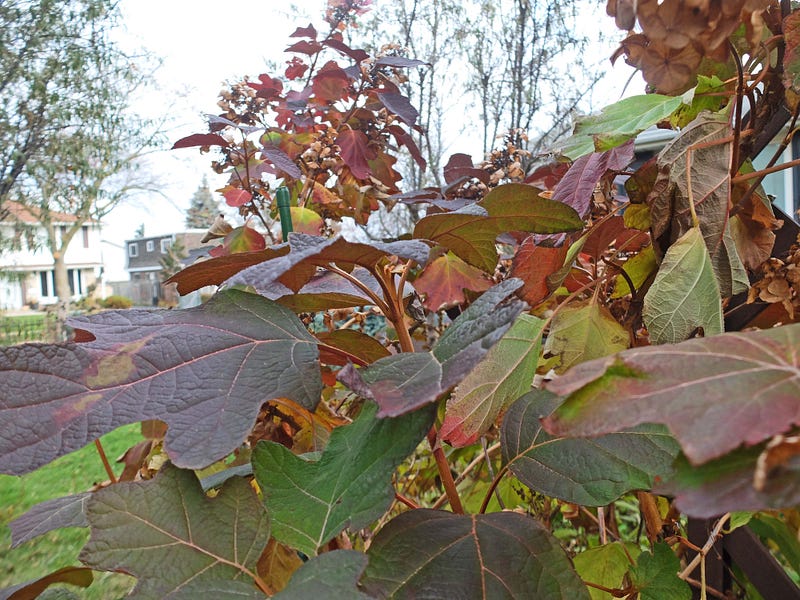
The first thing I saw when I stepped out the front door was the Oakleaf Hydrangea. Here it is, November 26, and it continues to look decorative. Here is a link to an article on this plant.
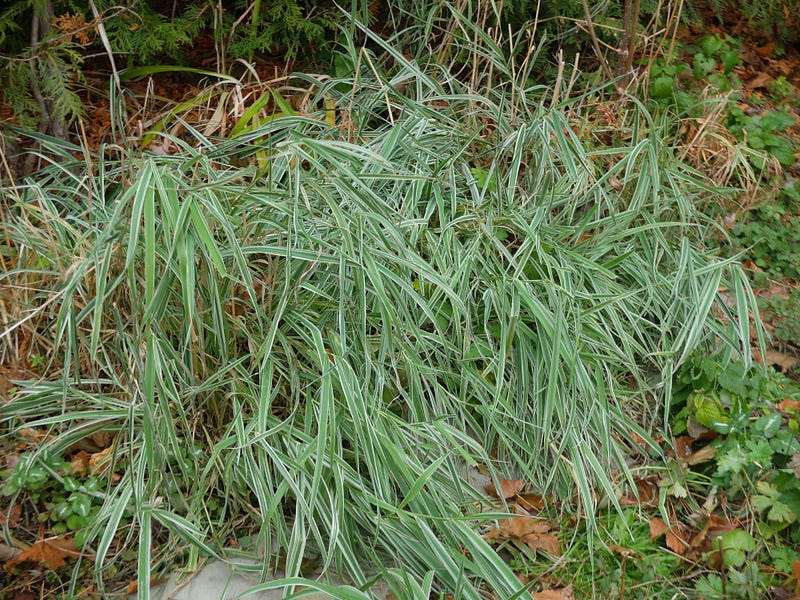
Ribbon grass is a favorite of mine for being low maintenance, a good edge filler, and very tolerant of growing conditions. Due to illness this year, I was sloppy in keeping it pruned back, so here it is, falling all over the stepping stones. I find that if I prune it halfway through the growing season it maintains its attractive stripes and keeps tidy where needed. I like that it is still perky in late November.
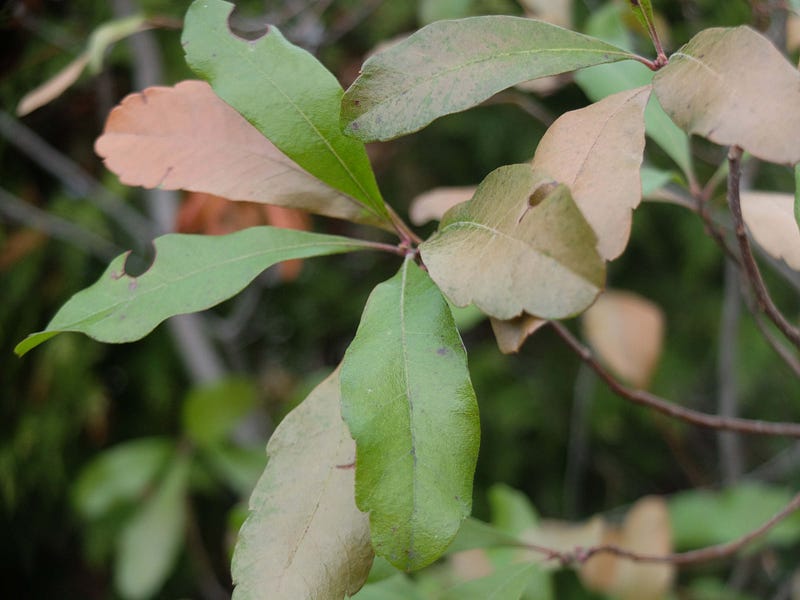
I tend to forget about this little shrub because it is tucked away with Cedars on both sides as wind protection. As far as I know from the tag, it is Bay Laurel, which is borderline hardy in our zone. I have had it in that spot since 2006, and although bits die back each year, it rallies every spring. The leaves smell and taste just like Bay leaves.
So here it is, cold and cross due to the chilly weather, but hanging in.
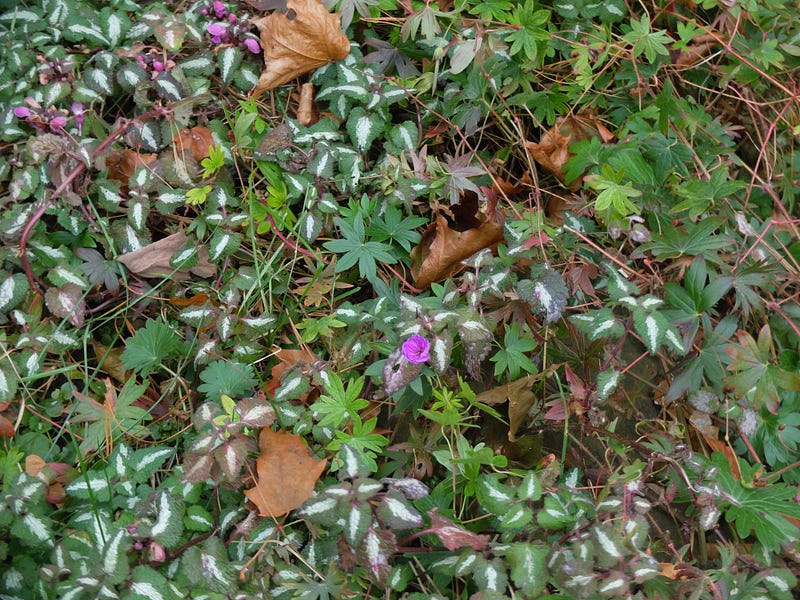
You have got to love the hardy persistence of these two groundcover perennials. Even though this is not a fantastic show, it is still nice to see a couple of flowers putting in an effort.
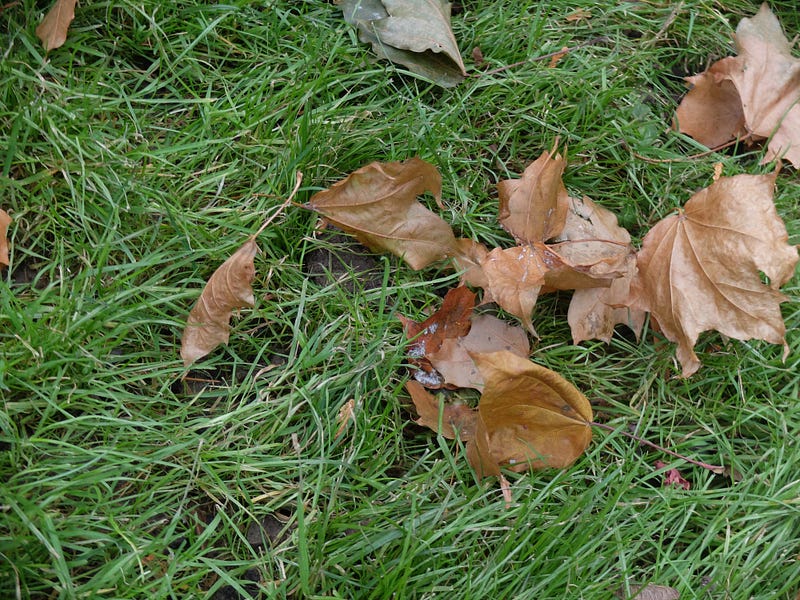
The grass is still looking quite healthy and green, and the fallen leaves look nice, so I decided to take a picture.
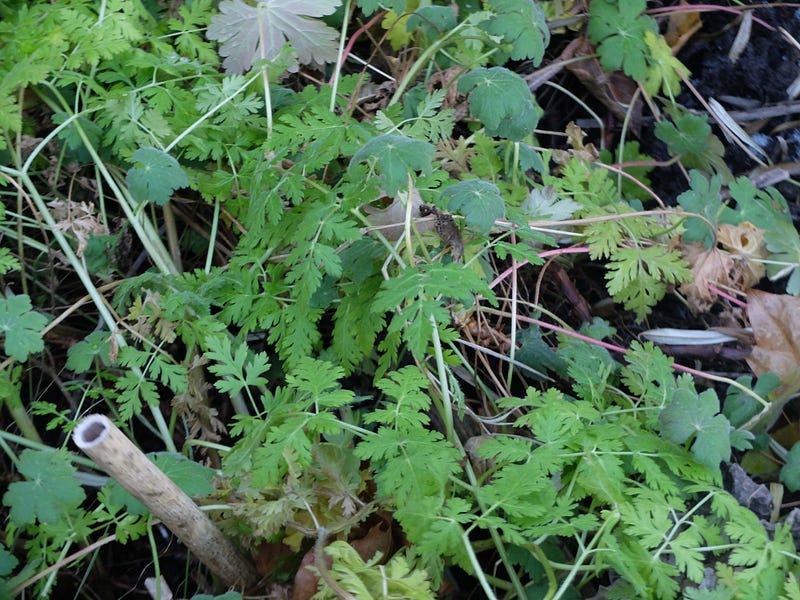
This is a first for the Sweet Cecily. It has usually died back by now, but the weather has been so mild it is still hanging in, even producing a few flowers recently. The grey hollow stem you see is the remains of a flower stem.
Although it tends to get quite large and self-seeds generously, it is a favorite of mine because it will tolerate a lot of shade, and the leaves are so pretty that even after it flowers, one still has an attractive plant as a backdrop for other perennials. And lastly, the whole plant is very aromatic, smelling like licorice. There is more information on this pretty plant at this link.
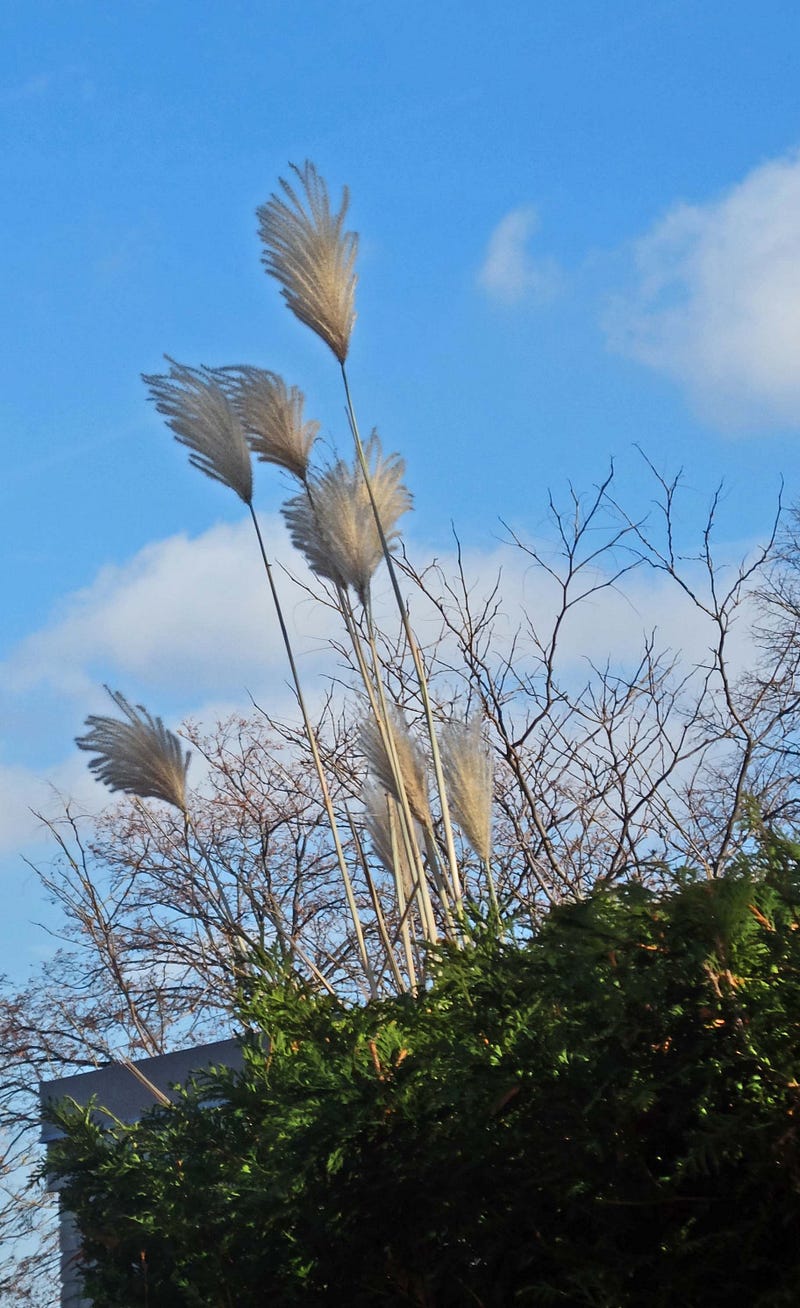
I love how this enormous grass fills in the corner between the gate and the fence. I would leave it all winter, but it tends to get weighed down with snow and ice and then falls onto the neighbor's garden path and interferes with them moving their garbage bins, so I usually cut it back in very late Fall.
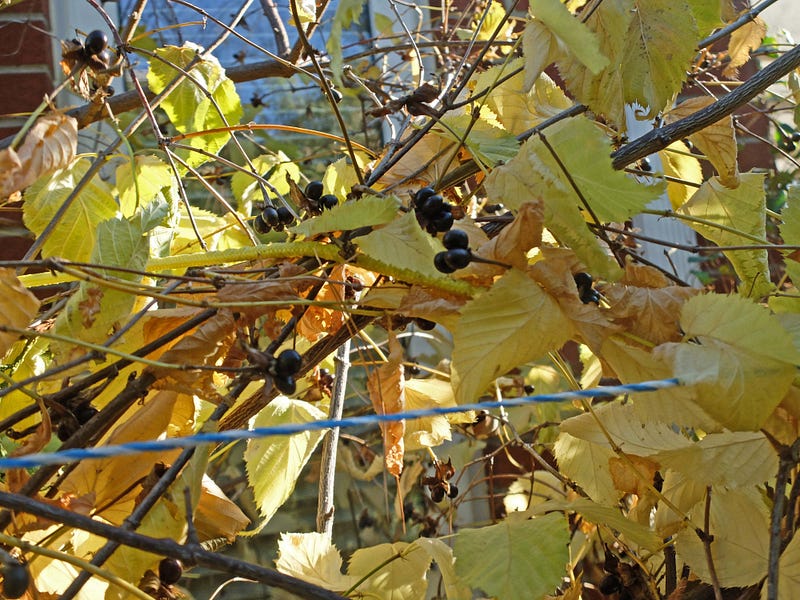
Showing some nice fall colour.
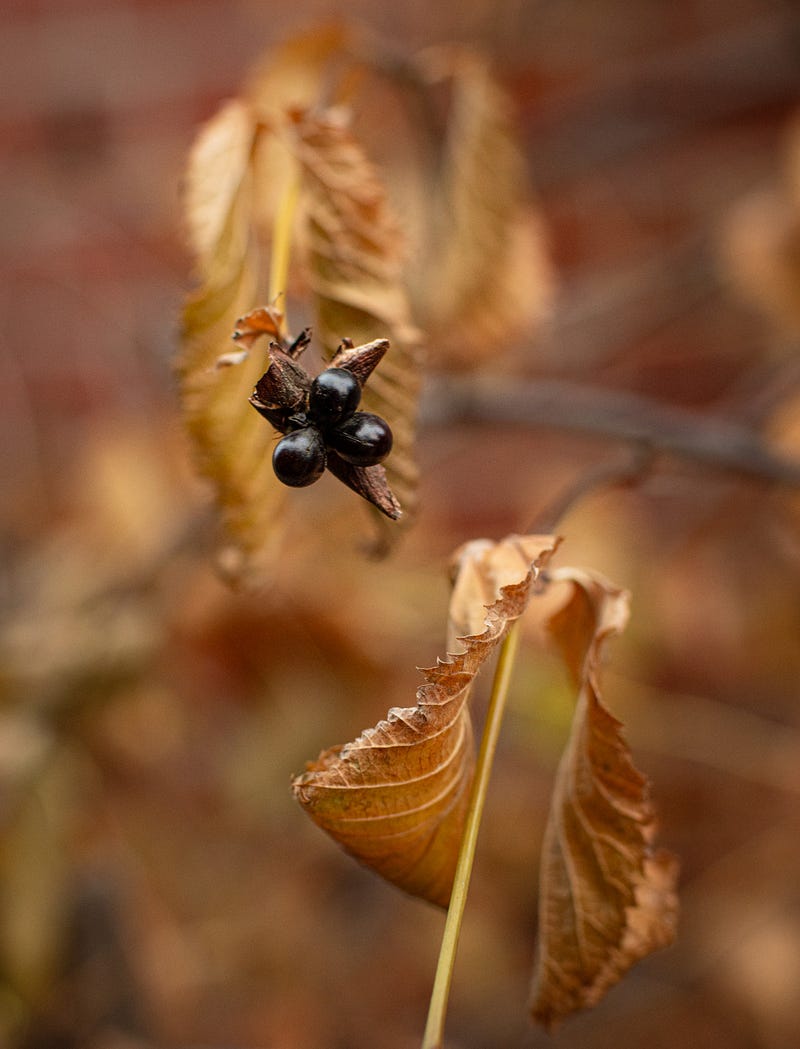
This bush tends to get forgotten because it is planted at the side of the house least frequented by us. (In some locations, it is considered to be invasive, and the beautiful blackberries are deadly poisonous to humans.) If interested, here is a link to an excellent article about it.)
I learned about this ornamental shrub while taking my horticulture courses at Guelph University. The professor was unhappy that it has fallen into disuse in the landscape in current times because it thrives in the partial shade and grows in almost any soil type, and he felt it was an asset to landscapers.
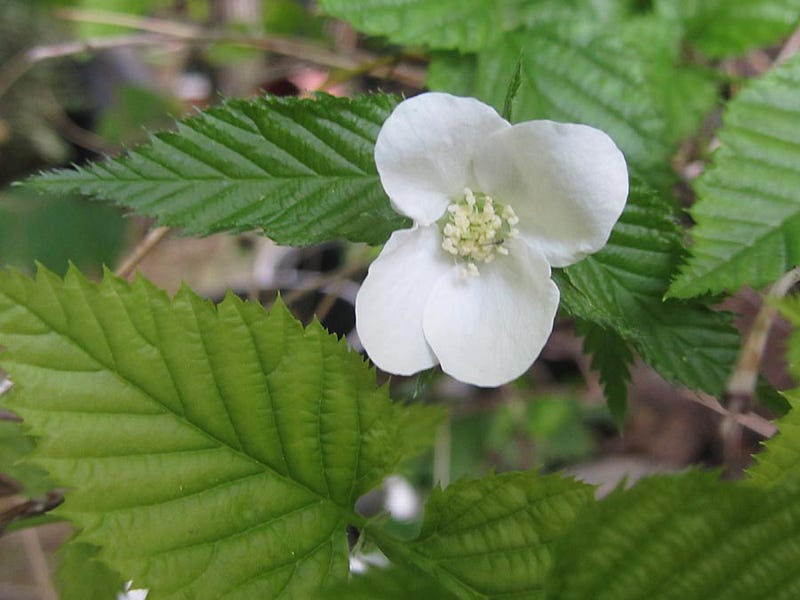
This particular plant was gifted to me by a client who had picked one up at a nursery specializing in unusual plants. It produced some seedlings and they gave one to me. I have had this plant since 2000. I moved it from our former home and planted it in this partial shade spot on the north side of the house. It loves this spot and thrives.
It produces attractive white flowers in the spring, followed by hard black berries. Here is a photo of the flower.
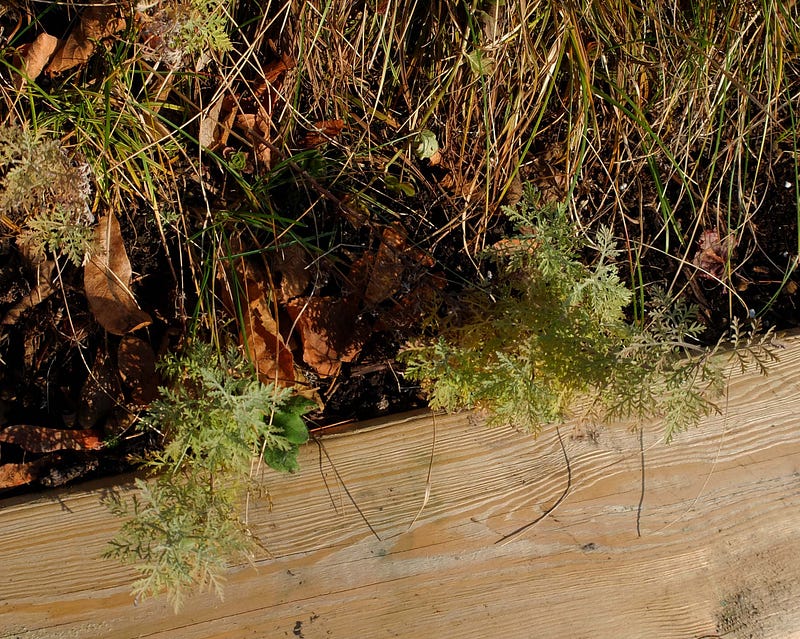
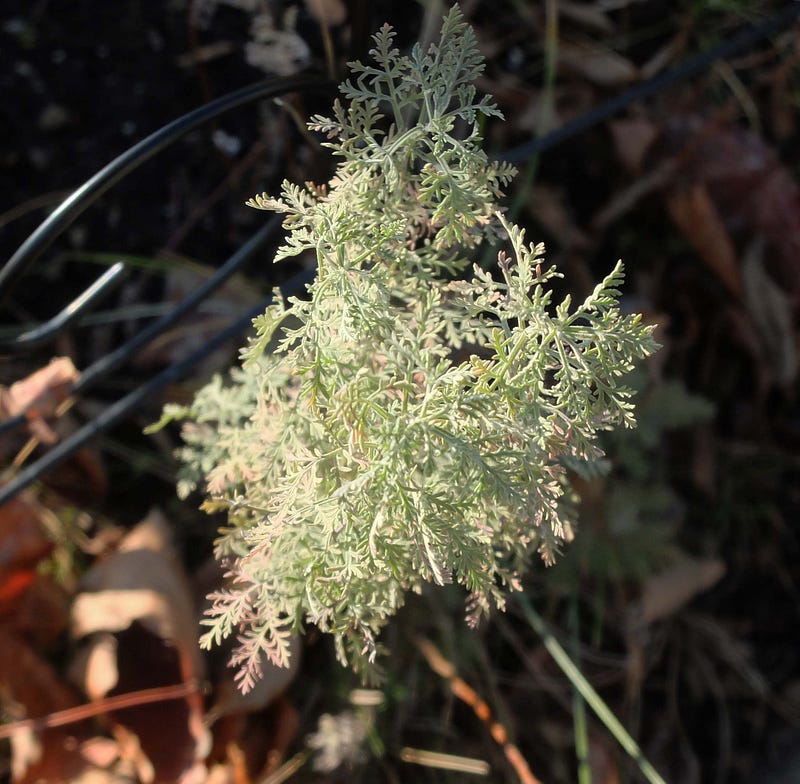
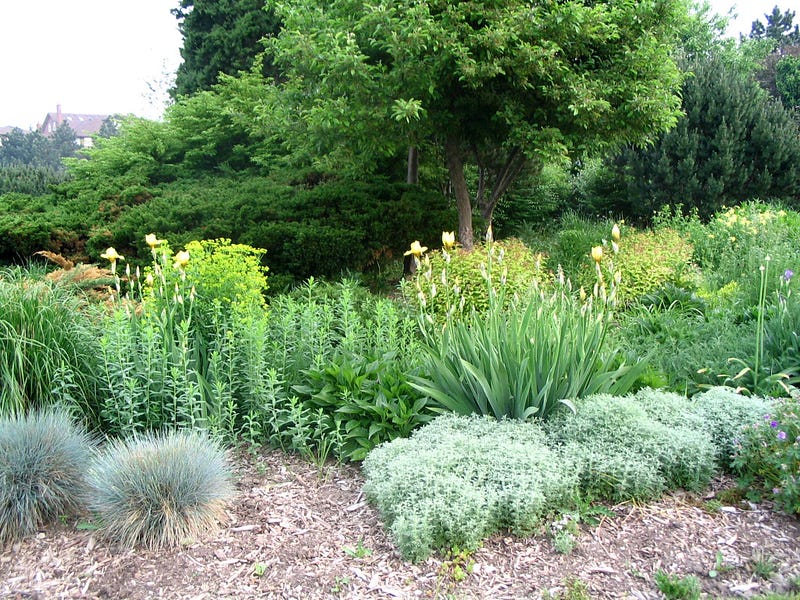
The Artemesia pontica in the above shots resides in the front boulevard garden. I was introduced to it years ago by my brilliant boss at the time, Paul Z.
This particular variety of Artemesia is not seen much, in favour of the more commonly used Silvermound (Artemisia schmidtiana) and Artemisia stelleriana ‘SilverBrocade’.
Paul Z pointed out that the beautiful, soft, silver-leafed Silvermound Artemesia does not keep its pretty shape and ends up looking ratty and brown before the end of the season. Instead, he liked to use the Artemesia Pontica, which is tolerant of clipping to maintain shape, does not give in to the rotting and droopy leaves of Silvermound, is very tolerant of a wide variety of growing conditions, and is pest and disease-resistant.
In this location, it is perfect because it gets plenty of sun and the leaf colour contrasts with other plants. Here is a Wikipedia link giving information about the uses of this plant.
As a side note, when I was volunteering at one of our local parks, I suggested we use some of this Artemesia as a border edging plant. It worked out really well, although nobody had time to trim it!
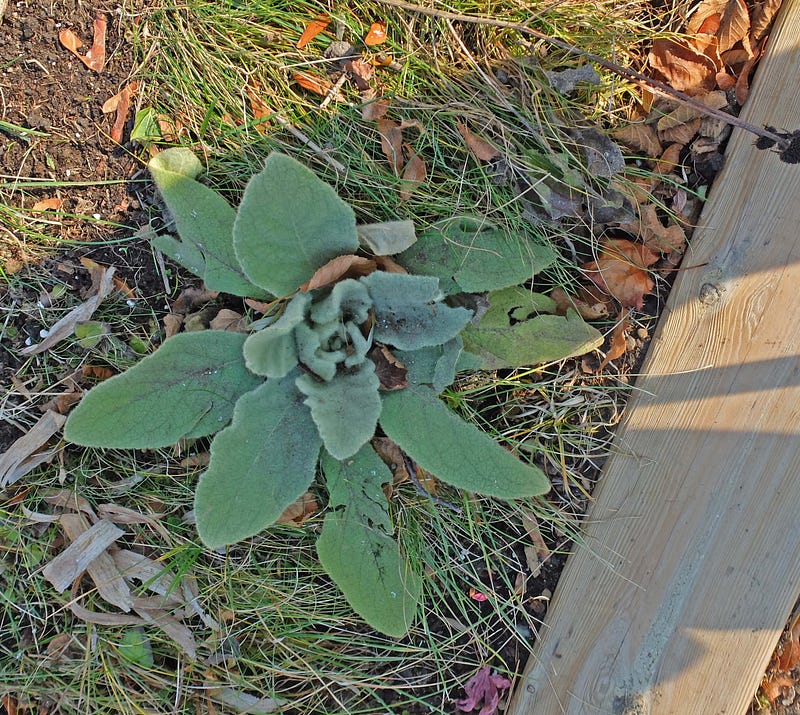
The Lambs Ears in the photo above is a volunteer on the front boulevard, but a very welcome one. It is extremely drought tolerant and makes a lovely silvery ground cover. It is said to have medicinal properties.
I welcome its presence here and look forward to seeing it spread. I love that it is still looking quite spry this late in the year. Here is a link to an article regarding possible uses for this plant.
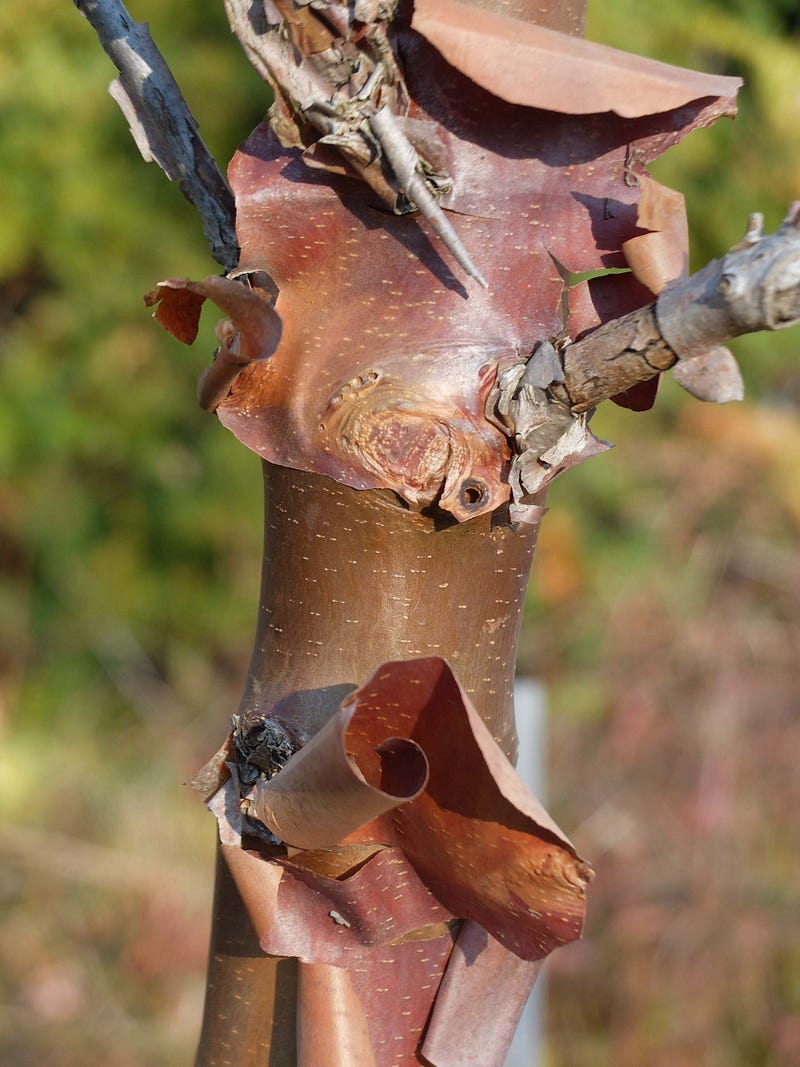
Although the Paperbark Maple has completely shed its beautiful red leaves, the showy bark remains. Here is a link to an article on this pretty tree.
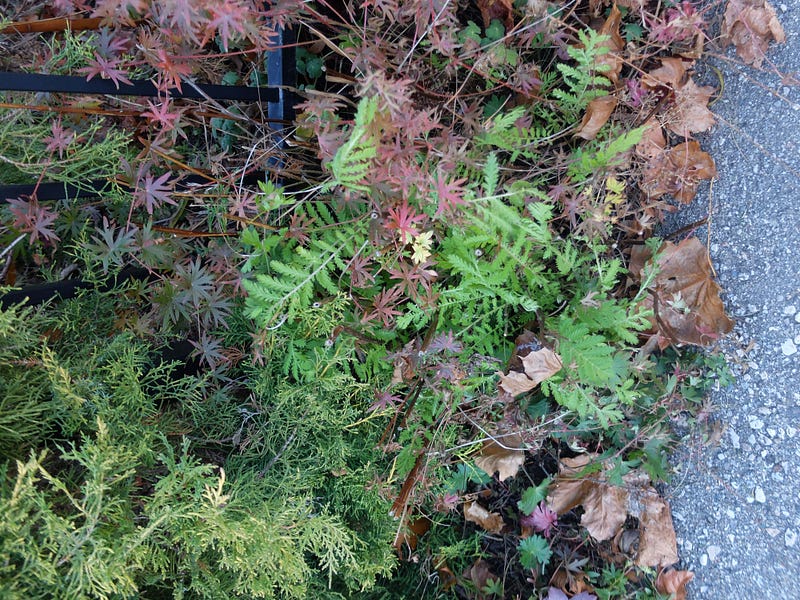
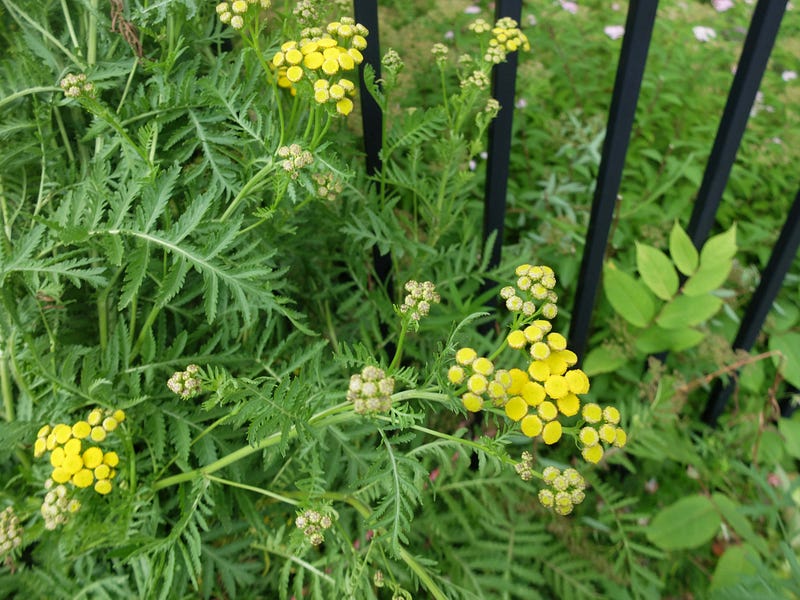
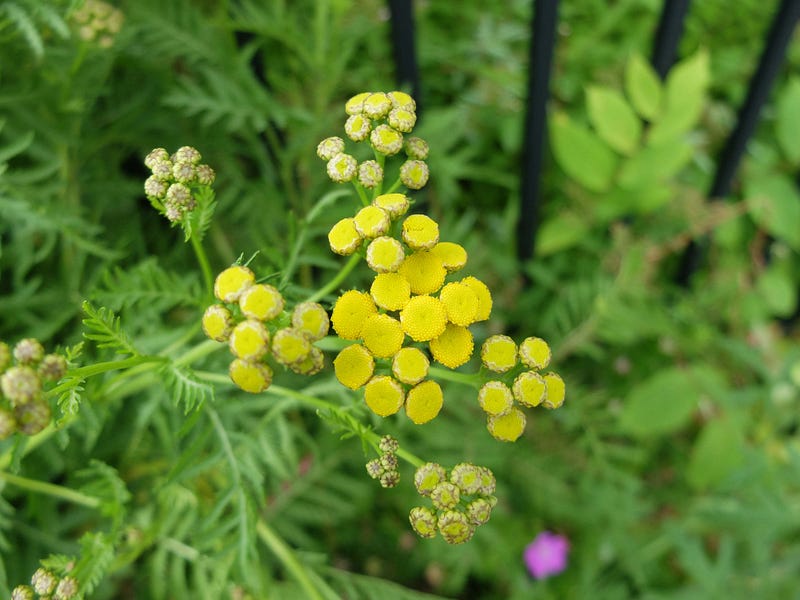
I plant Tansy in various places around the garden because it is a tall, robust perennial with lovely yellow flowers and because supposedly planting Tansy among your vegetables and ornamentals will deter certain pests.
Although not flowering, I like that it is still putting forth new growth in November. Below, you can see how pretty it is when flowering. Here is a link to an article on Tansy explaining possible uses.
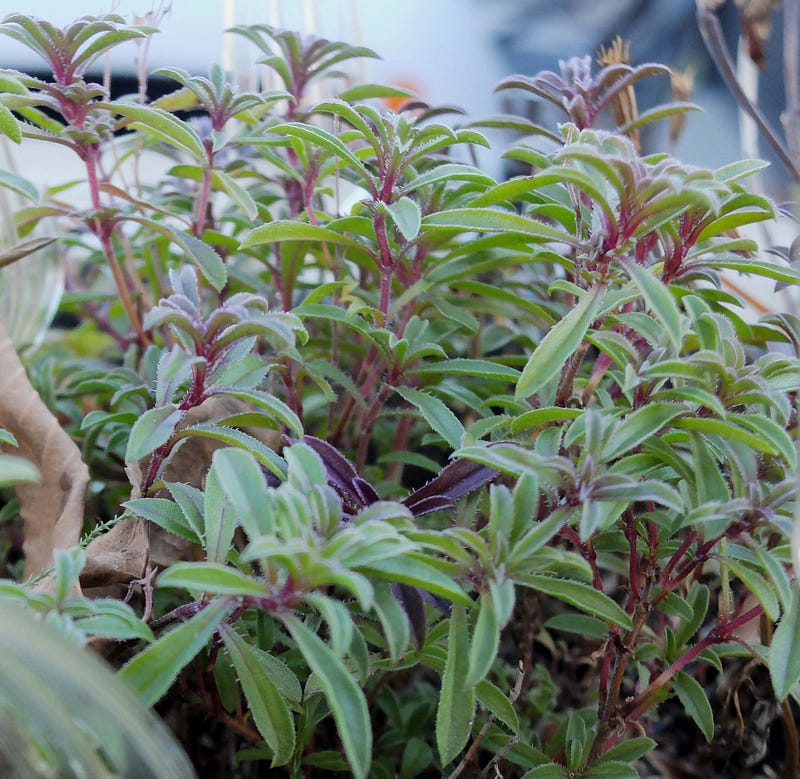
I have had this Winter Savory growing in wall planters for the past 6 years. Every year I am sure it will die over the winter, but every year it leafs up happily in the spring, Produces masses of delicate blue flowers and has self-seeded like crazy, attempting to fill all the space in these wall planters. I just recently learned that it is supposedly not hardy in our zone — go figure!
Winter Savory is one of my favorite cooking herbs, and it’s nice to be able to cut it and dry it myself for over winter.
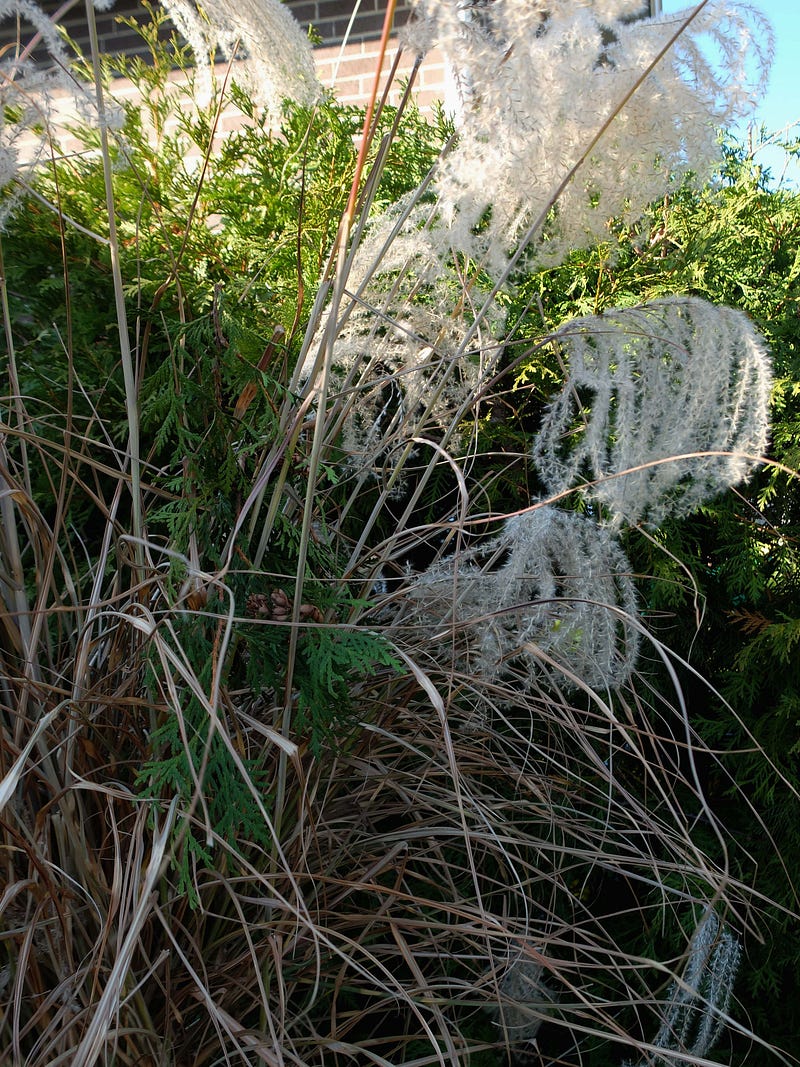
I like to leave the flower heads on the various ornamental grasses so that the birds can use them and because they are very showy. The Zebra grass has particularly beautiful flower heads, and I decided it would be appropriate to finish off this year’s Walking the Garden series with end-of-November images of this plant.
We will revisit our garden walks in the spring of 2024.


