
Walking on the World’s Biggest Mirror: Salar de Uyuni, Bolivia
The world’s largest salt flats are only reflective when conditions are just right
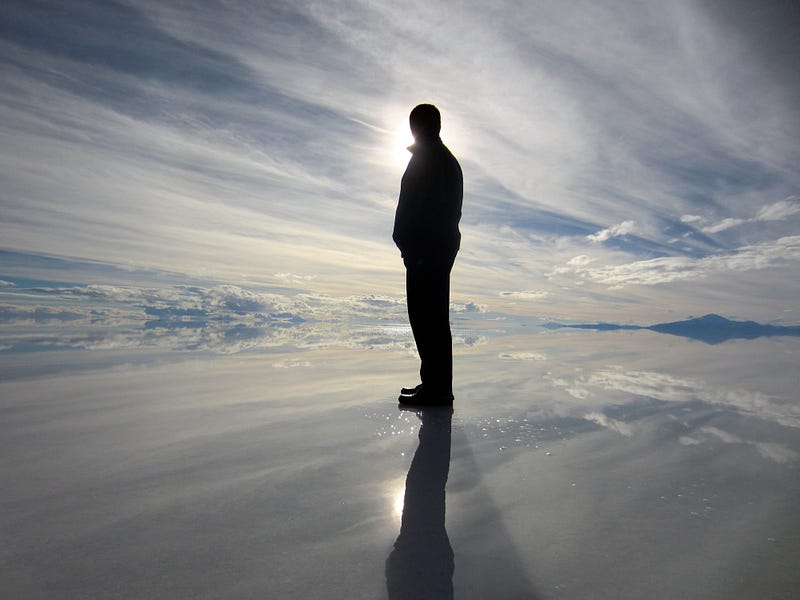
Before I dive into some downright impressive facts about this mind-blowing place, I’ll cut straight to one of its most “important” aspects as a tourist destination:
You can take really cool photos there.
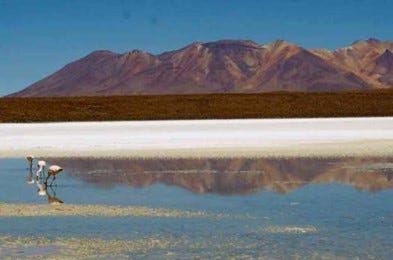
When conditions are perfect and a thin layer of water covers the flats with minimal wind interference, a gigantic mirror is formed like no other on earth.
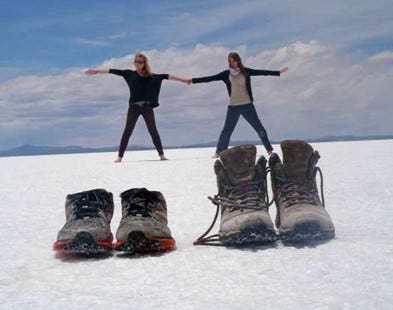
With little deviation in elevation, perspective can be played with in very amusing ways. This works just as well when the mirror effect isn’t performing at its peak grandeur, which was the case when I visited.
DOWNRIGHT IMPRESSIVE FACTS
- They’re the largest salt flats in the world, spanning 10,582 m² (4 086 mi²)
- They’re so dang flat that their elevation deviates less than one metre across the entire area
- A crust of salt, several metres thick, covers a pool of brine that holds 50–70% of the world’s known lithium stores
- All of it sits at an altitude of 3656 m (11995 ft) above sea level, which is enough to potentially cause severe altitude sickness
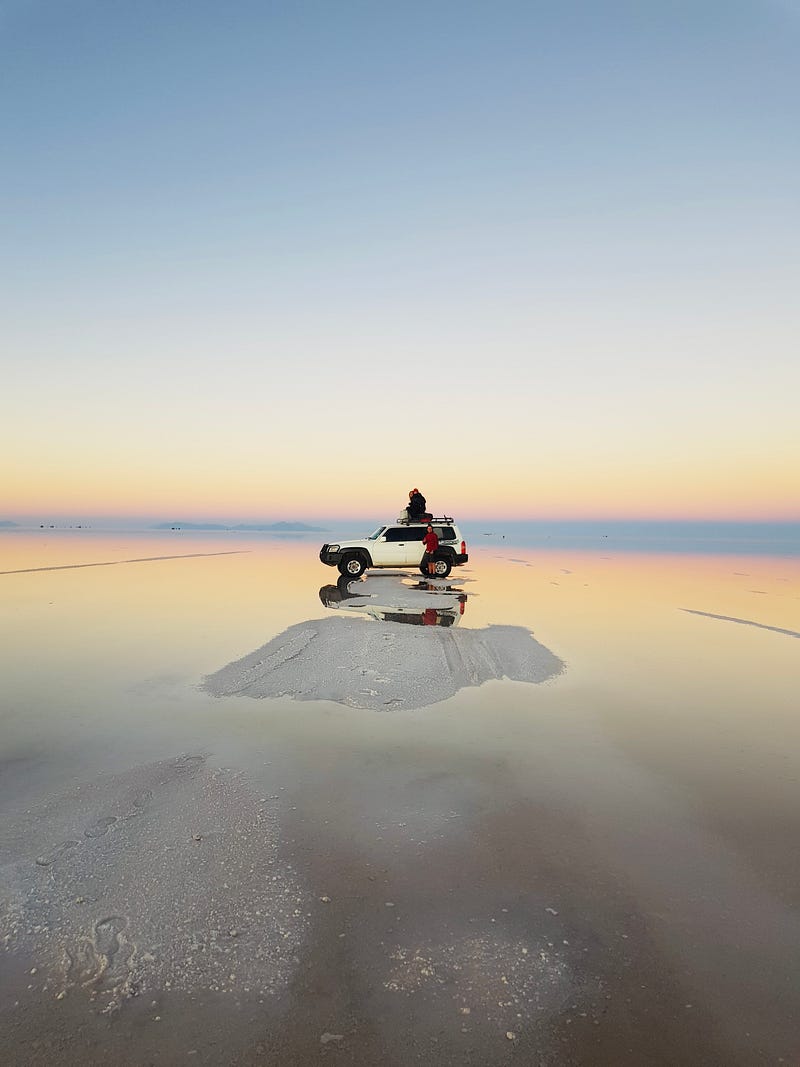
HOW TO MARVEL AT SALAR DE UYUNI
You can hire a four-wheel-drive and explore yourself, but the easiest and most common way to see the best stuff is with a small tour group. You can go for a single-day tour, but to really experience the area, I’d recommend opting for a three- or four-day tour (I went with a three-day tour.) This way you’ll get to see more of the amazing landscape of the Altiplano, the widest part of the Andes; the most far-reaching area of flat plateaus in the world besides Tibet.
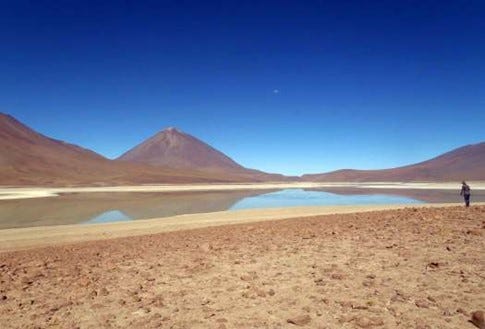
HOT SPRING PIT STOP
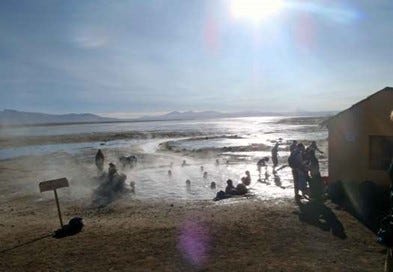
An excellent stop on the way to Salar de Uyuni is Aguas Termales de Polques: volcanic hot springs surrounded by geysers, nestled amongst mountains. Tour groups, including mine, rose very early to arrive at the geysers by sunrise for a spectacular scene of dramatic, fiery steam clouds.
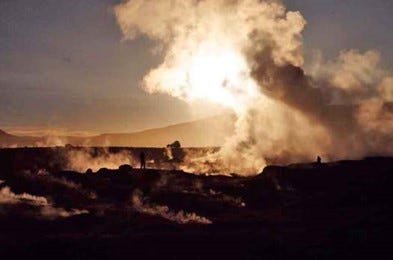
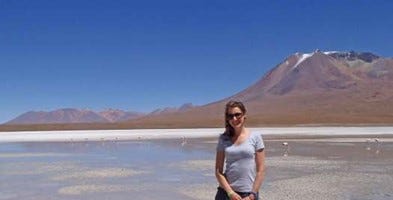
A swim in the nearby 29°C hot springs when external temperatures were as low as -10°C was simply divine. Getting changed into my bathers with only a tiny, crowded, freezing room on offer was less divine, but worth it. As with any volcanic hot spring, the waters are full of minerals that many believe to be good for your health. The surrounding shallow rock pools often have pink flamingos wandering through; we saw thousands of the pretty things by the end of a four-day tour.
SALT, SALT EVERYWHERE
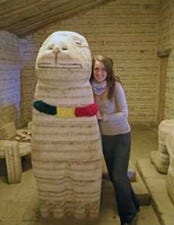
It’s possible to stay in a hotel made entirely out of salt in Salar de Uyuni. The beds are salt, the tables and chairs are salt — everything’s salt. I didn’t get the chance to stay there, but I had a peek into one of the salt buildings to see some pretty funky salt statues.
DON’T EXPECT PERFECTION
I didn’t realise when I first gravitated towards Salar de Uyuni that the famous mirror effect can be quite difficult to achieve. Conditions have to be Goldilocks-level perfect, with just the right amount of water covering the salt — not too much, not too little. I was shown a taste of the mirror effect on my visit, but it was not as flawless as I’ve seen in other people’s photos. The expansive flatness of the flats was amazing in itself, however.
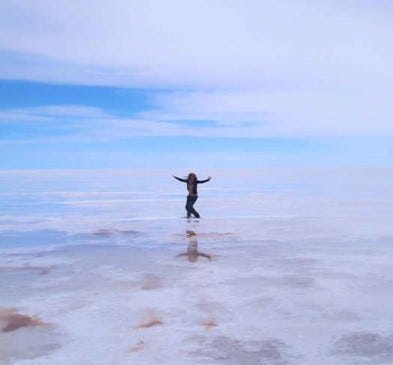
We had a great time toying with perspectives and taking silly photos.
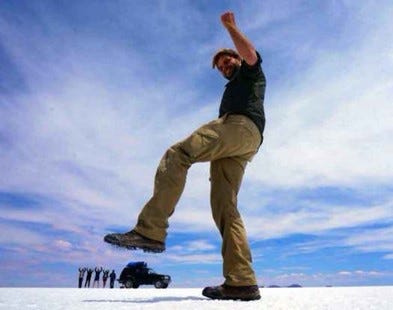
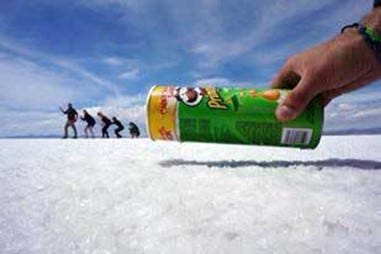
The photos didn’t always work out as planned, but we gave it our best shot, anyway.
ISLANDS AMONG A SANDY SEA
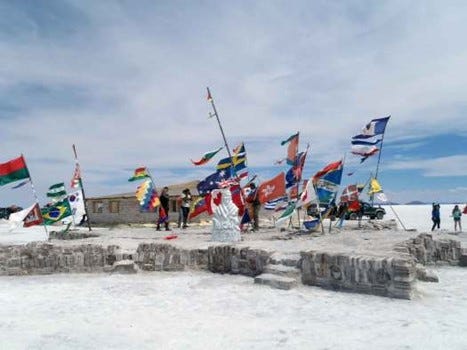
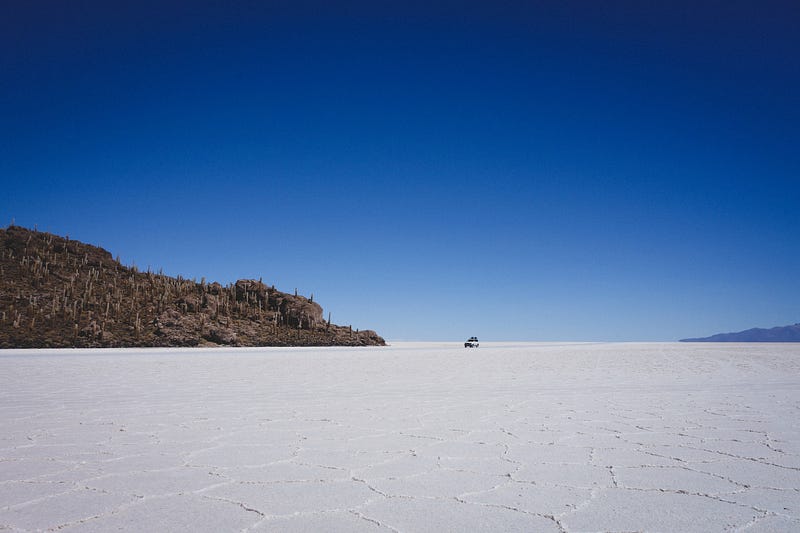
Protruding from the overwhelming flatness are a couple of islands here and there, such as the one covered in crusty salted flags from tourists around the world. Another, named Isla Incahuasi, is home to some giant cacti.
FROLICKING WILDLIFE
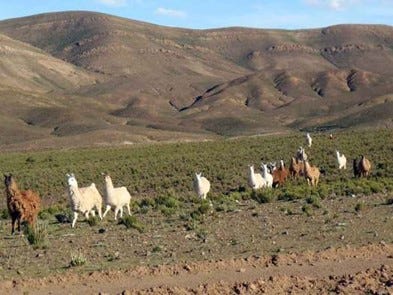
Llamas, alpacas and vicuñas can commonly be seen galloping around the surrounding landscapes, looking gracefully adorable. I personally couldn’t get enough of watching these woolly guys prancing about.
Pink flamingos regularly dot the shallow pools, causing extremely photogenic situations.
GET READY TO ROCK
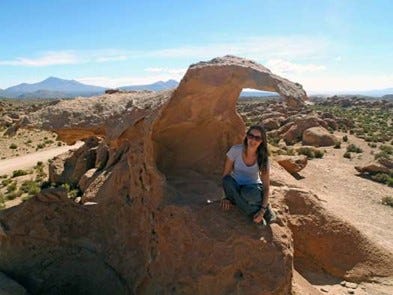
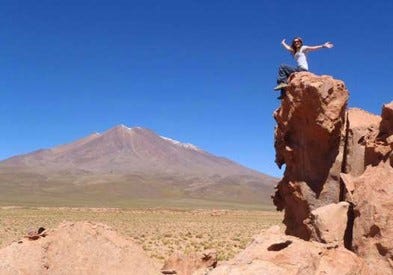
The landscapes change so much on the drive in and out of Salar de Uyuni. Strange rock formations morphed many of the plains, making for some interesting exploratory walks.
HOW TO GET TO SALAR DE UYUNI
The best starting point for tours is the town of Uyuni. Located about eight hours south by bus from La Paz, there are also daily flights with airlines Amaszonas and BOA (Boliviana de Aviación). The bus will cost about 30–40 USD, flights are usually around 150–350 USD. There is also a train option that’s slightly cheaper than the bus, but the schedules are terrible, you need to get off in Oruro and you’ll arrive in the middle of the night.
Once in Uyuni, offers for tours are everywhere. They vary greatly in quality, so try to do some prior research, or talk to local travelers who have just come back from a tour for recommendations. It is possible to book in advance with some of the more expensive operators, but there have been a few reports of guides being unavailable upon arrival, or the whole thing being not quite like it was advertised. You can arrive the day before, or even early morning on the bus, walk around and meet the tour operators, and book to leave around 10 am the same day or the next.
THE BEST TIME TO GO
The rainy season is roughly December to April. Rain gives you a better chance of getting good reflections, but too much water can cause bogged cars, and tours may be unable to access much of the flats. The dry season is from May to November, but may still offer reflections if you’re lucky. Overall best weather conditions are from July to October.
REMEMBER TO BRING
- Waterproof shoes for the salt flats. Some people on my tour brought ballet flats and spent the entire time with soggy feet.
- Clothes you don’t care about being ruined after spending days caked in salt.
- Warm clothes for the high altitudes. It gets cold at night.
- Lip balm for the inevitable chapped lips, dried out from all the salt.
PRICES VARY
Tour prices can be negotiable; some friendly haggling is allowed. The cheapest option is probably not going to be the best option. English- speaking drivers often cost extra, and tours may or may not include the national park entrance fee (~$25 USD.)
Salar de Uyuni was an unforgettable experience for me. If you find yourself in this enchanting area of the world, do consider checking out the world’s largest mirror! If you’ve already been, let me know what your favourite part was :)
More of my writing is at www.kerriduncan.com.


