
LITERATURE
Walking On That Yellow Brick Road
Battling inferiority complex when reading difficult texts in English literature
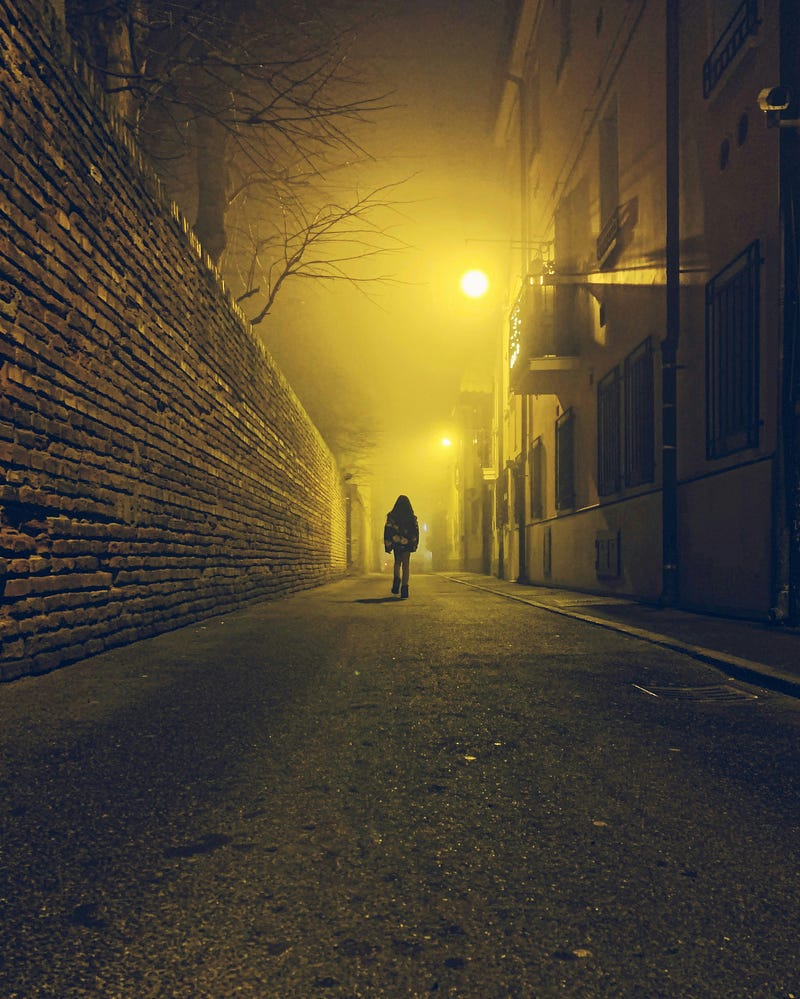
When I first read Rushdie’s book, Midnight’s Children, I struggled. I was a freshman, a literature major. I struggled to fathom what exactly Rushdie was trying to convey through his thematic structures of Magical Realism. Prior to entering university, I’d never heard of the term.
At first I thought it was Rushdie’s fault. “The man is too complex,” I wrote repeatedly in my journal. We were assigned to bang out an entry each night. Mine was often pounding on how much I disliked the reading requirement. On that list was Joseph Conrad (colonial voice and exhausting), KS Maniam, a Malaysian award-winning novelist (equally exhausting from too many bombastic expressions), and Salman Rushdie.
Albeit frustrating, there was something alluring about Rushdie’s vivid descriptions. Yet, I couldn’t put a finger on it. The same for Conrad and Maniam. They were good authors. Perhaps too good. Problem was, I had to depend on a thesaurus to make sense of each paragraph, combing through the tough words, like picking fleas off a monkey. Imagine an entire tome. It wasn’t laborious. It was onerous.
How on earth did I sign up for this?
It frustrated me as a reader knowing I’d read their book cover to cover, yet for inexplicable reasons, not sucked the entirety of their creative marrow. I disliked that feeling of incompleteness. It made me feel inferior. There, I said it. You have that intuitive feeling that there’s more to this than meets the eye. Perhaps, it’s just me, but I’m certain I am not alone.
I’ll share with you three excerpts from Midnight’s Children to exhibit my point:
“What had been (at the beginning) no bigger than a full stop had expanded into a comma, a word, a sentence, a paragraph, a chapter; now it was bursting into more complex developments, becoming, one might say, a book — perhaps an encyclopedia — even a whole language…”
“I fell victim to the temptation of every autobiographer, to the illusion that since the past exists only in one’s memories and the words which strive vainly to encapsulate them, it is possible to create past events simply by saying they occurred.”
“Symbolic value of the pickling process: all the six hundred million eggs which gave birth to the population of India could fit inside a single, standard-sized pickle-jar; six hundred million spermatozoa could be lifted on a single spoon. Every pickle-jar (you will forgive me if I become florid for a moment) contains, therefore, the most exalted of possibilities: the feasibility of the chutnification of history; the grand hope of the pickling of time!”
Rushdie was, in my most humble opinion at the time, excruciating. What in the bloody world was he on about? What did people see in such a twaddle?
To his fans, Rushdie is described as an author who has this incredible ability to proffer irreverent humor, then could later be counted on for sage advice. Sadly, I was still struggling through the fog to see this.
At 19, with English not being my native tongue, reading Rushdie made me feel stupid, incompetent, intellectually weak and inferior to those who could afford to enjoy him. Why couldn’t I?
Then a new professor entered the class and proceeded to challenge all that I knew about reading literature. She began by making me feel worse than I already was.
“The problem isn’t with the authors, it’s with you as the reader,” the professor confidently shot us with her literary revolver.
She continued to shoot us down with her bullets of bitter truths. Her arsenal was never in short supply:
“These authors lead complex lives. They’re writing from the depths of their soul, the epicenter of existential crises. They are embalmed with conflicts. They’ve battled with their identity, suffered alienation, soaked themselves in the Whos, the Hows and the Whys. If you’ve never lifted a finger of your privileged life to lift the rock you’re under, how do you expect to understand the world they live in, extended through their writing?”
I tried to note what the new lecturer said. Then I had to use a thesaurus to make sense of it. More work, more work, more work.
On the surface, our juvenile ears translated her academic monologues as we’re spoiled, lazy and shallow to appreciate what was unfamiliar, above and beyond us. We didn’t have the acumen to understand the writers we were tasked to study.
She wasn’t wrong.
“How can a novel be difficult to consume?” She kept rubbing salt on our wounds. “You’re either unbothered due to sheer laziness, or you’re terrified of where the author can take you. Or both.”
It took us some time to process what she meant. As much as our ears bled from her caustic comments, I was intrigued. Everyone in my class was a non-native speaker of English attempting to study English Literature. My cohort started with 120 hopeful undergraduates. By the time we graduated, there were only 23.
Many of them believed that we were out of our depths.
The words by our lecturer had only two potent side-effects: she either destroyed your motivation and made you quit; or, she fired you up to stay and prove you can succeed. I chose the latter because I liked watching her knickers get twisted. The words that came out of her mouth rivaled the authors we studied. She sounded just as embittered, internally conflicted, and restless as the great canonical authors.
Yet when she spoke, I listened.

Her point was — and she had a good one — we were now entering a new territory at university. We were reading stories written from different corners of the world. Truth was we were terrified of the books. The language was sophisticated, the context unfamiliar.
Not only were we reading them from a distance, we were reading through our young, inexperienced lenses. We forgot that they were meant to challenge us.
Gradually, dawn emerged, and we saw a light at the end of the tunnel. We fathomed the truth of what was spoken by the easily disgruntled academician.
A story cannot separate itself from its author’s historicism. That means to read a text, more so to embrace and digest it, we needed to go beyond it.
We need to read about the author’s life, his/her upbringing and achievements. We also needed to read into the history, culture and artistic movement at the time the book was conceived. How was society at the time? Was there a war? Was there an outbreak? Who were the thinkers and agents of social change at the time? What was the state of science versus theological influences? Was it before or after the Renaissance and Reformation era? Was it written at the turn of the century when machinery and manufacturing influenced traveling, cross-culture, and colonization.
In short, to read a novel, we needed to read 20 additional texts to support and supplement it.
“The plot thickens and the challenge intensifies,” I penned in my journal at 2am. I decided to tackle one author at a time.
To the world, Salman Rushdie is famous for his unfortunate controversial 1988 novel The Satanic Verses (and in August 2022 the attack made on him on stage in New York). That would be like scooping the solidified fat off beef broth, missing the whole point of how nutritious the broth is. He is a legend in magical realism fiction.
I say “unfortunate” in regards to ‘Satanic Verses’ because of the complex weaving of nuances embedded in a magical realism text which is what Rushdie is known for. To readers unaccustomed to magical realism, it’s easy to misunderstand (or miss) the undercurrents of a text. There’s the nominal conversation on the surface where logic lives; and there’s an under discussion where our emotions and imagination are connected to the story.
That’s what happened with The Satanic Verses, a rich story that was read with shallow ignorance and hasty judgment. A magical realism text is more than meets the eye.
Indian-born British-American novelist Rushdie changed the landscape of Asian literature that had its center of gravity in the North Atlantic region. His stories spoke of the migrant’s experience jumping through fantastical plot twists and detailed evocations. His narrative tone alternates between arrogant and self-deprecating; street-smart and highbrow. Themes of alienation, displacement, and interpolation of culture, psyche and identity are his jams.
But Rushdie is as prolific a reader as he is a writer. His inter-texturing and multidimensional layering challenge the reader to dig deep beneath the epidermis and visceral fat of a story. This is where weak critics and readers often go wrong with his allusions, symbolisms and interpretations.
Writers like Rushdie are not to be taken at face value. He is a hero just as much as he is a marginalized citizen. He is a creative writer as much as he is a social critic. He is a patriot as much as he is a dissident.
I see myself sharing identical dilemmas as Rushdie. Born in Southeast Asia, raised and educated in the UK, traveling in and out of Europe, and living in between eastern and western cultures, a lot of how I think, feel and understand is a discord between two notes. By right, I should be able to connect seamlessly with Rushdie.
And that was my first step. Instead of resisting him for all that I couldn’t grasp, I strategized by focusing on what we had in common: the way we looked at life from the other end of the stick.
“Language has musicality,” writes Rushdie. He is referring to meter, rhythm, and harmony. Not just between language and words, but between sounds and subjects. That’s where a gap of mystery was for me.
Re-examining the excerpts from Midnight’s Children, I realize now that Rushdie’s cohesiveness of identity is prevalent from the structure of his paragraphs: the musicality of alphabets as notes. Playing the scales and chords as words are music to his repertoire.
“What had been (at the beginning) no bigger than a full stop had expanded into a comma, a word, a sentence, a paragraph, a chapter; now it was bursting into more complex developments, becoming, one might say, a book — perhaps an encyclopedia — even a whole language…”
Here, the morphology and syntax of language is akin to a writer’s evolving identity when amalgamating many cultures, yet needing to find a center of gravity.
“I fell victim to the temptation of every autobiographer, to the illusion that since the past exists only in one’s memories and the words which strive vainly to encapsulate them, it is possible to create past events simply by saying they occurred.”
Here, Rushdie is suggesting that we are who we design ourselves to be, based on what we want to believe has happened. It isn’t so much about telling the truth, but the version that we can live with. The version that we can have control over especially when our real life is not what we wish it to be. Sometimes it’s the opposite, we choose what we are familiar with, much to our detriment.
In Woody Allen’s The Purple Rose of Cairo, waitress Cecilia, tired of her bad marriage and uneventful life, gets a ticket of a lifetime. The cinema is her escape from reality. Two versions of the hero from her favorite movie steps out of the screen, breaking the cinematic fourth wall, to woo and offer her a chance at a better life.
Unfortunately Cecilia chooses poorly because she is unfamiliar with a good thing (and man) even when luck is standing right in front of her. She resorts to someone else who isn’t much of an improvement to her tormenting husband. And when her luck runs out, she ends up right where she started — a lonely woman who seeks solace at the cinema dreaming, hoping and wishing.
Perhaps for some people, dreaming is all they can handle in life. Perhaps conjecturing their dreams is the fascination, not actualizing them.
“Who what am I? My answer: I am the sum total of everything that went before me, of all I have been seen done, of everything done-to-me. I am everyone everything whose being-in-the-world affected was affected by mine. I am anything that happens after I’ve gone which would not have happened if I had not come. Nor am I particularly exceptional in this matter; each “I”, everyone of the now-six-hundred-million-plus of us, contains a similar multitude. I repeat for the last time: to understand me, you’ll have to swallow a world.”
Here, the idea is that we are an ongoing product of synergy. Regrets of our past are crucial for growth and future. Regrets fuel inspiration, like out of mud comes the lotus flower. It needs a cruel and muddied bed to sprout. Not all that is bad is bad, not all that is good is good. We’re all faced throughout our lives with agonizing decisions, moral choices. Some are on a grand scale, most of these choices are on lesser points. But we define ourselves by the choices we have made. We are, in fact, the sum total of our choices.
But the greatest challenge to deciphering Rushdie was to get into the framework of magical realism itself — since that’s his jam. If he is a legend in that genre, what on earth is it?

Magical Realism is a literary term to describe works of fiction that fuse realism and fantasy with a deadpan approach. Think of it as a joke on realism, produced in reaction to the confining assumptions of realism, a hybrid that combines the “truthful” and “verifiable” aspects of realism with the “magical” effects we associate with myth, folklore, tall story and the perfectly implausible.
A fantasy piece would give us a flying horse. Pegasus would come to mind. Pegasus is a horse-god, sired by Poseidon depicted as a majestic, white stallion. We’d describe such a myth to be far-fetched, a subject of dreams.
In magical realism, you’ll be on a farm, a farmer goes about with his chores, and out of the blue, his beloved horse speaks to him in English. The farmer is startled at first, yet gradually, the extraordinary becomes ordinary. As the days go by, the farmer gets annoyed with the now talking horse, being accustomed to his horse doing the work, not interacting using the same language as man, and much preferring for it to act like a … horse.
One day, the horse tells the farmer to bet on a lottery, it foresees a windfall win. The horse refuses to stop talking about it knowing how it would change the luck of the farmer. The farmer, irritated by the incessant advice coming from a horse on how to improve his life, takes his rifle and shoots the horse dead.
The significance of the story is how the mundane becomes extraordinary. A larger web encasing the story is in the truth, the reality, and the circumstances that envelop all the characters into a believable plot that are anomalous and unsettling.
While the talking horse as a seer is a unique occurrence, there is embedded sadness and skepticism in the farmer’s lack of belief that profound luck is possible based on the hard life he lives. He’d rather get rid of the horse, to avoid chaos in the community should it be discovered, than to take a bet on a lottery — which would be what many fantastical movies prefer.
The approach to downplay the extraordinary is a seminal criterion in magical realism. This is what readers often underlook in a magical realism text. You cannot read things too literally. This challenges imagination. This nonchalant air has its roots in Latin American literature spearheaded by authors such as Gabriel Garcia Marquez, Angel Flores and Jorge Luis Borges.
In magical realism, there is an intersection, a colliding of cultures or civilizations, one “primitive” in touch with magic, the other “civilized,” presumably realistic. Much of this intersection has to do with ancient beliefs in paganism and animalism, where elements of supernatural and spirituality are accepted into the fabric of daily existence.
The same is said throughout Asia as magical realism slowly moved its way into its narrative bloodline. As these societies experience modernization, magical realism becomes emblematic of social escapism. It becomes a literary device to escape poverty, to provide comic relief, to inject surrealism to the mundane. In Europe, magical realism found its way into modern art at the turn of the century.
There’s a famous saying in regards to explaining magical realism. A basic idea, at least. Montaigne made a famous speculation as to whether when he thought he was amusing himself with his cat, the truth might be that the cat was amusing itself with him.
The collapse of dimension is another unique facet of magical realism. This allows so much play, interlayering and cross-referencing in a text. It’s been said that a sibling to magical realism is satire, or that magical realism is a derivative of satire.
For both satire and magical realism, a piece is not to be read with straightforward eyes. For magical realism, it requires the imagination of a child, or one that is almost as innocent, but tainted with enough cynicism of an adult to deepen the humor.
It took more than a semester to synthesize all of the above. Reading and understanding authors are not something we achieve in a single exam or three essay assignments. That’s where tertiary education fails us. It’s a lifelong journey.
A journey that evolves as we age through the times, observing the social and cultural revolutions around us. It won’t be easy, life never is. But it’s challenging enough to keep us riveted and intrigued to keep scribbling in our journals at 3pm or 2am.
I finally got to appreciate Rushdie and the complex authors (to this day) after I broke my own fourth wall: when I stepped out of familiarity and comfort to enter the unfamiliar and intolerable. Any new territory would be spartan accommodation, and that’s how learning anything effectively should be.
Reading difficult texts is immensely rewarding. I grew up. I took myself out of my limited world to allow myself to enter the magical realms of authors. My world got bigger. “That isn’t an assignment,” I later told my own students in my writing classrooms. “That is a privilege. So enjoy your walkabout on that yellow brick road. May you find your heart, your brain, and your courage along the way. And convey my love to the wizard.”