
Travel & Photography
Walking in the Footsteps of Henry David Thoreau
The ethereal experience of exploring Walden Pond with a co-editor and new friend
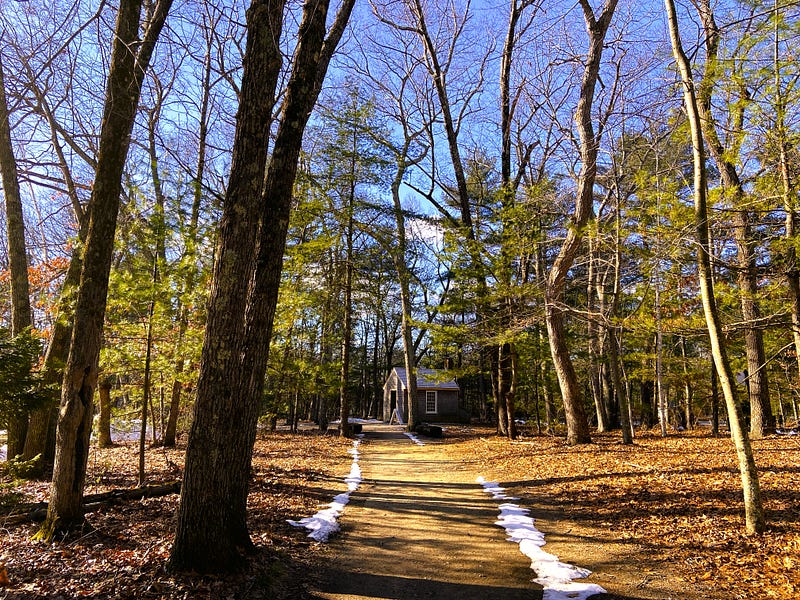
Stillness permeated the air. Tall trees towered to the sky — a few leaves and pine needles clung hopelessly to branches amidst the New England January chill. A slight bit of snow teased the corners of the road and pathways.
As we exited the car, we breathed in heavy, clean, and clear. It was an intoxicating feeling — not of drink or smoke — but just the simple high of being in nature surrounded by intrinsic beauty. This is what greeted my fellow In Living Color editor, Allisonn Church and I as we began our visit to Walden Pond.
When I mentioned I would be in Boston for a month for a house/pet sit, one day Allisonn suggested an outing to the infamous retreat of Henry David Thoreau. She even offered to drive, since I was without a car. Wow! Wonderful!
A visit to the aesthetic sanctuary where Thoreau escaped in order to live off the land, contemplate life, and write seemed like a right fitting place for two fellow devotees of the written word themselves to head in order to get to know one another as both co-editors and friends.
Walden Pond is located just a hop, skip, and jump from the town of Concord, Massachusetts, where Thoreau was born in 1817. Immediately I was filled with a sense of awe and gratitude to be visiting this area as we walked toward the pond while ingesting the intoxicating earthy scent of pine, maple, birch, and oak trees.
So much profound yet simple beauty, for one thing, and so much rich history.
It’s difficult to imagine now, but glaciers once inhabited this land more the 12,000 to 17,000 years ago. As soon as the glaciers melted, humans began to filter in as it was an attractive place to fish in the plentiful waters and hunt in the surrounding woods. However, it remained sparsely populated due to it not being such a great place to cultivate large scale agriculture.
Fast forward a few years, in the 1700 and 1800s, this location became a haven for people who did not otherwise fit into civilized society — the poor, the disenfranchised — as well as many freed slaves. Peaceful existence wasn’t always attainable though, as one notable woman who settled in the area discovered. Not willing to be a quiet, demure, and proper kind of lady, Zilpha succumbed to having her house, cat, and dog all burned up together by English soldiers during the War of 1812.
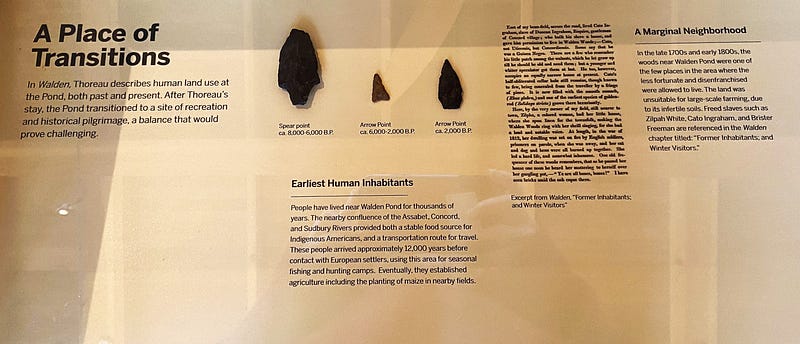
Thoreau related the details of this story in Walden, one of his defining published works, along with “Civil Disobedience” and A Week on the Concord and Merrimack Rivers — the same ones many of us students in the U.S. read portions of in school. As a staunch abolitionist, the plight and treatment of marginalized people in both the U.S. and around the world weighed heavily on his mind. It’s no wonder, then, that his life and writings ended up influencing the minds of now iconic figures such as Mohandas Gandhi and Rev. Dr. Martin Luther King, Jr.
Thoreau, in turn, had been influenced by a wealth of intelligent and thoughtful human beings himself:
“His contemporaries and sometimes-neighbors include Nathaniel Hawthorne, Bronson Alcott, Margaret Fuller, and his mentor, Ralph Waldo Emerson.” (*¹)
And, of course, he was heavily influenced by Eastern philosophical thought and spiritual texts such as the Bhagavad Gita and the practice of yoga.
This is one of the immense pleasures of being human — the ability to learn from each other and use it as a springboard to contribute to society in our own potentially impactful way.
“When I wrote the following pages, or rather the bulk of them, I lived alone, in the woods, a mile from any neighbor, in a house which I had built myself, on the shores of Walden Pond, in Concord, Massachusetts, and earned my living by the labor of my hands only.” — Walden, Henry David Thoreau.
Thoreau believed in the principles of resisting injustice wherever it may be found. Furthermore, he trusted in the power of nature to refresh our souls and remind us just how small we are. As a philosopher and Transcendentalist, he did not prefer one religion over another and instead believed in the simplistic yet complex spirituality of the natural world. Giving credence to sound science, he also realized the limitation of science to explain everything that occurs in our world, such as the light that comes into the soul (*¹).
Such thinking remains so incredibly relevant still today. Don’t you think?
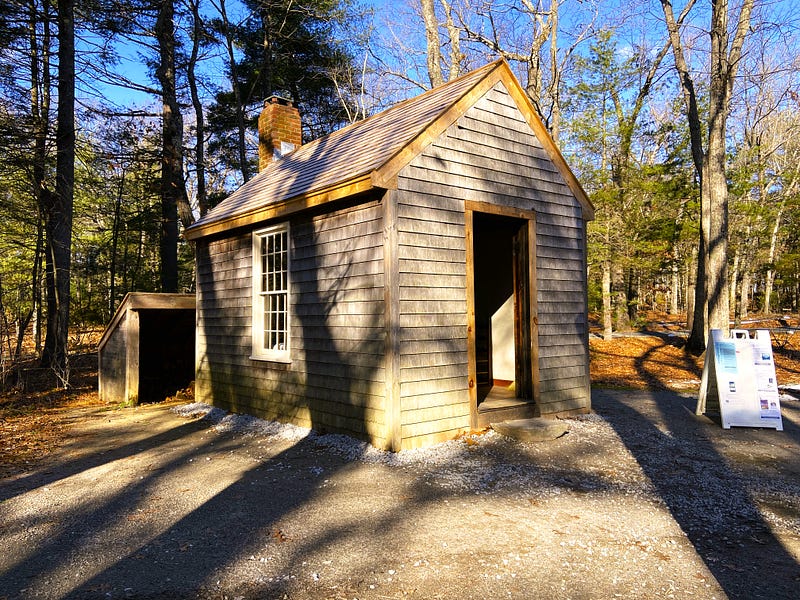
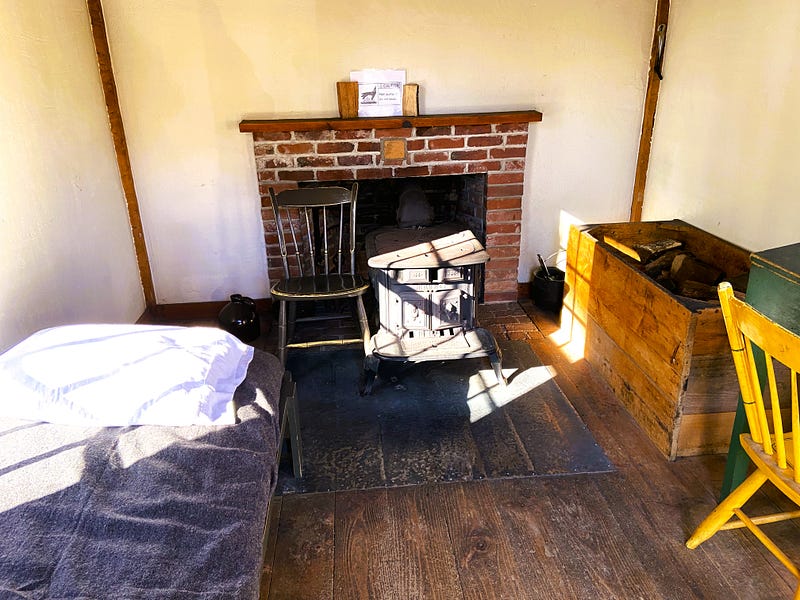
After walking through the visitor’s center and learning more about Thoreau and his life on Walden Pond, we found our way to the replica of the house he both built and lived in. At 10' by 12' in size it was much smaller than I’d imagined but every bit as humble. There was a small bed, a wood stove that doubled as both a cook stove and a source of warmth in the winter, and a small desk for writing, as well as a chair for visitors to sit in when they occasionally would stop by.
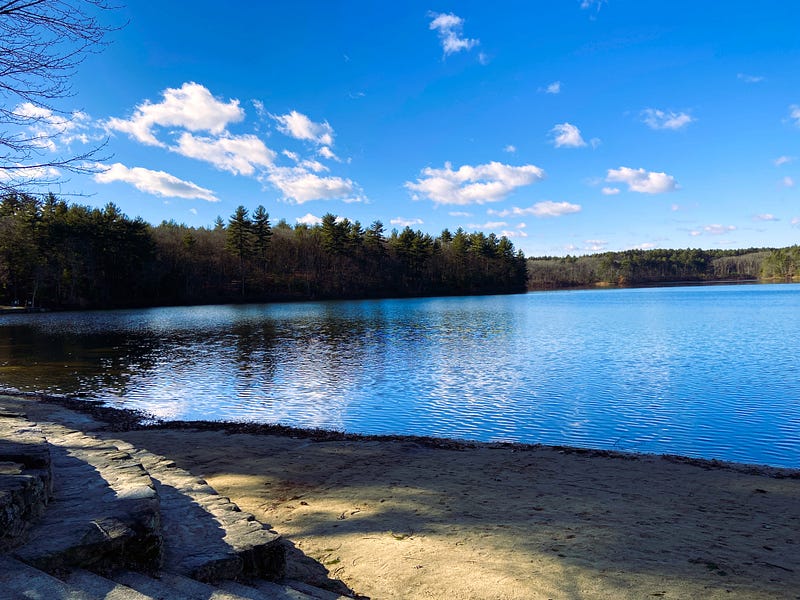
Of course, the greatest feature of the area is the pond itself. At only around a mile and a half in circumference, visitors can easily walk around the entire pond, which Allison and I chose to do, in well under an hour, although we might have taken a bit longer than that as we slowly but thoroughly enjoyed the beautiful scenery and chatted about a myriad of things — writing, editing, publishing, and just a lot of other tidbits about life itself — both personal and more general.
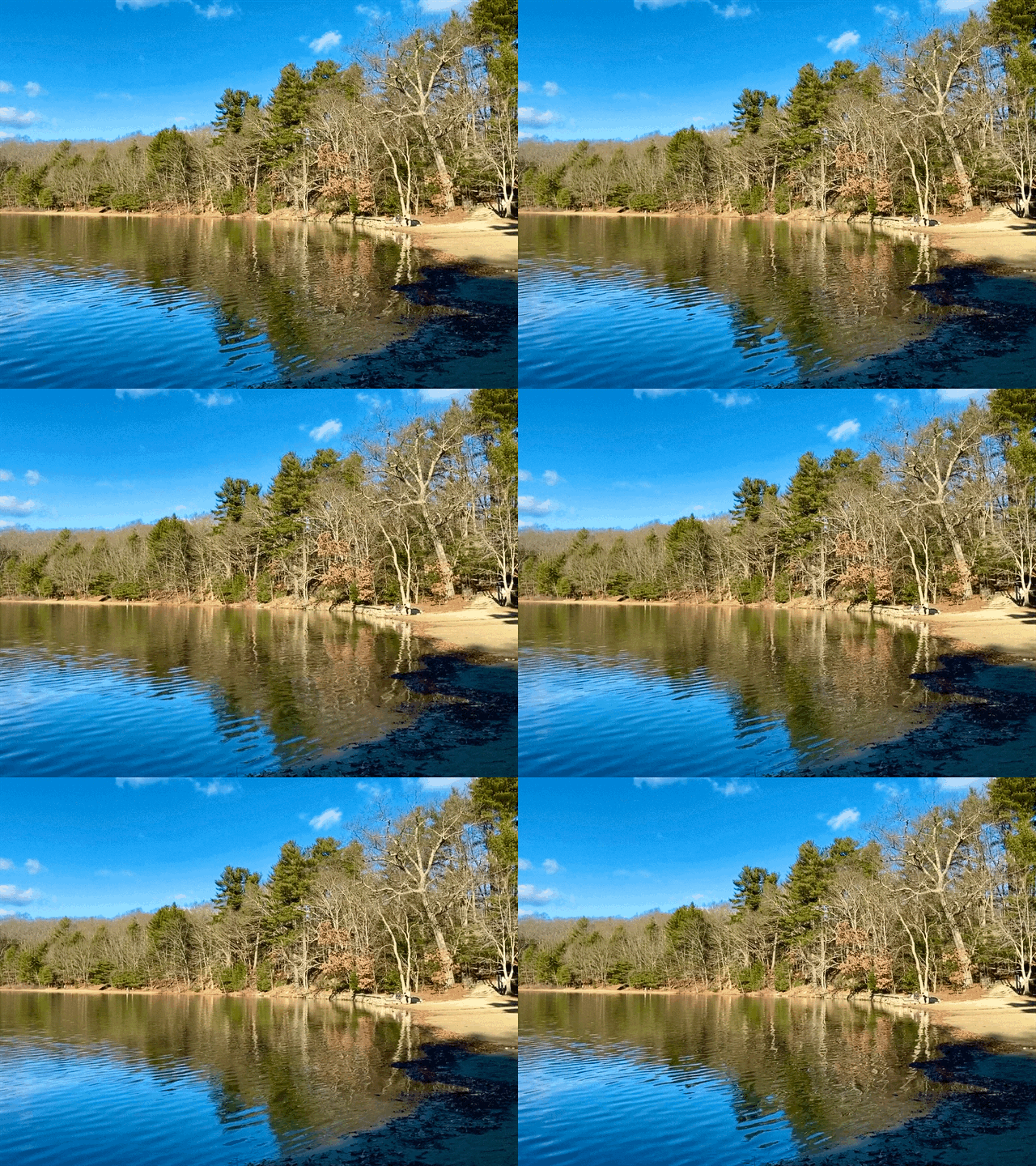
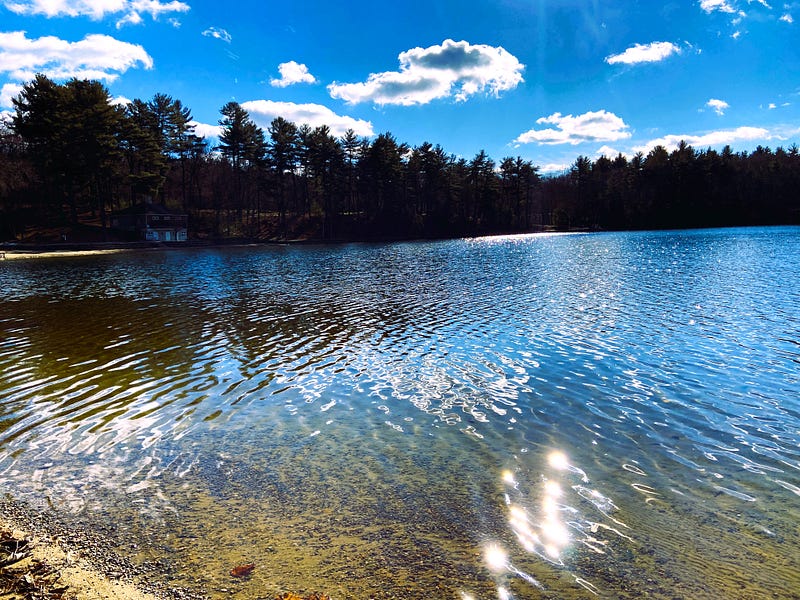
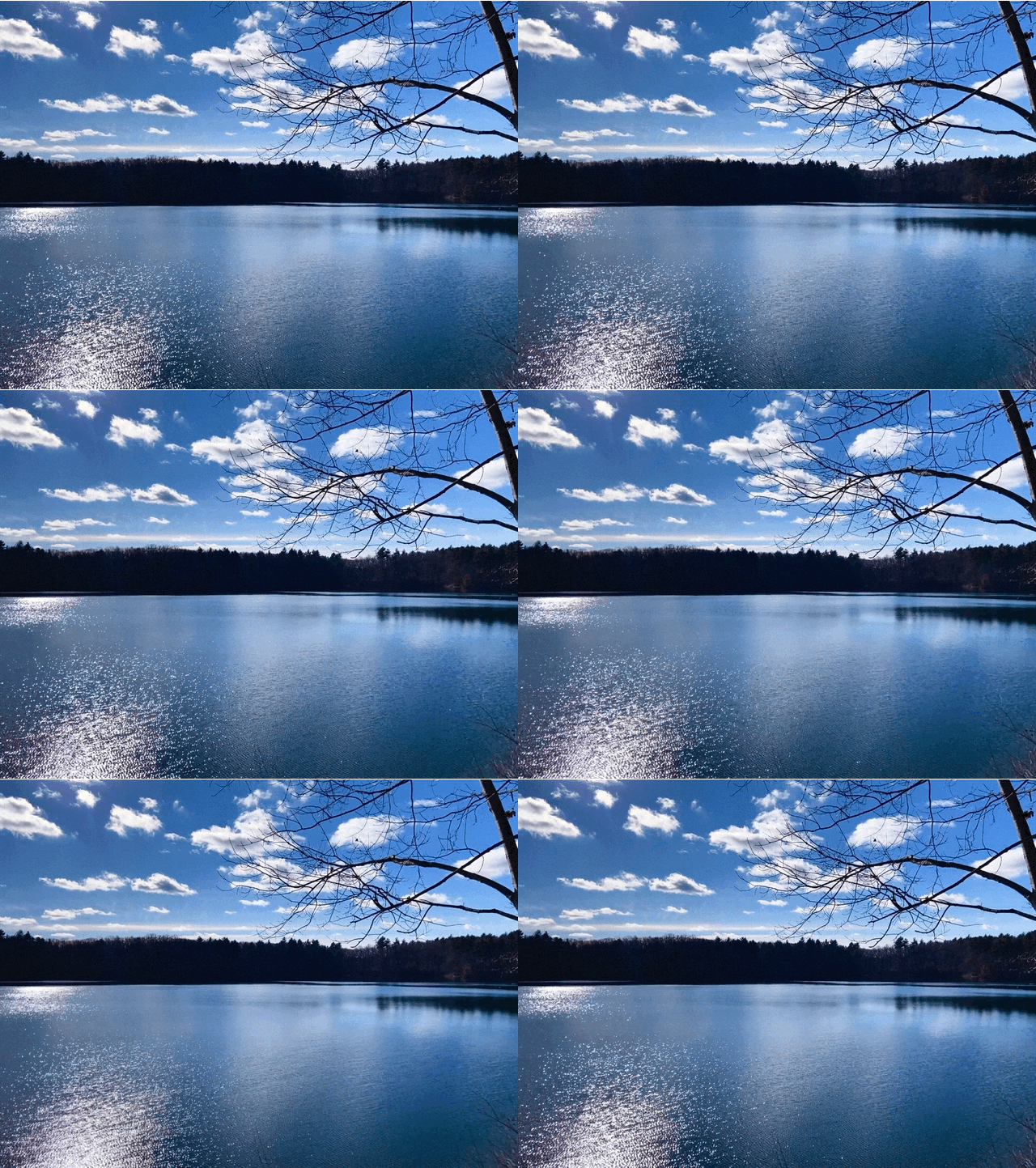
As you can clearly see from these photos, the water flows gentle and slow, and it is so clear that at many points during our walk I just became so mesmerized and even hypnotized by the rhythm of the flowing water, the teasing accompaniment of gently dancing leaves and other foliage, and overwhelming beauty to be found at every turn.
Talk about a true treat of the senses!
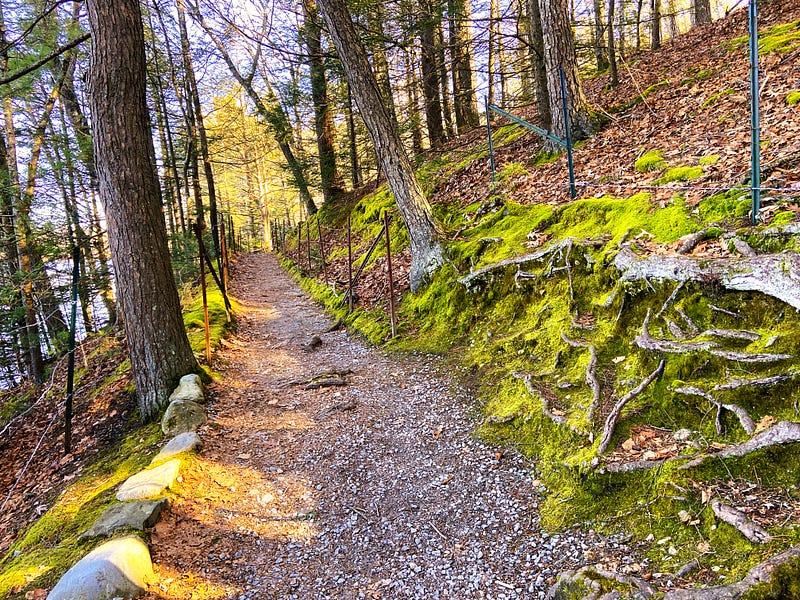
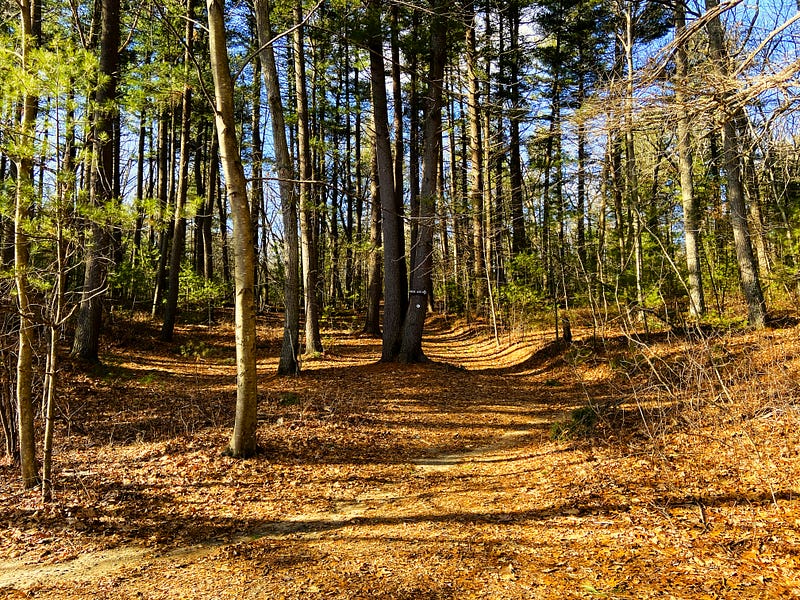
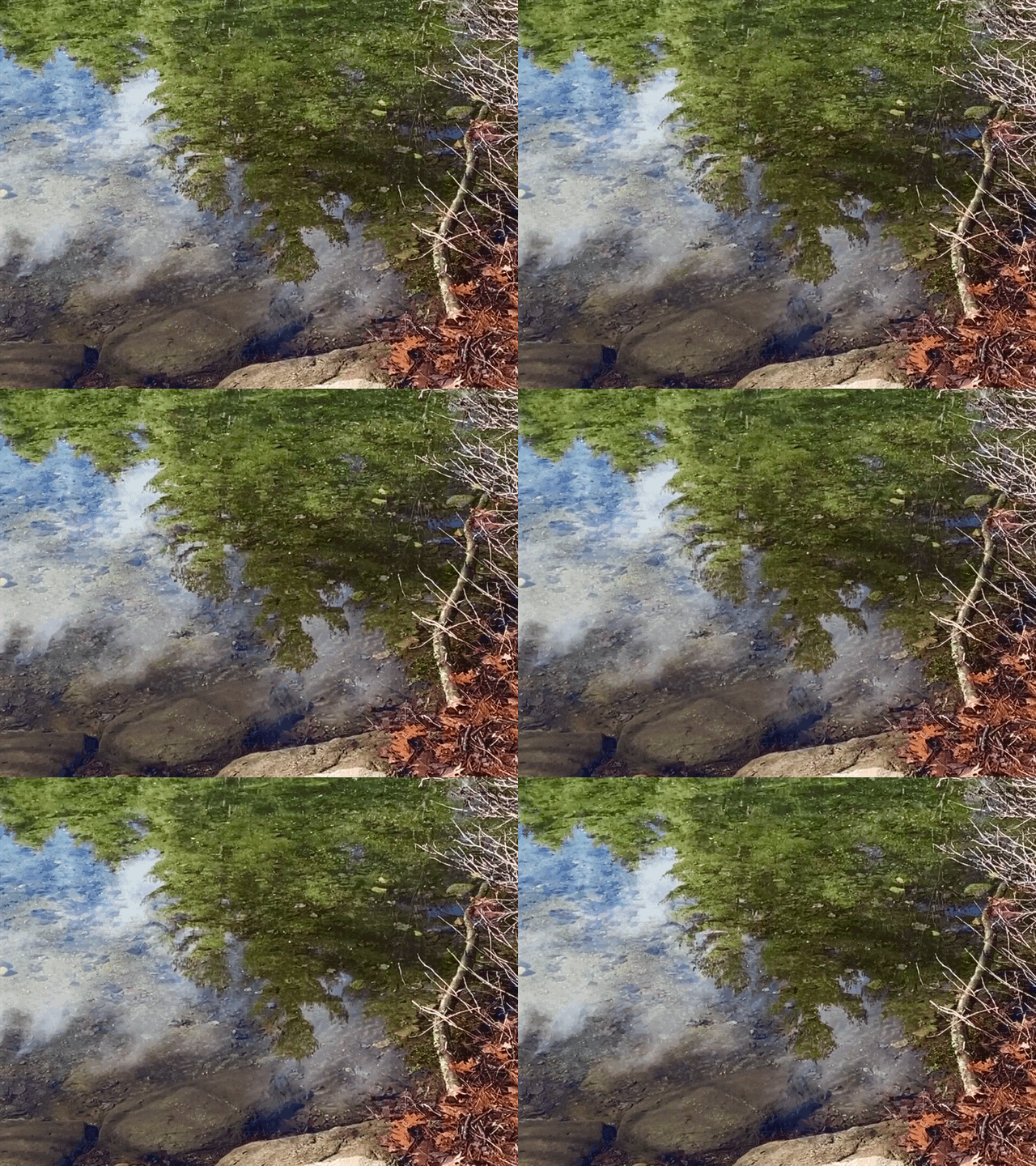
The pathway itself was a source of wonder, having been decorated with nature’s finest offerings — abundant and sporadic fallen leaves, moss-covered rocks, pebbles and sticks of all sizes and shapes, and the rich brown earth beneath our feet as it crunched delightfully from the impact of our shoes.


After our soul-rejuvenating visit to Walden Pond, we headed out of the reserve to a enjoy a lunch at a diner in the nearby town of Watertown. The food was crazy delish.
What a charming and magical day it was. One to remember for a lifetime. Bonding with nature and people, especially fellow editors and word wranglers, is such an important aspect of life. I can’t recommend it enough, and would furthermore highly recommend a visit to Walden Pond yourself. You won’t regret it.
Allison already wrote her own account of our visit, which you can read here: “If You Want to Love Humanity More, Step Away From It”
Sources for information and further reading: