
Walking Down the Eiffel Tower
A summer day tinged with iron
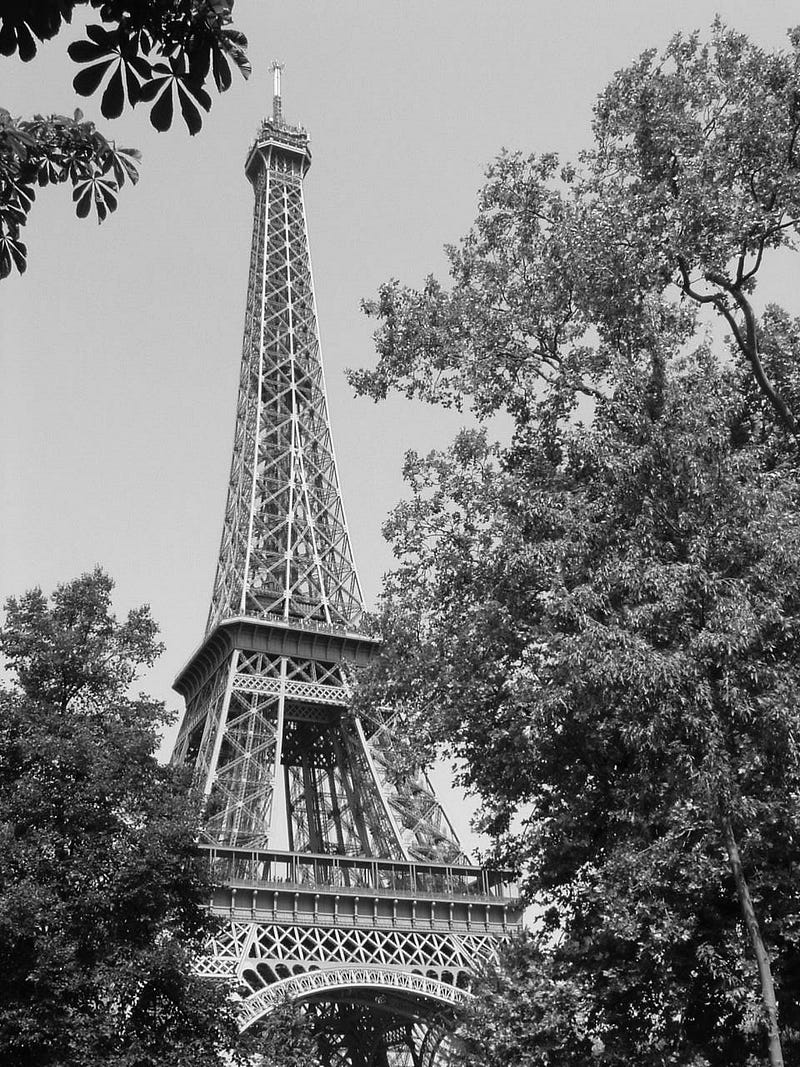
I have a photograph taken from the ground pointing up at the great gray mass of the Eiffel Tower, shortly before my dad and I took the elevator up it in July 2006, then walked back down.
I was eighteen years old, on my first trip to Europe, and indeed on my first trip outside of the United States. Before Paris, we had rented a car and traveled the length and breadth of the U.K. in seven days.
I fought off a cold and now I was fighting off the depression and homesickness I had battled my whole freshman year of college in Philadelphia.
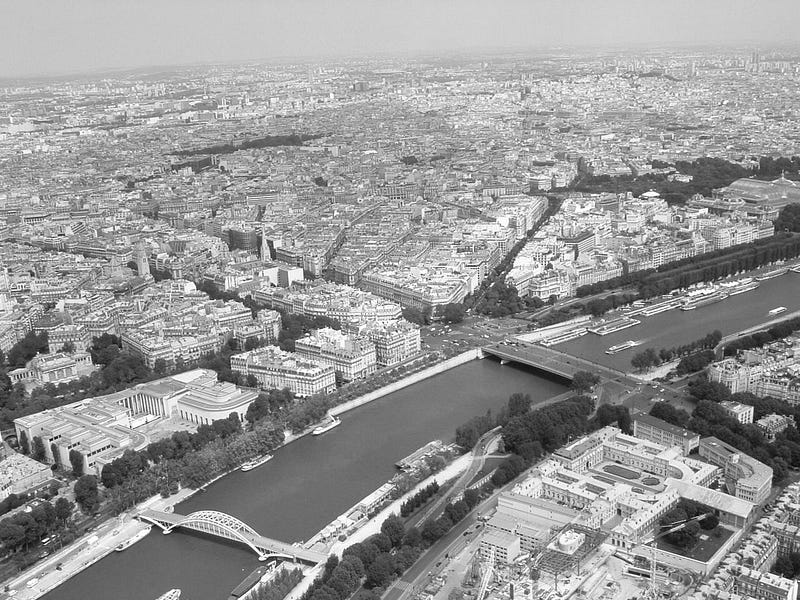
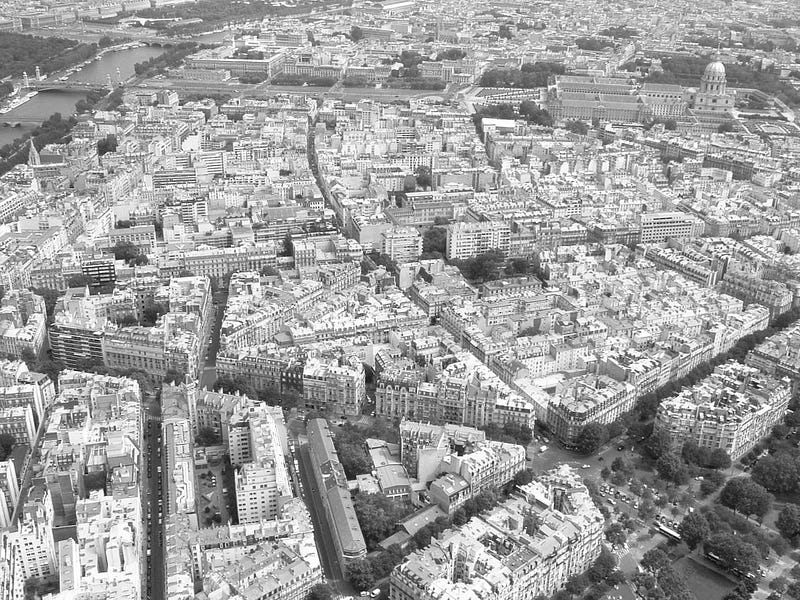
But Paris — it was full of the grand monuments that I adored, and nothing was grander than the Eiffel Tower. What was more exciting than to take the elevator up and stand at the viewing deck looking down at the city spread out below?
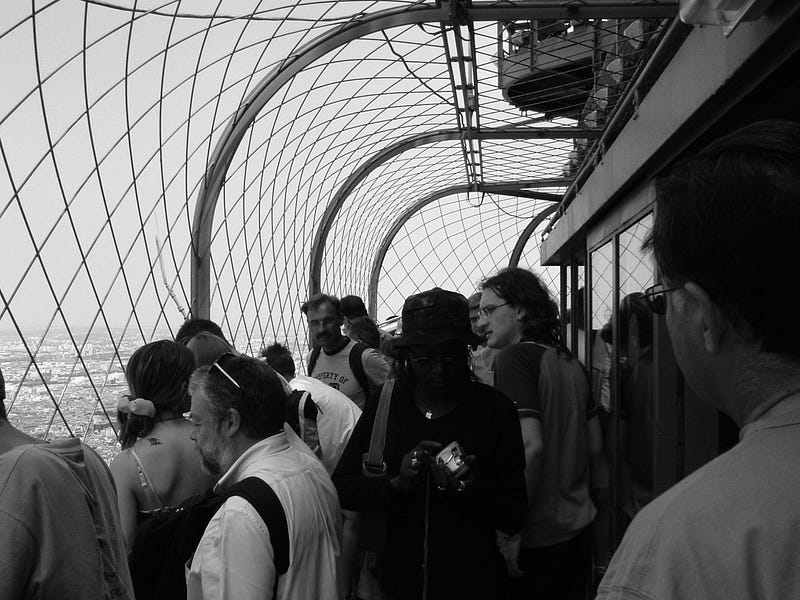
At the time these photographs were taken, when we chose to forgo the elevator on the way down and take the stairs instead, I only knew I was looking at something that snatched my breath away.
Now, twenty years later, I know much more about the Eiffel Tower than I did then.
When it was constructed from 1887–89 for the 1889 World’s Fair, many of France’s leading intellectuals viewed it as an eyesore. Can you blame them? A towering hunk of iron was so different from the glamorous monuments that populated the city far below.
“Gustave Eiffel Has Gone Mad: He Has Been Confined in an Asylum,” read one headline in the tabloids.
Charles Garnier called the tower a “truly tragic street lamp.”
The great writer Alexander Dumas referred to the“odious shadow of the odious column built of rivets and iron plates extending like a black blot.”
But the completed tower was a great success at the World’s Fair. Famous visitors included the Prince of Wales, Buffalo Bill Cody, and Thomas Edison.
After dark, the tower was lit by hundreds of gas lamps, and a beacon sent out three beams of red, white and blue light. The daily opening and closing of the exposition were announced by a cannon at the top.
By the end of the Fair, nearly 1.9 million people had visited.
Gustave Eiffel, the architect, only had a permit for the tower to stand twenty years — it was supposed to be dismantled in 1909.
Luckily, it proved useful to radio communication and was allowed to remain forever part of Paris’ skyline.
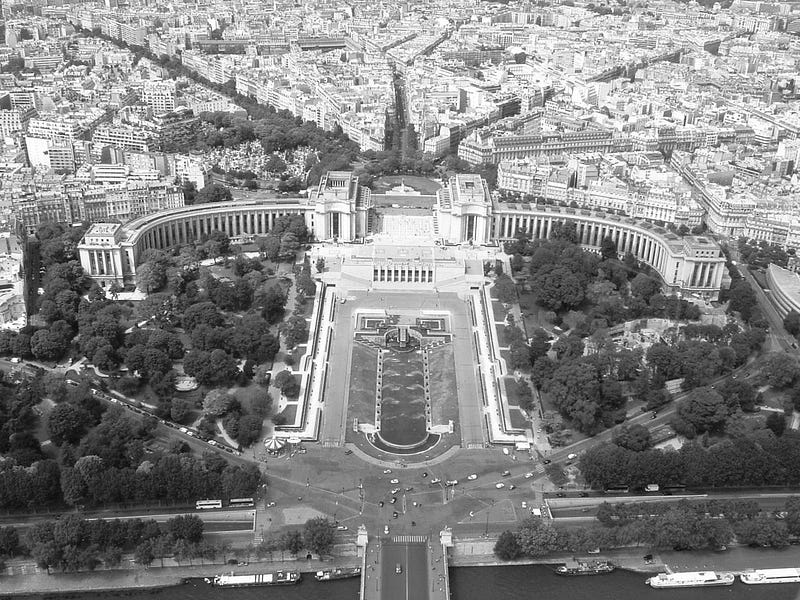
I remember my dad was fascinated by the tower’s iron construction — not steel, as I thought from its gray color. So many millions of rivets! We took more pictures of the iron walking down than we did of the view.
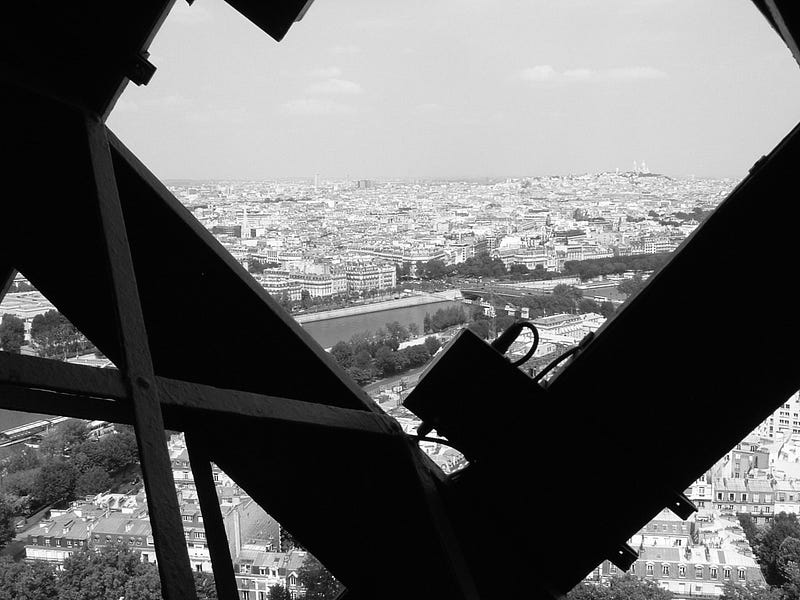
It’s a strange experience, walking down the Eiffel Tower. You feel as if you’re on a momentous journey of a lifetime. Your thighs burn but yet, you’re floating on air. Your thoughts focus on the steps, the steps, the endless winding staircase.
You drift in awe, yet so conscious are you of the effort not to trip, and of the people around you, you don’t much appreciate the sublime views until you stop to rest.
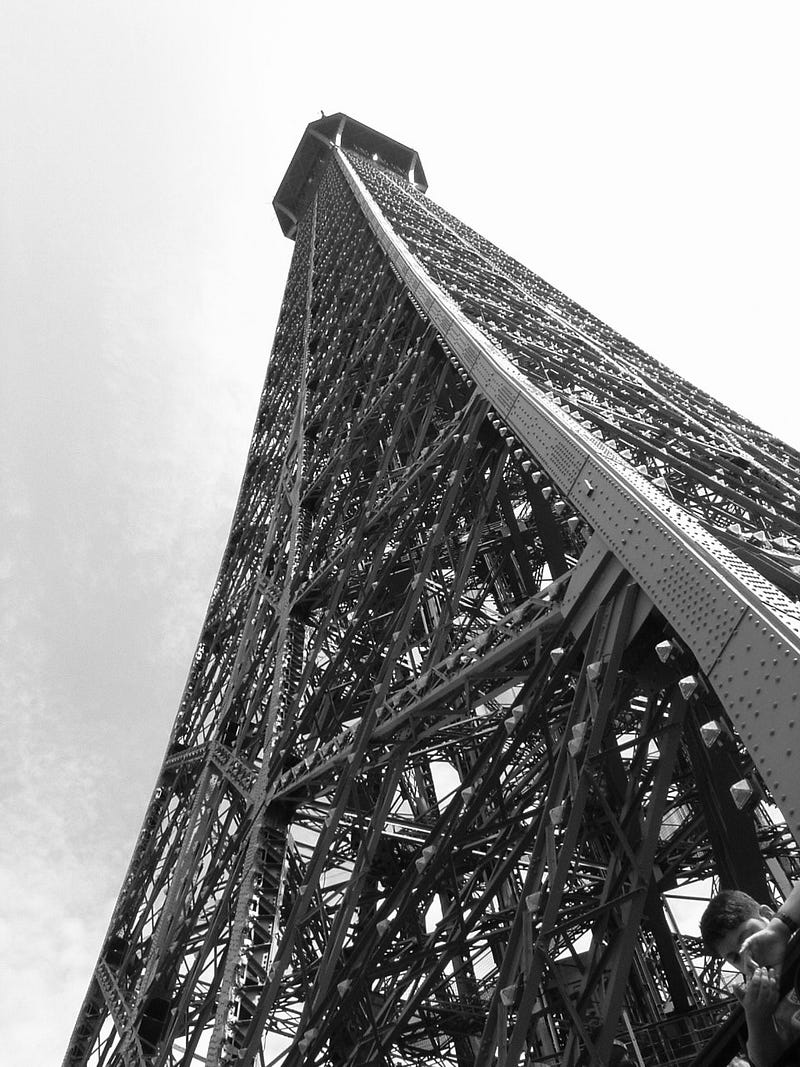
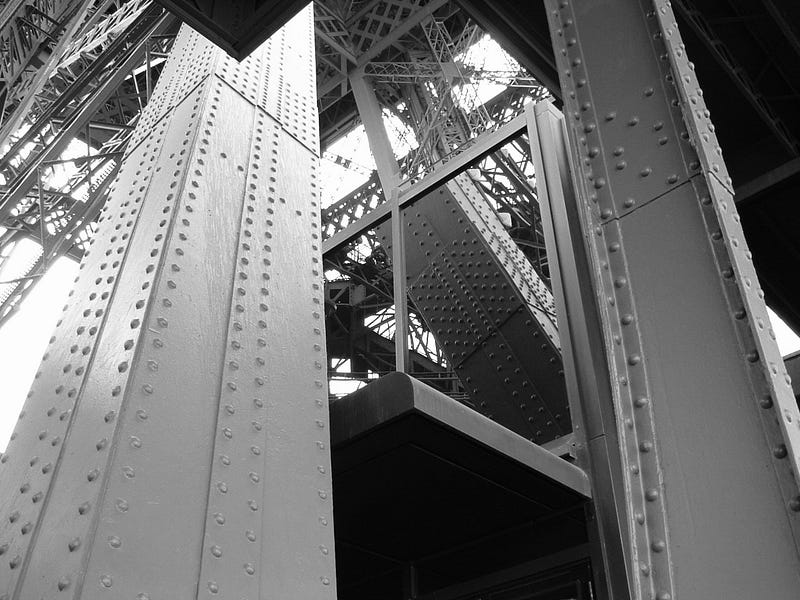
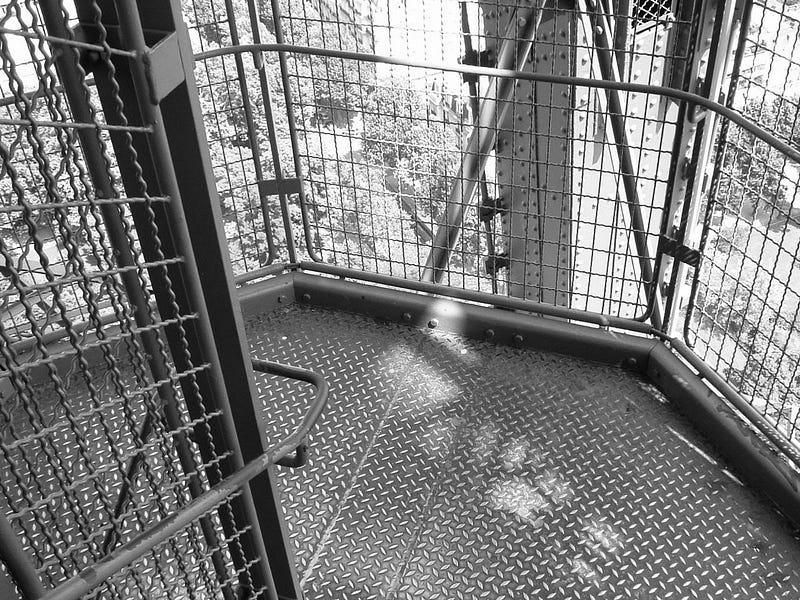
My photos seem eerie now. There were in fact many people on the stairs, going through the same journey as us, but I always make the effort not to include people in my pictures. I like to see only the scenery, the monuments.
Thus it seems like ghosts inhabit my photos, like I’m getting the same black-and-white view of Paris as the first people who walked down the Eiffel Tower.
I know that’s silly, of course. Those people would have walked under brilliant blue skies and puffy white clouds, same as my dad and I did.
But my walk is receding into memory. I can barely recall the smell, the touch, the taste, of that summer day.
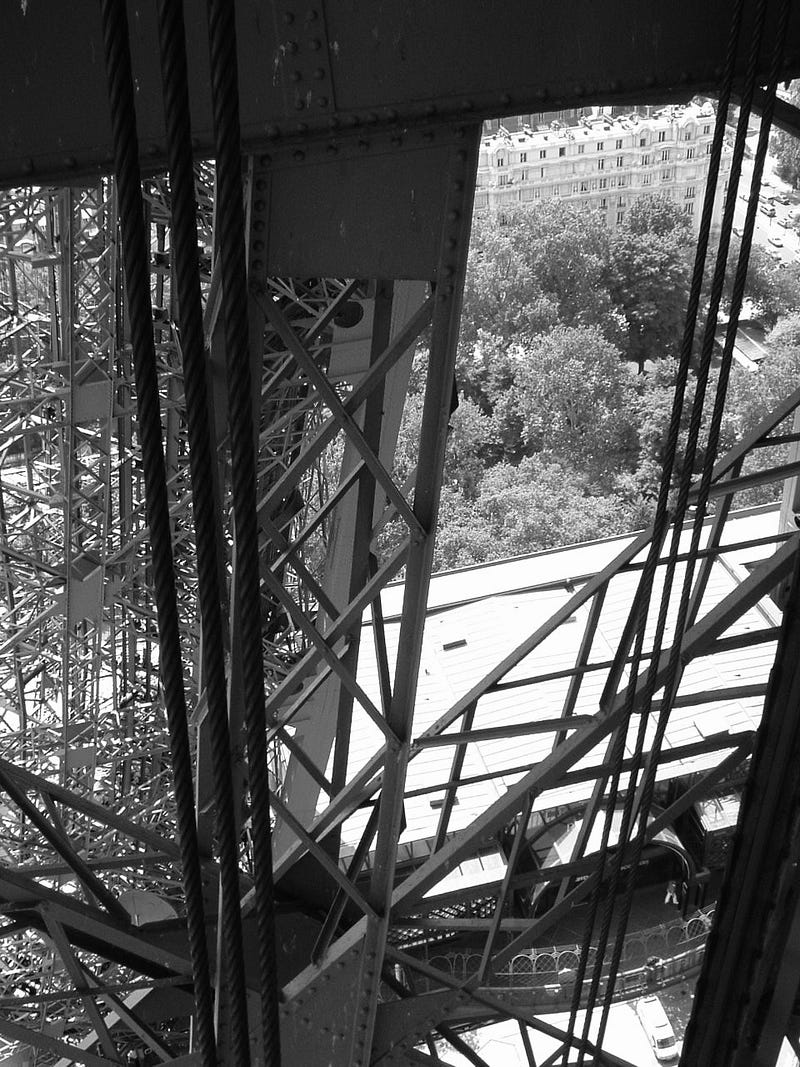
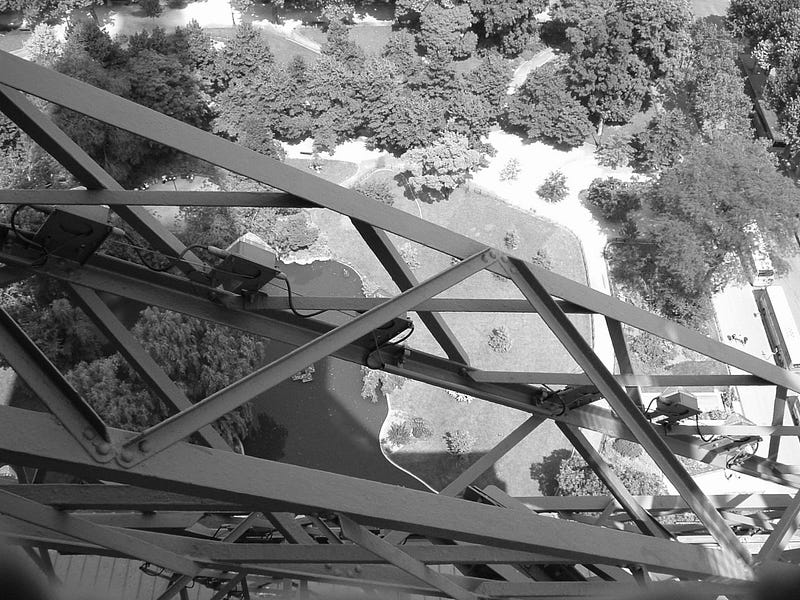
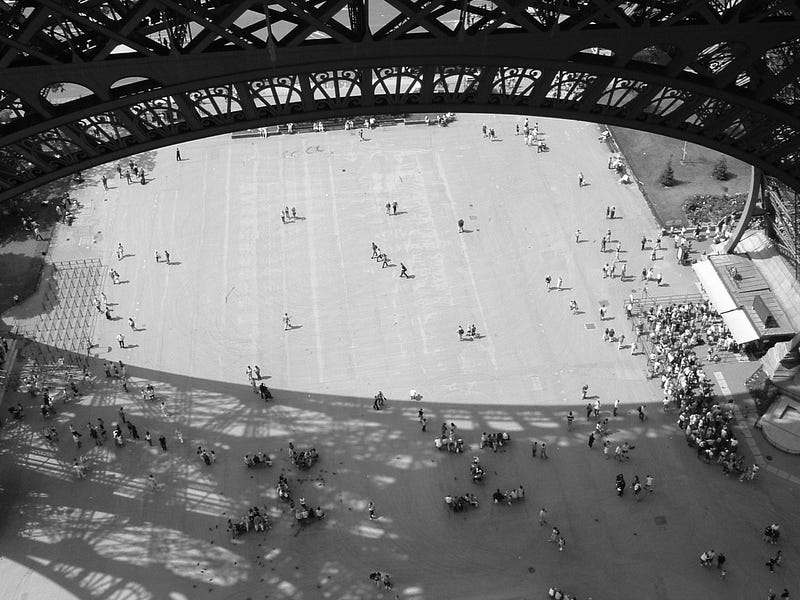
At long last, we reached the bottom, the “legs” of the Eiffel Tower, and saw the people milling around down below. Many were lining up for the chance to take the elevator up to the top as we had, and then perhaps take the stairs down.
Their summer day would also recede into memory, and become a day of gray.
Thanks for reading, and thank you to the editors at Globetrotters (JoAnn Ryan, Anne Bonfert, Jillian Amatt — Artistic Voyages, Adrienne Beaumont, Michele Maize) for running a great publication.
I’m planning a trip to Hawaii, so I enjoyed Oksana Kukurudza's Sunflowers Rarely Break’s story about searching for seals:
I always love keeping up with Jillian Amatt - Artistic Voyages’s travels:
Here is the November ‘Gray’ Challenge:


