Walking Down MMORPG Memory Lane
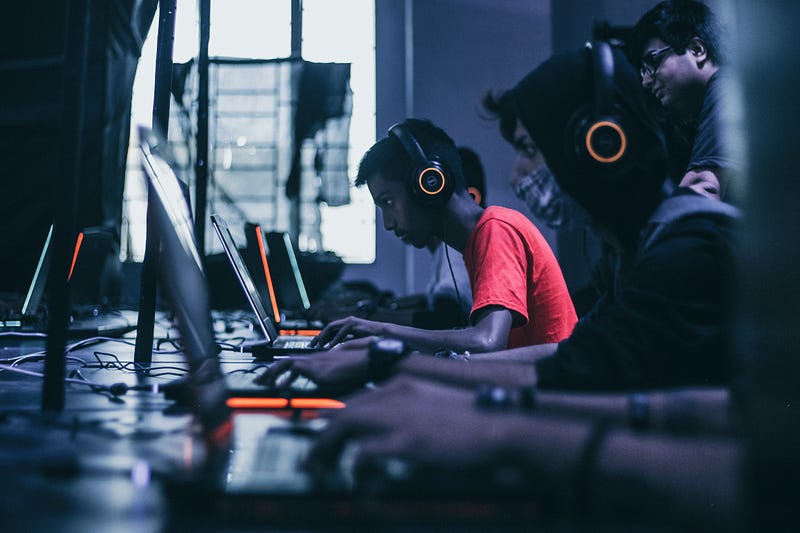
The other night I was sitting in my favorite chair, reading, while my kids were playing their favorite games — Fortnite and Roblox respectively if you want to know — and I got to thinking about how MMORPG, or Massive Multiplayer Online Role-Playing Games, have evolved over the past few decades.
Now, when you say MMORPG most people probably think World Of Warcraft, or if you’re older, late 1990s games like Ultima Online and EverQuest, but the genre stretches way back further than that. There were of course plenty of RPGs that offered some sort of online play, some already in the early 90s — Neverwinter Nights for example — but the first real Massive Multiplayer game I experienced was in the much older form of text-based online adventure games, the Multi-User Dungeon — or MUD for short.
If you’ve never heard of text-based adventure games, well, I don’t blame you. They were all the rage back in the ’70s and ’80s. Briefly, they are RPGs where instead of graphics; you have a textual description of your surroundings and have to type in the actions you want to perform (go north, kill orc… you get the picture… or not). MUDs were the online multiplayer version of these, and while they may not sound like much to today’s audience, they were incredibly addictive! I nearly flunked my university studies by spending way too much time on NannyMUD, and one of my fellow students actually dropped out for the same reason.
So, what is it about this type of game — be it a modern MMORPG or older MUDs — that is so addictive? From my point of view, what got me so hooked was the open world. It was the first time I played a game where you weren’t dictated to buy the game what you could do, or where you could go. There was no end to the possibilities, and it was exhilarating! That, in combination with the fact that you were playing with — and against — other players, made it a heady brew indeed. Teaming up with your friends on a quest, butting heads with a member from a rival guild, or just chatting with players from all around the world on the village green. It was like nothing I had ever experienced before. There was a real sense of community and adventure that knew no bounds.
Back in those days, the only way to connect to the internet from home was through dial-up modems, and in Sweden at least you had to pay by the minute, making hours of online gaming incompatible with a student budget. Luckily we had free internet access in the university computer labs, where my friends and I spent every spare moment frantically hacking away at our keyboards, slaying monsters, going on quests, and shouting at each other across the computer lab (Leeeerooyyy Jeeennnnkins!). I spent many an all-nighter in that lab, eschewing sleep for hours of adrenaline-fuelled gaming. I remember one particularly long session (30+ hours), sitting bleary-eyed at 5 in the morning, my desk littered with empty Coke cans, coffee cups, and candy wrappers when I suddenly heard a thump, followed by a continuous beep. I turned around to find that my gaming buddy had fallen asleep at his desk with his head resting on the keyboard.
I learned a thing or two playing these games as well. Many of the MUDs had a leveling system that gave you an option when you had reached the maximum player level. Either you played on various forms of hero levels, or you became a Wizard. As a Wizard, it allowed you to create your own realm, to actually build your own little world in the game by programming it. I became a Wizard on NannyMUD, which used the LPC programming language. This was basically a C-like language with some object-oriented features, making it fairly easy to create things like rooms and creatures, and code actions into them (it later evolved into the Pike programming language).
I suppose this was the first time I wrote actual production code in a real environment, and boy was it fun! I spent the best part of a year coding my realm and learning a lot of practical lessons in programming along the way. When I graduated in ’97 and got my first job, the MUDding fell by the wayside. I didn’t really have enough time for it, and online graphical games had really gotten a lot better by this time, making text-based games seem less enticing.
As the ’90s turned into the ‘00s most of my MUD playing friends turned to EverQuest and World of Warcraft, continuing to feed their habit, but I somehow dodged that bullet. I had moved to a different country by then and had way too much on my plate to have time to spend my nights playing online games. I reverted to old single-player favorites — like Civilization — when I had time for it, and somehow the whole MMORPG craze passed me by (though I probably spent more time playing Civilization than was strictly healthy… just… one more round).
It’s quite amusing to watch my children today displaying the same behavior I did nearly 30 years ago. My son yelling into his headset while jumping up and down, trying to coordinate whatever quest he and his friends are on at the moment. My daughter laughing out loud while chasing her friends as Killer in Roblox or hunting impostors in Among us. Bonding with people from across the world. To them, the open-world play and online component seem perfectly natural, they haven’t really experienced anything else. And sometimes they will switch to a non-online game on purpose, just to have some time for themselves. Go figure.
Getting married and having kids changed my priorities in so many ways, and these days I get little gaming done, apart from the occasional bout of XCOM 2, or playing Plants vs Zombies with my son. On the one hand, I miss those rather carefree days when I would spend an entire weekend glued to my computer. On the other, I realize that forcing myself away from the constant gaming has opened my eyes to other hobbies and pastimes I had been neglecting, such as writing. Spending too much time on just one thing isn’t all that healthy, to be honest, and you miss out on so many other things.
But no matter what happens, wherever my life takes me, I will always remember that moment when I first stepped in the MUD.


