
Walking As Therapy
The Way of Saint James, France, 2012
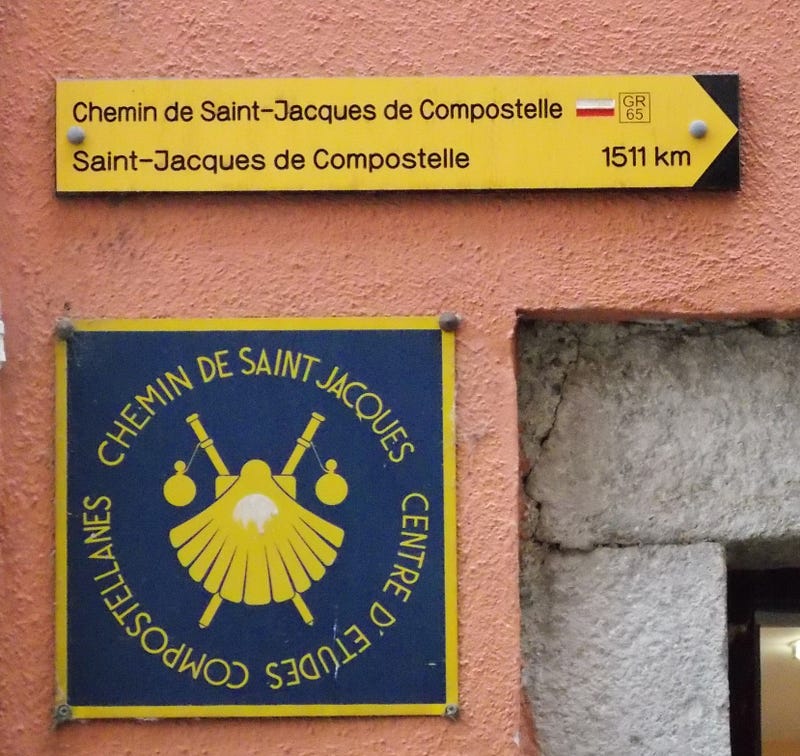
Life throws some curve balls turning a person’s life upside-down. My career as a university instructor in China had come to a crashing end at the beginning of 2012. The previous few months had been difficult with my mother’s death while I was on a short snorkelling vacation in the Philippines, and the following series of flashback scenes that had literally brought me to my knees.
Knowing that there was no way I could return for the second term at the university, I resigned and headed home to Canada to begin a second, intensive round of Jungian analysis. I was as broken as broken could get.
By the time spring arrived, analysis had allowed me to begin to breathe with less difficulty. I began to leave my small basement suite where I lived alone, and walk. As my strength began to return, I even walked the twelve kilometres from my lodgings to my analyst’s office. After all, I had nothing else to do besides appear for my analytic sessions to fill my days.
Then, I happened to watch a movie on Netflix called The Way. Something stirred deep within me and naturally, I shared this with my analyst. However, rather than just treat this as an indicator of what was unfolding within my psyche, I couldn’t let go of the idea of walking the Camino. After all, I was grieving just as the protagonist in the movie.
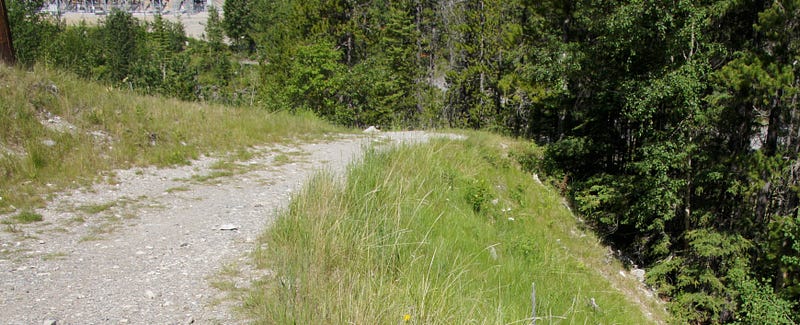
There is something about walking and running that reached into my depths that was vital. And so, I found myself walking more, including going to hike on mountain trails only an hour distant from city where I lived. I had hiked this area in the past with my wife. When I reached the point where the edge of the trail, much higher up than in the scene above, I decided to risk following that trail. In the past, I took the safer route. I am a person that is afraid of heights. Somehow, I slowly managed to creep along that edge and meet up with the regular trail. It was a special moment for me, one that I wasn’t going to be sharing with my analyst.
I had just turned sixty-three and I had given up on continuing analysis. I needed to go home and talk to my wife, to reconnect. Yet, I also needed to go on a pilgrimage, a different approach to therapy, probably the oldest form of mental-health therapy. And so, I left the city and my Jungian analyst and returned home.
As I talked with her about my need to go on a pilgrimage, my wife suggested that needed to ‘walk the devil’ out of me and that it wasn’t a good idea that she go with me. I was going to have to do this alone.
I left the day after our forty-first anniversary. On August 29th, I boarded a plane for Paris. My destination was Le Puy en Velay via Paris. Le Puy was going to be the starting point of my Camino. I had three months set aside for the 1,500+ kilometre long trek, a pilgrimage of almost 1,000 miles.
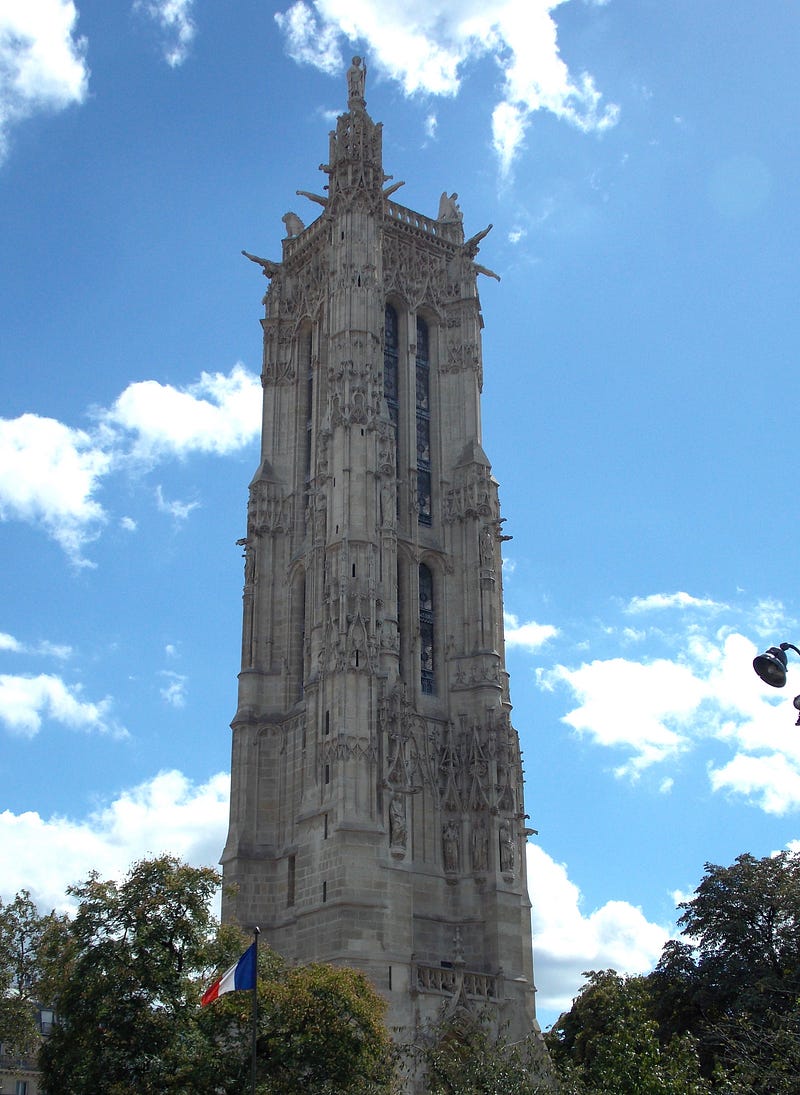
I arrived in Paris in the morning. I had booked a hostel bed for the night as I had a few places I needed to see before taking the train the next day. My first stop was La Tour Saint Jacques. In centuries past, this was the gathering spot for pilgrims that would attempt to make it to Santiago de Compostela in Spain. Dying on a pilgrimage was not unusual. I sat on a bench by the tower and imagined myself as one of those pilgrims, imagining that I was a displaced nobleman’s son who had somehow disgraced the family name and was making the pilgrimage as a penance.
Passing tourists broke the spell. It was time to walk to the Cathédrale Notre Dame where I hoped to get the first stamp in my pilgrim’s passport. Once inside the cathedral, I found a quiet spot on one of the benches used for church services.
I had grown up as Catholic and knew my way around Catholic churches and soon found myself weeping while seated, my head bowed in sorrow for something I couldn’t name. The spell eventually left, and I got up to find the office at the back where I could get the first stamp.
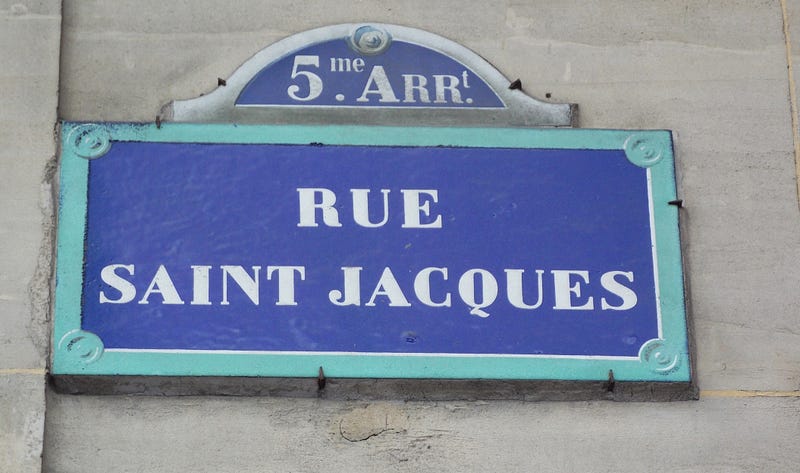
Leaving the cathedral, I walked across the bridge to reach Rue Saint Jacques, the pilgrimage route. My destination was another small church called Saint Jean de Haut Pas, a pilgrims’ church.
Because it was hot out, I had worn my sandals rather than my hiking shoes. I had left my backpack at the hostel and had only taken a small hip pack which held my camera and a small writing journal that my eldest daughter had given me so that I could record the journey. I had yet to make an entry into it.
I managed to find someone to put a stamp in my passport before leaving the quiet church. I was hungry and it was time to find lunch. I also had another task, going to a particular store where I could buy a book called Miam, Miam, Dodo, a walker’s guide book to walking one of the many long hiking routes in France. The book would lay out the stages I needed to walk, the eating places en route, and where I could sleep each night. Of course, the book was written in French. Since I was fluent in French, that wasn’t a problem.
At the restaurant, I felt tired and my feet were hurting. Somehow, I had developed a blister wearing sandals instead of my trusted hiking shoes. I groaned. This was an ominous omen for the task ahead of me. I still had a long walk to return to the hostel near the Basilique Sacre Coeur. My pace was much slower as I made the return trek to the hostel. I had walked 12 kilometres and I still hadn’t taken the first steps on the Camino.
It didn’t matter. I was in Paris. I was a pilgrim. And I was alive and filled with hope.
. . . to be continued . . .


