
Waiting For The Kiss Of The Muse Is The Kiss Of Death For Your Art
You sit down and want to write the next chapter of your new book. You turn on the computer, open the manuscript, and hope that inspiration will come over you. If that sounds familiar, you’re an amateur who doesn’t understand his art. Do not wait for the kiss of the muse, for it will come far too seldom to complete a great work.
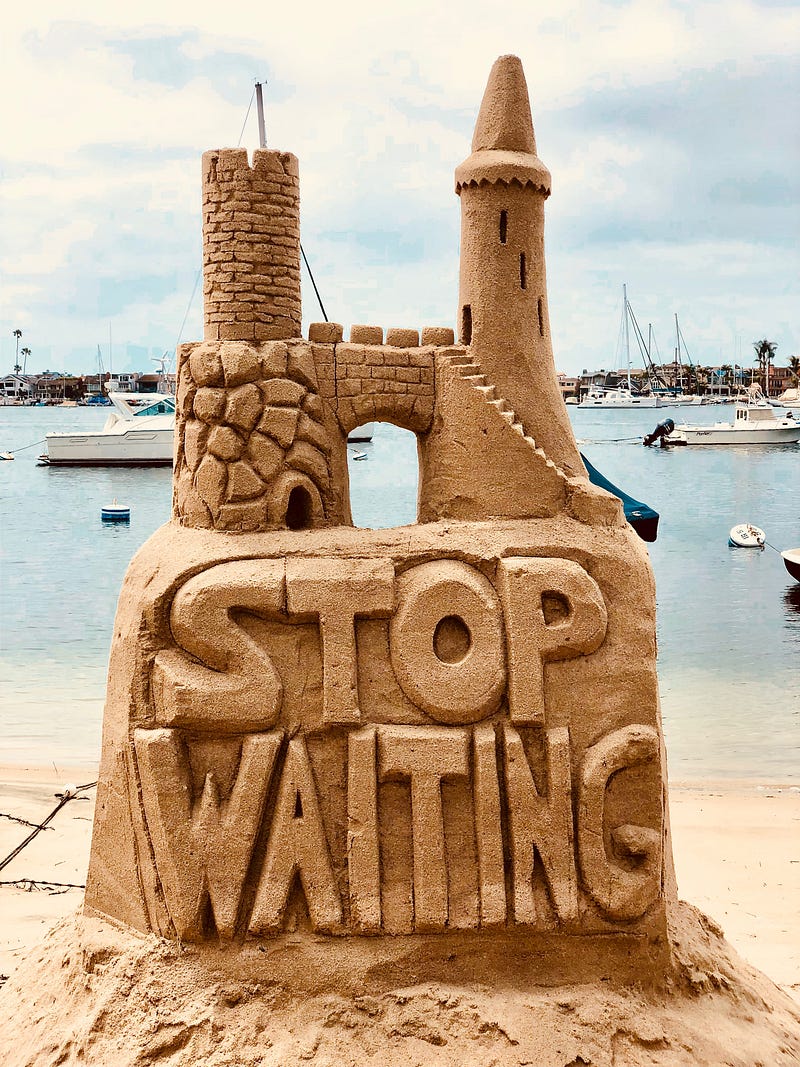
“You can’t wait for inspiration. You have to go after it with a club.” — Jack London
Everyone who writes has heard this one question so often: “Where do you take your ideas from?”
We writers are quickly annoyed by this, but we overlook the fact that the questioner apparently knows more about writing than we do. He doesn’t ask where we get our ideas from, but where we take them from.
Letting an idea come up is a passive act. Taking an idea is active. As artists, we must always be active when we write. There is no such thing as passive writing.
The muse is not our mistress, but our servant.
Ideas want to be hunted, pursued, discovered. They are not particularly affectionate by nature, because they get along well without us. From ideas, we weave and build our stories, how we build our houses out of stones and our boats out of wood.
No bricklayer would come up with the idea that the mortar mixes itself to enable him to build walls. But we writers, if we are still inexperienced, are waiting for the miracle that ideas and inspiration come to us.
Worse still, we’re making ourselves dependent on the mercy of the muse. If she doesn’t kiss us, we can’t create anything today. We are like dogs, waiting with our tongues hanging, for the Lord and Master to throw us a piece of flesh.
The muse will never respect us that way. Through passive waiting, ideas will come less and less over time, not more often.
How can the muse know what to deliver if we don’t ask for it? If we don’t literally demand it?
You can do it without the muse.
If the muse is so bitchy, we should learn to get along without her. If we succeed, we replace chance with a method.
The most essential method is to separate writing from brainstorming. When we sit at the computer to write, we have to know what we want to write. Writing and inventing the story at the same time is harmful to our flow.
The professional plans one day and executes this plan the next. It’s not even necessary to develop an entire plot that defines every scene in advance if we don’t like this way of working.
But we definitely need an idea before we start writing. We should know whether in our next scene a murder should take place, a quarrel between the main characters should break out or whether a love scene occurs.
These basic premises alone ensure that we dive into the scene with a whole flood of associations, mental images, and ideas. From this point on, we can really let ourselves fall into the story.
A basic framework is everything it takes to create a whole chain of events in front of our inner eye.
It’s not much we need before we start, but we always need something, not nothing. If we get to work with empty heads, it is as if the bricklayer were trying to lay the first stone with empty hands. It’s not possible.
But what if I don’t want to be a pro?
That’s perfectly all right. Nobody says amateurs can’t write. But if you choose the path of the amateur, choose it wholly.
Write your fragments, your philosophical reflections, without being philosophically educated, and write your poems without good verse and with false rhymes. Write books in which the hair color of the main character changes after half of the chapters and plot holes appear everywhere. If you enjoy writing, then write.
Only then don’t do one thing: Don’t offer your work for money.
You can make your hobby your profession at any time, but as long as it is a hobby, you should not get paid for it. Readers are customers, and customers have the right to a professional product.
And how do I know if I’m a professional if I want to be one?
If you’ve read this far, you know the answer. You’re a pro if you can write without having to rely on the muse’s kiss.
You’re a professional if you do the writing like a job.
You are a professional if you can do all this and still be original and truthful — if you still love what you do despite everything.
do you want more of this?
Receive weekly emails, and don’t miss any of my articles.
subscribe here http://bit.ly/ReneJunge
Read also:


