
Waiting for Lefty in L.A.
The current Hollywood writers strike is a pretty good TV show in itself.
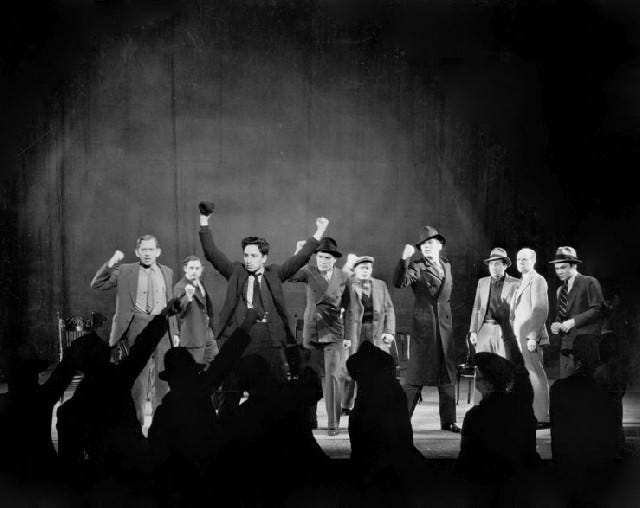
At the end of Clifford Odets’ classic 1935 play Waiting for Lefty, a union agitator cries out to the exploited cab drivers of New York: “Hello America! We are the storm birds of the working class workers of the world….What’s the answer?” The frenzied cabbies all shout in response: “Strike!”
While the membership of the Writers Guild of America is hardly the storm birds of the working class, the current strike against the studios and networks is a reminder of the power of unions and the results of collective bargaining organizations that began in the mid-19th century in America and finally found their power when congress created the Department of Labor in 1913.
In 1997 a sitcom I was producing and directing was canceled. The show was Working starring Fred Savage. We were in NBC’s prime time schedule and struggled to find an audience for two seasons. When we were canceled, our audience share was somewhere around 14 million viewers a week. That wasn’t enough, because shows like Friends were pulling 20–25 million viewers and we were expected to do better being on the same schedule.
By comparison, a show today on any network that pulls 5 million viewers in is considered a smash hit. The lesson? The labyrinth of Hollywood’s definitions of success is constantly evolving. As Einstein pointed out, it’s all relative. So is the accounting.
I have fond memories of working with the cast, crew, and writers of the show. NBC was also a great place to be in those days. I ended up directing dozens of episodes of their famous “Must See TV” lineup, including, yes, Friends (I directed the “PIVOT!” episode for reference.)
The current strike by the Writers Guild of America reminds me of some of the difficult battles that are constant in the world of making stories for profit and the eternal tension of art vs. commerce. As the media landscape evolves over time, the business model for studios and networks has changed radically. Streaming services, new media outlets, competition, and a splintered audience mean content is distributed in new and often obscure ways, leaving those who create the content to try and sort out where they stand in terms of fair compensation.
As a member of the Directors Guild of America, I am part of a union that works closely with the Writers Guild. Writers and Directors work hand in hand in the trenches of Hollywood, churning out season after season of television that the audience takes for granted. It’s a grind, a machine of terrifyingly high stakes and not for the faint of heart or the thin of skin. The real history of labor organizing is one of pain, suffering, and even death, and the various unions in Hollywood owe an eternal debt to those who risked life and limb for workers' rights. Our situation in no way compares to the struggles of workers in the past.
The heart of the current strike issue is, of course, money. Since the earliest days of motion pictures and television, studios and networks have been purposely deceptive about how much profit they take. Arcane and obscure accounting practices can show that smash hits seemingly bring in no profit at all. You may recall the case of Eddie Murphy’s Coming to America lawsuit in 1988: Paramount alleged that even though the film grossed $288 million (over $550 million today), it made no profit. Paramount ultimately caved and settled the case, but still insisted it made nothing from the film.
In today's fractured and rapidly evolving media markets, new and old content is available to audiences 24 hours a day across dozens of platforms. The fair sharing of profits with artists from this Wild West of media is the current battleground. Writers see their work distributed in more and more outlets but see no residual payments coming in. They have now decided that enough is enough.
On the other hand, those of us who have lived and worked in the trenches of the Hollywood dream machine long enough are aware that this strike, though fascinating, has little to do with the striking cabbies in Odets’ play. More likely both the studios and the Writers Guild have long known this strike was coming and have long ago settled on the numbers that will end it.
The current strike, for lack of a better description, is a show of its own. A play for the new media and a little reality series for the American people. A bargaining game show with prizes for the winners. Tropes about workers' rights, fairness, equity, and transparency are thrown about. Attacks about greed, spoiled Hollywood elites, and out-of-touch dilettantes are bandied back and forth. In the end, a settlement will be reached and everyone will return to their work in their Ferraris and Benzes and get back to power lunches at the newest hot spot.
Hollywood is very good at putting on a good show sometimes.
I for one, will keep watching it and look forward to my residual checks from Netflix for all the times they have run my Friends episode without paying me. After all, my Mercedes ain’t cheap to keep shiny! STRIKE!!!


